Matte Zipper Bags Sell the Product Before the Seal Opens
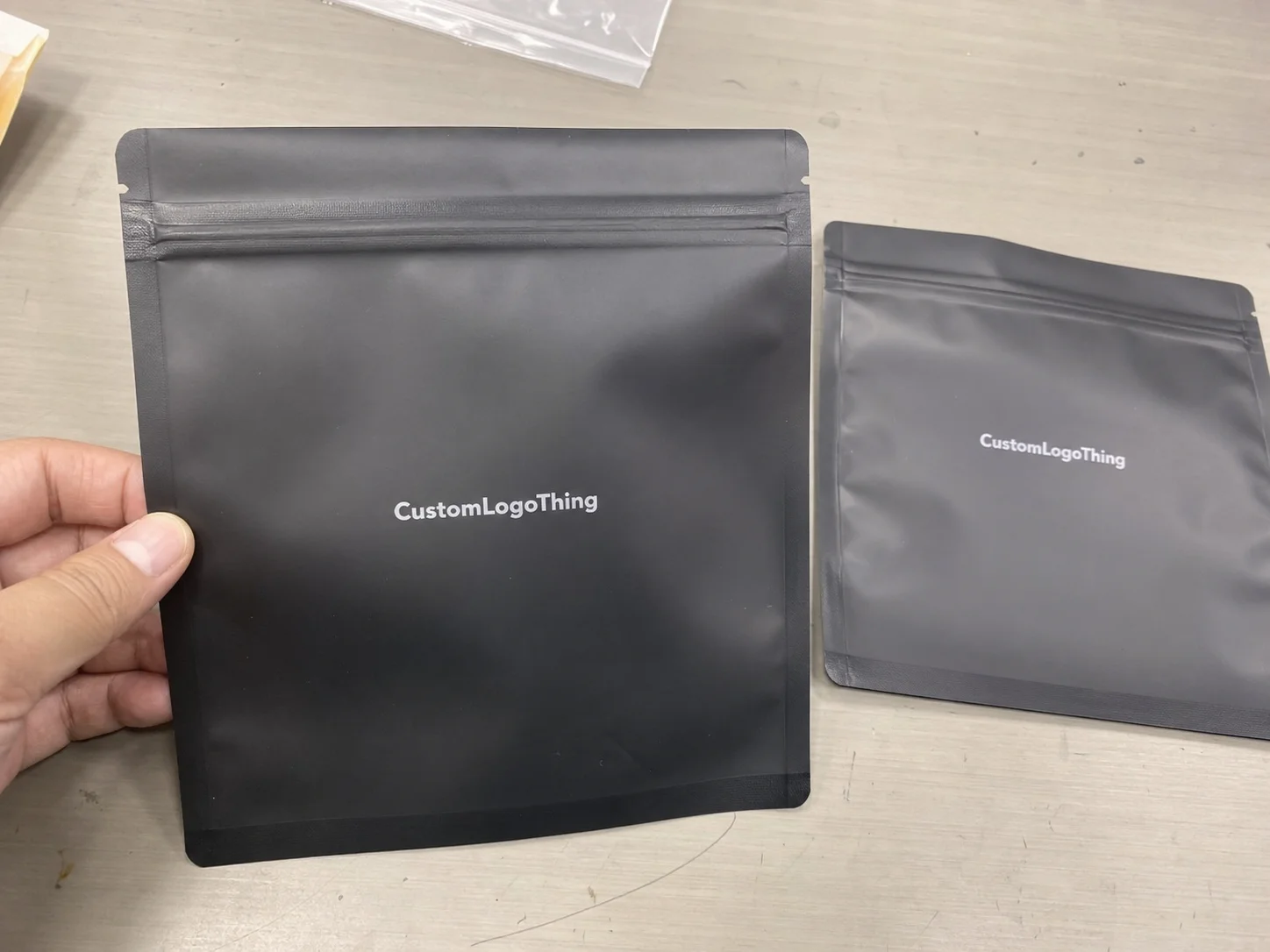
Shoppers decide fast. Buyers searching how Buy Matte Zipper bags moq pricing plan are usually not collecting packaging mood boards. They are trying to understand order thresholds, launch budgets, and whether a matte resealable pouch can support a product line without chewing through margin.
A matte zipper bag does two jobs before the seal opens. The finish suggests a more controlled, premium product. The zipper tells the customer the package is meant to be opened, closed, and used again without a wrestling match. That matters for snacks, coffee, supplements, cosmetics, pet treats, apparel accessories, and sample kits. Flexible packaging often gets judged in a few seconds on a retail shelf, marketplace thumbnail, or subscription box photo. Brutal, but true.
Matte is not decoration only. It cuts glare in product photography, softens the look under bright retail lighting, and gives clean contrast for dense black panels, bold ingredient blocks, nutrition facts, foil stamping, and spot UV. Glossy packaging can work beautifully for candy, bright promotional items, and high-energy graphics. Matte zipper pouches usually read quieter, more tactile, and more premium.
The surface is the easy part. The risk sits underneath it.
Choose the wrong film structure and oxygen-sensitive coffee or fatty snacks may stale too quickly. Choose the wrong zipper and powder can clog the track. Choose the wrong MOQ and cash gets trapped in cartons of packaging before the SKU proves itself. A smart buying decision starts with product protection, filling method, artwork complexity, order volume, freight weight, and reorder cadence. Finish comes after function. Always.
Packaging buyer rule: a matte pouch that looks excellent but misses the barrier, zipper, or filling requirement is not premium packaging. It is expensive rework.
How Buy Matte Zipper Bags MOQ Pricing Plan Works
The clean way to understand how buy Matte Zipper Bags moq pricing plan decisions is to separate the order into three linked questions: What bag structure is required? What minimum order quantity is realistic? Which pricing tier makes sense for the first order versus repeat runs?
MOQ is not just a supplier being difficult. It is usually tied to material roll setup, printing setup, lamination, zipper application, pouch conversion, packing, and quality control. Custom flexible packaging has real setup costs. Even a short run may require artwork proofing, press preparation, color adjustment, roll changeovers, zipper alignment checks, seal testing, and production waste. Those steps do not vanish because the buyer only wants 1,000 bags.
Low MOQs can still be useful. A 1,000 to 3,000 piece run may be the right call for market tests, seasonal flavors, influencer bundles, limited beauty launches, and SKU validation. It protects cash flow while the product is still proving itself. The tradeoff is unit cost. Fixed setup costs get spread across fewer bags, so each bag carries more of the burden.
As quantity rises, per-piece pricing usually improves. A simple digitally printed matte pouch might land around $0.45 to $0.85 per unit at a low quantity. A larger run of the same size and artwork may move closer to $0.18 to $0.35 per unit, depending on film structure, print coverage, zipper type, packing method, and freight. Those are planning ranges, not universal promises. Anyone quoting without specs is guessing with confidence. Very popular in packaging. Not very useful.
Quote comparison needs discipline. Ask each supplier to price the same width, height, bottom gusset, film structure, thickness, zipper type, print colors, finish, quantity tiers, packing method, shipping terms, and proofing expectations. If one quote includes freight and another does not, the cheaper option may not be cheaper. If one quote uses a thinner film or a basic zipper while another includes high-barrier material and a stronger closure, the unit-cost comparison is not honest.
A practical pricing plan uses three tiers: test run, launch run, and reorder run. This gives finance a real model before artwork is finalized. It also shows where the price curve actually changes. Sometimes moving from 3,000 to 5,000 pieces barely affects the unit price. Other times the jump from 5,000 to 10,000 pieces can cut cost per piece by 15% to 30% because the run becomes more efficient.
Do not chase the cheapest line item if the quote hides freight, skips proofing, uses vague material specs, or says nothing about zipper performance. Returns, repacking, delayed launches, and damaged product cost more than a slightly higher but better-defined quote.
Film, Finish, and Zipper Details Buyers Should Lock First
Most quote problems start with missing specifications. A supplier can price “custom matte zipper bags,” but that phrase is too broad to mean much. Buyers need to define material layers, thickness, surface finish, zipper style, tear notch, hang hole, gusset, window, and valve requirements before pricing becomes reliable.
Common film structures include PET/PE for general dry goods, PET/VMPET/PE for stronger light and oxygen barrier, kraft-look laminated plastic for natural-positioned products, clear-front matte-back constructions for product visibility, and higher-barrier laminated films for coffee, supplements, jerky, pet treats, or moisture-sensitive powders. A typical pouch thickness may range from 3.5 mil to 6 mil. Heavy fills, sharp pieces, and rough distribution may need more structure.
Barrier is not a nice extra if the product needs it. Coffee, protein powder, jerky, nuts, fatty snacks, and some pet treats can be sensitive to oxygen, moisture, aroma loss, or oil migration. A basic matte pouch may look right and still fail the product. If shelf life matters, ask about the material structure and barrier intent, not just the thickness. Thickness alone does not tell the whole story.
Matte can be produced in several ways. Matte film gives a consistent soft surface. Matte varnish may be used in print areas and can control cost on certain jobs. Matte lamination adds feel and surface protection but may raise the quote. Scratch resistance varies. Dark matte backgrounds look sharp in a mockup, then show scuffs if cartons are packed too tightly or pouches rub during shipping. Black matte is dramatic. It is also honest about every abrasion.
Zippers deserve more attention than they usually get. Standard press-to-close zippers work for many dry snacks, gummies, apparel parts, accessories, and sample kits. Heavier fills may need stronger closure profiles. Powder products may benefit from zipper designs that tolerate fine particles better. Regulated or safety-sensitive categories may require child-resistant closures. Coffee may need a degassing valve, often paired with a high-barrier film and a zipper for repeat use.
Print behavior changes on matte surfaces. Bright oranges, greens, and blues can appear softer than they do on gloss film. Dense blacks often look excellent. Metallic effects need careful proofing because matte lamination can reduce shine unless foil, cold foil, or spot effects are specified. Ask for a digital proof at minimum. For color-critical jobs, request a press proof or production sample and define acceptable color tolerance before bulk production starts.
Here is the mistake that causes a surprising amount of rework: artwork gets approved before the structure is locked. If the fill weight, shelf-life target, filling machine, or gusset changes later, the dieline can change too. That resets pricing, proofing, and lead time.
| Option | Best Fit | Typical Cost Impact | Buyer Watchout |
|---|---|---|---|
| PET/PE matte pouch | Dry snacks, accessories, samples | Lower to mid-range | May not provide enough barrier for oxygen-sensitive goods |
| PET/VMPET/PE matte pouch | Coffee, supplements, pet treats | Mid to higher range | Metalized layer blocks product visibility |
| Clear window with matte finish | Granola, candy, cosmetics kits | Moderate increase | Window placement can reduce print area and barrier |
| Child-resistant zipper | Regulated or safety-sensitive products | Higher | Requires usability testing and compliance review |
Specifications That Decide Fit, Shelf Impact, and Failure Rate
A useful quote request includes width, height, bottom gusset, usable fill area, target fill weight, film thickness, print coverage, zipper requirement, tear notch, hang hole, and case pack preference. Add the delivery ZIP code or country. Freight can move the landed cost more than buyers expect, especially with bulky cartons of empty pouches.
Bag dimensions are not interchangeable with product weight. Four ounces of granola, gummies, roasted coffee, protein powder, and pet treats can require very different pouch volumes. Low-density products need more headspace. Powder settles. Sharp treats can stress side seals. Oily products may need stronger barrier and seal layers. If dimensions are not final, send a product sample or at least the target fill volume in cups, grams, or ounces.
The filling method matters too. Hand filling gives more flexibility, though it can be slower and less consistent. Semi-automatic and automatic filling equipment may require specific pouch openings, seal zones, film stiffness, and zipper placement. A pouch that looks fine on a desk can be a nuisance on a filling line if the mouth will not open cleanly or the zipper sits where the equipment wants to grip.
Tolerances should be discussed early. Flexible packaging production can involve small dimensional shifts and color variation. A tolerance of plus or minus 1 to 2 millimeters may be normal on certain pouch dimensions. Color can vary because of substrate, ink system, lamination, lighting, and production method. If a brand needs strict color matching, the supplier needs that information before production. Not after the cartons arrive and everyone suddenly becomes a color scientist.
Shelf presentation is also a specification issue. A stand-up pouch needs enough bottom gusset and stiffness to stay upright after filling. A peg display may need a reinforced hang hole. Ecommerce shipping may favor lay-flat behavior and scuff resistance over dramatic shelf posture. Front-panel hierarchy should reserve clean space for the logo, product name, net weight, claims, ingredients, nutrition facts, barcode, lot code, and any regulatory symbols.
Testing is cheap compared with failure. Fill samples and check zipper usability after 5 to 10 open-close cycles. Test seal integrity. Drop a filled pouch from a typical handling height, often around 36 inches for small consumer packs, and inspect corners and side seams. Rub matte surfaces against a shipping carton and neighboring pouches to see how scuffing appears. For distribution testing, buyers can reference protocols from the International Safe Transit Association, especially if the product will move through parcel networks.
Clear specifications reduce quote revisions, sampling loops, overbuilt materials, and production pauses. They also make MOQ and pricing discussions faster because the supplier can price the actual job instead of filling in blanks.
Pricing Variables, MOQ Breakpoints, and Unit Cost Tradeoffs
Matte zipper bag pricing is built from several moving parts: bag size, material structure, order quantity, print method, number of colors, ink coverage, finish, zipper type, add-ons, proofing, packing, and freight. Tooling fees may apply for custom shapes, special windows, plates, or dies, depending on the production method. Digital print can reduce setup charges for smaller runs. Plate-based printing may become more economical at higher volumes.
Unit cost often falls sharply after setup costs are absorbed. That is the appeal of bulk pricing. More bags are not automatically better, though. Ordering 50,000 units for a product that sells 1,500 units per month may create warehouse pressure, tie up cash, and leave the brand exposed if the formula, claim language, barcode, or net weight changes. Obsolete packaging is not a rounding error. It is a margin leak with cardboard around it.
Ask for three quantity tiers instead of one quote. A practical request might ask for 2,500, 5,000, and 10,000 pieces, or 5,000, 15,000, and 25,000 pieces for a stronger launch. The right breakpoints depend on SKU velocity, cash flow, storage space, and deadline. Tiered pricing reveals where the real curve changes. If the unit cost drops from $0.42 to $0.31 at the second tier but only to $0.29 at the third, the middle tier may be the smarter launch order.
Matte finish, high-barrier films, custom windows, metallic details, valves, hang holes, and specialty zippers can increase price. That increase is not automatically bad. If a higher-barrier film extends freshness by 60 to 90 days, it may reduce spoilage and support wider distribution. If a matte black pouch with spot UV protects a $14.99 retail price by making the product feel more premium, the packaging cost may be justified. The math has to connect to margin, not just taste.
Compare landed cost, not factory unit price alone. Shipping cartons, palletization, duties, split deliveries, residential or limited-access delivery fees, and expedited freight can change the real number. A quote that looks 8% cheaper before freight may lose once the landed cost is calculated. For sustainability-related claims or fiber-based components, confirm documentation instead of relying on vague supplier language; the Forest Stewardship Council provides useful context for certified paper and forest-based materials.
Cash timing matters as much as unit cost. Many custom packaging orders require a deposit before production and a balance before shipment or release. If the launch also needs ingredient purchases, filling labor, photography, and retailer fees, the “best” packaging tier may be the one that keeps the project funded, not the one with the lowest theoretical unit price.
The strongest pricing plan balances margin, sales velocity, warehouse space, reorder lead time, and packaging risk. That is the practical center of buying matte zipper bags with MOQ pricing: not the lowest MOQ, not the biggest discount, but the quantity that supports the launch and keeps cash moving.
Process, Timeline, and Lead Time From Quote to Delivery
A clean buying process follows a predictable order: specification review, quote, artwork template, digital proof, sample or pre-production approval, production, quality inspection, packing, and shipping. Skipping steps rarely saves time. It usually moves the problem later, where it costs more and annoys more people.
Timeline depends on artwork readiness, material availability, print method, sampling requirements, production queue, and shipping mode. Missing dielines are a common delay source. So are late barcode changes, undecided claim language, and artwork built without seal zones. A simple custom run may move from proof approval to production in roughly 10 to 20 business days. More complex laminated structures, valves, specialty zippers, or color-critical proofs can take longer.
Separate sample timing from bulk production timing. A fast prototype does not mean full production will move at the same speed. A sample can be digitally printed or hand assembled to show size and artwork. Bulk production still requires material allocation, print setup, lamination curing if applicable, pouch conversion, zipper checks, inspection, and packing. If a supplier quotes both timelines, ask which stage each timeline covers.
Before placing an order, confirm decision deadlines: final artwork date, proof approval date, production start date, inspection date, ship date, and expected delivery date. Put these into the launch calendar. Packaging delays can affect filling appointments, retail onboarding, photography, marketplace listings, and promotional campaigns.
Expedited production is sometimes realistic. It is riskier if the bag requires custom lamination, specialty film, strict color matching, or a nonstandard zipper. Rush work also narrows the window for catching errors. If the product launch has a hard date, reduce risk by approving the structure early and leaving artwork refinement for the proof stage.
Reorder planning should begin before the first shipment is gone. If monthly sales are 4,000 units and reorder lead time is 25 business days after proof approval, the reorder point cannot be “when the shelf looks low.” Build a safety buffer for freight disruption, promotion spikes, influencer demand, or retail pickup. Buyers who understand how Buy Matte Zipper Bags moq pricing plan decisions usually treat reorder timing as part of the pricing decision, because emergency freight can erase months of unit-cost savings.
Request a Clean Quote and Avoid Rework
A strong quote request is short, specific, and complete. Send product type, fill weight, bag dimensions, material preference, matte finish preference, zipper requirement, print artwork status, target quantity, delivery location, and required in-hand date. If you already have a current pouch, share photos and measurements. If not, share the product and target fill volume.
- Product details: dry snack, coffee, supplement powder, cosmetic refill, pet treat, apparel accessory, or sample kit.
- Bag format: stand-up pouch, lay-flat zipper bag, bottom gusset pouch, hang-hole bag, or window pouch.
- Performance target: moisture barrier, oxygen barrier, shelf life, scuff resistance, freezer tolerance, or ecommerce durability.
- Print needs: full-color artwork, spot color, foil, spot UV, barcode, nutrition panel, lot code area, and matte finish type.
- Commercial details: target MOQ, quantity tiers, budget range, delivery address, deadline, payment terms, and reorder expectation.
Competitor photos are useful references, not final specifications. A photo rarely reveals film thickness, sealant layer, barrier rating, zipper profile, or lamination method. If the goal is to match a pouch style, say that clearly, but expect the supplier to translate the visual reference into technical specs.
Ask for template files before final artwork is built. Designers need the dieline, bleed, safe zones, zipper location, tear notch, gusset folds, seal areas, and barcode placement rules. A beautiful design that crosses the seal zone may need rework. A barcode placed over a curved gusset can scan poorly.
In the same conversation, request quote tiers, sample options, proofing steps, payment terms, reorder pricing, and freight assumptions. That reduces back-and-forth and helps internal teams approve faster. If you need background on ordering, artwork, and custom product questions, Custom Logo Things also maintains a practical FAQ for buyers comparing branded packaging options.
The goal is not to push the largest order. The goal is to Buy the Right structure at the right quantity with fewer surprises. Matte zipper bags are simple only after the film, zipper, finish, MOQ, artwork, timeline, and freight have been defined. Until then, they are just attractive variables waiting to become invoice problems.
If your team is deciding how MOQ pricing should fit the launch, prepare the specs above, review the FAQ for common order questions, and request a tiered quote before artwork is finalized.
FAQ
What information do I need before asking how to buy matte zipper bags with MOQ pricing?
Prepare bag size, fill weight, product type, material preference, zipper type, print artwork status, target quantity, delivery location, and required in-hand date. If dimensions are not final, share product samples, target fill volume, or a current package reference so the supplier can recommend a practical pouch size before quoting. Ask for quantity tiers at the start so the unit-cost curve is visible.
How does MOQ affect matte zipper bag unit cost?
MOQ affects unit cost because setup, material waste, printing, lamination, zipper application, cutting, inspection, and packing costs are spread across the order. Higher quantities usually reduce the per-bag price, but the best quantity depends on sales velocity, storage space, cash flow, and reorder timing.
Can I order a low MOQ for custom matte zipper bags?
Low MOQ options may be available depending on size, print method, material, and finish, especially for simpler designs or digitally printed runs. Compare low-MOQ pricing against the next quantity tier. A slightly larger run may improve unit economics without overloading inventory.
What changes the price of custom matte zipper bags the most?
The largest price drivers are bag dimensions, material structure, barrier requirements, order volume, print coverage, matte finish method, zipper type, and freight. Add-ons such as clear windows, hang holes, valves, spot effects, metallic details, and specialty closures can also raise the quote.
How long does the matte zipper bag production process usually take?
Lead time depends on artwork approval, sampling needs, material availability, print method, production queue, inspection, and shipping method. To avoid delays, approve dielines early, submit print-ready artwork, confirm proofing requirements, and set a reorder date before inventory runs low.


