Knit Beanies for Retail Drops: How to Plan a Winning Launch
If you are planning knit Beanies for Retail drops, the hard part is not the idea. It is making sure the beanie still looks premium after it gets folded, hung, handled, and lit by a store fixture that was clearly designed by someone who dislikes knitwear. A strong drop has to photograph well, read clearly from six feet away, and stay costed tightly enough that freight does not quietly eat the margin.
Retail beanie programs work best when they are treated like product launches, not seasonal filler. The spec, the packaging, the timeline, and the shelf presentation all matter. Miss one, and a good design starts acting expensive for the wrong reasons.
What knit beanies for retail drops need to do on shelf
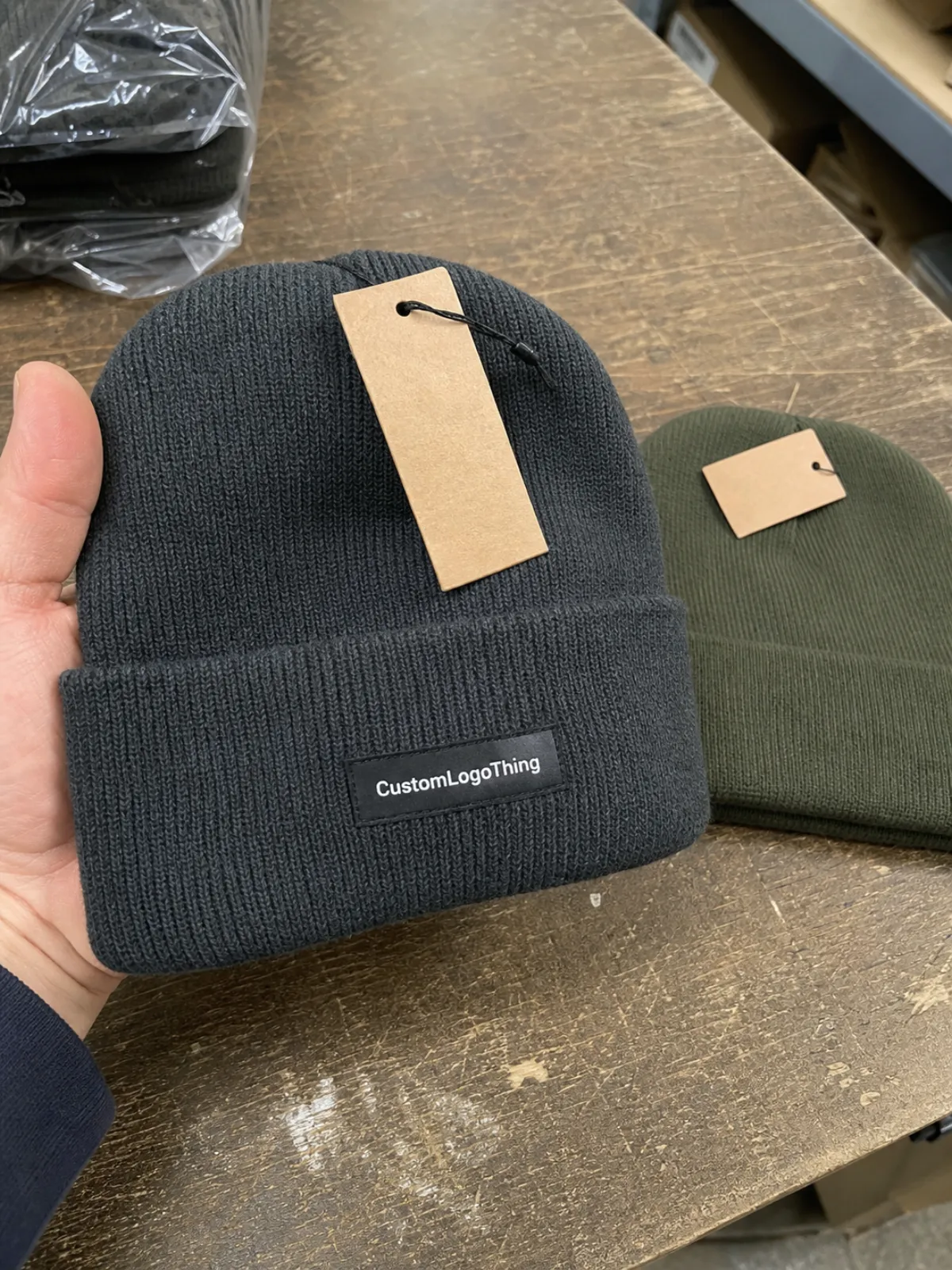
A beanie can look sharp on a table and still read cheap under retail lighting. Usually it is one of three things: the cuff is too flimsy, the crown collapses awkwardly, or the logo sits in a place that disappears once the hat is folded or hung. For Knit Beanies for Retail drops, shelf readability matters more than chasing the biggest possible logo. Buyers want a product that looks intentional from a distance and still feels worth the ticket once a shopper picks it up.
Retail drops move fast. The product has to sell quickly, photograph cleanly for launch assets, and survive the messy side of store life: hangers, stacked displays, and customers twisting the cuff with cold hands. That means shape retention matters. So does color contrast. A dark logo on a dark yarn may look tasteful in a mockup, then vanish in-store like it was never approved.
The best retail beanies usually do three jobs at once: they sell from the shelf, they hold up in photos, and they keep the buyer out of trouble on replenishment. If a style cannot do all three, it is probably dressed up for the wrong audience.
In practice, a shelf-ready beanie needs a clean silhouette, a knit that holds its structure, and one clear branding move. Dense decoration, oversized labels, and complicated fold placements often make the product harder to shop, not easier. A customer rarely studies a beanie for long. They glance, touch, and decide. The product has to do the convincing in that short window.
If the beanie only looks good in perfect light, it is not retail-ready. It is just render-ready.
How the process and lead time usually work
The sequence is more practical than mystical. First comes the concept brief. Then yarn and construction selection. After that, artwork approval, sampling or strike-off, preproduction signoff, bulk knitting, finishing, and packing. Each step has its own delay potential, and the slowest part is usually not the knitting. It is the back-and-forth around approvals.
Simple beanie programs can move in roughly 3-5 weeks from approved spec to finished bulk if the factory is using stock yarn and the artwork is clean. Once you add custom yarn development, color matching, or a label system that needs retailer signoff, the window often stretches to 6-10 weeks. Freight can add another layer. Air is faster and pricier; ocean is cheaper and more patient.
Retail drop schedules make timing unforgiving. The product usually needs to land before marketing goes live, not after. That means working backward from the launch date and building in a buffer for sample revisions, carton rework, or a delayed freight booking. If there is a retailer distribution center involved, leave extra time for receiving and allocation. One missed window can turn a planned drop into a rushed markdown event.
The most common bottlenecks are dull but expensive: slow sample feedback, color approval loops, label proof revisions, and final freight booking after production finishes. Those are not glamorous problems. They are the ones that move the calendar anyway.
There is also a quality-control rhythm worth protecting. Good teams check the first sample against measurements, then check the preproduction sample against the approved sample, then verify the first bulk cartons against the packing spec. Skipping a step usually means paying for the mistake later, after the goods are already in motion.
Build the schedule around approvals, not around knitting time. The machine is rarely the real problem.
Material, gauge, and fit choices that affect sell-through
The yarn choice drives more than feel. It affects warmth, stitch clarity, cost, and how the product behaves after a shopper has tried it on twice and tossed it back onto the shelf. Acrylic is common because it is cost-effective, easy to color match, and usually gives clean knit definition. Wool blends feel warmer and more premium, but they can raise the price and sometimes need better care instructions. Recycled fibers can support the story if the hand feel and color consistency are acceptable. If the beanie feels scratchy or uneven, the sustainability angle will not save it.
Gauge matters just as much. A lower-gauge knit gives a chunkier, more substantial look. A tighter gauge reads cleaner, especially for logos and fine stripe details. Too loose, and the beanie sags. Too tight, and it can lose stretch recovery. That balance affects sell-through more than many brands expect because shoppers judge comfort with their hands before they judge the branding with their eyes.
Fit is where otherwise good projects go sideways. A slouchy fit can work for streetwear, but it is not always the best retail choice if the customer base wants something more universal. Cuffed styles are usually safer for display and decoration. Deep-cuff styles give you more branding space. Fitted silhouettes can look sharper, but they also punish weak grading. One size does not mean one shape works for everyone.
Most retail buyers want a beanie that sits in the middle of the market: not so oversized that it feels fashion-only, not so tight that it loses comfort. That middle lane is less dramatic, but it sells. A lot of dead stock starts with a silhouette that was chosen because it looked good in a sample room, not because it fits the broadest possible shopper.
| Material path | Typical strengths | Tradeoffs | Best use case |
|---|---|---|---|
| Acrylic | Good color control, lower cost, clean knit definition | Can feel less premium than wool | Entry and mid-tier retail drops |
| Wool blend | Warmer hand feel, stronger premium signal | Higher cost, care sensitivity | Upper-tier or heritage-style launches |
| Recycled fiber blend | Useful sustainability story, solid versatility | Color consistency can vary by lot | Brands with clear eco claims |
| Mixed yarn build | Flexible texture and custom look | More complexity, slower approvals | Limited drops that need a distinct finish |
If you are considering FSC-certified paper hangtags or inserts, start with the standard at FSC. Certification does not make the beanie itself better, but it can keep the support materials aligned with a cleaner retail story.
For actual product testing, pay attention to stretch recovery, seam stability, and pilling. Even a simple rub test can reveal whether the yarn surface starts to fuzz too quickly. That matters because a retail beanie often gets handled more than a wholesale sample ever does.
Pricing, MOQ, and unit cost tradeoffs
MOQ is the point where a factory can spread setup costs across enough units to make the price behave. Lower quantities usually raise the per-unit cost. Larger runs improve the unit price, but they also increase inventory risk. That is the part people skip when they get seduced by a lower quote. Cheap per unit is nice. Warehousing regret is not.
The biggest cost drivers are yarn quality, stitch complexity, the number of colors, decoration method, packaging, and packing labor. A simple cuffed acrylic beanie with a woven label usually prices lower than a jacquard style with multiple yarn colors, embroidery, branded tissue, and custom cartons. Freight, duties, and inbound handling also matter. A quote that looks strong at the factory can get uglier after it lands.
| Run size | Typical quoted unit cost | What it usually means | Best fit |
|---|---|---|---|
| 300-500 units | $5.50-$9.00 | Setup cost is spread thin | Test drop or limited collab |
| 500-1,000 units | $4.00-$7.00 | Better balance of price and risk | Most retail drops |
| 1,000+ units | $3.10-$5.75 | More efficient production, higher inventory exposure | Proven styles with repeat demand |
Use landed cost, not just factory cost, if you want a real margin check. For many knit beanies for retail drops, freight and handling can add another $0.60-$2.25 per unit depending on origin, carton density, and shipping method. That does not sound dramatic until you multiply it by a thousand units and realize the “small” charge is eating the promo budget.
If you want cleaner comparisons, ask every supplier to quote the same packout, same label set, same carton count, and same delivery terms. Otherwise you are comparing apples to pears and acting surprised when the orchard smells funny.
Price only tells part of the story. A slightly higher unit cost can still be the better option if the supplier has stronger color control, fewer remakes, and lower defect rates. One avoided rework can erase the difference between two quotes.
Production steps for a retail-ready beanie drop
A good launch starts with a tight brief. Lock the customer, the silhouette, the color count, the logo method, and the packaging rules before sampling begins. If those pieces keep changing after the first sample, the schedule starts bleeding.
A useful tech pack for knit beanies should include dimensions, yarn specification, stitch count or gauge, cuff height, label placement, hangtag size, barcode data, carton pack counts, and any retailer-specific compliance notes. If the retailer wants individual polybags, tissue, or an outer carton label format, that belongs in the spec too. Guessing is how people end up paying for rush rework.
- Confirm the target retail price and margin.
- Choose the silhouette and fit.
- Approve yarn, stitch density, and colorway direction.
- Review the sample for hand feel, size, and logo placement.
- Sign off on packaging, carton markings, and barcode layout.
- Release bulk production only after the final proof is clean.
Back-plan from launch day. Add time for receiving, quality checks, and distribution to stores or the warehouse. A beanie that leaves the factory on time but reaches the buyer after the campaign has already rolled out is not a win. It is a missed opening.
For shipments that need stronger carton integrity or repeated distribution handling, it is worth checking shipment testing guidance from ISTA. Not every retail beanie needs a lab-style test plan, but if the packaging is carrying multiple SKUs or traveling through a rough network, basic distribution testing can save embarrassment later.
On the production floor, the checks that matter are usually plain ones: measurement tolerance, needle or stitch consistency, logo placement, shade match, loose threads, and fold presentation. The work is simple to describe and easy to miss if nobody owns the checklist.
Common mistakes that turn a good design into dead stock
The biggest mistake is designing for the mockup instead of the shelf. A beanie can look fantastic in a clean digital render and still fall apart visually when it is folded, stacked, or hung. Retail does not care how pretty the file was. Retail cares whether the product reads instantly.
Sizing errors are next. A beanie that fits one head shape beautifully can still feel too tight, too shallow, or too long for the rest of the market. That is especially painful in a drop format because the assortment is often small. There is less room for “we will fix it next season.” One bad shape can drag the whole release down.
Color mistakes are just as common. Too little contrast and the logo disappears. Too many colorways and the SKU count gets bloated faster than the sales plan can support. A lot of brands also skip real color approval and trust screens too much. Screens lie. Fabric does not care about your laptop brightness.
There are operational mistakes too. Missing barcode specs. Ignoring carton pack counts. Over-ordering styles for a drop that only has space for two hero SKUs. Any one of those can turn a decent design into dead stock, even if the knit itself is fine. In some programs, the biggest waste is not the product. It is the extra labor spent fixing things that should have been locked before bulk.
Another common issue is over-decoration. If the beanie has embroidery, woven labels, and a loud hangtag all competing for attention, the piece can start to feel crowded. Retail buyers often prefer one strong signal over three weak ones. The cleaner option usually photographs better and ages better on shelf.
A good retail beanie is not just made well. It is planned well enough to survive the entire chain, from sample room to store shelf.
Expert tips to improve margins and replenish faster
Keep the launch tight. One hero knit, a narrow color palette, and one clear branding system usually do more for sell-through than four slightly different versions of the same thing. A focused drop feels deliberate. A crowded one feels like leftovers.
Use a repeatable base spec if you can. A stable silhouette with swap-in colors or labels makes reorders faster and cheaper because the factory is not rebuilding the entire program every time. That also helps if a retailer wants a quick replenishment after the first sell-through wave.
Packaging should speed store handling, not slow it down. A pretty hangtag is fine, but not if it covers the logo or makes the beanie awkward to display. Ask for packout that protects the knit, keeps SKUs organized, and lets store staff identify the style without opening five cartons. That is the kind of boring detail that saves margin.
Build a replenishment plan before launch. If the first batch sells cleanly, can you reorder the same spec with a new color? Can you keep the carton format? Can you preserve the same label setup? The faster you answer those questions, the less likely you are to start from zero every time the style works.
Most buyers do better with a realistic, repeatable knit beanies for retail drops program than with a flashy one-off. Consistency makes the numbers easier to trust, and trust is what keeps a retailer coming back for the next round.
If the product line has to survive multiple seasons, build the spec so it can absorb a small color refresh without new development. That keeps the program fresh without sending every order back through a full approval cycle. It is not glamorous, but it is how margins stay intact.
What to lock before you request quotes
Before you ask for pricing, gather the basics. Quantity by color. Target budget range. Desired delivery date. Artwork files. Packaging rules. Barcode requirements. If you send half a spec, you will get half a quote, and then everybody will waste time pretending the missing pieces do not matter.
Ask each supplier to quote the same information set:
- Target quantity by SKU and color
- Yarn type and preferred gauge
- Decoration method and label placement
- Packaging format and carton pack count
- Sample terms and revision limits
- Turnaround estimate and freight assumptions
- Landed cost assumptions, including duties if relevant
Decide early whether you need custom yarn, custom labels, or a stock-base approach. That one choice drives both the budget and the schedule. Stock-based programs usually move faster. Custom yarn and custom packaging usually feel more premium. Pick the lane that fits the drop instead of trying to force one style to do every job.
For brands comparing vendors, matching the spec is everything. Same knit, same label, same packout, same delivery terms. Only then do the numbers mean anything. If you are serious about shelf-ready knit beanies for retail drops, do the boring work first, then let the launch look effortless.
One more practical point: ask for a sample tolerance note before bulk starts. If the factory knows which measurements can vary slightly and which ones cannot, the chance of avoidable disputes drops fast. That is a small document with an outsized effect.
Frequently Asked Questions
What MOQ makes sense for knit beanies for retail drops?
A smaller drop can work at a lower MOQ, but the unit cost is usually higher because setup gets spread across fewer pieces. If you want a better sense of pricing, ask for breakpoints around 300, 500, and 1,000 units. That gives you a real picture of where the cost starts behaving. Pick the MOQ based on sell-through confidence, not the lowest number on a quote sheet.
How long does custom knit beanie production usually take?
Simple styles can move fairly quickly, while custom yarn, color matching, and label revisions add time. A practical schedule usually includes sampling, approval, bulk production, and freight, not just the knitting stage. For a launch with a fixed date, work backward and leave buffer room for one revision cycle. That buffer is cheaper than a missed drop.
What changes the unit cost the most on a retail beanie order?
Yarn type, stitch complexity, and the number of colors usually move cost the most. Labels, embroidery, packaging, and carton setup add smaller amounts, but they still matter once the order scales up. Larger quantities lower unit price if the spec stays stable. If the spec keeps changing, the savings get chewed up fast.
Which materials work best for store-ready knit beanies?
Acrylic and wool blends are common because they balance warmth, cost, and knit clarity. Recycled fibers can work well too, as long as the hand feel and color consistency hold up for your audience. The right material depends on the retail price point and how premium the beanie needs to feel on display. Cheap-looking knit is still cheap-looking, no matter how nice the hangtag is.
How should knit beanies be packaged for retail fulfillment?
Package them so the shape stays intact, the SKUs stay organized, and store staff can handle them quickly. Ask for barcode placement, carton pack counts, and labeling rules before production starts. If a retailer has strict requirements, build them into the spec sheet early so nobody is guessing later. That discipline is often what separates knit Beanies for Retail Drops That move from the ones that sit until markdowns force the issue.


