Buy Ribbon Handle Paper Bags Wholesale for Bakeries. If you are trying to find a ribbon handle paper Bags Wholesale Supplier for bakery buyers, the paper itself is rarely the thing that causes trouble. The handle does. A bag can look refined on a counter and still fail the moment someone lifts a cake box with one hand and a drink in the other. That gap between appearance and use is where most packaging mistakes live.
Bakery packaging has a narrow job description: carry the order, protect the presentation, and survive a rushed handoff at the register. Ribbon Handle Paper Bags do that better than a plain twisted-paper bag when the sale is meant to feel giftable. They also shift perception. A pastry set in the right bag feels more deliberate and more expensive before the customer even leaves the shop. That is not branding theater. It is a small change in the physical experience that affects how the product is judged.
For bakery buyers, the challenge is not finding something pretty. It is finding a spec that holds up under real handling, can be reordered without surprises, and does not turn into a staff complaint during the lunch rush. The right supplier should understand weight, structure, and print control as much as ribbon color.
For general packaging terminology and material standards, packaging.org is a useful reference. It will not choose the bag for you, which is exactly the point.
Ribbon Handle Paper Bags Wholesale Supplier for Bakery Buyers
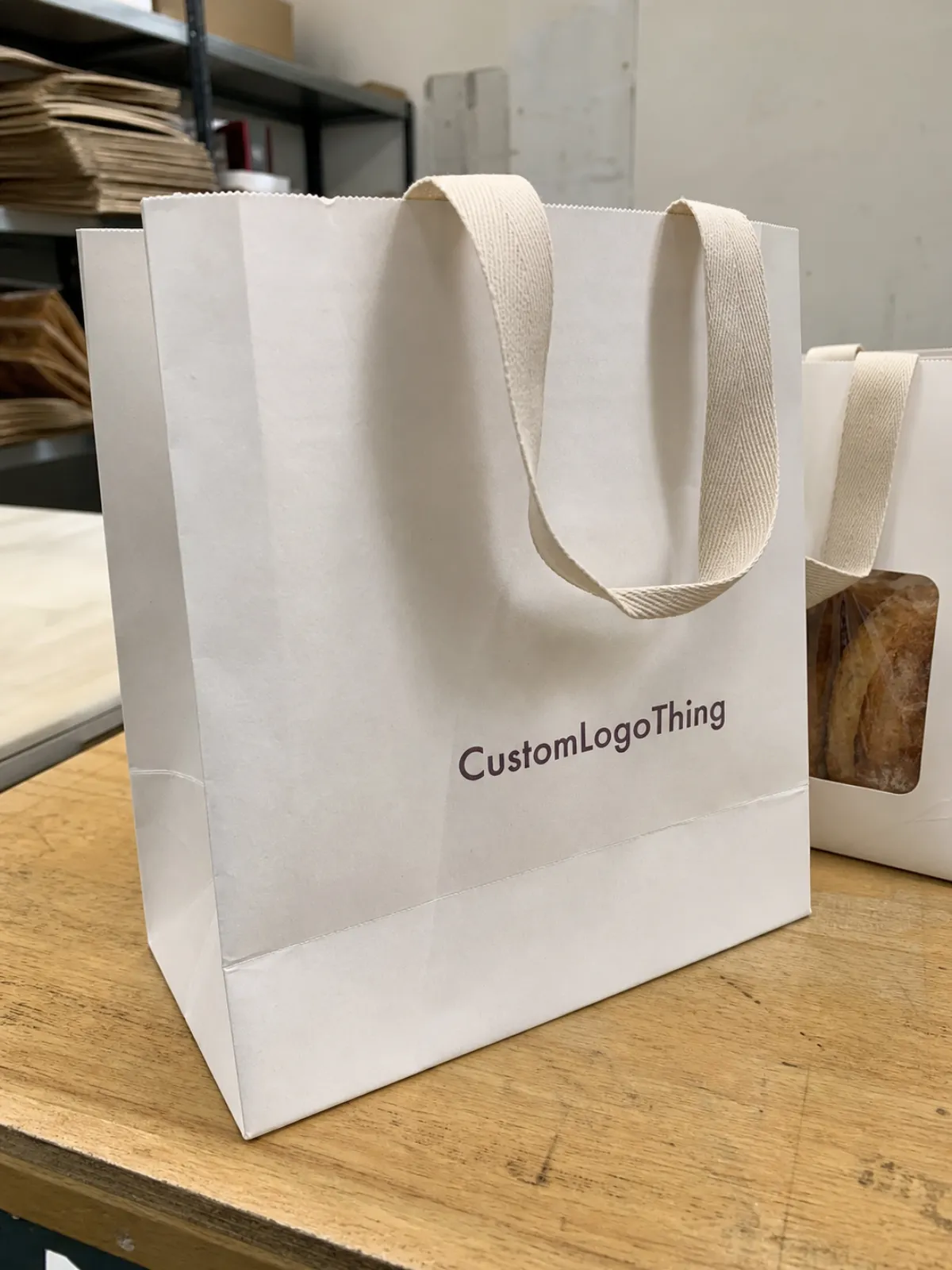
The phrase sounds simple, but the buying decision is not. A bakery bag has to work across at least three different pressures: customer perception, product weight, and staff speed. Ribbon handle bags do well when all three matter at once. The ribbon is easier on the hand than a thin paper twist, and it gives the bag a more polished look, especially for cake counters, pastry gift sets, and seasonal promotions.
Buyers usually start this search after a familiar failure. The handles tear, the bag sags at the base, or the printed surface looks nice on day one and shabby after a week in storage. Once that happens, the packaging stops feeling like an asset. It becomes a replacement cost.
There is a second reason bakeries keep coming back to this style. It supports upsell without changing the product. A loaf of bread in a basic carrier is still a loaf of bread. Put a pastry set, macaron box, or holiday dessert bundle into a structured ribbon handle bag and it reads as a gift purchase. That matters in retail environments where presentation can move the average order value by a noticeable margin.
The key is matching the bag to the order profile. Lightweight pastries do not need the same construction as a dense cake box. If the bag is too soft, it loses shape and the customer notices. If it is oversized, the box slides around and the bag looks empty. Buyers who get the size right usually keep reordering the same spec because the packaging disappears into the workflow instead of fighting it.
A reliable supplier should be able to talk through paper grade, handle attachment, reinforcement, and packing count without drifting into vague marketing language. If the answer is only that the bag “looks premium,” ask for the actual specification. Premium appearance is the result. The spec is the cause.
Bag Construction, Ribbon Details, and Bakery-Ready Finishes
Structure comes first. Before color or print, the buyer should decide how much weight the bag must carry and whether the product will be standing upright or lying flat inside. For light pastry takeaway, a midweight paper bag can work. For cake boxes or mixed dessert sets, the base and side panels need more support. The difference between a decent bag and a troublesome one is often a few millimeters of reinforcement at the bottom.
Paper weight is only part of the story. Board inserts, glued base structure, gusset depth, and fold accuracy all affect whether the bag holds its shape under use. A bag that folds neatly in production but bows when loaded is a weak design, no matter how good the printed artwork looks. Bakery staff do not handle empty bags for long; they handle the loaded version.
Ribbon choice changes the feel more than many buyers expect. Satin reads soft and elegant. Grosgrain has more grip and tends to feel better for heavier takeaway orders because it does not slide in the hand as easily. Width matters too. Narrow ribbon can look refined, but if the bag is carrying weight, a wider ribbon usually distributes pressure better and digs less into the fingers. That difference shows up quickly during a busy service window.
Finish affects both presentation and durability. Matte lamination tends to look calmer and more modern. Gloss gives stronger color contrast, though it can show fingerprints and scuff marks faster. Soft-touch coating can feel upscale, but it adds cost and is not always the best choice for packaging that will be stacked, carried, and restacked all day. Foil stamping works best for seasonal lines, weddings, and premium dessert launches. For everyday bakery use, a clean one-color print often gives the strongest value-per-unit.
Food-adjacent packaging should also be judged by the small irritations people remember. Low-odor inks matter more than most people think. Grease resistance matters near pastry boxes, especially if warm products will sit in the bag for a few minutes before handoff. A surface that scuffs easily will make a first-rate design look tired long before the inventory is gone.
FSC-certified paper is worth asking about if your bakery needs documented sustainability claims. Certification does not make the bag stronger, but it does support sourcing transparency. The framework is explained clearly at fsc.org.
If the handle fails once, the bag stops being branding and starts being a complaint.
Size, Print, and Specification Checklist for Bakery Orders
Size should be driven by the product, not by guesswork. A pastry bag, a loaf carrier, and a cake box bag behave very differently once they are filled. The wrong size creates movement inside the bag, and movement creates damage, bent corners, or a sloppy presentation at the counter. Buyers who rely on a rough estimate often discover the mismatch only after the sample is packed.
The best way to shorten the buying cycle is to send a complete spec the first time. That means dimensions, paper weight, ribbon width, print count, finish, and carton packing details. If the bag must carry a box, include the box dimensions too. A supplier can only quote accurately if the product they are building around is clear.
- Dimensions: width, gusset, and height in millimeters or inches.
- Paper: weight, coating, and whether bottom reinforcement is required.
- Print: one color, two color, full coverage, or inside print.
- Ribbon: width, material, and exact color match requirement.
- Packing: inner pack count, export carton count, and pallet plan if needed.
Artwork placement affects the final look more than many buyers expect. A centered single-panel logo is easier to manage and usually looks cleaner for daily takeaway. Full wrap printing adds more visual energy, but it can also make the bag feel busy if the brand does not need that much movement. Inside print works well for launches and premium gift sets, though it adds a production step and usually lengthens the schedule.
Window cutouts, tag attachments, and custom inserts should be decided before quoting. Adding them later almost always changes cost and lead time. That is not a hidden surcharge problem so much as a production reality. Each extra feature creates one more place for variation.
Sample approval is where buyer discipline pays off. The sample should be tested with the actual bakery box or product inside, not judged while empty on a desk. Check the carry feel, the pull on the handle, the way the base sits, and whether the bag opens cleanly after flat packing. A beautiful bag that struggles once loaded is not the right bag.
Cost, Pricing, MOQ, and Unit Cost Drivers
Wholesale cost is shaped by a handful of variables, and most of them are predictable: paper weight, ribbon type, reinforcement, print complexity, lamination, and order volume. Simple specs cost less because they use fewer materials and less setup time. Add foil, heavier board, or a custom ribbon color, and the price rises for a reason. That is normal manufacturing logic, not a surcharge to be negotiated away.
MOQ works the same way. Smaller runs absorb the setup expense across fewer units, so the unit price climbs. Larger orders usually bring the price down and make factory scheduling easier. For bakery buyers, the right MOQ is the one that fits storage, sales velocity, and design life. There is little value in buying a very large run just because the per-unit number looks attractive if the bags will sit for a year before they are used.
| Spec choice | Typical wholesale impact | Best use |
|---|---|---|
| 157gsm paper, one-color print, satin ribbon | About $0.18-$0.32 per unit at 5,000 pcs before freight | Pastries, cookies, and lighter takeaway |
| 200gsm paper, matte lamination, wider ribbon | About $0.28-$0.48 per unit at 5,000 pcs before freight | Medium cake boxes and premium gift sets |
| 250gsm board, foil stamp, custom ribbon color | About $0.42-$0.80 per unit at 5,000 pcs before freight | Holiday launches and high-end bakery bundles |
The table is only directional. Freight, carton size, packing method, and sampling can move a quote more than people expect. A low-looking unit price can also hide the real cost if the bag is packed in a way that increases shipping volume. Two quotes that appear close on paper may be quite far apart once freight and packing are included.
Buyers should also ask how the price changes across volume tiers. The jump from 3,000 pieces to 10,000 pieces can be useful if the design is stable and storage is manageable. If the bakery changes graphics every quarter, that same jump can create waste. Good pricing is not the lowest number. It is the number that fits the rotation of the business.
Process, Timeline, Lead Time, and Production Steps
The production process should be predictable. A clean order usually moves through spec review, price confirmation, artwork proof, sample approval, production, inspection, packing, and shipping. If the supplier cannot explain that sequence clearly, the order will probably involve avoidable delays later. Packaging is a process business before it is a design business.
Lead time depends on how custom the bag is. A near-stock ribbon handle bag may move in roughly 10-15 business days after proof approval. A custom size with a heavier board, special ribbon color, or foil can land in the 15-25 business day range, sometimes longer if the artwork needs revision or if the print setup is complicated. Shipping sits on top of that. Air freight can protect a launch date, while sea freight is usually better for planned replenishment and lower landed cost.
Most delays are human, not mechanical. Late artwork, unclear sizing, color changes after proofing, and slow sample approval stretch the calendar more than the production line does. Bakery teams often underestimate how long packaging decisions take because they see the bag as a side task. In practice, it sits on the critical path if a promotion is tied to a launch date or holiday rush.
Rush production is possible in some cases, but it should be treated as a compromise, not a solution. A rushed job can still miss on color consistency, handle placement, or base strength. If the packaging has to support a retail campaign for months, a marginal rush order is usually a bad trade. The quicker option is only useful if it still passes the carry test and the print check.
Some buyers ask for compression or drop checks similar to ISTA guidance, especially if the bags will move through distributors or multiple storage points before reaching the bakery. That is a sensible step for orders with long transit chains. The bag needs to survive shipping before it ever reaches the counter.
How to Compare Suppliers Before You Place a Reorder
Samples should be tested the way the bakery will actually use them. Put a loaded cake box into the bag. Pull the handle with a real grip, not a gentle touch. Open and close the bag a few times. Check whether the base stays flat, whether the ribbon twists, and whether the print still looks clean after handling. A bag that survives a desk test is not necessarily a bag that survives a Saturday rush.
Consistency matters more than a flashy first order. Bakery packaging is usually reordered month after month, and the staff handling it may change. If the size drifts, the ribbon shade shifts, or the print position wanders, the whole line starts to look uneven. That is especially obvious in multi-location bakeries where the same packaging needs to appear identical across stores.
Communication quality is part of the product. A good supplier answers with clear tolerances, explains what is included in the quote, and does not hide behind vague language. If the paper weight, handle attachment, or packing count is not stated plainly, the buyer is being asked to fill in the blanks. That is a warning sign, not a minor omission.
Watch for practical red flags:
- no sample process before mass production;
- vague dimensions or “approximate” sizing with no tolerance;
- random carton counts that make inventory planning harder;
- no explanation of color control during print runs;
- price that looks low until freight and packing are added.
Good buyers also check whether the supplier can repeat the same spec six months later. That sounds basic, but it is one of the easiest ways to separate a production partner from a one-off seller. A reliable ribbon handle Paper Bags Wholesale Supplier for bakery buyers should be able to reproduce the same structure, the same ribbon, and the same print result without turning the reorder into a new project.
Why Bakery Buyers Keep Reordering the Same Spec
The honest answer is time. Once a ribbon handle bag works, it saves time everywhere. Staff already know how it opens and stacks. Customers already understand the feel of it. The business stops arguing about packaging each month and starts treating it as a stable part of the sales process. That stability has value even if nobody puts it on a spreadsheet.
There is also a brand reason. A bakery selling cakes, desserts, and seasonal gifts usually does not need a new carrier every time the menu changes. It needs one well-built spec that can carry the brand through busy periods without looking cheap or becoming hard to manage. Reordering the same bag keeps the visual system clean and makes forecasting easier.
Operationally, repeatability pays back in small ways that add up. Fewer damaged bags means fewer substitutions at checkout. A stable carton count makes storage and replenishment simpler. Multi-site operations benefit even more because purchasing can be consolidated instead of chasing one-off packaging decisions that only make sense for one promotion.
That is the practical side of premium packaging. The bag does not need to be dramatic. It needs to be dependable, visually consistent, and hard to misuse.
A ribbon handle paper bag should look good, feel right in the hand, and survive the way bakery staff actually use it. If it does that consistently, the spec is right. If it does not, the next order should not repeat the mistake.
Next Steps: What to Send for a Bakery Quote
Useful quotes start with useful information. Send the bag dimensions, quantity, artwork files, target delivery date, shipping destination, and the type of bakery box or product the bag will carry. That last detail often changes paper weight and base reinforcement more than the logo does. A cookie bag and a cake-box bag do not need the same structure.
Ask for at least two or three pricing tiers. A serious quote should show how the price changes if you move from a lighter paper to a heavier board, or from a simple print to foil or a custom ribbon color. That gives the bakery a real comparison: cost versus presentation versus lead time. Without tiered pricing, every decision gets flattened into a single number that hides the trade-offs.
A practical buying sequence looks like this:
- Request a sample pack or prototype.
- Test loaded carry strength and handle comfort.
- Approve the proof only after color and placement look right.
- Confirm carton packing and reorder timing.
- Plan replenishment before stock gets tight.
The spec sheet should lead the conversation, not the color idea. Pretty packaging is useful. Packaging that fits the product, holds up under real use, and arrives on time is what earns the reorder.
FAQ
What MOQ should I expect from a ribbon handle paper bags wholesale supplier for bakery buyers?
MOQ depends on size, print colors, ribbon type, and whether the bag needs reinforcement. Simple specs usually allow lower minimums than fully custom bags. Special ribbon colors, foil, and heavier board raise the MOQ. Ask for tiered pricing so you can see the jump between a test order and a larger run.
Are ribbon handle paper bags strong enough for cakes and pastry boxes?
Yes, if the bag is built for the load. For heavier cake boxes, ask for stronger paper, a reinforced base, and a wider ribbon handle. Load testing matters more than the claim on the quote sheet. Match the bag to the actual product weight, not the estimate.
What paper weight works best for bakery takeaway bags?
Midweight paper can work for pastries and lighter takeaway. Heavier paper is a better fit for cake and gift orders. The right choice depends on whether the bag carries one box or several items. A sample with the real product inside is the safest way to judge it.
How long does custom production usually take?
Lead time depends on artwork approval, print complexity, and order size. Straightforward custom runs move faster than bags with special finishes or ribbon colors. Delay usually comes from proof revision, not the machine. Build extra time into the schedule if the bags must arrive before a seasonal launch.
What should I prepare before requesting a quote?
Prepare bag dimensions, quantity, artwork files, and the target delivery date. Include product weight and the type of bakery box or item the bag will carry. Share your preferred finish, ribbon color, and carton packing needs. The clearer the brief, the faster the quote and sample process will move.
Why do some bakery buyers stay with the same bag spec for years?
Because a working spec reduces damage, speeds up receiving, and keeps the brand image consistent. Once the bag fits the product and the staff know how to use it, changing it creates more risk than value. Reorders become routine instead of a redesign project.

