Apparel Poly Bags Wholesale Supplier for Hotel Retail Buyers
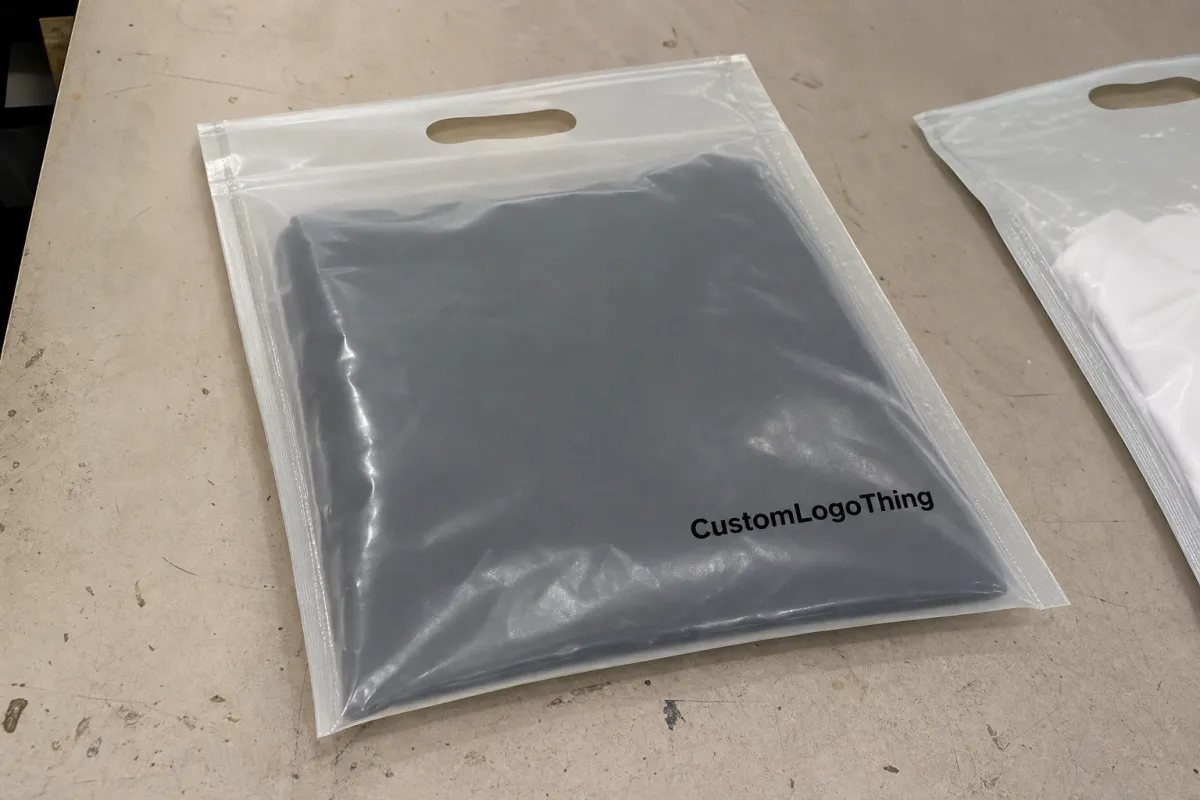
apparel poly Bags Wholesale Supplier for Hotel Retail Buyers is not a glamorous search term, but the packaging choice has real retail weight. The bag shapes perceived value before the garment does. If the film looks cloudy, the seals look rough, or the size is off by half an inch, the whole item reads cheaper. That is a painful way to sabotage a nice folded tee or a robe that should feel premium on the shelf.
Hotel retail is a specific kind of packaging problem. You are dealing with folded tees, robes, kids' apparel, souvenir apparel, and mixed SKUs that move from back-of-house storage to a boutique shelf or gift counter. The bag has to survive handling by staff, housekeeping, and replenishment teams without splitting, wrinkling badly, or turning into a static mess. A generic shipping bag will not carry that load for long.
Most buyers run into the same issues: cloudy film that hides the product, weak seals that open during packing, and inconsistent sizing that forces rework. None of that is exotic. It is just expensive. A reliable Apparel Poly Bags Wholesale supplier for hotel retail buyers should solve those problems with repeat ordering, mixed SKU support, and presentation that fits hotel retail standards instead of warehouse leftovers.
Custom Logo Things handles this category the practical way: standardize the specs, make the first run clean, then keep reorder friction low. If you need broader sourcing support, the Wholesale Programs page is the fastest place to start, and the Custom Packaging Products catalog helps if you are comparing formats across retail lines.
From here, the buyer question is simple: what should you buy, what should it cost, how long will it take, and what needs to be checked before money changes hands? That is the useful part.
Poly Bag Styles for Folded Apparel and Gift Retail
Not every garment wants the same bag. A flat poly bag works well for folded tees, undershirts, and other low-bulk basics. It keeps the profile clean and uses less material. Gusseted bags make more sense for robes, thicker knits, and bundled items because they give the pack room without crushing the fold. Resealable bags are the premium option for products that will be handled more than once, especially gift apparel and souvenir sets.
Clear film is still the default for a reason. It shows color, size, and print at a glance, which matters in visual merchandising and stock checks. Frosted film can look more upscale on some lines, but it also softens product visibility. Printed film gives you brand presence, though too much coverage can hide the merchandise. There is no magic answer here. Pick the format that helps the staff pack fast and helps the customer understand the product in three seconds or less.
Closure choice matters as much as film choice. Open-top bags are simple and fast for packing stations. Adhesive flap bags are common for folded apparel because they keep the item closed without extra hardware. Zip seal bags cost more, but they are useful for premium presentation or repeated handling. Hang-sell options work if the item will be displayed on hooks, not just stacked.
Here is the tradeoff: a cleaner bag improves shelf appeal, but a fussy format slows packing and wastes labor. In hotel retail, labor is not free. Neither is dead stock. Pick the style that fits the product flow first, then the look.
Film Thickness, Dimensions, and Print Specs That Actually Matter
Size the bag from the folded garment, not the flat garment. That sounds obvious until a buyer approves a bag that fits the shirt width but ignores the fold height, cuff bulk, and whether the item needs a header card. The result is a pack that balloons, wrinkles, or looks underfilled. Measure the final packed form, then add enough room for clean insertion and seal performance.
Film thickness is usually discussed in mil or micron ranges. For light retail use, thinner film can work, but it starts looking cheap quickly and tears more easily in repeated handling. For hotel retail, I usually see better results in the 1.5-2.5 mil range for standard folded apparel, with thicker stock reserved for heavier garments or higher-traffic programs. If the bag is part of a premium gift set, a slightly stiffer hand feel often helps more than buyers expect.
Print specs need to be locked early. Decide the number of ink colors, logo placement, and whether you need barcode space, size marking, or a suffocation warning panel. Matte and gloss finishes both have a place; matte tends to look quieter and more upscale, while gloss pushes clarity and contrast. Ask for exact registration tolerances and keep the artwork clean. Busy packaging is how good product gets buried.
For compliance, ask for market-specific labeling and recycled-content options where relevant. If your bags will travel through distribution testing or multi-property handling, standards matter. The general package testing framework from ISTA is useful for thinking about vibration, compression, and transit abuse, even if your order is not a lab project. For claims around waste and recycled content, EPA recycling guidance is a practical reference point.
Also check the boring stuff: clarity, seal strength, odor, and static control. A bag that smells sharp or clings badly will undermine the product inside. Buyers notice that faster than most suppliers admit.
Pricing, MOQ, and Unit Cost Drivers for Wholesale Orders
A good apparel poly bags Wholesale Supplier for Hotel Retail buyers should be able to explain price without hiding behind vague phrases. The main cost drivers are straightforward: bag size, film gauge, print colors, closure style, freight method, and whether the order is stock or custom. Every one of those decisions changes the total.
Typical MOQ bands are not mysterious either. Stock clear bags can start in the low thousands, sometimes lower if the supplier already has the exact size on hand. Custom-sized or custom-printed runs usually land higher because setup, film conversion, and print preparation are spread across the batch. Add multiple properties or multiple SKUs to the same spec, and the economics usually improve.
Unit cost falls fastest when the buyer standardizes sizes and limits color count. That is boring advice, but it works. A single 1-color print on a common size will almost always price better than a 3-color design on a custom gusseted bag. If you are buying for several hotel properties, combining volume into one run can lower the per-unit price and make reorder management less annoying.
| Option | Typical MOQ | Unit Cost Range | Best Use | Notes |
|---|---|---|---|---|
| Stock clear flat bag | 1,000-3,000 pcs | $0.05-$0.09 | Basic folded tees and fast replenishment | Lowest setup burden, limited branding |
| Custom printed flat bag | 3,000-5,000 pcs | $0.10-$0.22 | Branded hotel retail apparel | Price moves with color count and coverage |
| Gusseted or heavier gauge bag | 5,000 pcs+ | $0.14-$0.28 | Robes, knits, bundled gifts | Better presentation, more film usage |
| Resealable premium bag | 5,000 pcs+ | $0.18-$0.35 | Gift apparel and higher-end retail | Extra closure cost, better shelf impression |
Quote accuracy depends on the information you give. The supplier needs dimensions, thickness, quantity, artwork files, delivery location, and the target ship date. If any of those are vague, the quote will be vague too. That is not deception. It is math trying to protect itself.
Watch for hidden costs: plate or setup fees, sample charges, rush fees, overage policy, shortfall policy, and storage if you want staggered releases. The real landed cost is not the sticker price. It is the price plus freight plus all the little surprises that appear after someone says "we can probably do that."
Production Steps, Lead Time, and Artwork Approval
The cleanest jobs follow a predictable path. RFQ first. Then spec confirmation, artwork review, sample or proof approval, production, QC, packing, and shipment. Skip a step and the schedule starts leaking time. Most buyers do not need more speed. They need fewer surprises.
Lead time depends on whether the order is stock, custom size, or custom print. Stock bags can move quickly, sometimes within a week or two if inventory is available. Custom printed or custom-sized work usually needs a longer window, often 12-18 business days after proof approval, and longer if you are asking for multiple colors or special labeling. If a supplier promises magic on a complex job, ask what they are omitting.
Delays usually come from the same places: missing dielines, late artwork changes, color approval loops, and unclear labeling requirements. Hotel retail buyers also tend to forget seasonality. That is a mistake. Occupancy peaks, store resets, and souvenir demand spikes can burn through inventory faster than planned. A packaging order should be timed against the sell-through curve, not against the date the PO was approved.
Standard production is cheaper and gives you more flexibility on minor changes. Rush service can save the season, but it usually costs more and limits what can be adjusted once the job starts. If the order supports a launch, ask for the schedule in writing and check where the risk sits. That is better than hoping the factory "understands the urgency."
For buyers who also need outer shipping formats, it can help to compare apparel bags against Custom Poly Mailers. Different job, same lesson: packaging should match the handling path.
Supplier Proof Points That Matter for Hotel Retail Programs
A serious supplier should be able to show more than a quote. Ask for material specs, a print proof, tolerance ranges, and test photos before you sign off. If the supplier cannot explain the film, the seal, or the finish in plain language, that is a warning sign. Not a mystery. A warning sign.
Back-up support matters because hotel retail is never a one-and-done order. You need repeat ordering, predictable reorders, and the ability to split shipments across properties without turning the purchase order into a scavenger hunt. Good suppliers keep artwork on file, repeat prior specs, and preserve color and size consistency from one run to the next. That consistency saves more money than a tiny quote discount ever will.
Operational checks matter too. How responsive is the warehouse? Are the cartons labeled consistently? Does the sample policy actually send a sample, or does it disappear into a black hole while the buyer waits? Those details sound minor until a property opens a store with no bags on hand.
"I would rather approve a plain sample that prints cleanly than a glossy promise that falls apart on the first reorder."
One more practical point: ask how the supplier handles documentation. For larger programs, some buyers want clear references to material tolerances, repeat-run controls, and package testing. That is where standards like ISTA help frame expectations around handling, even for simple retail packaging.
The right partner reduces risk. Fewer defects. Fewer delays. Less time spent chasing corrections. That is the actual value proposition, not some shiny sales line.
Mistakes That Create Reprints, Delays, and Dead Stock
The most expensive sizing mistake is still the classic one: measuring the flat garment instead of the final folded pack. That creates bags that are too tight, or wastefully large, or both. Buyers usually see the problem only after the first carton arrives. By then the clock is already running.
Ultra-thin film is another trap. It may look fine in a sample sleeve, then tear in packing, wrinkle in storage, and arrive looking tired. Cheap film is only cheap until you count replacements, complaints, and the labor spent fixing bad packs. After that, the math changes quickly.
Overprinting is a subtler problem. More art does not mean better branding. Sometimes it just means the garment is harder to see and the approval cycle takes longer because everyone has an opinion. Clean packaging usually sells better than crowded packaging, especially for folded apparel on a small shelf.
Hotel retail also has its own handling headaches. Humidity can make bags cling or curl. Static builds in dry back rooms. Cartons get stacked, opened, and restacked more times than anyone admits. If the bag spec does not account for that, the presentation will degrade before it reaches the customer.
The prevention logic is simple: tighter specs, better proofs, and a controlled first run reduce waste far more than chasing the absolute lowest price. Use the first order to lock the standard. Then reorder cleanly.
Final Checks Before You Place the Order
Before you ask for the quote, lock down the basics: size, style, film gauge, print count, quantity, ship window, and delivery address. One clean spec sheet is better than twelve messy emails. Add one artwork file and one sample request, and the supplier can answer without guessing what you meant.
Ask for a written production schedule and a reorder plan at the same time. That matters more than most buyers admit, especially if the bags support seasonal hotel retail launches or gift shop resets. You do not want to rediscover the spec from memory three months later while inventory is low.
A practical close-out process helps too:
- Approve the sample before mass production.
- Set a safety stock level for replacement orders.
- Assign one internal owner for future reorders.
- Keep the approved artwork and spec sheet in one folder.
If you want a smoother buying cycle, buy the packaging like a program, not a one-off. Standardize the winning sizes, keep the branding tight, and let the supplier repeat the same spec without starting from zero each time. That is how an Apparel Poly Bags wholesale supplier for hotel retail buyers becomes useful instead of merely available. Send the specs, request the quote, and lock the production slot with an apparel poly bags wholesale supplier for hotel retail buyers.
What is the typical MOQ for apparel poly bags wholesale orders for hotel retail buyers?
Stock sizes can start lower, while custom printed or custom sized bags usually need a higher run. MOQ tends to rise when you add multiple ink colors, special closures, or nonstandard dimensions. The fastest way to lower MOQ is to standardize on one film spec across several SKUs.
How long does production usually take after artwork approval?
Simple stock or one-color runs can move faster than fully custom bags. Custom sizes, multi-color print, or special labeling usually add extra production days. Ask for a written schedule that includes proof approval, production, QC, and ship date so there are no guesses.
Which bag style works best for folded shirts, robes, and gift apparel?
Flat bags usually fit folded tees and light basics. Gusseted or slightly larger bags work better for robes, thicker knits, and bundled gift sets. Resealable styles help when the product is opened and handled multiple times in-store.
What drives unit cost down the fastest on a wholesale quote?
Standardizing size and thickness usually saves more than trying to squeeze the print. Reducing the number of colors and combining volumes across properties can lower price quickly. Freight, setup, and repeat ordering terms matter too, so ask for the full landed cost.
How do I compare suppliers without getting burned by vague specs?
Request the exact film gauge, bag dimensions, closure type, and print method in writing. Ask for samples or photos of prior work plus QC proof, not just a sales promise. Choose the supplier that can explain tradeoffs plainly and still keep the order schedule realistic.
If you are comparing vendors right now, start with the spec sheet, not the sales pitch, and use it to judge the fit of each apparel poly bags wholesale supplier for hotel retail buyers.

