Beer Woven Label Beanies Unit Cost Review for Bulk Orders
A beer Woven Label Beanies unit cost review has to go past the blank hat price. That number is usually the smallest part of the story. The real cost is shaped by the knit body, the woven label construction, the way the label gets sewn on, how the order is packed, and whether freight or duties are sitting inside the landed number.
That is why a beanie that looks cheap on a quote can turn expensive once the spec is locked. A polished woven label can make the product feel retail-ready fast, but only if the body holds shape, the label size is realistic, and the order quantity matches the level of hand labor involved. Buyers who skip those details usually end up paying for them later in the form of slow approvals, rework, or a margin that disappears on arrival.
Beer Woven Label Beanies Unit Cost Review: What Buyers Miss
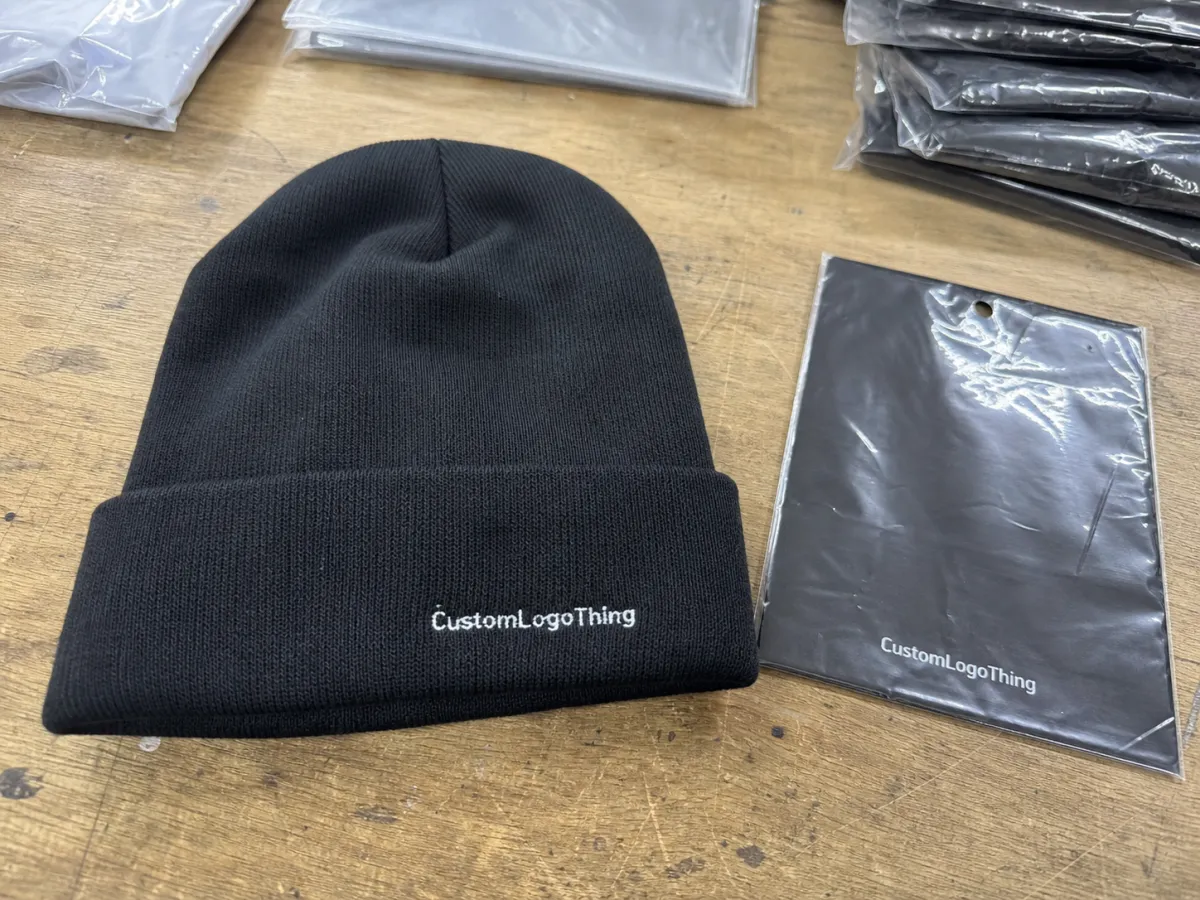
Most buyers start with a sample price and assume the rest is detail work. It is not. The unit cost is built from a stack of small decisions, and none of them are especially dramatic on their own. Put them together and the gap becomes obvious.
The first question is not “How cheap can this beanie get?” It is “What is this beanie for?” Giveaway, staff wear, and retail each need a different level of finish. A giveaway can survive on simpler materials and lighter labeling. A staff piece needs comfort and repeat wear. Retail merch has to survive close inspection under bright store lighting, which is where weak knit density or sloppy label placement starts to look obvious.
That is the practical value of a beer woven label Beanies Unit Cost Review. It shows where the quote is doing real work and where it is just pretending to be simple. If the label art has fine script, tiny text, or a border that needs perfect registration, the price will reflect that. If the order needs a custom fold, a special sew method, or multiple colorways, the number moves again. No mystery there. Just math.
There is also a margin issue. If a brewery wants to retail the beanie at $18, $22, or $28, the build has to support that shelf price. Once setup charges, sewing labor, and freight are added, the easy-looking quote can become a poor fit for the planned retail band. That is usually the point where a smarter buyer asks for alternatives instead of accepting the first number and hoping it improves later. It never does.
- Giveaway: simple body, small label, minimal pack-out.
- Staff wear: softer handfeel, better stretch recovery, durable stitching.
- Retail merch: tighter knit, cleaner label finish, stricter color control.
One more thing gets missed a lot: the unit cost is only useful if the spec is repeatable. If you cannot reorder the same body, the same label size, and the same color reference six months later, the first quote is just a snapshot. For brewery merch, repeatability is the whole point. A good program should make the second order boring. Boring is profitable.
Beanie Body Choices That Affect Handfeel and Shelf Appeal
The body of the beanie drives more of the unit cost than most buyers expect. Acrylic is usually the cheapest route and can work well for large runs, especially if the knit density is decent and the beanie has enough structure to sit cleanly on a display wall. Acrylic-wool blends cost more, but they usually feel warmer in hand and look more premium. That matters when the product has to carry a price tag instead of a freebie sticker.
Gauge and knit style matter too. A tighter rib knit generally supports a cleaner woven label because the cuff surface stays flatter. A looser knit can feel softer at first touch, but the label may sit less cleanly or pull slightly at the edges if the attachment method is heavy. Buyers usually notice this the minute they compare samples side by side.
Cuff style changes both branding space and perceived value. A standard cuff gives you a dependable front panel. A taller cuff creates more room for a larger woven label or a logo with more breathing space. A slouch beanie looks more relaxed, but the label can drift visually because the fabric hangs differently from person to person. That is fine if the goal is lifestyle merch. It is less fine if the logo has to read clearly from across a taproom.
Color is its own problem. Brewery brands often live in deep reds, charcoal, navy, forest green, cream, or amber tones. Those colors need to be matched across the body, label background, and thread details without wandering. If the buyer wants consistency, ask for Pantone references or a firm color target early. “Close enough” sounds cheap until the re-run arrives and the shade is wrong enough to bother everyone in the room.
Material specs should also match the season. A lighter acrylic beanie can move well in shoulder-season merch drops. A heavier blend or thicker rib knit usually sells better in colder months and feels more substantial on the shelf. I would not spec a thin beanie for a winter launch just because it trims twenty cents off the base cost. That is false economy dressed up as savings.
If the brand is building a larger soft-goods line, document the body choice the same way you would document a printed tee or a cap. That makes reorders less messy and keeps the product family consistent. For teams already working across trims and tags, the Custom Labels & Tags category is a useful reference for how finish, attachment, and presentation affect the final feel.
A beanie can be plain in hand and still sell if the cuff holds its shape, the knit is clean, and the woven label sits flat. The finish does more work than people think.
If the order will move through a warehouse instead of straight to a retail shelf, packaging deserves more attention. Carton strength, fold direction, bagging, and count accuracy all affect receiving time. For transit testing and pack-out basics, the ISTA standards are a practical benchmark. They are not glamorous. They do keep cartons from turning into a headache.
Woven Label Placement and Spec Limits That Change the Run
Label placement changes both the look and the labor. Front cuff center is the most common choice because it is easy to read and easy to photograph. That helps in retail, on web product pages, and in the one-second glance customers give a table display before moving on. Side placement looks quieter and sometimes more premium, but it gives up visibility. Hem placement is possible, though rare. Interior branding is useful for care or secondary marks, but it will not carry the product on its own.
Size is where reality starts pushing back. A woven label is not a magic patch that can absorb any logo. Fine script, tiny serif type, and detailed borders need room. If the art is forced into a label that is too small, the weave will blur and the border will look fuzzy. A clean damask-style woven label with a simple border often performs better than a crowded design with too many thin elements. Less heroic, more readable. Better business.
The fold and sew method matter just as much as the art. A straight edge stitch is fast and durable. Hidden tack-down gives a cleaner finish, especially on retail pieces where the buyer will notice every bit of thread. A fold-over attachment can help the label sit neatly on a thick cuff. None of those methods is universally better. They just trade off speed, labor, and finish.
That tradeoff is why quote comparison has to include construction notes. Two beanies can look similar on paper and price very differently because one label is sewn with a cleaner method or because one spec demands more hand alignment. If a quote feels high, ask what the attachment method is before blaming the body cost. The sewing detail is often where the difference hides.
Good proofing saves money. Send the logo file, the exact label text, the target label size, background color, thread color references, and any reference photo that shows the brand look you want to preserve. If the beanie has to match an existing apparel run, include that sample context. Otherwise the proof team is guessing at what “same as before” actually means. And that phrase is always a trap.
Packaging details should be locked before production starts. Fold orientation, polybagging, size stickers, and carton counts all affect receiving flow on the buyer side and labor on the production side. A warehouse team hates surprises. So do production teams. Specify the boring stuff early and nobody has to play detective later.
For brands that care about paper inserts or hang tags, the FSC framework is a sensible reference if the paperboard needs a responsible sourcing claim. It is a small part of the order, but these small parts are usually where the messy questions show up.
Pricing, MOQ, and Unit Cost Breakdown for Custom Beanie Orders
The cleanest way to read a beer woven label Beanies Unit Cost Review is to split the quote into pieces. Blank body, woven label setup, sewing labor, packing, and freight should all be visible somewhere in the estimate. If they are not, the buyer is being asked to approve a number without knowing where the pressure sits.
MOQ changes the whole math. A small run almost always costs more per piece because setup charges are divided across fewer units. That does not make small runs bad. It just means they are better for pilots, event merch, or limited drops. Bigger orders usually open better bulk pricing, but only if the spec is stable and the pack-out stays simple.
| Order Tier | Typical MOQ Fit | Estimated Unit Cost | What Usually Changes |
|---|---|---|---|
| 100-149 pcs | Pilot run, staff issue, event merch | $7.50-$10.50 per unit | Setup charges and sewing labor carry more weight; packing is less efficient |
| 300-499 pcs | Small retail drop | $5.90-$8.20 per unit | Better balance between body cost and finishing; more workable retail margin |
| 500-999 pcs | Core seasonal order | $4.80-$6.90 per unit | Bulk pricing starts to show real value; label and sewing costs are spread out |
| 1,000+ pcs | Multi-location or online retail program | $4.10-$6.10 per unit | Best cost per piece if artwork is locked and the packaging spec stays basic |
Those numbers are useful only if the buyer remembers what is not included. Add-ons like Custom Hang Tags, multiple label sizes, mixed colorways, special fold styles, or rushed timing can move the quote fast. Split the run too far across colors and the price breaks get weaker. That is especially true when each colorway needs its own approval path. One body spec with one label spec is easier on everyone.
Ask for a quote matrix. Side-by-side pricing at 100, 300, 500, and 1,000 pieces is much more useful than one lonely number in an email. It shows the real jump points and makes it easier to decide whether a slightly larger order earns enough savings to justify the extra inventory. Sometimes it does. Sometimes it just creates more hats to store.
Also separate base price from landed price. Freight, duties, and carton handling can turn a nice-looking factory quote into a mediocre total if nobody checks the delivery side. For a merch buyer, the only number that matters is the one that reaches the warehouse, the retail back room, or the event site on time and intact.
Sampling, Production Steps, and Lead Time Expectations
A normal production flow looks simple on paper: artwork review, spec confirmation, proof approval, sample or strike-off if needed, bulk production, inspection, packing, and shipment. The catch is that each step depends on the one before it. If the files are incomplete, the proof slows down. If the label wording changes late, the whole schedule shifts. Speed comes from clarity, not from optimism.
Lead time should be discussed in two parts. First is approval time. Second is production time after approval. Buyers often ask for a total timeline and miss the fact that nothing starts until the proof is signed off. That is why orders with locked artwork move faster than orders still waiting on a tagline or a color decision.
Most delays are avoidable. Missing vector art is a common one. So is a color reference that exists only in someone’s memory. Late changes to the label text can be worse, because woven labels are not a place for improvisation. Once the weaving layout is set, every change costs time. Sometimes money too. Usually both.
Quality checks should not be treated like a nice extra. The label has to sit straight. Stitching has to hold. The cuff should not pucker around the attachment points. Colors need to stay within an acceptable range from the approved proof, and the final count has to match the packing list. If the run is retail-bound, a crooked label is enough to make the product feel unfinished. Customers notice faster than suppliers like to admit.
Rush orders are possible, but only when the body stock, label capacity, and shipping window all line up. They also become expensive fast. If the launch date is fixed, lock the spec early. A rushed order with moving artwork is the worst kind of order: costly, stressful, and still somehow late.
For buyers who need a broader packaging benchmark, the EPA can be a useful reference when recycled cartons, paper inserts, or waste reduction goals are part of the packaging plan. It is a small piece of the process, but it helps keep the order grounded in real material choices rather than vague sustainability language.
How Repeat Orders Stay Clean for Brewery Merch Buyers
Reorders are where a decent program becomes a good one. A buyer who has to rebuild the spec every season is paying for confusion. A buyer who keeps the body, label, placement, and packing notes locked can move faster and spend less time fixing the same mistakes over and over.
That is the main thing brewery merch teams are really buying. Not just hats. Certainty. A well-run order tells you exactly what the body is, how the label is built, where it sits on the cuff, how the product is packed, and what needs to be repeated next time. The quote should read like a production plan, not a guess in a blazer.
Consistency also protects the brand. If the first run had a certain knit density or label scale, the second run should match it unless someone intentionally wants a change. Small differences in cuff height or label border size can make a run feel off even when the logo is technically correct. That is the sort of thing customers cannot always name, but they absolutely notice.
Good communication matters, but only because it prevents avoidable changes. If the brand team knows the beanie is for retail, say so. If it is for a holiday drop, say that too. If the colorway needs to match other brewery apparel, include that reference in the first email. The fewer assumptions in the chain, the less likely the order is to drift.
The best merch order is the one that can be repeated without reopening every decision. That is what a clean spec does.
Next Steps for a Quote-Ready Order and Clean Reorders
The easiest way to get a usable quote is to send the right information up front. Use the logo file, preferred beanie body, label size, color references, quantity split, and delivery destination. If the order is for resale, staff use, or a seasonal giveaway, say that clearly. The use case changes the spec more often than people expect.
Before approval, decide whether the order needs one colorway or several. Multiple colorways are fine, but they should be listed separately so the pricing and MOQ impact are visible. If one shade is carrying the sales volume and the others are just filler, the quote should show that difference instead of flattening it into a vague average.
Ask for pricing at a few quantity points. That helps you see where the savings actually start and whether the extra inventory is worth it. If the margin only improves by a few cents, the larger order may not be worth the storage problem. If it drops the unit cost enough to support a stronger retail price, then the bigger run makes sense. The math should lead the decision, not hope.
- Confirm the beanie body and cuff style.
- Approve the woven label size, text, and placement.
- Lock the quantity split by colorway.
- Document pack-out, bagging, and shipping details.
- Save the approved proof for the next reorder.
That final step matters more than it sounds. Keeping the approved proof, artwork, and packing notes together makes the next run faster and cleaner. It also protects the product if someone new handles the reorder and tries to “simplify” the spec. Simplify too much and you usually end up with a different product wearing the same logo.
For brewery merch, that is the real goal: a beanie that looks good, sells through, and can be reordered without rebuilding the whole spec from zero. Keep the beer woven label beanies Unit Cost Review focused on the full build, and the price starts making a lot more sense.
What changes beer woven label beanies unit cost the most?
The biggest drivers are the beanie body, the label complexity, and how much manual sewing or packing the order needs. Quantity matters because setup charges are spread across more pieces as the run gets larger. Freight and rush timing can move the landed cost too.
What MOQ is typical for custom woven label beanies?
MOQ usually depends on the body style and whether the label is a standard setup or a custom-spec build. Smaller runs are possible, but they usually carry a higher cost per piece because setup charges are not diluted. If you need multiple colorways, ask whether they can be combined under one production order.
How long does production usually take after approval?
Lead time starts after the proof is approved and all artwork details are confirmed. The schedule depends on stock availability, label capacity, and how many finishing steps the beanies require. Rush timing only works when the spec is locked early and shipping has a real buffer.
Can I order multiple colorways in one beer beanie run?
Often yes, but the answer depends on whether the same label spec is used across each colorway. Each added color can increase coordination time and may affect the unit price if the run is split too far. The cleanest approach is one body spec with clearly separated color quantities on the quote request.
What files do you need for a quote on woven label beanies?
Send a vector logo file when possible, plus any wording that must appear on the label. Include quantity breakdowns, desired beanie color, label size ideas, and any Pantone or brand color references. Add the delivery location and target in-hand date so pricing and timing can be built around the real order.


