Trucker caps unit cost breakdown for Outdoor Brand Promotions is where many buyers get surprised by the final number. The blank hat is usually not the expensive part. Decoration, setup, freight, carton handling, and small packaging choices move the landed cost faster than most people expect. If you are buying for trail crews, sponsor tables, demo days, or giveaways that need real wear, the goal is straightforward: get a cap people will keep without paying retail logic for a promo run.
Why Trucker Caps Stretch Outdoor Promo Budgets Further
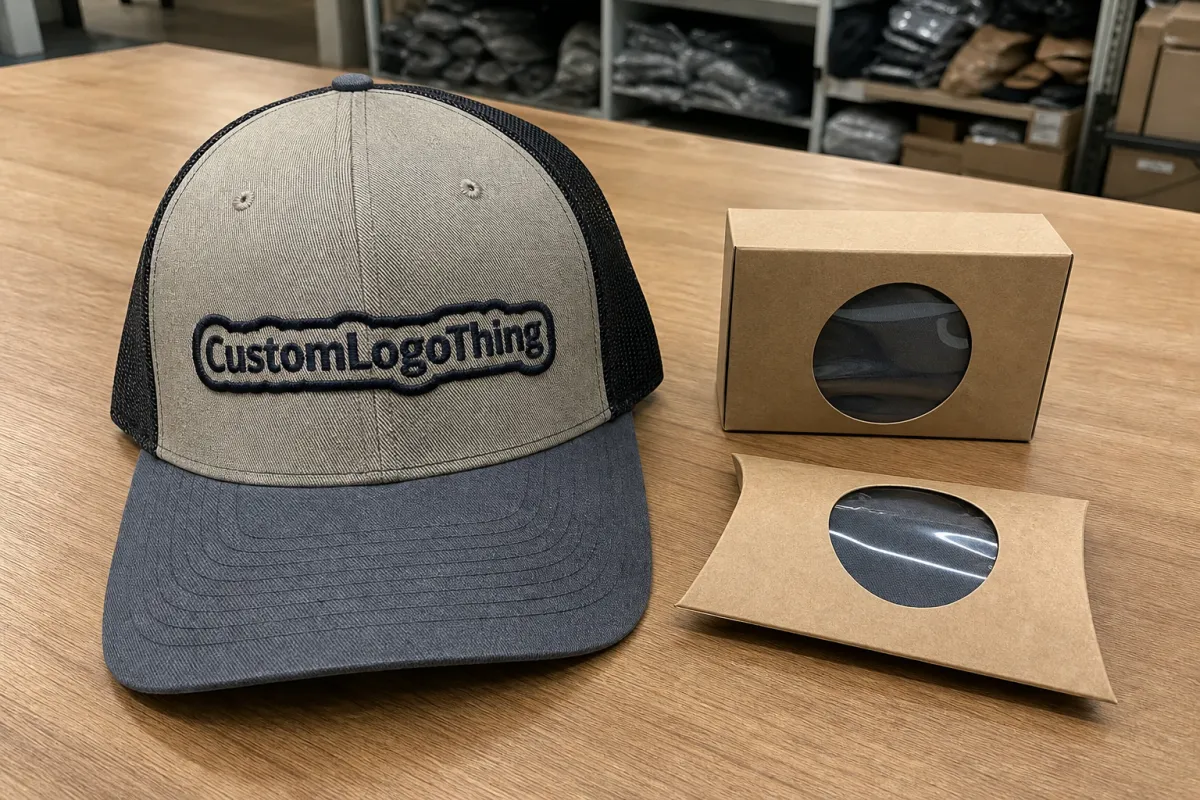
Outdoor brands like trucker caps because they do a lot with a small amount of material. A structured front, mesh back, adjustable closure, and broad imprint area make them easy to hand out and easy to read from a distance. That matters when a logo needs to work at a trailhead, a race finish line, or a crowded festival booth.
The reason they stretch a budget further is that the spend is split across several line items. A low-cost blank cap can look harmless on paper, but the final unit cost changes once you add digitizing, embroidery stitches, patch setup, bagging, and freight. A quote that only shows the hat price is incomplete. For a real trucker caps Unit Cost Breakdown for outdoor brand promotions, the landed number is the only number that matters.
There is also a practical brand effect. A cap that fits well and holds a clean logo gives you better visibility without forcing the buyer into retail-level spend. A crooked patch, loose stitching, or flimsy crown does the opposite. Outdoor buyers notice that quickly because the audience is close to the product, and these caps are often worn immediately at the event.
Most savings come from three decisions made early: cap construction, decoration method, and quantity tier. Choose the wrong combination and every quote will feel inconsistent. Choose the right one and pricing becomes much easier to control, especially on repeat programs where the same logo and body style come back season after season.
What Buyers Get in a Custom Trucker Cap Build
A standard custom trucker cap usually includes a front panel, mesh back, visor, sweatband, closure, and some kind of interior label or taping. None of those parts is complicated, but each one can change comfort, appearance, or price.
Front panels are the first material choice that affects both look and cost. Foam fronts are light and inexpensive, which makes them useful for high-volume giveaways. Cotton twill fronts feel more substantial and usually give embroidery a cleaner base. Poly-cotton blends sit in the middle and are often the best balance for outdoor promotions because they hold shape better than foam without pushing the order into a premium price band.
Closures also matter more than buyers expect. Snapbacks are common because they are fast to produce and fit a wide range of head sizes. Hook-and-loop closures are practical for field crews, but they can look less polished. Metal buckles or fabric strap closures raise the perceived quality and sometimes the labor cost, so they make more sense when the cap is part of a sponsor kit or staff uniform than when it is a simple handout.
Decoration is where the logo starts to drive the quote. Embroidery works well for bold marks, short copy, and logos that need a durable finish. Woven patches handle fine detail better and give a sharper edge on structured caps. Printed patches can preserve gradients or small type, but they depend more on the factory's print process and ink coverage. Heat transfer can be economical on smaller runs, though it is not the first choice for caps that will see a lot of sun, sweat, and abrasion.
Buyers also miss the small details that change the quote:
- Stitch color changes can add handling time if the logo uses several thread colors.
- Logo placement affects setup; front-center is usually cheaper than side or back placement.
- Label format matters if you want woven labels, tear-away labels, or no label at all.
- Packing format changes labor when you need individual polybags, size stickers, or retail hang tags.
A clear spec sheet is usually the cheapest spec sheet to quote. Vague requests create quote spread. Specific requests create useful numbers. That is not a sales line, just how production pricing works when a factory has to account for materials, labor, and handling before anything ships.
Specs That Change Fit, Durability, and Decoration Cost
Some specs change the way the cap wears. Others change how clean the logo looks. A few do both, which is where buyers can spend more wisely or waste money on details nobody notices.
Structured front versus unstructured front is the first real decision. Structured caps hold shape better and usually give embroidery or patches a flatter surface. Unstructured caps feel softer and more casual, but the logo can look less precise if the crown collapses. For outdoor promotions, structured is usually the safer choice unless the brand wants a relaxed, worn-in look.
Profile height also affects fit and presentation. Mid-profile caps are the most versatile for mixed audiences because they sit comfortably on a wide range of head shapes and photograph well. High-profile caps create a louder, more athletic look. Low-profile caps can feel more fashion-forward, but they are less universal. If the order is going to volunteers, trail staff, and customers at the same event, mid-profile usually gives the cleanest result.
Mesh density sounds minor, but it changes both durability and appearance. Tighter mesh tends to look cleaner and more finished. Looser mesh may reduce cost, but it can look flimsy under close inspection. If the cap is expected to be worn again and again, a denser mesh is usually worth the small jump in price.
Decoration cost also rises when the front panel is too soft or too thin for the artwork. A smooth, stable panel lets embroidery sit flatter and reduces the risk of puckering. It can also help a patch stay centered and intentional. Thin fronts are cheaper, but they often need extra backing or slower handling to keep the logo from distorting. That is how a low-cost blank can become a more expensive finished item.
Closure hardware and sweatband construction affect comfort in ways buyers feel after the first long event day. A soft sweatband matters more than it sounds. So does a closure that sits cleanly against the back of the cap. Cheap hardware can create a perception problem even when the logo is good. The cap may have a decent front, but a flimsy closure tells the buyer the product was squeezed too hard.
There is no universal best spec. Lower-cost caps work fine for broad giveaways, while stronger builds make more sense for launches, sponsor packs, and recurring outdoor programs. The right choice depends on how long the cap needs to stay in circulation and how much wear it will take before the logo starts to age.
One small but useful detail: if your promo uses paper inserts, carton sleeves, or hang tags, check whether the paper stock is FSC certified. That does not change the cap itself, but it can help the whole package feel deliberate instead of improvised.
Trucker Caps Unit Cost Breakdown for Outdoor Brand Promotions
This is the part buyers usually want first, so here it is in plain terms. A proper trucker caps Unit Cost Breakdown for outdoor brand promotions should separate the blank cap, decoration, setup, packaging, freight, and any special handling. If a quote only gives one number, ask for the components. Otherwise you are comparing guesses.
For a standard six-panel trucker cap with one logo location, these are realistic landed ranges. They are typical, not fixed, because fabric choice, stitch count, patch size, and ship-to distance all move the final number.
| Quantity band | Embroidery landed unit | Patch landed unit | Print or heat transfer landed unit | MOQ note |
|---|---|---|---|---|
| 100-199 pcs | $6.50-$10.50 | $5.75-$9.50 | $5.25-$8.75 | Lowest tier, highest setup pressure |
| 300-499 pcs | $4.60-$7.40 | $4.20-$6.90 | $3.90-$6.40 | Best balance for most outdoor promos |
| 1,000+ pcs | $3.10-$5.20 | $2.95-$4.90 | $2.80-$4.70 | Better efficiency, fewer surprises |
Those ranges usually include the blank cap, decoration, and basic packing. They may not include split shipping, rush processing, or retail-ready extras. That is why a quote that looks cheap at first can drift upward after you add the real requirements. The cheapest quote is not always the lowest landed cost, especially when freight and packing are still open questions.
As a rough planning guide, the blank body on a common trucker cap might sit around $1.20-$3.00 depending on material and construction. Standard embroidery setup can run $30-$95 per design, sometimes more if the logo is dense or requires fine digitizing. Printed or patched decoration may shift the setup line differently, but the same principle holds: the art prep and production setup often matter as much as the cap itself.
MOQ logic is simple. Factories price around production efficiency. A lower minimum often means one of three things: a higher unit cost, fewer color choices, or a narrower set of decoration methods. If you need a small event run, that is fine. Just accept that the per-cap number will not look like a 1,000-piece reorder. The factory still has to set up machines, prep art, and pack cartons.
For quote reading, ask five direct questions:
- What is included in the unit price?
- What is the setup fee for decoration?
- Are sample or proof costs separate?
- Does the price include carton packing and internal labeling?
- What changes if we move to the next price break?
That last question matters more than people think. Sometimes moving from 200 to 300 pieces cuts the price enough to justify extra inventory. Sometimes it barely moves the number. Ask both quantities and let the math decide.
"Give me the logo file, target quantity, and delivery ZIP before you ask for a price. Anything less, and the quote is just a guess with a nice font."
For shipping-heavy programs, it also helps to ask how cartons are packed for transit. Caps are light, so freight is often billed on dimensional weight instead of actual weight. If the boxes are oversized or overpacked, shipping costs climb fast. When the order is moving through parcel or multi-stop freight, carton protection should match the route, not just the factory's default packing habit.
Process, Timeline, and Lead Time From Artwork to Delivery
Most delays are boring. They come from slow approvals, fuzzy art files, or changing the logo after the proof is already moving. The cleanest schedule is the one with the fewest revisions.
The usual process looks like this:
- Quote confirmation with cap style, decoration method, quantity, and ship-to details.
- Artwork proof showing logo placement, thread or print colors, and cap color.
- Sample or mockup approval if the run needs a physical check.
- Production for decorating and assembly.
- Quality check to catch loose stitching, color errors, or alignment issues.
- Packing and shipment to the final address or event site.
Real timing depends on decoration method and order size. A simple embroidered run can move from proof approval to shipment in about 10-15 business days if the factory is not overloaded. Custom patches, mixed colors, or special labels can push that to 15-20 business days. Add freight time on top of that, usually 3-7 business days domestically depending on location.
Rush jobs are possible, but they usually cost more and leave less room for correction. If the caps are for a launch date, trade show, or trail activation, giving the order enough time often matters more than choosing the fastest decoration method. Speed hides mistakes until the box arrives.
Here are the biggest timeline risks:
- Late art files that need cleanup before proofing.
- Color changes after approval, which restart part of the process.
- Complex logos that need digitizing, patch grading, or print correction.
- Peak shipping periods when carrier space gets tight.
A practical rule is to simplify the spec if the event date is close. Keep the design stable, avoid extra color changes, and choose the decoration method that can move without much back-and-forth. If the schedule is comfortable, choose the better finish instead of paying extra just to save a few days.
Quality control matters at the end of the line. The usual checks are not glamorous, but they catch the problems that ruin a promo order: uneven crown symmetry, crooked patch placement, broken thread, poor color match, loose trims, and weak closure hardware. If those items are checked before shipment, buyers spend far less time sorting problems at the receiving dock.
How to Cut Freight and Packout Waste on Event Orders
Freight is the quiet tax on promo orders. It rarely looks dramatic on the quote, but once you start sending hats to stores, crews, or event sites, the landed number climbs fast. The cap price stays put while shipping eats the margin.
The easiest savings move is consolidation. One destination is cheaper than three. A single delivery window is cheaper than split shipments. Standard carton counts are cheaper than custom packout instructions nobody asked for. That sounds obvious, but it still gets missed when the order is moving quickly.
Polybags are another place where buyers overspend. If the caps are going directly to an event table or a staff issue, individual bags are often unnecessary. If they are going retail-side or into mixed inventory, then bagging may be worth it. The point is to use protection where it adds value, not because a spec sheet picked it up years ago and nobody questioned it.
Mixed-color orders can also raise labor time. Every additional color adds sorting, packing checks, and a higher chance of error. If the promotion can live with one or two core colors, the total unit cost usually improves. That is especially true for recurring outdoor programs where brand consistency matters more than novelty.
Use this quick logistics checklist before approving a quote:
- Confirm one ship-to address whenever possible.
- Ask for standard carton counts and carton dimensions.
- Remove unnecessary retail boxing unless the end use truly needs it.
- Check whether split-color or split-size packs add labor.
- Verify whether the freight quote includes liftgate, appointment, or residential delivery fees.
That last point causes a lot of frustration. A quote that looks low can jump after the carrier adds accessorial charges. If the shipment is going to a warehouse, great. If it is going to a trailhead office, event venue, or small storefront, say so early. Freight companies do not reward surprises.
When you want to reduce packout waste without cheapening the product, ask for cleaner cartons, fewer inner bags, and simple labels. If you need paper inserts or branded cards, use them with intent. Not every promo cap needs a full retail presentation. A sharp, well-packed order often creates a better receiving experience than an overbuilt one.
Why Repeat Buyers Stick With Our Cap Program
Repeat buyers care about consistency. Not hype. Consistency. They want the same cap body, the same logo placement, the same decoration quality, and the same delivery window every time. That is what keeps a promotion from turning into a headache.
Outdoor brands especially need predictability because they rarely order caps for one reason only. A launch run turns into a staff issue. A staff issue turns into a sponsor pack. A sponsor pack turns into a reorder after the event calendar fills up. When the spec is controlled, those reorder cycles get faster and cheaper.
Good supplier support is boring in the best way. Clear proofs. Honest pricing ranges. Realistic delivery windows. Fast answers when a logo file is a mess. Advice when a lower-cost spec would damage the look of the cap. That is more useful than a flashy promise that falls apart after the deposit clears.
For teams protecting brand identity, the cap has to do two jobs at once. It should be affordable enough for the promotion, and good enough that people wear it after the event. That is where the right spec protects customer perception and extends the useful life of the order. A cheap cap that never leaves the drawer is not cheap. It is waste.
Once the body, patch size, and packing rules are locked, a reorder is mostly a repeatable production run instead of a new project. Less friction usually means better pricing and fewer mistakes. The buyer gets a steadier result, and the production team spends less time rediscovering the same details.
"The strongest promo cap is the one people keep wearing. If it stays on heads, the branding keeps working."
What To Send for an Accurate Quote
If you want a useful quote, send the basics up front. That saves time and gives you a real trucker caps Unit Cost Breakdown for outdoor brand promotions instead of a placeholder number. The faster the brief is tightened, the faster the order gets to a spec that matches the campaign.
Send these five items first:
- Your logo file, ideally vector.
- Target quantity and the next price break you want to see.
- Preferred cap color and decoration method.
- Delivery date or event window.
- Ship-to ZIP code or full destination list.
Then ask for two quotes: one at your target quantity and one at the next tier up. That shows whether the break is real or just decorative. If the larger run saves enough per unit, extra inventory may make sense. If it barely moves the number, stay lean.
Before payment, confirm sample timing, proof approval deadline, and freight method. That prevents the schedule from sliding after the order is already in motion. A lot of delays start with a buyer assuming the factory can adjust things later. Usually, later costs more.
The same cap can land very different results depending on decoration, packing, and freight choices. That is the reason the unit-cost breakdown deserves attention before the order is placed, not after the boxes are already on the way.
FAQ
What drives the trucker cap unit cost most for outdoor brand promotions?
Decoration method usually has the biggest impact, followed by quantity and shipping distance. Blank cap style matters too, but setup fees and labor explain more of the price jump than the hat body itself.
How many trucker caps do I need to hit a better price break?
That depends on the factory, but common break points are around 100, 300, and 1,000 pieces. Ask for two quantities on every quote so you can see whether the next tier actually saves money.
Which decoration method is cheapest for trucker cap promotions?
A simple print or patch setup is often the lowest-cost option, but the best choice depends on logo detail and durability needs. Embroidery can cost more up front, yet it often looks stronger on structured caps and holds up well outdoors.
What is a realistic lead time for custom trucker caps?
Lead time changes with artwork approval speed, decoration method, and order size. A simple run may ship in about 10-15 business days after proof approval, while custom patches or busy-season orders usually need more time.
Can I lower the unit cost without making the caps look cheap?
Yes. Keep the cap spec simple, limit color changes, choose a decoration method that fits the logo, and consolidate shipping. The trick is cutting waste, not cutting quality in the wrong place.

