Dad Hats Unit Cost Breakdown for Small Business Giveaways
The dad Hats Unit Cost Breakdown for small business giveaways is usually friendlier than buyers expect, especially if the cap stays simple, the logo stays clean, and the pack-out avoids unnecessary extras. A plain-looking dad hat can feel more premium than a pile of small trinkets because it is wearable, easy to size, and easy for recipients to understand at a glance. For a staff thank-you box, a client mailer, or an event handout, one well-made cap often does the job of several lower-value items, and it does it without looking cluttered.
What usually surprises buyers is that the savings do not come only from the blank cap itself. They come from fewer production variables: one decoration location, standard thread colors, straightforward artwork, and packaging that does not force a custom insert or individual embellishment. Once those pieces are under control, the quote becomes much easier to read, and the real cost drivers stand out fast.
That is why it helps to think in terms of total landed cost, not just the blank price. Decoration, setup charges, packaging, freight, and low-quantity surcharges all change the final number. If the order is for small business giveaways, the smartest move is usually to simplify the cap body and spend attention on fit, logo placement, and delivery timing.
Why simple dad hats keep giveaway budgets under control
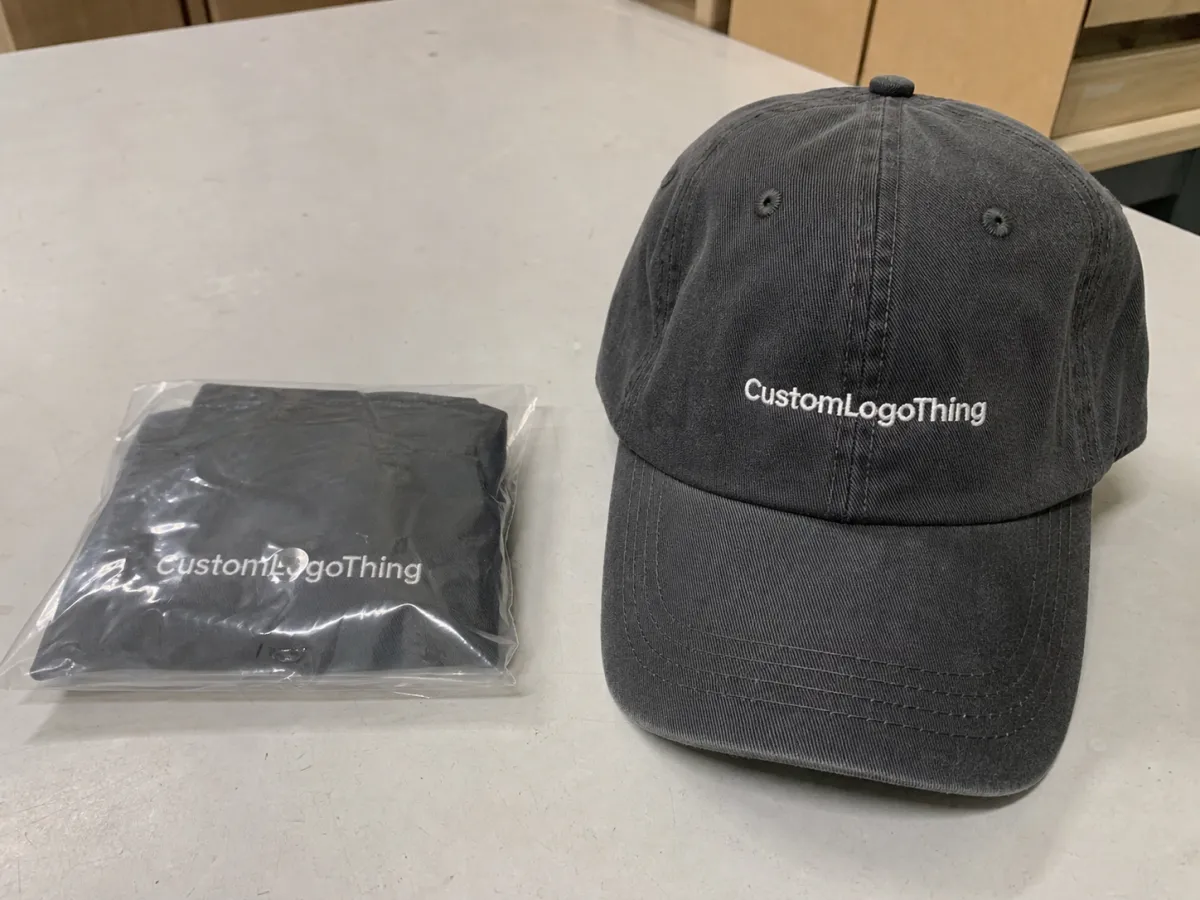
Simple dad hats work well because the form is already familiar. The soft, low-profile crown, curved brim, and adjustable closure make the product easy to wear across a broad group, which matters for giveaways more than it does for fashion drops. A buyer does not need a complicated size chart or a high-risk fit decision. That cuts down on returns, leftovers, and awkward inventory questions after the event.
Here is the practical upside: a basic cap can carry a brand message without asking the recipient to learn anything new. The perceived value comes from the utility and the presentation, not from heavy construction. In a staff appreciation pack, for example, a clean navy dad hat with one embroidery location can feel more thoughtful than a mix of pens, stress balls, and sticky notes that all compete for attention. The same cap can work for a thank-you campaign, a neighborhood event, or a trade show handout.
The budget control also comes from the production path. One cap body, one logo location, one packaging style, one freight method. Every extra choice adds a little friction, and small orders feel that friction more sharply because fixed costs are spread across fewer units. That is why the unit cost on a 50-piece run may look high even when the blank is modest.
“Keep the cap clean, keep the logo readable, and spend your money where people actually notice it. That is the easiest way to make a giveaway feel more valuable without forcing the budget higher.”
From a packaging buyer's point of view, the smartest comparison is not blank hat versus blank hat. It is total value versus total cost. If one option ships in a plain polybag and another ships in a folding carton with a paper insert, the second may look better on arrival, but the difference should be intentional, not accidental. For transit-sensitive mailers, I also like checking distribution guidance from ISTA so the carton and pack-out make sense before production starts.
Material, crown, and closure choices that shape the cap
Most quotes start with the cap body, and that is where buyers should slow down for a minute. Cotton twill is the familiar workhorse: durable, clean-looking, and usually predictable on embroidery. Washed cotton has a softer hand and a more relaxed feel, which can make the giveaway seem less corporate and more casual. Brushed twill adds a slightly smoother surface, while blended fabrics can improve color consistency and sometimes reduce wrinkling, depending on the construction.
Structured and unstructured crowns matter just as much. A structured front panel holds shape better and gives the logo a flatter, more stable field. An unstructured crown feels softer and more broken-in, which can be appealing for lifestyle brands but can also make front decoration sit differently. Low-profile dad hats are often the safest giveaway choice because they wear naturally on more heads. Mid-profile shapes can work too, but they look a little more substantial and may read as a different product class.
Brim shape affects both comfort and look. A curved brim is the classic dad-hat profile and usually keeps the cap approachable. A flatter brim leans sharper and more modern, but it changes the overall mood of the giveaway. For a small business order, the goal is usually to make the cap wearable on day one, not to make it behave like a fashion statement that only a narrow audience likes.
Closure style is another real cost and usability lever. Self-fabric straps with a metal buckle often feel more refined than a basic plastic snap, while hook-and-loop closures can be practical for broad size flexibility. Snapbacks are simple to produce and easy to adjust, but they do not always match the softer dad-hat look. The best choice depends on the recipient group, the brand voice, and how much the buyer wants the closure to contribute to the final impression.
Small details matter too. Matching thread, clean eyelets, reinforced stitching at stress points, and a tidy sweatband finish can lift perceived quality without forcing a major cost jump. Those details are the difference between a cap that looks sourced for the event and a cap that looks selected with care.
Fit, decoration, and artwork specs buyers should lock in
Before anyone asks for pricing, a buyer should have the core specs written down. Panel count, crown height, brim curve, closure type, logo placement, and decoration method all shape the quote. If those details are vague, setup gets slower and the odds of revision go up. That is true whether the order is 50 units or 500.
Artwork readiness matters more than many teams expect. A vector logo gives the decorator clean edges to work with, and that usually reduces setup time. If the logo has tiny text, thin lines, or layered effects, embroidery may require simplification before stitching starts. Patchwork can preserve more detail, but it usually adds additional labor and often extra tooling fees for the patch itself. Print can work well on some cap styles, though it is not always the best choice for textured fabrics or small front panels.
One logo location usually keeps the quote tighter than two or three placements. Front embroidery is often the cleanest route for giveaway hats because it balances cost and visibility. A side hit or back hit can be useful, but each added location increases labor and the chance of back-and-forth during proofing. If the goal is a practical cap that people wear outside the event, one well-placed logo is usually enough.
Fit approval still matters, even for a giveaway item. Adjustable caps help reduce waste because they cover a wider range of wearers, and that means fewer leftovers sitting in a storage room after the campaign is done. If the audience includes employees, customers, and event guests, a one-size-adjustable dad hat is usually the safest production choice.
For packaging made from paperboard or inserts, I also look for sourcing that aligns with FSC standards, especially if the buyer wants a cleaner material story. The point is not to overbuild the package; it is to keep the presentation tidy and the supply chain traceable where it counts. For reference, FSC explains chain-of-custody and responsible sourcing clearly at fsc.org.
Dad hats unit cost breakdown for small business giveaways
The easiest way to read a quote is to break it into parts. The blank cap price is only the starting point. After that come decoration setup, stitch or print labor, packaging, freight, and any overage tied to low quantities or custom details. If the supplier is transparent, you should be able to see each piece instead of guessing where the final number came from.
For small business giveaways, bulk pricing often changes the picture more than anything else. A small run absorbs fixed costs poorly, so the cost per piece may look high even when the blank cap itself is inexpensive. Once the quantity grows, the same setup charge gets spread across more hats, and the quote usually drops into a more comfortable band. That is why MOQ matters so much.
In practical terms, a 50-piece order might be quoted with a higher per-unit cost because the shop still has to handle digitizing, proofing, setup, and admin on a short run. A 250-piece order often looks cleaner because those fixed costs are diluted. Specialty colors, custom labels, multiple placements, or trim upgrades can push the number back up, so the buyer should ask which parts are optional and which are baked into the decoration method.
The table below shows a realistic comparison framework. These are typical planning ranges, not fixed prices, because artwork complexity, fabric choice, and freight distance will change the result.
| Run Size | Blank Cap | Decoration | Packaging | Freight Share | Estimated Cost Per Piece |
|---|---|---|---|---|---|
| 50 units | $2.25-$3.75 | $1.75-$3.50 | $0.20-$0.60 | $0.60-$1.40 | $5.25-$9.25 |
| 250 units | $1.85-$3.10 | $1.10-$2.25 | $0.15-$0.45 | $0.30-$0.85 | $3.40-$6.65 |
| 500 units | $1.65-$2.85 | $0.95-$1.95 | $0.12-$0.35 | $0.20-$0.60 | $2.92-$5.75 |
Two things stand out in that comparison. First, setup charges and tooling fees hurt small runs more than large ones. Second, freight can quietly distort the quote if the hats are shipping cross-country or need rush delivery. A low blank price does not help much if the decoration is complicated or the shipping method is poorly matched to the timeline.
For a buyer building a dad hats Unit Cost Breakdown for small business giveaways, the best question is not “What is the cheapest hat?” It is “Which combination of cap body, decoration, and pack-out gives me the best value for this quantity?” That framing keeps the order practical and reduces surprises during approval.
Production process and turnaround planning
Most delays happen before production starts. The usual sequence is request, artwork review, digital proof, approval, production, quality check, packing, and shipment. If the buyer knows that order of operations, the schedule becomes easier to manage, and the internal team can stop treating every delay as a factory issue.
Proofing deserves its own time window. A strong proof catches logo size problems, thread color mismatches, placement issues, and packaging questions before the line starts. Once production starts, changes get expensive fast. That is especially true for embroidered dad hats, where stitch counts and small shape adjustments can change the look of the whole cap.
Seasonal demand matters too. When event calendars fill up, lead times stretch even on straightforward orders. A simple cap may still move quickly, but the queue behind it can slow things down. Custom trims, specialty closures, and requests for a specific blank color can all add time because they narrow the sourcing options. Last-minute changes after approval usually create the biggest risk, because they can force a proof update or push the order back into scheduling.
- Proof time: often 1-3 business days if artwork is clean and the spec sheet is complete.
- Production time: often 7-15 business days after approval, depending on quantity and decoration method.
- Shipping time: varies by destination and method, so parcel and freight should be planned separately.
Rush orders can work, but only when the specs are simple and the buyer is flexible. If the project needs custom patches, unusual packaging, or multiple logo locations, a rush request can become expensive without improving the result. A better move is to build margin into the schedule and treat the proof as a real approval step, not a formality.
How to compare suppliers without paying for avoidable extras
The lowest quote is not always the best value. What matters is whether the supplier explains the quote clearly, keeps the run consistent, and tells you early when a spec change affects price. Strong communication is worth money because it prevents rework, missed expectations, and unnecessary delays.
Start by comparing the proof quality. Does the supplier show the logo at the right scale? Do they call out thread colors, patch construction, or blank substitutions clearly? Are setup charges itemized, or do they appear only after approval? A clean quote should tell you what is included and what is not. If those lines are blurry, the final invoice can drift quickly.
Also watch for hidden cost traps. Surprise digitizing charges, unnecessary artwork edits, swapped blank colors, and unclear freight terms all add friction. If a supplier says a fabric or trim is unavailable, they should explain the substitute before billing it. Buyers should not have to reverse-engineer the order after approval.
At Custom Logo Things, the goal is to keep the cap simple where simplicity saves money and upgrade only where the brand presentation truly benefits. That means practical quoting, repeatable decoration, and straight answers about MOQ, production timing, and packaging. For many small businesses, that is the difference between a giveaway that feels planned and one that feels improvised.
“A good supplier does not just sell hats. A good supplier helps you avoid paying for things your recipients will never notice.”
If the order is tied to a fixed event date, ask for the quote in a format that shows the full path from proof to delivery. That makes it easier to compare options side by side and to see whether the added features actually improve the cap or just raise the unit cost.
Next steps to quote, sample, and schedule the giveaway
Before you send a request, line up the basics: quantity, cap style, decoration method, color target, and the date the hats need to arrive on site. The clearer the starting point, the cleaner the quote. If the design is new, send artwork early and ask for a digital proof right away so the team can spot any issues before they touch the schedule.
If the giveaway is high visibility, request a sample or a pre-production mockup. That is especially useful when the logo is small, the thread colors are close together, or the cap body has a texture that could change how the embroidery reads. A sample costs more upfront, but it can protect the order from expensive disappointment.
It also helps to compare at least one low-complexity version against one upgraded version. Maybe one uses standard embroidery on a plain cotton twill cap, while the other adds a woven patch and custom labeling. Seeing the unit cost difference in writing makes approval easier inside the business, because the team can see exactly what each upgrade buys.
For small business giveaways, the smartest path is often simple: quote first, proof second, schedule third. That is the cleanest way to manage the dad hats Unit Cost Breakdown for small business giveaways without losing control of quality or timing. If you keep the spec tight and the communication direct, the order usually lands where it should: on budget, on brand, and on time.
FAQ
What drives dad hat unit cost the most on small business giveaways?
Quantity is usually the biggest lever because fixed setup charges, proofing, and admin get spread across more units as the run grows. Decoration complexity matters too, especially if the logo needs high stitch counts, multiple placements, or custom patches.
What MOQ should I expect for custom dad hats?
MOQ depends on the decoration method and trim choices, so simple embroidery can be quoted differently from patchwork or custom labels. A supplier should state the minimum clearly before artwork is approved and explain any price jump tied to a smaller run.
How do I keep the caps affordable without making them look low-end?
Choose a clean cap body, one logo location, and a decoration method that fits the artwork instead of forcing extra detail. Standard colors and simple pack-out usually keep the budget focused on the cap itself rather than avoidable production extras.
What artwork do I need for a dad hat quote?
Send a vector logo when possible, along with brand color references and the exact placement you want on the cap. If the design is embroidery-based, be ready to discuss stitch count, small text limits, and any details that may need simplification.
How far ahead should I order hats for a giveaway event?
Build in time for proofing, production, and shipping, because approval delays can matter as much as factory lead time. Order earlier if the date is fixed, the artwork is new, or the caps need custom finishing that adds extra steps.
