For a buyer comparing winter promo headwear, a beauty cuffed knit beanies Unit Cost Review is less about chasing the lowest line on a quote sheet and more about understanding what drives that line in the first place. A cuffed knit beanie looks simple until decoration, yarn choice, and finishing are added. Then the cost structure starts to behave like any other textile product: small spec changes create real price changes.
The cuff is the feature that most often changes the conversation. It gives the logo a stable area, improves the visual balance of the beanie, and usually makes the product feel more intentional. It also adds knit time, yarn usage, and a few decisions that can raise the unit cost if they are not planned early.
For procurement teams, merch buyers, and promotional planners, the useful question is not "How cheap can this be?" It is "Which details actually matter for the use case?" A staff gift, a retail accessory, and a bulk giveaway all justify different levels of construction, and the best quote is the one that matches the job instead of overbuilding it.
Why Cuffed Knit Beanies Change the Cost Conversation
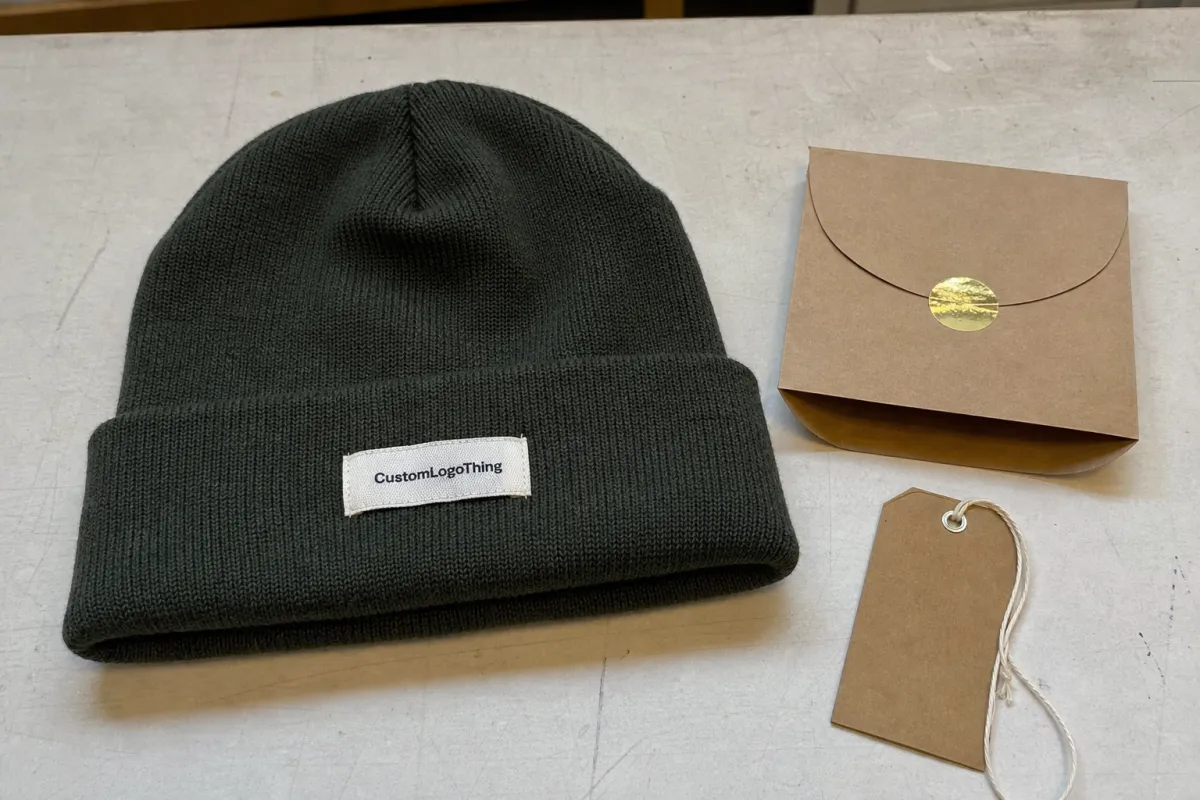
A cuffed knit beanie is not just a folded cap. The cuff creates structure, hides the inner seam on many builds, and gives decorators a place to put a logo without fighting the stretch of the crown. That sounds cosmetic, but it changes the production math. More yarn goes into the body, the knitting cycle is a little longer, and the finishing work has to keep the cuff sitting straight after packing.
The buyer usually sees the effect of that structure in two ways: better branding space and a less forgiving production spec. A smooth embroidery field is helpful, but the cuff still needs the right depth and density to hold stitch detail. If the knit is too loose, a small logo can wobble. If it is too tight, the handfeel gets stiff and the beanie loses some of the comfort buyers expect from winter headwear.
That tradeoff matters because the cheapest-looking product on a screen is often not the cheapest product to make correctly. A standard acrylic beanie with a one-color logo may be straightforward. Add a woven label, a custom patch, a private label inside the fold, and color matching to a brand palette, and the item shifts from simple promo stock to a managed apparel build.
A practical split usually looks like this:
- Promo giveaway - simpler yarn, standard cuff, small embroidery or woven label.
- Retail-style order - tighter knit, cleaner finishing, more consistent color and shape.
- Team or corporate order - branding clarity and repeatability matter more than fashion detail.
The most efficient orders usually start with the cuff height, decoration size, and yarn direction. Once those three are set, the rest of the quote becomes much easier to control.
Build and Decoration Details Buyers Need Up Front
The build spec is where many quotes become unreliable. Cuff height, body length, knit gauge, and crown shaping all influence both appearance and cost. A tighter face knit generally gives embroidery a cleaner base. A looser knit can feel softer in hand, but it is more likely to stretch under dense stitching or lose edge definition on a small patch.
Decoration method matters just as much. Embroidery remains the most common choice because the cuff gives it a stable zone, and the result usually reads well at retail distance. Woven labels are useful when the brand wants a subtler mark. Rubber patches and PU badges create stronger contrast and can look premium, but they add steps and usually require a higher MOQ to make the setup worthwhile.
Color choice is another cost driver that gets underestimated. Stock yarn is usually the easiest route. Heather effects, multiple color changes, or exact Pantone matching can increase the price and the lead time because the yarn has to be sourced or dyed to spec. If a buyer wants a specific corporate shade, that request should be treated as part of the production plan, not a cosmetic afterthought.
The cuff is useful because it gives the logo a clear stage. It is also unforgiving: if the placement is off by a few millimeters, the whole beanie can look awkward.
One question should be answered before artwork approval: does the logo depend on fine edges or thin type? If yes, confirm the stitch size against the cuff width. Thin outlines, small taglines, and delicate serifs can disappear once the knit flexes. This is one of the most common reasons buyers end up asking for a second sample.
Packaging and transit also deserve attention. A cuffed beanie that looks perfect on a worktable can arrive crushed if the fold is inconsistent or the carton count is too aggressive. Standards from groups such as ISTA are more often used for larger packaging decisions, but the same logic applies here: soft goods still need a pack-out plan that protects shape, labeling, and presentation.
Unit Cost, MOQ, and Quote Drivers
Unit cost for Cuffed Knit Beanies usually moves on a few predictable levers: yarn type, knit gauge, color count, decoration method, labeling, and packaging. A standard acrylic beanie with one embroidery hit will usually come in lower than a premium blend with a patch, woven label, and custom fold. Every additional process step adds labor, and labor is where small products often become more expensive than expected.
MOQ follows the same logic. A stock-color beanie with a simple decoration can sometimes be produced at a lower entry quantity because the factory is not carrying special yarn or extra setup work. Once a buyer asks for custom yarn, private labeling, or a more complex colorway, the minimum quantity usually rises so the factory can spread the setup across more pieces.
These ranges are not fixed price cards. They are a realistic frame for planning.
| Build Type | Typical MOQ | Common Unit Cost Range | Notes |
|---|---|---|---|
| Blank stock-color cuffed beanie | 100-300 pcs | $2.10-$3.60 | Lowest setup, simple pack-out, limited brand impact |
| One-color embroidery on cuff | 300-500 pcs | $2.60-$4.80 | Most common branded option, cost depends on stitch count and placement |
| Patch, woven label, or mixed decoration | 500-1,000 pcs | $3.10-$6.20 | More finishing steps, more visual polish, higher setup charges |
| Custom yarn, custom colorway, premium finish | 1,000+ pcs | $4.50-$8.50+ | Best for retail programs or brand collections where detail matters |
That spread is useful because it shows where price shifts begin. A 300-piece order can carry a noticeably higher unit price than a 1,500-piece order even when the product looks nearly identical. Setup, artwork prep, and sample approval do not disappear just because the product is small.
For a quote that can actually be used, send the details together rather than one at a time:
- Target quantity and acceptable MOQ range.
- Logo file in vector format.
- Preferred decoration method and exact placement.
- Color direction, including stock color versus custom match.
- Desired handfeel, thickness, and retail finish.
- In-hands date and any packaging requirement.
If the brief is complete, the supplier can separate sample cost, bulk pricing, decoration fees, and any packaging charges. If the brief is thin, the quote usually includes assumptions. That is where budget drift starts.
Production Process and Timeline From Sample to Ship
The production path for Cuffed Knit Beanies is fairly standard, but delays tend to cluster at the approval points. The sequence is usually spec review, artwork confirmation, yarn or color approval, sample knitting, revision if needed, bulk production, finishing, inspection, and shipment. None of those steps is difficult by itself. The problem is that a late change in one step can push the schedule for everything that follows.
Sample development is where the real surprises show up. A logo may be too wide for the cuff. A patch may sit too high once the beanie is folded. A yarn may feel softer than expected, or heavier than the buyer imagined from a photo. A second sample is not unusual when the first round exposes a placement issue or a color mismatch, but it does affect both timing and cost if the revision changes the build.
A realistic schedule separates sample timing from bulk timing. A simple sample can move quickly if the yarn is available and the artwork is clean. Bulk production typically starts only after approval, and that is where order size and decoration complexity begin to matter. When the order needs custom color matching, special labeling, or retail pack-out, the timeline expands. Rush work is possible, but only when the spec is straightforward and the buyer responds quickly.
- Spec confirmation: 1-3 business days.
- Sample knitting and review: about 5-10 business days.
- Bulk production: often 12-20 business days after approval, depending on quantity.
- Inspection and packing: 2-4 business days.
Those time frames are useful, but they are not guarantees. Winter headwear moves through busy production windows, and a factory that is already managing multiple orders will not compromise stitch quality just to hit a date. The faster a buyer wants the job, the more important it becomes to lock colors, artwork, and packaging before the first sample is cut.
For teams that care about transit risk, pack-out matters almost as much as knitting. Carton count, inner packaging, and folding method can affect shape retention, shelf presentation, and freight efficiency. The industry guidance published by organizations such as PMMI is useful here because it pushes the buyer to think about packaging as part of the product, not just the box around it.
Specifications That Affect Fit, Handfeel, and Retail Appeal
Once the price range makes sense, the next question is whether the beanie feels right. That is where the technical spec starts to matter more than the mockup. Fiber content, gauge, cuff depth, seam style, body length, stretch range, and target weight all change the way the beanie hangs and the way it wears.
Acrylic is common because it is cost-efficient and accepts color well. Acrylic blends can improve softness and drape. Wool or wool-rich builds usually raise the price, but they can bring better insulation and a more natural handfeel. There is no universal best choice. The right fiber depends on the audience, the budget, and how the beanie will be used.
Knit density deserves more attention than it often gets. A tighter gauge helps embroidery sit cleaner and keeps the beanie closer to its intended shape. Go too tight, though, and the result may feel firm or even slightly rigid. A looser knit can look relaxed and feel warmer, but it can also stretch during packing and lose some of the crisp shelf profile buyers want for retail.
Fit consistency is another practical issue. Most Cuffed Knit Beanies are unisize, but unisize is not the same as unmeasured. The cuff stabilizes the look, yet the crown shaping still determines whether the beanie sits high, slouches, or hugs the head more closely. Buyers should ask for measurement points, not just photos.
There are also a few quality-control checks that can save a lot of grief later:
- Stitch tension: keeps the knit from warping or puckering around the logo.
- Logo registration: confirms the patch or embroidery sits centered on the cuff.
- Thread trim: catches loose ends before packing.
- Shade consistency: checks for visible variation between batches.
- Stretch recovery: helps predict whether the beanie will hold shape after wear.
Retail and ecommerce orders also need a packaging plan that suits the channel. Fold style changes how the cuff reads in the carton. Hangtags can twist the knit if they are pinned badly. Polybags protect the product, but the bag should fit the piece instead of compressing the cuff into a permanent crease. Small packaging details often move the final unit cost by less than the cost of a remake.
What Makes a Clean Beanie Buying Process Easier
A good supplier process is mostly about reducing friction. Clear spec sheets, direct price feedback, and decoration advice that matches the knit structure make a project easier to approve. Buyers do not need a long presentation. They need enough detail to compare options accurately and enough discipline to keep the logo from fighting the product.
Cuffed knit beanies reward restraint. A logo that sits too high, too low, or too close to the fold can make a good knit build look awkward. Matching the mark to the cuff depth and stitch density usually produces a cleaner result than forcing a larger graphic into the same space. The best orders are the ones where artwork, color, and packaging are decided together instead of one after another.
That coordination matters because it reduces revision cycles. Fewer revisions mean fewer delays, and fewer delays usually mean the sample more closely resembles the final bulk run. The payoff is not just speed. It is consistency. Repeatable specs are what make reorders less painful and make cost comparisons meaningful the second time around.
| Buyer Input | Quote Quality | Production Risk |
|---|---|---|
| Target quantity, artwork, and decoration method | High | Lower |
| Only a logo image with no spec details | Low | Higher |
| Full packaging and delivery requirements | High | Lower |
| Late changes after sample approval | Unstable | Higher |
There is also a practical supplier test hiding inside the quote. If the factory can explain why one version costs less than another, the buyer gets a better read on setup charges, tooling needs, and which features are actually adding value. If the explanation stays vague, the quote probably needs more detail before anyone should approve it.
What To Send for a Fast Quote and Next Steps
The fastest way to get a usable quote is to send the full brief in one pass. At minimum, include the logo file, target quantity, preferred decoration method, color direction, cuff preference, and the in-hands date. If the order needs retail packaging, barcode labeling, or special folding, include that as well. Those details change the production plan, and the quote should reflect the actual build, not an idealized version of it.
When the budget is still being shaped, ask for two versions: one built for cost control and one built for presentation. That side-by-side view makes the tradeoffs visible. A lower-cost version may use stock yarn and embroidery. A more premium version may add a tighter knit, custom color, or branded packaging. Comparing those options is much more useful than comparing price alone.
If the project is still early, the most helpful notes to include are small and specific:
- Preferred logo width on the cuff.
- Whether the beanie is for retail, promo, or internal use.
- Any color tolerance limits.
- Who will approve the sample.
- Any ship-to constraint that could affect carton size or timing.
That is the real purpose of a beauty cuffed knit beanies Unit Cost Review: to show where the price is coming from, which features are worth paying for, and what can be simplified without weakening the product. The best decision is rarely the cheapest one or the most expensive one. It is the one that fits the spec, the timeline, and the use case.
If the order is moving forward, start with a sample-first plan and compare the sample against the intended pack-out before bulk approval. That keeps the process grounded and gives the buyer a clearer read on final unit cost before the run is locked.
FAQ
How is a beauty cuffed knit beanies unit cost review priced when embroidery is added?
Embroidery usually adds both setup cost and stitch cost. The final price depends on logo size, stitch count, thread colors, and how much space the cuff gives the artwork. Clean, compact designs are usually easier to control than dense lettering or very fine detail.
What MOQ should buyers expect for cuffed knit beanies with custom branding?
MOQ depends on yarn availability, decoration method, and how custom the colorway is. Stock-color builds often support lower quantities than fully custom yarn programs. A useful quote should separate sample quantity, bulk MOQ, and any threshold that triggers higher setup costs.
How long does production usually take after sample approval?
Lead time is usually split between sample development and bulk production. Simple artwork and clear color approval can shorten the schedule. Packaging changes, color matching, or late artwork edits can add days, especially if they affect labeling or carton configuration.
Which spec has the biggest impact on unit cost for a cuffed knit beanie?
Yarn choice, knit gauge, and decoration method usually matter most. Color count and custom finishing can raise cost quickly, and order size matters because setup cost spreads more efficiently at higher quantities. If budget pressure is high, those are the first levers to review.
What should buyers send first to get an accurate quote?
Send target quantity, artwork, color direction, and the desired decoration method first. Add the in-hands date, packaging needs, and any retail requirements if they apply. Clear input upfront cuts revisions and makes the quote more reliable.


