A wedding ribbed winter beanies Digital Proof Checklist is the point where a mockup becomes a production decision. Ribbed knit changes how color reads, how logos sit, and how much detail survives once the hat stretches or folds at the cuff. A design that looks clean on screen can still fail in the texture of the finished beanie.
That matters on wedding orders because the hats may be used for bridal-party gifts, guest favors, welcome boxes, or an outdoor event. Small errors create real problems: a wrong date, weak contrast, a logo placed too low for the cuff, or a delivery window that misses the event.
What a Digital Proof Checklist Catches on Ribbed Winter Wedding Beanies
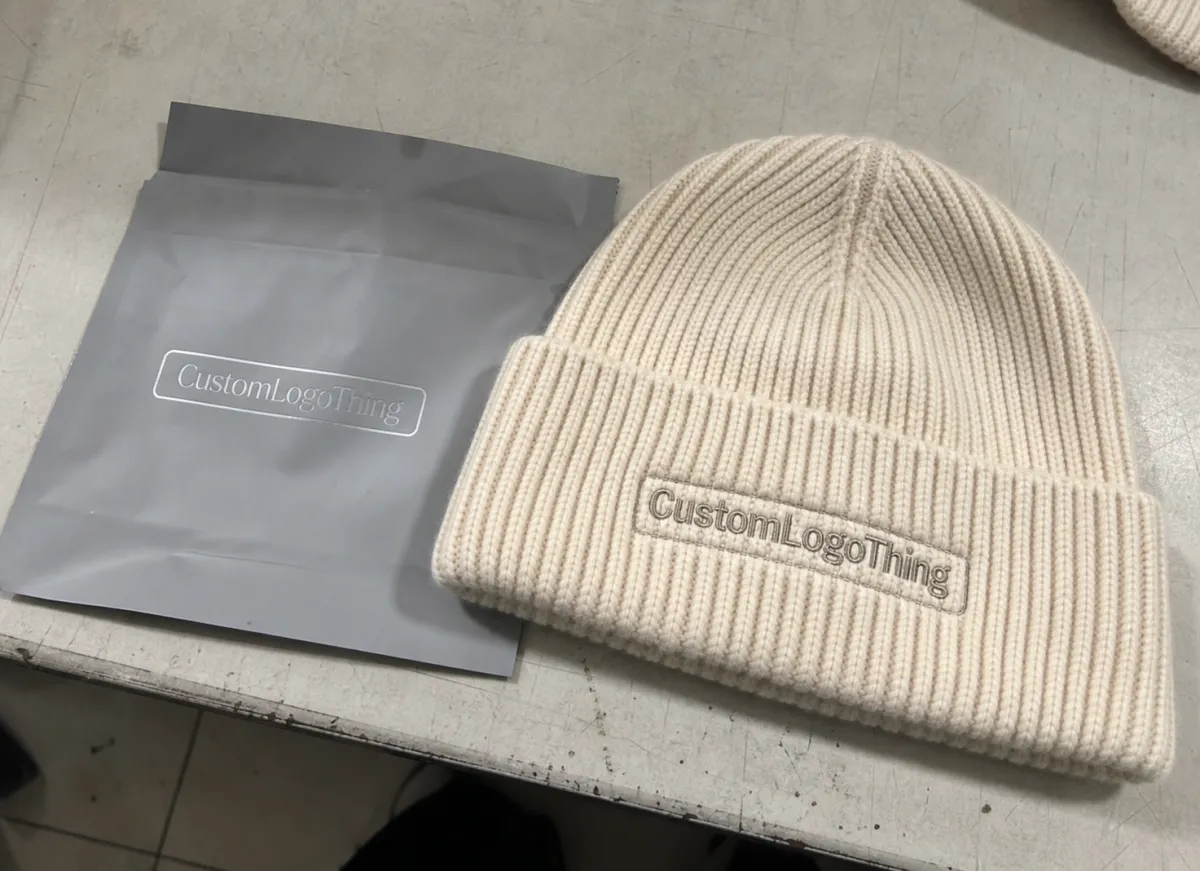
Ribbed knit is forgiving in fit and less forgiving in presentation. The stretch helps the beanie fit more people, but the texture breaks up thin lines, small lettering, and tight outlines. The proof should be read as a production tool, not just a design preview.
The checklist should catch the details that most often slip through: exact spelling, final wedding date, clear color references, and artwork size against the real decoration area. A logo that feels balanced on a laptop screen may shrink too much once it is placed on textured knit.
It also helps to treat the proof as a coordination document. If the hats are part of a winter welcome package, bridal-party kit, or gift table, the order should align quantity, packaging, decoration, and delivery before production starts. A useful proof answers practical questions quickly:
- Is the decoration centered on the cuff or body, and is that the intended placement?
- Are the names, initials, and date final and correctly formatted?
- Will the logo remain readable when the beanie stretches or folds?
- Do the beanie color and decoration color hold enough contrast in daylight and in photos?
- Is the buyer approving the exact production version, not just a concept mockup?
The best proofs are plain and direct. They show what will be made, where it will go, and how it will look against the actual beanie style. If the proof reads like a finished decision, production can move without guessing.
How the Proof Confirms Artwork, Knit Style, and Decoration
The proof workflow usually starts with the submitted art, then moves through cleanup, resizing, and mockup placement. That is where many wedding orders are saved. A good decorator checks whether the art is vector-based, whether the smallest text is legible at production size, and whether the design needs to be simplified for embroidery, a woven patch, or a label.
For Ribbed Winter Beanies, the mockup should show more than one angle. A front view checks general placement; an angled view helps expose whether the logo drifts into the ribbed texture or sits too close to the seam. If the order includes more than one colorway, the proof should show the actual hat color rather than a placeholder.
Rib structure deserves separate attention because it affects alignment. A patch or embroidered mark that crosses a stretch zone may look slightly wider on screen than it will on the head. Thin lines and centered initials should be checked against the minimum readable size for the decoration method. If the design is detailed, ask whether it should be simplified before approval.
There is also a practical limit to what each decoration method can carry. Embroidery handles texture well, but tiny type can close up. Woven patches preserve more detail, but add setup and a second material. Heat-applied labels can create a clean look, though some fabrics tolerate that process better than others. The proof should name the method clearly so the tradeoffs are visible.
For buyers comparing vendors, proof quality often reveals more than sales language does. Clear measurements, accurate placement notes, and documented approval reduce mistakes later. Industry organizations such as Packaging.org and testing bodies like ISTA both point to the same principle: the closer the order gets to shipment, the more valuable a controlled sign-off becomes.
Cost, MOQ, and Unit Pricing for Wedding Ribbed Winter Beanies
Pricing usually breaks into five parts: the blank beanie, decoration, setup or digitizing, packaging, and freight. The blank itself may be inexpensive, but the finished cost climbs once the order includes embroidery, a woven patch, a custom label, or presentation packaging. Wedding buyers often focus on the blank price first and then see the effect of setup and finishing work in the final quote.
MOQ matters because small runs carry the same labor and setup burden as larger ones, but across fewer units. A 24- to 50-piece order often has a higher per-piece price than a 100- or 250-piece run, even if the decoration is identical. For small wedding quantities, decorated Ribbed Winter Beanies often land around $7 to $14 per unit, with premium materials, more complex decoration, or gift-ready packaging pushing higher.
| Option | Typical MOQ | Typical Unit Price | Best For | Watch-Outs |
|---|---|---|---|---|
| Blank ribbed beanie | 24-50 | $3-$6 | Simple guest gifts or DIY finishing | No branding, so presentation depends on packaging |
| Embroidered logo beanie | 50-100 | $7-$12 | Most bridal party and favor orders | Very fine detail can soften on heavy ribbing |
| Woven patch or label package | 100+ | $9-$16 | Gift sets with a more finished look | Extra setup and a longer approval cycle |
The cleanest quote is an apples-to-apples comparison: same beanie style, same decoration method, same thread count or patch size, same packaging, and same shipping method. If one estimate includes an insert card and another does not, the numbers are not comparable. The cheapest line can become the most expensive once the missing pieces are added back in.
Proof Checklist: Artwork, Sizing, Materials, and Stitch Placement
The strongest checklist is specific enough to remove guesswork. Start with the artwork file. Confirm the exact logo version, punctuation, spacing, and any small text. If the beanies include initials, a wedding date, or a short phrase, those details should appear in final form on the proof, not as placeholders.
Then check sizing against the actual beanie style. A cuffed ribbed hat may have a cuff height around 2.5 to 3.5 inches, and the crown depth can shift the visual placement once the hat is folded or worn lower. That means the design needs to be judged in context, not only as a flat graphic.
Material choice changes both feel and decoration behavior. Acrylic is common because it is soft, cost-conscious, and easy to decorate. Wool blends usually feel warmer and more substantial. Fleece lining adds comfort in colder venues, while recycled yarn can fit a sustainability-minded brief. If the event leans premium, the proof should state the material plainly.
Stitch placement is the last part that deserves close inspection. On ribbed knit, the decoration needs to sit in a zone that can hold the design cleanly. If the logo drifts across ridges, the eye reads it as uneven even when the stitch count is correct. Thin lines and small lettering should be checked against the minimum readable size for the decoration method.
- Artwork: correct file, correct logo, correct spelling, correct date.
- Sizing: cuff height, crown depth, and placement when folded or worn.
- Materials: acrylic, wool blend, fleece lining, or recycled yarn.
- Placement: center point, safe area, seam clearance, and rib alignment.
- Finish: embroidery, woven patch, label, or a mixed decoration package.
If any of those points is unclear, the proof is not ready yet. One extra revision usually costs less than a reprint, and it avoids a bigger delay once production starts.
Production Steps, Timeline, and Lead Time After Approval
After approval, the order usually moves through a fixed chain: sampling if needed, decoration setup, bulk production, finishing, inspection, and final packing. Wedding apparel is especially sensitive to timing because the order often supports an event date, a venue drop-off, or a welcome-box assembly schedule. The supplier should be able to give milestone timing, not just a broad promise.
A realistic timeline for decorated beanies is often 12 to 15 business days from proof approval when the artwork is ready and the decoration method is standard. If the order needs digitizing, custom labels, extra packaging, or a new yarn color, the schedule can extend. Rush orders compress stitching, drying, inspection, and packing, which increases the chance of a preventable error.
Shipping deserves its own review. Venue deliveries usually have narrower windows than warehouse deliveries, and guest-count changes can affect quantity right up to the edge of production. A buffer of several business days is smart, especially if the order is going to a hotel, planner, or venue instead of directly to the buyer.
Packaging is not a side issue. Carton strength, inner packing, and label clarity matter when the order moves through multiple hands. ISTA standards are useful because they reinforce how transport stress affects even soft goods; a beanie does not seem fragile until a crushed carton, a wet label, or a missed handoff delays the event.
Common Mistakes That Slow Down Proof Approval or Trigger Reprints
Most proof delays come from a few small oversights repeated in different forms. Low-resolution logos are common. So are typos in names or dates, thread colors described informally instead of specified clearly, and assumptions that monitor color will match yarn or embroidery thread exactly. Screen settings, knit texture, and decoration method all influence the final appearance.
Size is another frequent blind spot. A design that feels clean on a flat mockup can become too dense once it stretches across a cuff or sits on a ribbed body panel. Buyers sometimes approve artwork without considering how the hat looks when worn low or folded loosely, then discover the logo reads smaller than expected in photos.
Approval slows down when too many people review the proof separately. One person wants a larger logo, another prefers a different thread color, and someone else is focused on the date format. The fix is simple: designate one final approver and keep everyone else in comment mode. Otherwise, the proof becomes a moving target.
Supplier notes should be treated as production knowledge, not decoration preferences. If the decorator says a line is too fine, the contrast is too weak, or the placement zone is tighter than expected, that note usually comes from the way the fabric behaves in real production. Ignoring those limits often leads to soft edges, unreadable type, or off-balance placement.
If the order includes hang tags, insert cards, or thank-you notes, the paper choice matters too. A lower-gloss stock usually sits better beside winter knit than a heavy coated sheet that fights the texture. Wedding orders are judged on small details, and the package can feel unfinished if the paper, hat, and decoration do not belong together visually.
Next Steps Before You Approve the Final Digital Proof
Before final approval, review the order as a whole rather than line by line in isolation. Confirm the guest count, lock the wedding date, and make sure the artwork file is the final version. If revisions are still needed, ask for them before production release. Once the order moves forward, changes may trigger fees, timeline shifts, or a restart if materials have already been prepared.
Compare the final art against the exact beanie color and decoration method in one view. Color and placement should be judged together, because a pale thread on a light beanie can disappear while the same thread on a darker body looks crisp. If the order includes multiple sizes, labels, or package inserts, check those details at the same time so the proof reflects the full finished order.
Document who approved the proof, where that approval was stored, and what details are now frozen. That prevents confusion later if someone asks for a change after production has started. It also makes shipping handoff easier, because the buyer can point to a single approved version instead of a loose thread of comments and attachments.
Handled properly, the wedding ribbed winter Beanies Digital Proof Checklist protects the budget, the schedule, and the final presentation at the same time. It is a practical control point, not an administrative formality. The difference shows up in the finished order: cleaner decoration, fewer surprises, and hats that arrive looking deliberate rather than improvised.
What should a wedding ribbed winter beanies digital proof checklist include?
It should cover artwork quality, spelling, logo placement, color references, and the exact beanie style being ordered. It should also confirm sizing, decoration method, and any finish details like labels or packaging inserts. A good checklist names one person responsible for final approval so the order does not stall in review.
How long does digital proof approval usually take for wedding beanies?
Simple proofs may be approved in a day or two if the artwork is clean and the buyer responds quickly. Revisions, color-matching questions, or multiple decision-makers can stretch approval time by several days. The fastest path is to have logo files, quantity, size mix, and finish details ready before the proof is requested.
What changes the price of ribbed winter beanies for weddings?
MOQ, decoration method, and the number of colors or setup steps usually have the biggest impact on unit cost. Custom labels, specialty packaging, rush timing, and shipping distance can add to the total. The cleanest quote compares the same style, decoration, and quantity so the buyer can judge value fairly.
Can I trust screen color on a digital proof for wedding beanies?
Screen color is only a guide, because monitor settings and knit texture can shift how the final color appears. If color matters a lot, ask for physical swatches, yarn references, or a sample photo under neutral light. For wedding orders, the safest move is to confirm both the beanie base color and the decoration color before approval.
What happens after I approve the final proof?
Production usually starts, and the approved details become the standard for decoration, packing, and shipment. Any changes after sign-off may cause fees, delays, or a restart if materials have already been prepared. The buyer should immediately confirm delivery timing, shipping address, and who will receive the finished order.