If you are comparing Woven Labels Unit Cost for ecommerce, start with the specification, not the headline number. Two orders can carry the same quantity and still price very differently because one label uses two thread colors, a standard size, and a basic fold while the other asks for a wider format, more colors, and a softer finish. The price difference is rarely random. It usually reflects machine time, setup work, and how much detail the design asks the loom to carry.
That matters because woven labels do more than identify a brand. They shape how the garment feels on the neck, how the brand looks after repeated washing, and how consistently a product line can be reordered. For ecommerce teams, the label is a small line item with a large downstream effect. A good spec keeps the unit cost under control, but it also keeps the label readable, durable, and comfortable enough that customers do not think twice about it.
The buyers who get the best result treat labels like any other production component: they compare landed cost, not just a unit price, and they lock the design early enough to avoid reproofing, rush fees, and avoidable revisions. That is the difference between a quote that looks efficient and a program that actually holds together through replenishment.
Why woven labels unit cost for ecommerce can change faster than you expect
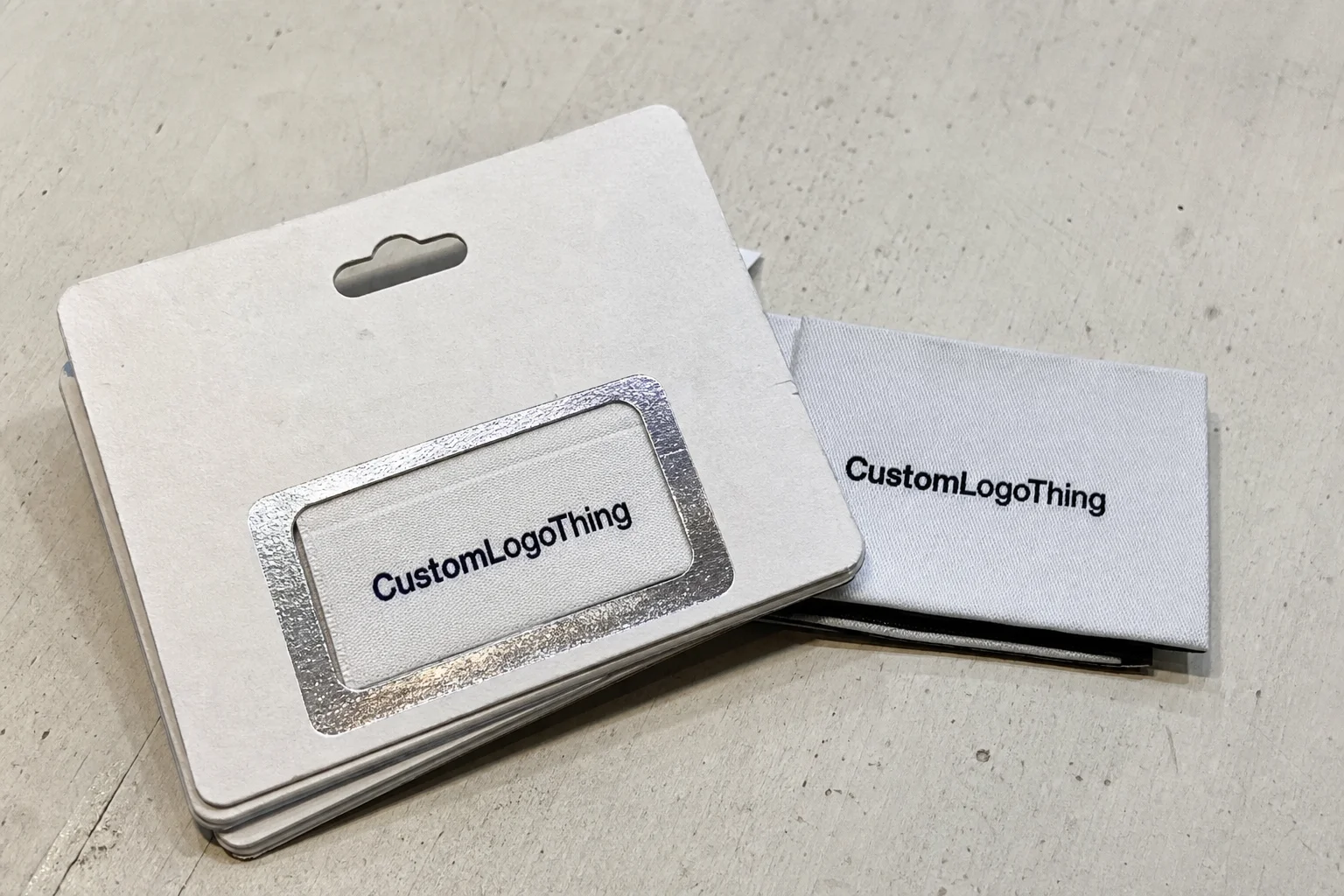
The phrase Woven Labels Unit Cost for ecommerce sounds simple, but the number behind it moves for reasons that are easy to miss. Quantity matters, of course. Larger runs usually spread setup work across more pieces. Yet design complexity often has a bigger effect than buyers expect. A label with dense artwork, more thread colors, and an unusual fold can stay expensive even when the order size increases.
That creates a common sourcing problem. A brand sees one supplier quote a lower price and assumes the comparison is straightforward. Then the details surface. One quote includes a standard damask weave with minimal finishing. Another includes a specialty fold, color matching, and a soft backing. Those are not the same product, even if the logo looks similar on a screen.
Finished size also affects price in a direct way. Wider labels use more material and take more loom time. Higher detail density can push the production method toward a finer weave, which is slower to run and more sensitive to artwork quality. If the design contains tiny type or fine lines, the supplier may need to adjust the construction to keep the text legible. That is not a cosmetic choice. It changes the production path.
There is a second layer to the cost conversation: repeatability. A label that is cheap on the first order can become expensive later if the artwork is unstable, the color callouts are vague, or the supplier has to rebuild the spec on every reorder. For ecommerce, where replenishment cycles matter, the real cost is the cost of consistency. A slightly higher first order can be better business if it prevents restock delays and spec drift.
“A useful label quote tells you the finished size, fold, color count, and finishing method. Without those details, you are not comparing like for like.”
That is also why a buyer should not chase the lowest number without checking what is being left out. Sampling, revisions, shipping, and inspection can all change the effective cost per piece. A low unit price paired with high add-on charges is not a bargain; it is simply a different billing structure.
For broader packaging sourcing context, the ISTA testing framework is a useful reference whenever durability and transit handling matter. Woven labels are not shipping cartons, but the same principle applies: performance should be verified, not assumed.
What a woven label package includes for ecommerce brands
A woven label order is more than a piece of cloth with a logo on it. It is a package of decisions that determine appearance, comfort, and cost. The supplier needs to know the construction, the finish, the fold direction, the size, and the artwork requirements before a quote can be trusted.
Most ecommerce brands end up choosing among a few familiar constructions. Damask is commonly used when sharp detail and a smooth handfeel matter. Satin can work well when a softer surface is desired, especially for labels that sit directly against skin. Taffeta is lighter and more economical in some use cases, though it generally carries less visual refinement than a finer weave. The right option depends on placement and use, not just price.
Placement changes the equation. A neck label has different comfort requirements from a side seam label. An externally visible brand tab on outerwear may need stronger presence and tighter detail, while a hidden size or care label can often stay simpler. A buyer who tries to force one format across every use case usually ends up paying for detail where it is not needed and sacrificing comfort where it matters most.
Before a supplier can price accurately, they usually need vector artwork, finished dimensions, quantity, fold style, and color targets. If the design uses specific Pantone references, those should be shared early. Missing files or vague instructions slow down quotation and make it harder to compare offers. A rough estimate can be produced quickly. A reliable production quote takes a more complete brief.
It also helps to think of woven labels as part of a broader trim system. If a brand has a standard neck label, a size marker, a care label, and a hang tag, those pieces should be organized so they can be reordered without re-deciding every detail. That discipline saves time on repeat runs and keeps artwork control in one place. For teams building out that system, the product range at Custom Labels & Tags is a practical place to structure the conversation around format, placement, and reuse.
One more point that gets overlooked: some label concepts look good in mockups but become awkward once sewn into real garments. The label can twist, scratch, or distort at the seam. A practical production review looks beyond the artwork and asks whether the label will sit flat, survive wash cycles, and stay legible after handling. That review often saves more money than a small reduction in quoted price.
Woven label specifications that affect durability and handfeel
The details that matter most are usually the ones a buyer notices only after production starts. Thread type, weave density, edge finish, label width, and the way the label sits against skin all affect how the finished product feels. A proof can look clean on screen and still produce a stiff or irritating label in the garment.
Durability should be assessed in the context of the garment category. A promotional tee worn a few times has different needs from a basic tee, sleepwear, babywear, or activewear that will see repeated laundering. In those higher-use categories, the label needs stable color, tight weaving, and a construction that resists fraying. If the edges curl, the product looks cheaper than the quote suggested.
Color count is one of the easiest places to overspend. Extra colors can improve a logo, but they also increase production complexity. In many cases, the same visual effect can be achieved with a cleaner graphic layout, tighter contrast, and fewer thread colors. That does not flatten the design. It just removes waste. A strong silhouette and disciplined spacing often do more for readability than a crowded weave.
Folds deserve more attention than they usually get. A center fold, end fold, loop fold, or mitre fold changes not only how the label is attached but also how it behaves after sewing. Some folds are more comfortable. Some are easier to line up in production. Some add cost without adding much value. The fold should support the garment and the sewing method, not simply reflect habit.
Backing is another point where brands make tradeoffs. A softer backing can improve comfort, especially for labels that sit directly against the body. It may also increase cost and change how the label is sewn. If the garment is already soft and close to skin, the extra backing can make sense. If the label sits on outerwear or a woven tab where comfort is less critical, the premium may not be justified.
Quality control on woven labels should not be treated as a formality. Buyers should confirm weave clarity, color accuracy, finished dimensions, edge integrity, and fold consistency. A good sample should be checked under normal light, then again after a wash test if the garment category demands it. Small problems are easier to correct before bulk production than after 10,000 labels have already been run.
For sourcing and material accountability, FSC is worth knowing if your packaging program also includes paper components or mixed-material presentation items. See FSC standards and certification for how responsible material sourcing is documented across packaging categories.
In practice, the best label spec is not the most elaborate one. It is the one that fits the garment, meets the durability requirement, and stays economical across reorder cycles. That usually means fewer unnecessary colors, a standard size where possible, and a finish that supports the actual use case instead of trying to impress on a sample board.
Cost, pricing, MOQ, and how unit cost is calculated
Woven Labels Unit Cost for ecommerce is usually calculated from a mix of setup work, machine time, material choice, color count, finishing, quantity, and shipping. The fixed part of the job is what makes small runs more expensive on a per-piece basis. The variable part is what pushes the cost higher as the design becomes more complex.
MOQ matters because it determines how much of that fixed work gets spread across the run. A low MOQ can be useful for a launch collection, a seasonal test, or a product that still needs fit and branding validation. It is not, however, the cheapest way to buy in pure unit terms. Once the design is stable and demand is predictable, larger orders usually improve the per-piece cost.
What buyers should compare is landed cost. A quote that looks lower may exclude sampling, proofing, shipping, or revision charges. Another quote may include those items up front. If the comparison basis is different, the numbers are misleading. The cleanest comparison is the cost per finished label delivered to the point of use.
| Order profile | Typical spec | Indicative unit cost | Best use case |
|---|---|---|---|
| Test run | 2 colors, standard size, simple fold | $0.16-$0.28 per piece | Early design validation and small launch batches |
| Core reorder | 2-4 colors, standard weave, stable fold | $0.08-$0.18 per piece | Ongoing ecommerce SKUs with predictable demand |
| Premium build | Higher color count, wider label, specialty finish | $0.20-$0.40 per piece | Hero products, premium outerwear, and comfort-critical labels |
Those are directional figures, not promises. The actual price moves with order volume, artwork complexity, color matching requirements, destination, and whether the supplier is building a new file or rerunning an approved spec. Still, the pattern is consistent. Higher volume lowers the share of fixed setup cost. More complex construction moves the number back up.
There are a few simple ways to keep cost under control without lowering the quality bar:
- Use fewer thread colors where the logo still reads clearly.
- Keep the finished size standard unless the garment truly needs something custom.
- Lock the fold style before production starts.
- Avoid artwork changes after proof approval.
- Ask for a landed-cost quote instead of a unit price alone.
That last item is the one that saves the most mistakes. A quote with a slightly higher unit rate can still be the better buy if it includes proofing, clearer production terms, and fewer surprise charges later. On a margin-sensitive ecommerce line, predictability is often more valuable than a small first-order discount.
It also helps to think beyond the label itself. If the label has to be sewn into a production line that already runs tightly on time, a cheap but inconsistent label can interrupt the flow. Rework, sorting, and quality rejects quickly erase the savings. The right number is not simply the lowest number. It is the one that keeps production moving and keeps the garment looking right after it reaches the customer.
Process and timeline: from artwork to production steps
The production path is straightforward, but it becomes slow whenever the brief is incomplete. A normal order moves through quote, artwork review, digital proof, sample approval if needed, loom setup, bulk production, quality check, packing, and shipping. Each step has a purpose. Skip one and the risk shifts downstream.
New orders usually take longer than repeat orders because the artwork has to be checked and the construction has to be set up. A repeat order can move quickly if the supplier has a clean file record and the spec has not changed. That is one reason good documentation matters so much in packaging procurement. It shortens the next order even if the current one feels routine.
Most delays are not caused by the machine. They come from missing vector files, unclear fold directions, late color changes, or slow internal approvals. A supplier can only begin once the final spec is approved. For ecommerce teams working against launch dates, that approval lag is often more dangerous than the production time itself.
A straightforward woven label order is often quoted in the 12-15 business day range after proof approval, with transit added separately. Complex constructions, larger volumes, or special finishes can extend that timeline. If the labels need to arrive before a replenishment window opens, it is worth asking for proofing, production, and shipping to be broken out separately so the schedule is easy to track.
Sampling deserves its own mention. A sample is not just a miniature version of the product. It is the point where handfeel, edge quality, color balance, and fit against the garment can be checked in real conditions. If the label will be visible on the outside of the product, the visual inspection matters. If it sits against skin, the tactile check matters just as much.
Common production checks include weave clarity, edge finish, label width, fold accuracy, and consistency across the batch. For wash-sensitive garments, a quick wash test on a finished sample can reveal whether the label softens, frays, or distorts. That small check can prevent a larger problem later. It is cheaper to correct a spec than to explain a failed label to customers.
For brands managing multiple trims, a stable spec library helps reduce rework across the board. The same discipline used for woven labels also helps with hang tags, care labels, and other Custom Labels & Tags used in the line.
Why ecommerce brands reorder from a supplier built for consistency
Repeatability is where the real value shows up. Ecommerce brands need the same shade, the same border, the same size, and the same fold every time a product restocks. A label that changes from batch to batch makes the product look inconsistent even when the garment itself is fine. That kind of drift is easy for customers to notice and hard to explain away.
This is why file retention and spec control matter. A supplier that keeps complete production records can rerun the same label without rebuilding the order from scratch. That reduces errors, shortens reorder time, and makes it easier to support seasonal drops or replenishment cycles. It also helps teams avoid the hidden cost of reapproval every time a style comes back.
There is a difference between a supplier that can quote and a supplier that can repeat. The first can price a one-off. The second can support a program. Ecommerce buyers usually need the second, even if the first looks cheaper at the start. A stable, well-documented process saves more money over six orders than a marginal discount on the first one.
Look for signs that the supplier understands production reality: clear proofs, color control, reliable communication, and the ability to keep spec records for future orders. Those are operational signals, not marketing claims. They tell you whether the vendor can handle the pace of ecommerce without introducing avoidable variation.
Consistency also helps the brand side of the business. When a label line is stable, designers can plan around it. Operations can reorder faster. Merchandising can launch new colorways without reworking the trim package. That kind of discipline is not flashy, but it keeps the whole product system cleaner.
Next steps for a fast, accurate quote
If you want a quote that is actually useful, send the full spec up front: finished size, fold style, quantity, color count, artwork file, and where the label will be applied. Those details give the supplier enough information to price accurately the first time. They also reduce the back-and-forth that usually slows a project down.
Then decide what matters most for this order. Lowest unit cost is not always the right goal. Sometimes the priority is softness. Sometimes it is premium appearance. Sometimes it is quick turnaround for a product launch. The best spec for a hero item may be different from the best spec for a basic reorder, and that distinction is worth making early.
A practical way to evaluate the options is to compare a lean spec against a more premium one. The lean version shows where the cost floor sits. The premium version shows what the brand gains by spending more. That comparison is often more useful than asking for one vague quote and trying to infer the rest.
Before approving production, confirm the MOQ, whether setup charges are included, how revisions are billed, the transit estimate, and whether the supplier will keep the approved spec on file for reorder. Those details protect margin and reduce surprises later. They also make it easier to keep the label program orderly as the product line grows.
For buyers who want brand presence, durability, and manageable cost in the same order, the cleanest path is simple: share the spec, request a landed-cost quote, approve the proof carefully, and keep the approved record for reorders. That is the most reliable way to keep woven Labels Unit Cost for ecommerce under control without creating extra inventory or extra work for the next production cycle.
How is woven label unit cost for ecommerce orders calculated?
It usually combines setup, material, size, color count, fold style, finishing, quantity, and shipping. The clearest comparison is landed cost per finished label rather than the headline quote alone.
What MOQ should I expect for ecommerce woven labels?
MOQ depends on label size, weave complexity, and the number of colors in the design. Smaller runs are useful for testing, but the unit cost generally improves as volume rises.
Which label specs lower woven labels unit cost without hurting quality?
Fewer thread colors, a standard finished size, and a simple fold usually help. Lock the artwork before production so revisions and reproofing do not add avoidable cost.
How long does production take after artwork approval?
Simple repeat orders are often faster because the supplier already has the approved file and spec record. New orders usually need proofing and setup first, so the production timeline should be quoted separately from shipping.
Can I order a sample before placing a larger woven labels order?
Yes. A sample is the safest way to check handfeel, size, fold direction, edge finish, and color balance before committing to bulk production.