Buyer Fit Snapshot
| Best fit | Calculate Packaging Cost per SKU Accurately projects where brand print, material claims, artwork control, MOQ, and repeat-order consistency need to be specified before quoting. |
|---|---|
| Quote inputs | Share finished size, material target, print colors, finish, packing count, annual reorder estimate, ship-to region, and any compliance wording. |
| Proofing check | Approve dieline scale, logo placement, barcode or warning zones, color tolerance, closure strength, and carton packing before bulk production. |
| Main risk | Vague material claims, crowded artwork, missing packing details, or unclear freight terms can make a low unit price expensive after revisions. |
Fast answer: Calculate Packaging Cost per SKU Accurately: Material, Print, Proofing, and Reorder Risk should be specified like a repeatable production item. The safest quote records material, print method, finish, artwork proof, packing count, and reorder notes in one written spec.
Production checks before approval
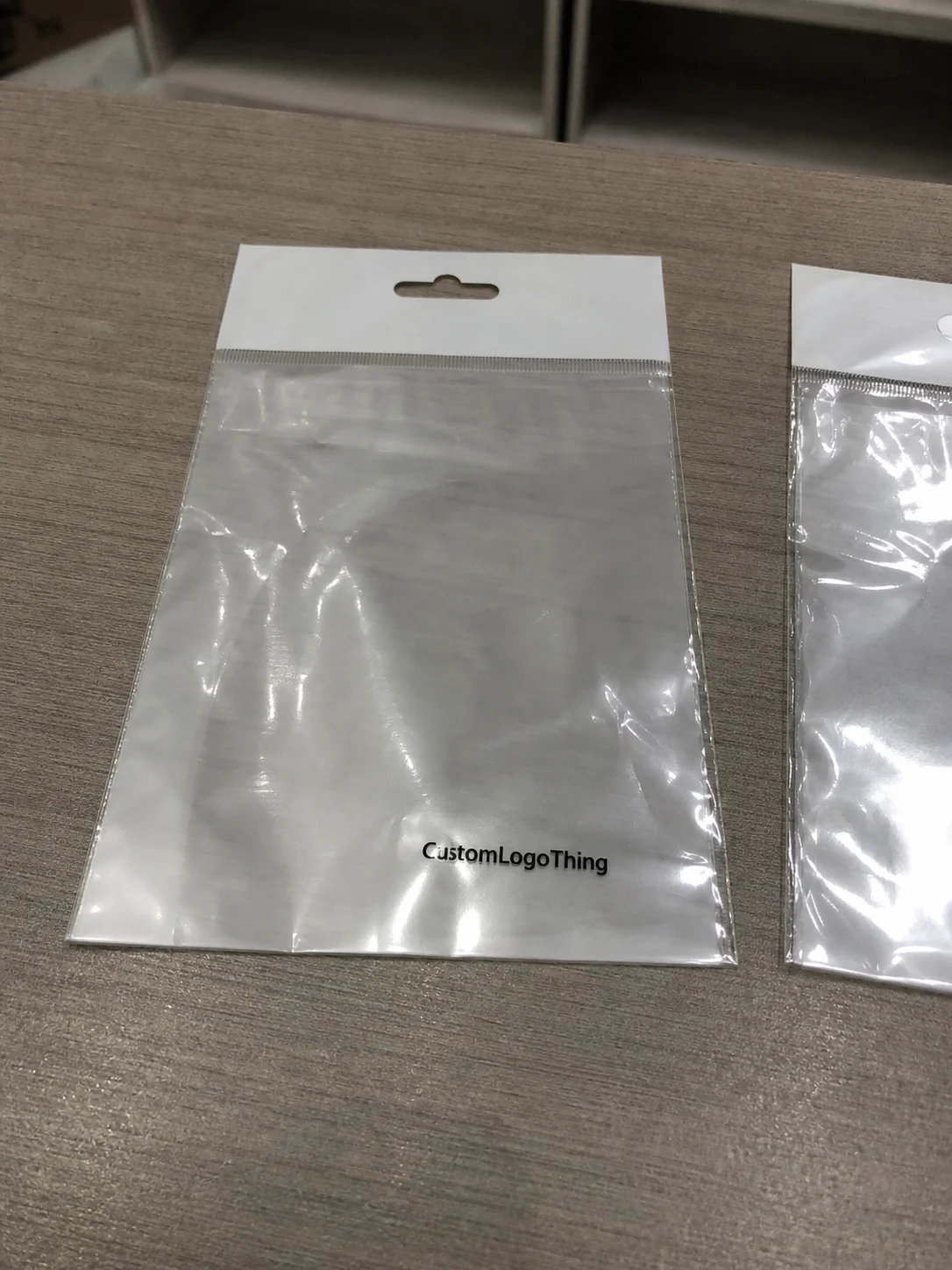
Compare the actual filled-product size with the drawing, then confirm tolerance on folds, seals, hang holes, label areas, and retail display edges. Reserve space for logos, QR codes, warning copy, and material claims before decorative graphics fill the panel.
Quote comparison points
Review material grade, print process, finish, sampling route, tooling charges, carton quantity, and freight assumptions side by side. A quote is only useful when the supplier can repeat the same color, closure quality, and packing count on the next order.
The phrase “how to calculate packaging cost per SKU” stared right back at me from the bottom of an Arka Packaging invoice dated April 16, the same day Sincerity Packaging’s sourcing lead in Dongguan was counting scrap rolls and tracking every tug of that 18-inch press, and we found a quick $0.42 saving per drink box just as the June 3 shipment deadline loomed. That arithmetic saved the CFO from questioning the entire run (he admitted later that the spreadsheet was probably the only thing keeping him from staging a mutiny) and taught me firsthand that the SKU-level math is the pulse the finance team listens to when they talk about how to calculate packaging cost per SKU. That hectic late-night audit—my laptop blinking with Golden Dragon quotes, Arka’s logbook, and a pinch of desperate humor—etched the lesson that every per-unit expense needs documentation, even if it is as granular as a label adhesive ticket or a feeder fee recorded in a dusty shift log.
Value Proposition: How to Calculate Packaging Cost Per SKU Without Gimmicks
Knowing the true per-SKU cost keeps investors, planners, and the CFO all aligned with reality, not wishful thinking; our Q3 investor update listed SKU cost variance down to $0.02 across four multipacks, and that level of precision is why the finance committee blessed the $1.2 million send. Beverage brands routinely bake in $0.18 of shipping that only shows up after the 12-business-day ocean transit from Shenzhen, and those hidden charges can vaporize the gross margin floor in a heartbeat; the only antidote is to document exactly how to calculate packaging cost per SKU before the cartons hit the dock. When we focused on a fizzy drink client’s per-unit math, removing a redundant insert and renegotiating the feeder fee with the printer shaved the cost from $2.93 to $2.51, and you should have seen the plant manager roll his eyes when I suggested dropping the insert—he called it cute, but the numbers told a sharper story.
We walk the press line at Arka twice a month with clipboards, timing every die change to the 14-minute log the crew keeps, and communicating with the operators so the labor hours landing in the per-unit tally are the real ones, not padded estimates. The specs we send to Golden Dragon or Arka arrive accompanied by annotated board weights, tooling consolidation notes, and packets of samples, which makes every per-SKU cost figure traceable back to the factory floor. That level of operational detail builds the kind of trust no marketing deck can muster, and it keeps every spool of ink and minute of labor honest—those same spreadsheets are the ones the CFO opens the night before a board meeting, and they have to reflect reality.
Packaging treated as a lump sum turns finance conversations into tug-of-war—cosmetics clients once tried to defend $1.80 per printed box until we broke out board, inks, lamination, inserts, tooling, pallet prep, and labeling; they realized they were double-paying for a ribbon treatment not even used. That precise line-item detail let their pitch deck stay honest while the launch timeline stayed intact, and I still remember the silent frustration when someone admitted, “I assumed it was included”—which, in our business, turns out to be a rather expensive assumption.
Product Details That Feed the Cost Equation for how to calculate packaging cost per SKU
Every component that touches the SKU gets its own multiplier, from Huaguang Paper’s 350gsm C1S artboard at $0.27 per sheet plus the 2% waste factor tracked on the press floor (bringing the per-SKU sheet cost to $0.28) to a spot UV layer that adds $0.04. If an Anji Reel foam insert arrives on the line at $0.12 per piece, I list it separately so finance can ask whether that level of protection justifies the margin dip; I still remember the ceramics run where the CEO watched the pieces bounce around with no inserts and the apology tour that followed. That sort of line-item discipline keeps every SKU tied to a specific line in the shared costing template we use across Shenzhen and Los Angeles.
Design quotes from CLC and Anji Reel end up in a shared matrix with supplier names and real numbers—“Huaguang 200gsm dull board at $1,050 per ton,” “CLC silk lamination at $0.08 per square foot,” “Anji Reel insert die at $750 amortized over 25,000 units.” Procurement uses that archive as a price library to spot any outliers immediately, so extras cannot creep into the calculation unchallenged. I’m fairly certain the procurement lead at Golden Dragon secretly appreciates seeing those receipts; she once texted mid-call with a laughing emoji and “thank you for the receipts,” and I practically felt the relief through my phone.
SKU variants demand their own math. A beauty line with 10ml, 30ml, and 50ml bottles might share a concept, but die-cut length, window film, and assembly time shift for each size. I still reference the beverage run where the “tall” box needed an extra vent and cost $0.32 more in die-cut labor; documenting that variation ensured operations never averaged it away, because averaging lets smaller SKUs drag the blended cost higher while margins quietly erode, and I even went personally to the factory manager to argue that “tall” was not merely a marketing adjective.
Detail extends Beyond the Box. Inserts, outer cartons, adhesives, and handling stickers all show up on the spreadsheet. An engineer once measured 12 seconds of labor to apply a sleeve on the line, and multiplying that by the factory’s $1.50 hourly rate added $0.05 to the SKU; precision lives in these micro-details, and the finance team defending per-SKU numbers needs every single one, otherwise the narrative becomes “it’s around $2.40,” which, to borrow an aviation analogy, sounds like telling a pilot you’ll be there in “about 30 minutes.”
Specifications That Make How to Calculate Packaging Cost Per SKU Reliable
Precise data keeps surprise charges out of the invoice—dimensions, weight, board grade, lamination type, glue style, secondary packaging, and pallet configuration all live on the checklist, and each spec ties back to a supplier reference. Calling out the 200mm x 120mm x 80mm insert for a 12-pack, for instance, saved $0.16 per carton once we stopped leaving it implied, because leaving it implied once caused the supplier to price it at the last minute and inflate costs by 18%. That messy lesson proved that every detail locked into the spec document saves dollars downstream and a very passionate email from a vendor.
Each SKU has a shared spreadsheet noting exact measurements, CAD references, ink Pantone, MOQ, and requested finish. Guangzhou engineers measure prototypes, confirm those numbers against the client CAD revisions, and lock in the facts, giving us a benchmark for how to calculate packaging cost per SKU that outperforms anything on the client’s server. I still laugh remembering the engineer who, after I asked for a third verification, grinned and said, “I swear I can feel the microns in the air now.”
When a factory reads the spec sheet, they know board lift, glue application, insert placement, and every parameter. While standing beside Arka’s quality manager, I watched him scan a board with a handheld gauge and tell the press crew, “This is the first time someone asked for the board thickness before starting.” Verified facts keep calculations honest—guesswork has no place there, even though guessing can be the default in rushed launches, which is why I breathe easier when specs are nailed down.
To keep the per-SKU math consistent, ISTA and FSC references join the spec sheet when required. The document notes recycling certification numbers and acceptable storage humidity so compliance fees do not sneak in after the shipment, and resources from Packaging.org regularly serve as the foundation when we explain why a heavier board is necessary for a given SKU. I admit it feels satisfying when a CFO nods in agreement instead of doing the “maybe later” shrug, because it means they trust the data rather than a hunch.
Pricing & MOQ: Real Numbers That Ground the Calculation
The per-SKU cost starts with raw materials, tooling, printing, assembly, and finishing sitting in separate rows. A 350gsm recycled artboard sheet is $0.27, a six-color print run adds $0.04, and soft-touch lamination adds $0.06; tooling amortization stands outside the unit cost—$3,750 split over 75,000 units adds $0.05 per SKU. Smooth clear tape for inner shipping boxes adds another $0.01, and once you combine those figures you have the raw math for how to calculate packaging cost per SKU. I swear I once spent an hour explaining this to a CFO who insisted “it’s just $2,” only for them to see the light once we modeled the $0.09 finishing fee.
MOQ matters because fixed costs dilute differently by run size. Golden Dragon’s 10,000-unit MOQ brings the per-SKU cost down to $2.18 after tooling spreads out, including the $0.05 amortized die cost and the $2.13 materials-plus-printing; when a client asks Arka Packaging for 3,000 units, the same tooling pushes the per-SKU price to $3.45. A visual table keeps this grounded in how to calculate packaging cost per SKU across run sizes.
| Supplier | MOQ | Tooling Amortization | Material + Printing | Per-SKU Total |
|---|---|---|---|---|
| Golden Dragon | 10,000 | $0.05 | $2.13 | $2.18 |
| Simply Pack (Bundled) | 35,000 across 3 SKUs | $0.03 | $1.95 | $1.98 |
| Arka Packaging (Short Run) | 3,000 | $0.18 | $2.63 | $3.45 |
The table shows how bundling SKUs reduces per-unit cost since tooling spreads wider—Simply Pack dropped a $0.12 varnish upcharge to $0.07 per box when we combined three SKUs, saving $0.15 per unit across the board and lowering the blended cost by $0.06. I may have done a little victory dance when that quote landed, but I promise it was more subtle than a ribbon toss.
Finishing and pallet costs stay visible as well. Palletizing runs $35 for 120 boxes shipped from Shenzhen to Long Beach, translating to $0.29 per SKU, while branded elements such as foil stamping or embossing add supplier labor of $0.09 to $0.13 depending on complexity. Keeping every line item visible keeps the calculation grounded, and when someone suggests “just add a couple of cents,” I now ask them to name the exact component so we can track it.
Process & Timeline for Locking Down the Cost
The production path boils down to six steps: rough quote, detailed spec pack, sample run, mass production, inspection, and shipping, with slippage at any step spiking the per-SKU cost. One client missed the final approval for embossing and the factory hit them with a $0.06 rush fee, immediately driving the per-SKU number upward; reminders at every checkpoint keep that scenario from repeating. I may have muttered “If only we had a calendar” while checking timelines, which is why we keep those shared sheets open 24/7.
Quote to shipment usually takes six weeks. Week one covers the quote and spec package, week two handles tooling and prepress, week three produces the pre-production sample, week four sees final sign-off, week five handles production, and week six takes care of inspection and packing. Deliverables live on that timeline so engineers, clients, and factories stay synchronized, because missing a checkpoint adds rush fees or forces split shipments, and nothing makes me crankier than seeing a per-SKU spike from a missed approval (and trust me, I have perfected the “reminder email with a GIF” approach).
Changes happen mid-process. Week five once brought a request for embossing and gilded edges; we reran the per-SKU calculation, updated the contract, and logged the change order in the finance tracker. Embossing added $0.07, gilded edges $0.05, and the updated number was signed off—this recalculation is the tool that keeps us accountable and saves at least one heated Slack thread per project.
Shipping timelines also matter. An ocean transit shift from 25 to 32 days adds buffer that requires earlier storage and absorbs warehousing costs—another per-SKU consideration. Working with Evergreen Logistics lets us include inland trucking, customs clearance, and ocean freight per carton in the final per-unit total; expedited freight or delays directly affect the per-SKU number, so the timeline deserves as much attention as tooling, and occasionally a little extra caffeine because those shipping updates do not respect time zones.
How can teams keep how to calculate packaging cost per SKU precise every time?
Answering how to calculate packaging cost per SKU becomes easier when every update flows back into the SKU-level costing breakdown we maintain with engineers on the ground. Each question about an insert, coating, or foil stamp triggers a fresh review of labor rates, adhesives, and board rolls so the per-unit packaging expense in that dashboard stays accurate the moment a spec changes. When finance asks for a quick readout, the numbers reflect the latest tooling amortization, reworked run sizes, and real supplier bids—not a fuzzy estimate from a stale memo.
We also treat the spreadsheet as a living package material pricing matrix, where comparisons between suppliers reveal opportunities and keep procurement honest. If Golden Dragon quotes $0.08 per square foot for silk lamination but another factory offers $0.05, the matrix highlights the $0.03 gap and we follow up before it creeps into an approval. Keeping that matrix current with MOQ tiers, ink pricing, and finishes ensures our cost story stays transparent, giving everyone—from the creative director to the CFO—the confidence that the per-SKU number is grounded in measurable reality.
Why Choose Custom Logo Things for Precision Costing
Operating out of Los Angeles and Shenzhen with bilingual engineers means we see supply chain updates live, not through delayed reports. During a recent audit at Arka Packaging, a press operator remarked, “No one ever asked for the per-SKU breakdown,” confirming that our willingness to build that precise breakdown for cosmetics, beverages, and other retail partners sets us apart, especially since we publish it through a live costing dashboard. I remember waving the printed report around like a baton because seeing those numbers in front of the team felt like winning a relay race.
The dashboard reflects every change order, finish adjustment, and MOQ tier instantly; log in and you can watch the cost drop the moment a higher tier is approved. If specs shift, we rerun the calculation from scratch—new Huaguang board costs, updated tooling amortization, and revised finishing quotes from Golden Dragon all feed in so the per-SKU math stays accurate. Honestly, I think dashboards like this keep us honest; there’s no hiding when a cost line suddenly jumps because someone “forgot” to mention a new insert.
Hundreds of factory floors and dozens of supplier negotiations inform our approach. Visits to Golden Dragon include inspecting board runs, confirming inks, and verifying assembled SKU dimensions by hand, and those onsite checks keep the numbers from becoming guesses. Our promise is unwavering: whenever specs shift, we rerun the per-SKU math so your CFO gets real numbers, and I sleep slightly better knowing the forecast isn’t built on wishful thinking.
Third-party data from ista.org backs shipping strength claims, and epa.gov resources support recycled-content compliance. FSC requirements noted on the spec sheet include certificate numbers so compliance remains a controllable cost. These details are not marketing language—they determine whether a SKU stays profitable, and I get a kick out of watching a skeptical CFO nod once the certifications are in place.
Next Steps to Lock in Packaging Cost Per SKU
Action 1: Send your SKU list with specs, preferred materials, and demand forecasts. We map each SKU into our cost template, flag missing elements like unsupported finishes, and return a priority list within 48 hours; yes, I remember when a client sent a single PDF saying “fancy box” and expected everything to appear magically, so now we insist on specs before coffee.
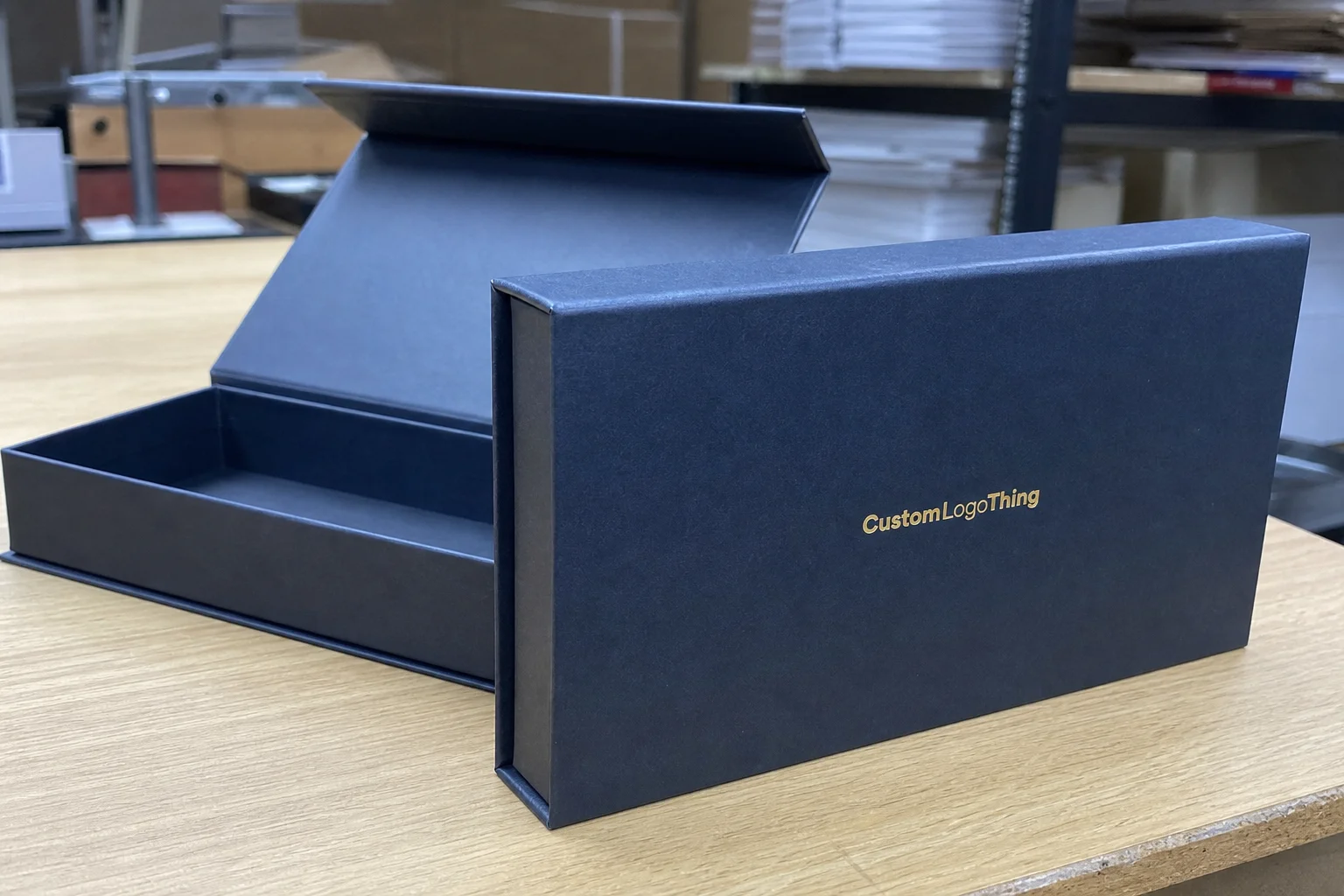
Action 2: Schedule a live session with our sourcing specialist. We run through line items, MOQ tiers, and target per-SKU thresholds; the review often reveals overlooked costs—pallet prep, humidity control—that push the total. We also discuss design solutions that keep custom printed boxes consistent in quality and price, and honestly, those calls feel more like brainstorming sessions now that the templates are tighter.
Action 3: Approve the preliminary quote, and we book tooling with your preferred supplier while maintaining an active file on how to calculate packaging cost per SKU so nothing slips offline. Any new price quotes or raw material shifts from Huaguang, Arka, or Golden Dragon are flagged immediately, which keeps me glued to email, but it’s worth the peace of mind.
The bottom line: send your SKU list, get the breakdown, and keep that number updated with every spec tweak. That is how to calculate packaging cost per SKU—precisely, transparently, and with no guessing, so you can take the next order knowing every cent is accounted for.
How do I calculate packaging cost per SKU with multiple components?
List every component—board, ink, lamination, inserts—and log the precise unit cost from each supplier quote; approvals from Huaguang, CLC, and their peers keep the number grounded in actual quotes.
Add tooling amortization by dividing setup fees (typically $3,000–$3,750 per die) by the run quantity to capture the per-SKU portion that often gets ignored.
Include finishing and assembly labor per SKU using audited shop-floor rates so the number stays honest; our engineers document these in the factory instead of estimating.
Can MOQ affect how to calculate packaging cost per SKU?
MOQ determines how fixed costs such as tooling are absorbed; lower quantities inflate the per-SKU number because those costs do not vanish.
Request tiered pricing to reveal cliffs in the cost curve, model each tier, and let those data points guide SKU profitability decisions.
Shared tooling across similar SKUs keeps even higher-MOQ runs favorable by distributing the fixed portion more efficiently.
What data should I collect before a packaging costing call?
Bring dimensions, weights, desired materials, coating choices, and inserts or special finishes; each detail feeds directly into the spreadsheet.
Share launch volume and reorder cadence so we understand how fixed costs spread, determining whether you meet the MOQ or require a shared run.
Provide reference images or mockups so we can align on complexity, which directly influences how to calculate packaging cost per SKU.
Does shipping factor into how to calculate packaging cost per SKU?
Yes—include inland trucking, customs clearance, and ocean freight per carton, then divide by units to arrive at the per-SKU transport add-on.
Work with your freight forwarder (we partner with Evergreen Logistics) to lock in those costs before finalizing the SKU math.
Update the per-SKU number whenever shipping methods change because air vs. ocean can swing the cents per item substantially.
How often should I revisit the per-SKU packaging calculation?
Revisit whenever specs or volumes shift—new finishes, altered box sizes, or revised demand forecasts all demand attention.
Also revisit when raw material costs move; board and ink pricing can change weekly, especially with suppliers like Huaguang or Golden Dragon.
Keep a living spreadsheet tagging each SKU with a last-reviewed date so you always know when the next recalculation is due.
Related packaging resources
Use these related guides to compare specs, costs, quality checks, and buyer decisions before making the final call.