Buyer Fit Snapshot
| Best fit | Candy Packaging Boxes Wholesale projects where brand print, material claims, artwork control, MOQ, and repeat-order consistency need to be specified before quoting. |
|---|---|
| Quote inputs | Share finished size, material target, print colors, finish, packing count, annual reorder estimate, ship-to region, and any compliance wording. |
| Proofing check | Approve dieline scale, logo placement, barcode or warning zones, color tolerance, closure strength, and carton packing before bulk production. |
| Main risk | Vague material claims, crowded artwork, missing packing details, or unclear freight terms can make a low unit price expensive after revisions. |
Fast answer: Candy Packaging Boxes Wholesale: Pricing, Specs, Lead Time should be specified like a repeatable production item. The safest quote records material, print method, finish, artwork proof, packing count, and reorder notes in one written spec.
Production checks before approval
Compare the actual filled-product size with the drawing, then confirm tolerance on folds, seals, hang holes, label areas, and retail display edges. Reserve space for logos, QR codes, warning copy, and material claims before decorative graphics fill the panel.
Quote comparison points
Review material grade, print process, finish, sampling route, tooling charges, carton quantity, and freight assumptions side by side. A quote is only useful when the supplier can repeat the same color, closure quality, and packing count on the next order.
Candy moves quickly, and the box around it has very little time to prove its value. With Candy Packaging Boxes wholesale, the difference between a carton that looks shelf-ready and one that feels disposable can come down to a few cents, a tighter fold, and a print surface that still holds up after shipping, stacking, and repeated handling. Buyers feel that difference long before they see the invoice, and so do customers standing in front of the shelf for three seconds or less.
I have sat through enough packaging reviews to know how this usually goes: a brand starts by asking for the cheapest carton, then realizes the cheaper option is the one that dents, scuffs, or prints poorly once the first pallets move out. That is why candy Packaging Boxes Wholesale works best as a repeatable program instead of a last-minute purchase made under pressure. A good spec sheet saves more money than a hurried negotiation ever will.
For a packaging buyer, the real goal is not finding the lowest carton price and calling it a win. The better move is choosing a structure that prints cleanly, assembles without drama, and holds up every time you reorder. In practice, that means deciding early which parts of the package must perform, and which parts are only there to make the product look nice. If those two are mixed up, the budget gets muddy fast.
Candy Packaging Boxes Wholesale: Why Bulk Orders Beat Piecemeal Buying
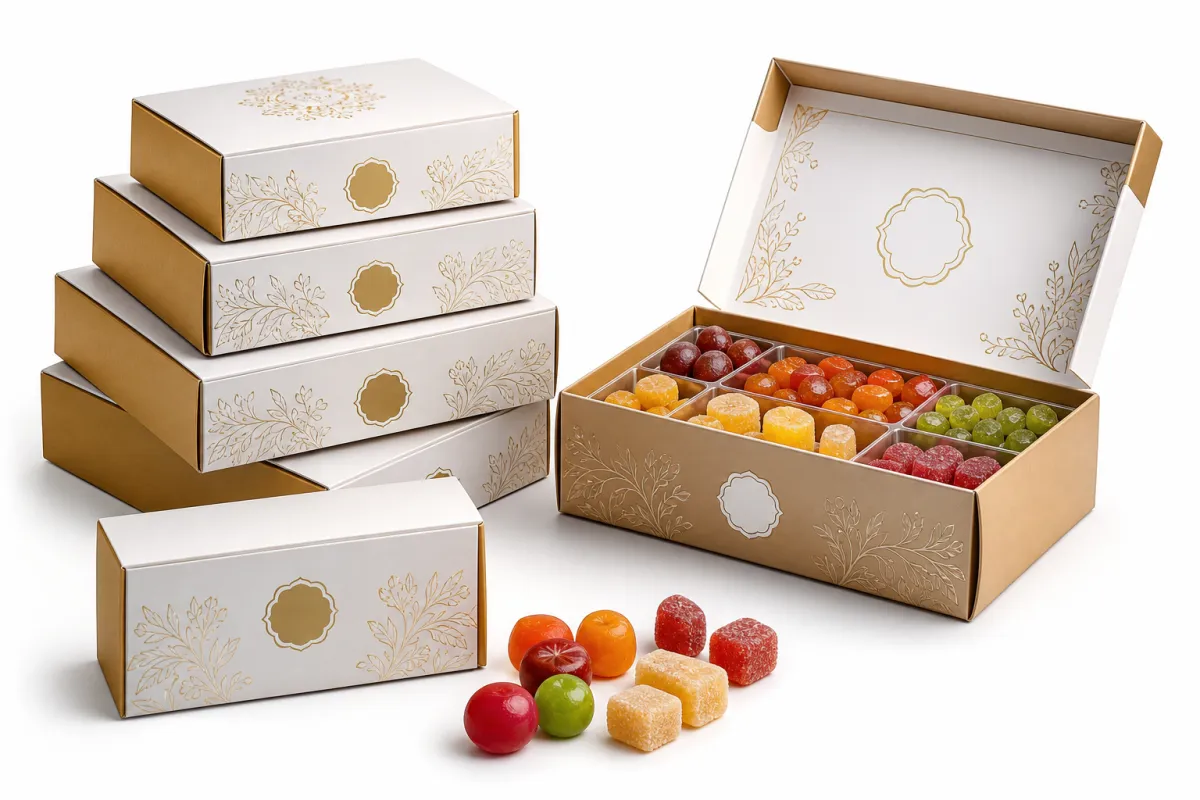
Candy packaging gets judged in seconds. A shopper notices color, shape, coating, and how the carton sits on the shelf before a single piece is tasted. A box that looks thin or poorly finished sends the wrong signal right away. That is the blunt reality behind candy packaging boxes wholesale: a low-cost box can become the costliest option if it weakens shelf appeal, slows production, or creates damage in transit.
Wholesale buying makes financial sense because setup costs get spread across more units. Print plates, die cutting, trimming, folding, and finishing all carry fixed charges. Order 500 boxes instead of 5,000, and those setup costs sit on a much smaller batch, which pushes the unit price up fast. The savings only hold when the structure, print method, and material stay stable across the run. Change the box size for one flavor, switch the coating on another, or add a special finish to just one seasonal line, and the price advantage starts slipping away through added setup and complexity.
That is why candy packaging boxes wholesale tends to reward brands that plan in packaging families rather than isolated SKUs. One carton style can serve gummies, truffles, chocolate bites, seasonal assortments, and gift sets if the product count changes through inserts, dividers, or label swaps. The outer structure stays consistent. Branding stays recognizable. Reorders stop turning into a fresh design project each time sales wants a new flavor live, which is a small mercy when the calendar gets crowded.
Operationally, standardized packaging is easier to approve, easier to stock, and easier to forecast. A confectionery brand that sells Valentine’s assortments, holiday gifts, and everyday candy bars does not need three separate carton systems if one platform can cover the line. In day-to-day buying terms, that means fewer proofing mistakes, fewer mismatched reprints, and less scrambling when a new item appears that was never part of the original packaging calendar.
Most buyers have seen this happen. A candy brand launches three gummy flavors and two chocolate bites, then discovers that separate cartons for each version create more waste than expected. A single candy packaging boxes wholesale program with one board spec, one fold pattern, one size family, and different print panels or labels keeps the whole line cleaner. The result is stronger shelf consistency, less design overhead, and a smoother reorder path. Nothing flashy about it. It is simply better packaging discipline.
If the box dents, crushes, or looks cheap on shelf, the candy starts losing value before anyone opens it.
Before quoting begins, the useful details are already known: box style, board grade, print method, MOQ, timeline, and whether the carton has to do more than sit on a shelf. Those are the core questions for candy packaging boxes wholesale, and sorting them early saves a great deal of back-and-forth later.
Candy Packaging Boxes Wholesale: Materials, Styles, and Print Options
The structure should come first. Most candy packaging boxes wholesale buyers land on a few common formats because those formats balance cost, presentation, and performance in ways that custom novelty shapes usually do not. Tuck end cartons remain the workhorse for retail shelves. Auto-Lock Bottom Boxes make more sense for heavier candy or any pack that needs a stronger base. Sleeve-and-tray sets bring a more premium feel and work especially well for assortments, gift packs, or truffles. Window boxes put the product on display, which helps when color, shape, or decoration is part of the appeal.
Material choice changes both appearance and function. SBS or coated paperboard is a strong choice for crisp graphics and clean branding because it prints beautifully and holds sharp folds. Kraft creates a more natural, handcrafted feel and fits brands that want a warm, organic look. Corrugated is the safer option when the box needs to survive e-commerce drops, longer freight routes, or heavier candy loads. None of those materials is automatically right or wrong. The correct answer depends on candy weight, retail environment, and the amount of handling the carton must absorb before it reaches the customer.
Print decisions matter more than many buyers expect. CMYK delivers full-color artwork and usually serves as the baseline for Custom Printed Cartons. Pantone keeps brand colors stable across runs, which matters when a logo green or red has to look the same on every reorder. Matte lamination softens the surface and gives the box a quieter, more restrained finish. Gloss pushes color harder and can make photography pop on shelf. Specialty finishes such as foil, embossing, or spot UV should be chosen with purpose, not simply because they sound attractive in a sales presentation. If the candy margin cannot absorb the added cost, the box may look premium while the business quietly takes on too much expense.
Candy packaging boxes wholesale becomes more useful when the inside is planned as carefully as the outside. Inserts, dividers, food-safe liners, and clear windows can improve presentation and keep the product from shifting during transit. Those features also affect cost and minimum order quantity, which means they belong in the conversation early. A mixed chocolate assortment, for instance, often needs a divider so each piece stays in place. Sticky gummies may be better served by an inner liner or pouch if oil migration or tackiness could become an issue. Fragile truffles usually do best with a snug insert so the box does not sound loose each time it is picked up.
Some candy projects need more than a good-looking carton. Direct-to-consumer shipping and rough distribution routes call for a structure that can handle more than shelf display. If the package must survive transport stress, ask whether the design should be evaluated against common transit standards such as those covered by ISTA. That is a practical way to learn whether the carton belongs in a shelf-only program or whether it needs stronger support. It is also worth saying plainly that ISTA is a test framework, not a stamp of magic; the box still has to be built well in the first place.
Paper sourcing can matter as well. If certified fiber content is part of your brand story or procurement requirements, ask whether the paperboard can align with FSC requirements. That is not the answer for every project, but it is a useful checkpoint when package claims, retailer expectations, or internal compliance review are part of the brief. FSC certification is about sourcing and chain-of-custody, so the paperwork should be checked with the same care as the artwork.
Choose the format by product type, not by habit. Small bite-size candies usually do fine in lighter folding cartons. Boxed chocolates need better compression resistance and a more polished presentation. Hard candies may tolerate simpler construction, though they still need enough board stiffness to stay presentable after stacking. Mixed assortments require the most planning because the package has to protect multiple pieces while still looking premium enough to support a higher retail price. That is the real work of candy packaging boxes wholesale: protect the product, support the brand, and hold up in real handling without forcing the budget into a bad place.
Candy Packaging Boxes Wholesale: Product Specifications Buyers Should Lock Before Quoting
Most packaging headaches start with vague specifications. A buyer asks for pricing before the size is locked, then everyone spends the next week correcting a quote that never had enough information in the first place. That pattern costs time and invites mistakes. Define the product first, then request candy packaging boxes wholesale pricing. Box dimensions, candy count, item weight, and whether the carton ships flat or assembled all affect the final number.
Size is the first gate. A carton built for six truffles is not the same thing as a box for twelve gummies or a display pack for a single chocolate bar. Interior fit, outer dimensions, and shelf footprint all need to be known before the quote means much. If the box must sit inside a retail tray, include the tray size in the specification. If it is shipping direct to consumers, the external dimensions can affect freight pricing more than print finish ever will.
Other details matter just as much, and buyers often forget them until production starts. Bleed size. Dieline format. Coating choice. Food-contact requirements. Window dimensions. Insert style. Tamper-evident features. Barcode placement. Ingredient copy. If those items are not settled before artwork is finalized, they turn into delay points later. Delays in candy packaging boxes wholesale projects rarely come from mystery problems. They usually come from paperwork that arrived late.
A practical rule helps here: the more fragile or premium the candy, the more exact the structure has to be. Sticky gummies can deform if the carton is too tight. Truffles crush if the insert is too loose. Gift assortments rely on fold accuracy because presentation is part of the value. A box that looks fine on a screen can still fail in hand if the board is too light or the closure is too weak. That is why structure belongs in the quote stage, not after approval.
Approval assets should be locked early as well. Final artwork. Logo files. Barcode art. Nutrition panel. Ingredient text. Compliance language. Any claim about recyclable content, FSC paper, or food-safe lining should be checked before proofing begins. A clean spec sheet is far cheaper than a corrected print run. If your team already uses a purchasing checklist, that checklist should cover every material and print note needed for branded packaging, not just the dimensions.
Many teams benefit from a standard spec sheet because it makes vendor comparison much easier. Instead of sorting through quotes that hide differences in board thickness or coating, you can compare the details side by side. A useful sheet for candy packaging boxes wholesale should include:
- Exact box dimensions and product count
- Board type and thickness
- Print side count and color method
- Coating or lamination
- Window, insert, or divider requirements
- Artwork status and file format
- Shipping address and delivery target
If you need a place to start with custom printed boxes, our Custom Packaging Products page is a useful reference for common structures before sending a quote request. For buyers who place repeat orders, the Wholesale Programs page keeps the process moving without rebuilding the same specification from scratch each time.
Pricing, MOQ, and Quote Terms for Candy Packaging Boxes Wholesale
Pricing looks simple until you break it into parts. The unit cost for candy packaging boxes wholesale depends on box style, board grade, print coverage, finishing, and order quantity. The carton itself is only one line on the bill. Setup, tooling, sampling, freight, and sometimes storage also affect the real total. That is why two quotes that appear close on paper can end up very different once the invoices are tallied.
The honest version is straightforward: small custom runs almost always carry a higher unit price. Larger wholesale runs lower the cost per box, but they also require more storage, more cash tied up in inventory, and more confidence in demand forecasts. That tradeoff matters a lot for seasonal candy. Ordering too few units means paying more per box and risking a stockout. Ordering too many means letting finished cartons sit while the market moves on.
MOQ changes based on how much complexity the box includes. Standard folding cartons usually allow lower minimums than rigid boxes, sleeve-and-tray sets, or packaging with heavy finishing. Add foil, embossing, die-cut windows, or custom inserts, and the minimum often rises because the setup work becomes less efficient. That is normal. It is not a trick. It is the math of production, and trying to force a small run into a big-run format usually ends up costing more anyway.
When you read a quote for candy packaging boxes wholesale, compare like for like. Make sure the dimensions match exactly. Check board weight, print side count, coating, insert inclusion, and whether the price includes shipping or only factory pickup. Ask whether tooling is included. Ask how samples are billed. Ask if there is a price break at 1,000, 3,000, and 5,000 units. Those tiered quantities show where the real cost drop begins.
Concrete budget ranges are more helpful than vague promises. For simple Custom Folding Cartons, buyers often see lower unit costs at higher volumes and much higher costs on small runs. For premium or specialty candy boxes, price increases quickly as structure and finishing get more complex. A rough working range for a basic retail carton might land around $0.18-$0.45 per unit at larger quantities, while more elaborate candy packaging boxes wholesale projects with inserts, windows, or specialty finishes can move into the $0.55-$1.50+ range depending on board, complexity, and quantity. That is not a formal quote. It is a practical reality check.
The table below offers a useful comparison of common options. Treat it as a planning tool, not a promise.
| Box Type | Best For | Typical MOQ | Common Unit Range | Notes |
|---|---|---|---|---|
| Tuck End Carton | Retail candy bars, small gummies, entry-level gift packs | 500-2,000 | $0.18-$0.45 | Good for shelf display; lowest complexity |
| Auto-Lock Bottom Box | Heavier candy, stronger retail packs | 1,000-3,000 | $0.25-$0.60 | Stronger base; faster packing on some lines |
| Window Box | Assortments, premium chocolates, display-driven retail | 1,000-5,000 | $0.30-$0.85 | Window material and cutting add cost |
| Sleeve and Tray | Gift candy, seasonal assortments, higher-end packaging design | 2,000-5,000 | $0.55-$1.50+ | More premium feel; more setup and assembly steps |
| Corrugated Mailer-Style Box | E-commerce candy, shipping protection, subscription boxes | 500-2,000 | $0.65-$1.80+ | Higher freight protection; usually larger footprint |
That table is exactly why buyers should ask for more than one quantity tier. A 1,000-unit quote may feel expensive, while the 3,000-unit or 5,000-unit break can change the math enough to justify a larger purchase. Sometimes it does not. Good purchasing means looking at the numbers instead of assuming bulk always wins. In candy packaging boxes wholesale, bulk only helps when inventory turns quickly enough to justify the spend.
If the packaging also has to support broader retail packaging standards, ask for a quote that spells out board weight, finish, and carton count per case. The quote should read like a procurement document, not a sales note. That is how experienced buying teams work, and it is also how they keep the final landed cost from turning into a surprise.
Process and Timeline: From Artwork to Delivery
A clean process matters just as much as a clean box. The best candy packaging boxes wholesale orders follow a simple sequence: inquiry, spec confirmation, artwork review, proof approval, production, packing, and shipment. Anything less organized tends to create delays. Buyers do not need drama; they need a timeline they can plan around with confidence.
Most first orders begin with a specification check. That means confirming box style, dimensions, quantity, print coverage, and any finishing features. Once those are set, artwork gets mapped onto the dieline. If the design team sends a file that ignores bleed, safe zones, or barcode placement, the proof process slows down right away. That is not the printer being difficult. That is the printer keeping the job from becoming waste.
Lead times vary by structure. Simple folding cartons can move fairly quickly after proof approval, while custom inserts, specialty finishes, or first-time tooling add time. A practical planning range for candy packaging boxes wholesale is often about 10-20 business days after proof approval for straightforward runs, with more complex jobs taking longer. Shipping time is separate. Always ask for both. A carton that is "done in production" is not the same thing as one that has arrived at your warehouse.
Most delays come from a short list of repeat problems: missing dielines, low-resolution files, late proof changes, and unclear shipping addresses. These are ordinary issues, which is exactly why they show up so often. If you want a launch to land on time, settle artwork and logistics early. That includes labeling, carton counts, palletizing requirements, and destination details for the finished candy packaging boxes wholesale order.
Seasonal candy launches need extra time built into the schedule. Holiday assortments, Valentine’s runs, and limited-edition flavors always end up under more calendar pressure than expected. If a launch date is fixed, include sampling time before production begins. A digital proof catches layout issues. A physical sample catches structure issues. When the design includes a window, insert, foil, or any other detail that changes how the box behaves in hand, both checks are worth the time.
Rush production can work, but only for the right jobs. Standard materials and simple print specs are the easiest to expedite. When the project needs special finishing, complex construction, or several rounds of artwork revisions, rush options become narrower and less economical. That is not a scare tactic. It is how candy packaging boxes wholesale production works when the timeline meets real manufacturing limits.
From a packaging design standpoint, the timeline should also protect repeatability. The first run is where the dieline gets validated, the color gets checked, and fold behavior gets confirmed. The second run should feel easier. If it does not, the supplier has not given you a stable process. That is a warning sign for any retail packaging program that expects to scale.
Why Choose Us for Candy Packaging Boxes Wholesale Orders
Buyers stay with a packaging supplier for one reason: the work keeps arriving the way it was approved. For candy packaging boxes wholesale orders, that means responsive quoting, clear dielines, consistent specifications, and production built for repeat business instead of one-off experiments. Fancy language does not matter if the cartons arrive late or the folds land off by a few millimeters.
What brands usually want is steady reliability. A quote that answers the right questions. A proof that does not hide surprises. A box that matches the mockup closely enough to keep package branding intact across reorder cycles. Once a candy line is in market, small changes in color, fold quality, or board weight become very visible. Customers notice more than procurement teams expect. They may not describe the problem in technical terms, but they absolutely notice when the packaging looks inconsistent.
That is where a dependable wholesale partner matters. Reorders move faster because the specs are already established. Artwork stays consistent because the files and dieline are locked. New flavors can be folded into the same system without rebuilding the entire packaging plan. That is especially useful for brands that grow through seasonal flavors, promotional assortments, or retail packaging programs with multiple SKUs.
We also see a lot of projects where the product itself is simple, but the packaging decisions are not. A candy buyer may need a box that looks premium on shelf, ships safely to stores, and still fits inside a master carton. That is a normal request. It is not unusual. It just needs a supplier that understands material behavior, print constraints, and production tradeoffs. The right support can keep a custom printed boxes program from turning into rework.
Good wholesale support should also mean practical advice. If the candy is light, there is no reason to overspec the board and waste money. If the product is fragile, underbuilding the carton is false economy. If the design calls for a premium finish, the finish has to support the retail price, not just the mood board. That is where many teams get tripped up. Packaging is not decoration first. It is product protection, shelf communication, and price justification working together in one structure.
Our role is to help buyers make those decisions with fewer surprises. That includes clear production communication, straightforward cost breakdowns, and recommendations based on actual use, not wishful thinking. A good candy packaging boxes wholesale partner should reduce friction. If every reorder feels like a fresh puzzle, the supplier is costing more than the carton price suggests.
If your team needs recurring fulfillment, multi-SKU packaging, or a controlled wholesale buying program, our Wholesale Programs page is the best place to start. If you are still deciding on structure, board, or print style, the Custom Packaging Products page gives you a practical starting point for planning the right package branding approach.
Next Steps: How to Order Candy Packaging Boxes Wholesale Without Rework
Good orders begin with good inputs. Before requesting quotes for candy packaging boxes wholesale, gather five basics: candy type, box dimensions, estimated quantity, artwork files, and target delivery date. That is enough to get a meaningful starting price and avoid the back-and-forth that burns time for everyone involved.
Ask for a proof or sample before placing the full run, especially if the box includes a window, insert, foil, or a premium finish. A digital proof catches layout issues. A physical sample catches structure issues. If the launch matters, both are worth doing whenever the design carries risk. A minute of review can prevent a full production mistake, and that is a trade worth making every time.
Compare at least two quantity tiers. For many candy packaging boxes wholesale jobs, the unit price changes enough between 1,000 and 3,000 pieces to justify a different buying decision. Sometimes the larger order is the better move. Sometimes storage costs erase the benefit. That is why the numbers matter. Guessing gets expensive fast, and pretending otherwise does not improve the margin.
Keep the reorder file ready once the first run is approved. Save the dieline. Save the final artwork. Save the approved color references. Save the approved quote with the exact board, coating, and dimensions. Reorders move faster when the file is organized. They also cost less in time, which is the one budget line many teams overlook until it starts causing problems.
Here is the simple action list I would use for candy packaging boxes wholesale:
- Confirm size, structure, and board weight.
- Approve artwork and barcode placement.
- Check whether inserts, windows, or coatings change MOQ.
- Compare price at multiple quantity tiers.
- Lock shipping timing before production starts.
Do that, and the order stays manageable instead of messy. Skip it, and the packaging project starts making decisions for you. For candy brands, that is usually a bad trade. If you want custom packaging that supports the product instead of fighting it, candy packaging boxes wholesale should be treated like a repeatable buying program, not a one-time gamble.
FAQ
What is the usual MOQ for candy packaging boxes wholesale orders?
Standard folding cartons often start lower than rigid or specialty candy boxes because the structure is simpler and setup is cheaper. A practical range is often a few hundred units for basic custom cartons, while premium finishes, inserts, or complex die cuts usually push the minimum higher. The best way to judge MOQ is by comparing the exact material, print coverage, and finishing you want, not by asking for a generic number that ignores the job details.
How long does candy packaging boxes wholesale production usually take?
Simple jobs can move from proof approval to production in about one to two weeks, depending on factory load and order size. Custom structures, special finishes, and first-time tooling add time, so first orders usually take longer than reorders. Shipping time is separate from production time, so buyers should ask for both before they commit to a launch date. If the schedule is tight, build in a buffer; candy launches rarely get easier once the calendar starts slipping.
Which materials work best for candy packaging boxes wholesale?
Paperboard is the common choice for retail candy because it prints cleanly and keeps unit cost reasonable. Kraft works well for natural or artisanal brands, while corrugated is better when the box has to handle shipping stress. Food-safe coatings or liners may be needed when the candy is delicate, oily, or packed for direct contact protection. If the candy touches the interior surface, confirm ink and coating compatibility before the order is approved.
What affects candy packaging boxes wholesale pricing the most?
The biggest pricing drivers are box style, board thickness, print coverage, coating, and order quantity. Special finishes like foil, embossing, or spot UV raise cost fast, so they should support the brand strategy, not just decorate the box. Shipping, tooling, and sample costs can change the real total, so buyers should ask for an all-in comparison. If two quotes are not built from the same spec, they are not truly comparable.
Can I get custom inserts or windows with candy packaging boxes wholesale?
Yes, many candy cartons can include inserts, dividers, or clear windows if the structure is planned correctly from the start. Windows help with shelf visibility, while inserts keep assortments from shifting during transit or display. These features usually change both MOQ and price, so they should be confirmed before artwork is finalized. Once the dieline is locked, changing these features can slow the job down more than most teams expect.
Strong candy packaging is not about overdesign. It is about making the box fit the product, the shelf, and the shipment without wasting money. If you are buying candy packaging boxes wholesale, keep the spec tight, ask for prices at more than one quantity level, and approve a physical sample before the main run. That is the clearest path to packaging that looks right, runs right, and keeps paying for itself on the next order of candy packaging boxes wholesale.


