Ceramic Embroidered Baseball Caps Bulk Order Planning is less about picking a cap style than controlling a chain of small decisions that can break an order if they drift. A sample can look right on a desk and still fail once it becomes a 500-piece run. Stitch density changes. Seams shift. A logo that felt balanced on a proof may sit too high on a real crown, or too close to a seam to read cleanly.
That gap between sample and production is where budgets get hurt. One extra thread color can add setup time. A different closure can change the fit profile and the carton count. Even a modest change in embroidery size can alter digitizing, needle path, and machine time. None of those problems looks dramatic in isolation, which is why they are so easy to miss until they repeat across a full order.
For procurement teams, the goal is consistency: the approved proof, the bulk run, and the delivered cartons should all tell the same story. That means treating ceramic embroidered baseball caps Bulk Order Planning as a specification exercise, not a styling exercise. The earlier the body type, decoration method, and packaging rules are locked, the fewer surprises appear later.
Why bulk planning prevents expensive cap rework
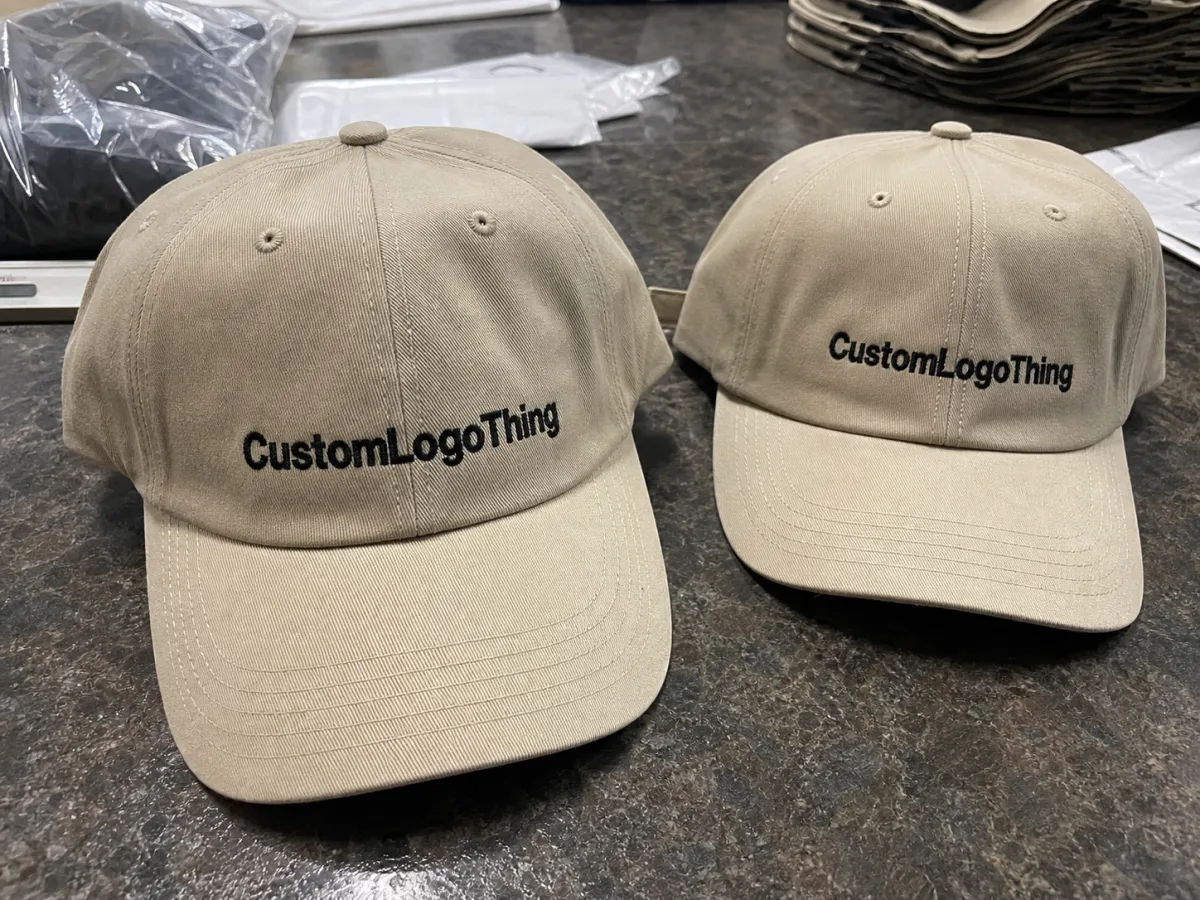
A small order can hide flaws that a larger one exposes. Fifty hats may pass because the first few pieces look fine under sample-room lighting. Five hundred hats tell a different story. If the crown is shallow, the logo may crowd the front panel. If the embroidery is dense, the cap may lose shape. If the artwork crosses a seam, the stitching can pull the image off center by enough to matter.
The expensive mistakes are usually not obvious ones. They are the almost-reasonable changes: a slightly wider logo, a different shade of thread, a switch from snapback to strapback, a request for retail packaging after sampling is already underway. Each adjustment seems small. Together, they can change the production path enough to force a new proof, a new sample, or a new approval cycle.
That is why the most useful planning document is a spec sheet with restraint. It should say exactly which cap body is being used, which decoration method is approved, where the logo sits, and what level of finish is expected. If the order is for uniforms, the buyer may care most about durability and fit range. If the hats are for resale, symmetry, hand-feel, and carton presentation matter more. The same cap can serve both uses, but the tolerance for variation is very different.
Planning also has to account for sequence. A launch tied to a trade show, a store reset, or a holiday mailing leaves little room for late-stage corrections. If production is forced to pause while marketing reconsiders the thread color, the schedule absorbs that delay whether or not anyone intended it. That is why the people who keep cap programs on track are usually the ones who ask annoying questions early.
One practical rule holds up across most programs: if a change cannot be explained in one sentence, it probably deserves a fresh proof.
Ceramic embroidered baseball caps: spec sheet basics
Before requesting quotes, define the cap body in plain terms. Is it structured or unstructured? Six-panel or five-panel? Low-profile or mid-crown? Pre-curved visor, flat visor, or a light curve that holds its shape without looking rigid? Those choices affect how the logo sits, how the cap photographs, and how it wears after a full day.
Material matters too. Cotton twill gives a familiar soft hand and a classic look. Polyester can hold color well and resist wrinkling. Cotton-poly blends usually sit between the two. Mesh backs change the stitching behavior because the front panel must carry the decoration while the rear panel breathes differently. If the order is meant for long wear in warm conditions, that detail is not cosmetic. It changes comfort.
The closure should be written down with the same care. Snapback, strapback, fabric strap, hook-and-loop, buckle, and fitted styles all affect fit management and inventory planning. Adjustable caps are easier to distribute across teams, especially when size data is thin. Fitted caps can feel more premium, but they require more forecasting and often more size splits. A buyer who expects mixed audiences should not leave this choice vague.
Decoration placement needs exact measurements, not just a general direction. Front-center embroidery remains the most common because it reads clearly from a distance. Side placement and back text are useful for programs that need sponsor marks, department names, or event references. If the logo crosses a seam, the digitizing file has to account for panel construction. If the artwork includes tiny text, thin strokes, or a narrow trademark line, the supplier may need to enlarge it to keep the final stitch readable.
Thread control is another place where experienced buyers ask for specifics. Some suppliers work from Pantone targets. Others rely on thread books and the closest available shade. The difference matters more in darker colors, where a slight shift in tone can disappear under warehouse light and then become obvious under store lighting. Ask whether the factory retains thread records for repeat orders. If the program is likely to reorder, that record saves time and limits drift.
- Confirm body style: structured, unstructured, six-panel, or five-panel.
- Confirm fit method: adjustable or fitted, with size split if needed.
- Confirm material: cotton twill, polyester, blend, or mesh-backed build.
- Confirm decoration area: front, side, back, or mixed placement.
- Confirm color control: Pantone match, thread library, or approved nearest match.
- Confirm use case: staff wear, giveaway, retail, or resale.
Customization choices that affect hand-feel and durability
Decoration method changes more than appearance. Flat embroidery is the safest choice for most logos because it stays readable, travels well across different cap bodies, and usually keeps the front panel comfortable. It is also the easiest route for repeat orders, which matters when a program may reorder later with the same artwork.
3D puff embroidery creates more height and visual impact, especially for block lettering and simple shapes. The tradeoff is stiffness. A puff build can make the front panel feel firmer and can limit how much the cap flexes during wear. That is acceptable for some retail programs and not ideal for long shifts or casual uniform use. If the artwork is busy, puff tends to make the problem worse rather than better.
Patch-backed decoration behaves differently again. Woven patches, embroidered patches, and mixed-material patches can preserve tiny details that direct stitching would blur. They also bring an extra layer of material, an extra attachment step, and a thicker edge profile. For buyers, the question is not which option sounds premium. It is which option keeps the logo legible after packing, shipping, handling, and normal wear.
Stitch density is one of the easiest variables to misunderstand. Too sparse, and the design looks thin or patchy. Too dense, and the panel can pucker around the artwork. Backing changes the result as well: lighter backing improves drape, while heavier backing stabilizes large logos but makes the cap feel more rigid. Thread finish matters, too. A glossy polyester thread reflects differently from a matte thread, and the same logo can look surprisingly different under office light versus retail lighting.
There is a practical rule here that saves headaches: simplify the artwork before production if the logo can tolerate it. Slightly larger lettering with clearer spacing almost always outperforms a tiny, crowded design. That is not a compromise. It is a better fit for embroidery, which rewards shape and spacing more than fine detail.
Buyers planning for a mixed-use program should also think about wear. Staff uniforms need comfort over long shifts. Retail hats need cleaner edge finish and more exact symmetry because customers inspect them up close. Giveaways sit somewhere in the middle, where the cap needs to look sharp in photographs and survive distribution without a lot of handling damage.
| Decoration method | Best for | Typical tradeoff | Buyer note |
|---|---|---|---|
| Flat embroidery | Most logo styles | Lowest visual depth | Usually the simplest route for repeat orders |
| 3D puff | Bold lettering | More rigidity at the front | Works best with simple shapes and thicker strokes |
| Woven or embroidered patch | Small text or detailed art | Extra material and assembly step | Useful when direct embroidery would blur fine detail |
| Mixed decoration | Retail-focused programs | More approvals and longer setup | Use only if the visual gain is clear |
Pricing, MOQ, and unit cost levers buyers should model
Cap pricing is built from several moving parts, and the factory price alone rarely tells the full story. The main levers are the cap body, decoration complexity, digitizing or setup fees, the number of thread colors, special labels, custom inner tape, retail tags, and packaging. One-color embroidery on a stock cap is the cheapest path. Add patch work, custom labeling, or specialty finishing, and the price climbs quickly.
MOQ behavior becomes clearer once the setup cost is spread across the order. Small runs carry a higher unit price because digitizing, proofing, and machine setup do not shrink just because the order is small. Larger runs reduce the per-hat cost, but only if the buyer can actually use the inventory. That is why order-threshold quoting matters. Ask for pricing at 100, 250, 500, and 1,000 units. Those numbers reveal where the unit cost drops and where extra stock starts to create its own risk.
For planning purposes, broad price bands help more than a single magic number. In many programs, a plain stock cap with simple embroidery might land in the roughly $2.50 to $4.50 ex-factory range at 500-plus units. Add more thread colors, patch construction, or branded packaging, and the cost can move into the $4 to $7 range or higher. At 100 units, the same build is often several dollars more per piece because the fixed costs are spread across fewer units. These are not promises; they are the shape of the market.
The best quote is usually the one that includes landed cost, not just factory cost. That means samples, freight, duties, inspection charges, carton costs, and any rush or split-shipment fees. A cap priced at $3.80 ex-factory can become a $5.40 landed item without anyone making a mistake. Freight and packaging often matter more than buyers expect, especially when shipping weight, carton size, and delivery window are part of the equation.
A useful budget model has six lines: unit price, setup, freight, duty, packaging, and a small reserve for correction costs. That reserve does not need to be large. Three to five percent is often enough to absorb extra sampling, label changes, or a carton upgrade. It is a minor amount to protect against one bad assumption.
If a cap program sits inside a larger merchandise rollout, grouped sourcing can change the economics. Multiple items may share approval effort, freight planning, or packaging standards, which can make the cap line item easier to forecast. The key is to compare like with like. A quote that assumes one decoration size, one label type, and one shipping lane should not be compared with a quote that assumes three of each.
Production steps, approvals, and turnaround expectations
A reliable timeline starts before production. The usual flow is art intake, digitizing, proof generation, sample production, sample approval, bulk production, inspection, packing, and shipment release. Each stage sounds simple, but the delays tend to happen at the handoff points. A late artwork revision can stop the file from moving forward. A slow approval can hold the entire schedule. A missing packaging decision can stall packing even after the embroidery is finished.
For a straightforward embroidered cap order using stock bodies, a practical lead time is often 12 to 15 business days after proof approval. Add custom labels, special packaging, multiple colorways, or more complex decoration, and 18 to 25 business days is more realistic. That does not mean the supplier is slow. It means the work has actual steps. Buyers who need a fixed launch date should build the approval window on their side so it is shorter than the production window, not longer.
Thread approval is a common bottleneck. A buyer may approve the artwork and then decide the thread should be darker, warmer, or closer to a brand red. That creates a second approval loop. The same thing happens with logo placement. Moving the design by a quarter inch may sound trivial, but on a small crown it can change the balance of the whole hat. Once the order starts moving, each change has a cost.
Packaging affects timing as well. Woven labels, tissue, hang tags, and insert cards all require coordination. If the order needs retail-ready packing, ask whether cartons are matched to the receiving plan. For shipments that will move through long transit lanes or be handled multiple times before shelving, packaging guidance from organizations such as ISTA can be useful. That is especially true when the delivery is expected to arrive in good shape rather than merely arrive.
Build a shipping buffer even when the production schedule looks healthy. Holiday congestion, port delays, and warehouse receiving windows do not care whether the proof was approved on time. A week of cushion can matter more than a small discount if the order is tied to a public event or a retail reset.
Quality-control checks that catch bulk-order problems early
Quality control should start at the sample stage, not after the cartons are sealed. The first check is visual: is the logo centered, legible, and proportional to the crown? The second is physical: does the cap sit correctly on a head, or does the front panel buckle? The third is repeatability: can the supplier reproduce the same result after the first approved piece?
Buyers should ask for simple measurements and tolerance ranges. Placement should be checked from the center seam or a fixed point on the visor. The cap crown should be measured for symmetry. The visor curve should be consistent across the sample set. A good factory will already be doing this, but it helps to confirm what they are measuring and how often. If the supplier cannot explain the check points clearly, the process may be looser than it should be.
Thread tension is another quiet quality issue. Too tight, and the fabric puckers around the stitch line. Too loose, and the embroidery looks uneven or unfinished. The problem may not show up in one photo, but it becomes obvious once the cap is handled, packed, and worn. That is one reason inspection photos should include close-ups, not just a clean front-facing shot.
Carton counts matter more than many first-time buyers expect. A production run can be perfectly embroidered and still create problems if the cartons are mislabeled, undercounted, or packed in the wrong size sequence. That is especially true for mixed-color orders or multi-location distribution. If the order is going to warehouses, event teams, or distributors, the packing list should match the receiving plan before shipment leaves the factory.
Repeat order files are another form of quality control. The factory should keep the final artwork, thread references, placement notes, and approved sample record. Without that file trail, a reorder becomes a fresh project. With it, the buyer can preserve the same cap body and decoration profile without starting over.
Supplier checks that prevent avoidable bulk-order mistakes
The strongest supplier is not the one that replies fastest. It is the one that documents assumptions clearly and confirms them in writing. The quote should say what is included, what is excluded, and which version of the artwork will be used. It should also specify embroidery size, thread count assumptions, packaging details, and any MOQ rules by color or decoration type. A vague quote creates comparison problems later.
Ask whether the supplier checks cap measurements at the crown, visor, and closure. Ask how they handle variation between lots. Ask what happens if a stitch line lands outside tolerance. These are ordinary procurement questions, not hostile ones. A supplier that answers them directly is usually easier to work with under deadline pressure. A supplier that dodges them often creates avoidable cleanup later.
Communication speed matters, but accountability matters more. A quick quote that leaves out the decoration area or packaging assumption is incomplete. A slightly slower quote that documents each variable is easier to compare and easier to approve. That difference becomes obvious once multiple vendors are bidding on the same program and the buyer has to line up the numbers cleanly.
After-sales support also deserves attention. Can the supplier reproduce the same thread palette later? Are production files stored for reorder use? Will inspection photos be available if a question comes up after delivery? If a remade batch is needed, does the supplier have a clear process for handling it? These details are not glamorous, but they are what separate a one-time transaction from a program that can be repeated without friction.
For sustainability-minded packaging or inserts, paper components can be specified with FSC-certified material where the sourcing claim needs to be documented. That does not solve every packaging question, but it helps keep the paper side of the order aligned with the rest of the specification.
What is the usual MOQ for ceramic embroidered baseball caps bulk orders?
MOQ depends on the cap body, the decoration method, and whether the supplier is quoting a stock base or a custom build. Many programs become easier to price at 100, 250, 500, and 1,000 units because those breakpoints show where fixed setup costs stop dominating the unit price. If colors are mixed, ask whether the MOQ applies per color or across the full order.
How should I budget for ceramic embroidered baseball caps bulk order planning?
Budget for the cap itself, digitizing or setup, samples, freight, duties, packaging, and any rush or split-shipment cost. A landed-cost quote is more useful than a unit-price quote because it reflects what the order actually costs by the time it arrives. If two suppliers are compared, they should be using the same embroidery size, thread count, and packaging assumptions.
What artwork files speed up a custom cap quote?
Vector files such as AI, EPS, or PDF usually move fastest because they are easier to digitize for embroidery. Include Pantone references, logo placement notes, and the final embroidery size so the supplier can quote accurately. If the design contains very fine text or gradients, ask whether it needs simplification before production.
How long does production usually take after approval?
Lead time usually starts after the final proof or sample is approved, not when the first inquiry is sent. Straightforward stock-body orders may finish in 12 to 15 business days, while orders with custom labels, more colors, or added packaging can run 18 to 25 business days. Peak seasons and shipping lanes can add extra days on top of that.
Can I mix colors or sizes in one bulk order?
Often yes, but the supplier may apply MOQ rules by color or by decoration variant, which changes the price structure. Mixed runs can also add sorting and packing time. Confirm carton labeling and distribution rules early if the order will go to multiple locations.
Good ceramic Embroidered Baseball Caps Bulk Order Planning is really about narrowing the gap between what was approved and what gets shipped. The more precisely the spec is written, the fewer revisions appear later, and the easier it is to keep cost, timing, and quality in the same lane.