Electronics embroidered baseball caps Bulk Order Planning starts with a practical truth buyers often miss: a cap is worn, handled, stuffed into bags, left on dashboards, and pulled on in bright light, wind, and heat. That means it has to do more than carry a logo. It has to fit cleanly, hold its shape, and survive long wear without looking tired by the second day.
That matters more in electronics than in many other categories. Field reps wear caps on service calls. Installers wear them outdoors. Trade show teams wear them under heavy lighting and long shifts. Channel partners may receive them in launch kits, where the cap becomes part of the brand impression before anyone touches the product. The best bulk orders account for all of that before the first proof is approved.
If the cap will be used indoors, outdoors, or in mixed settings, let that use case drive the spec. A cap for technicians may need breathable fabric and a low profile that sits well with headsets or glasses. A launch-day cap can be a little sharper and more structured. A distributor gift often benefits from a cleaner finish and simpler decoration. The art file is only one piece of the order.
A cap may look simple on a screen. In production, the difference between a clean run and a problematic one usually comes down to fit, stitch behavior, and whether the buyer locked the use case before asking for price.
Electronics embroidered baseball caps bulk order planning starts with wearability
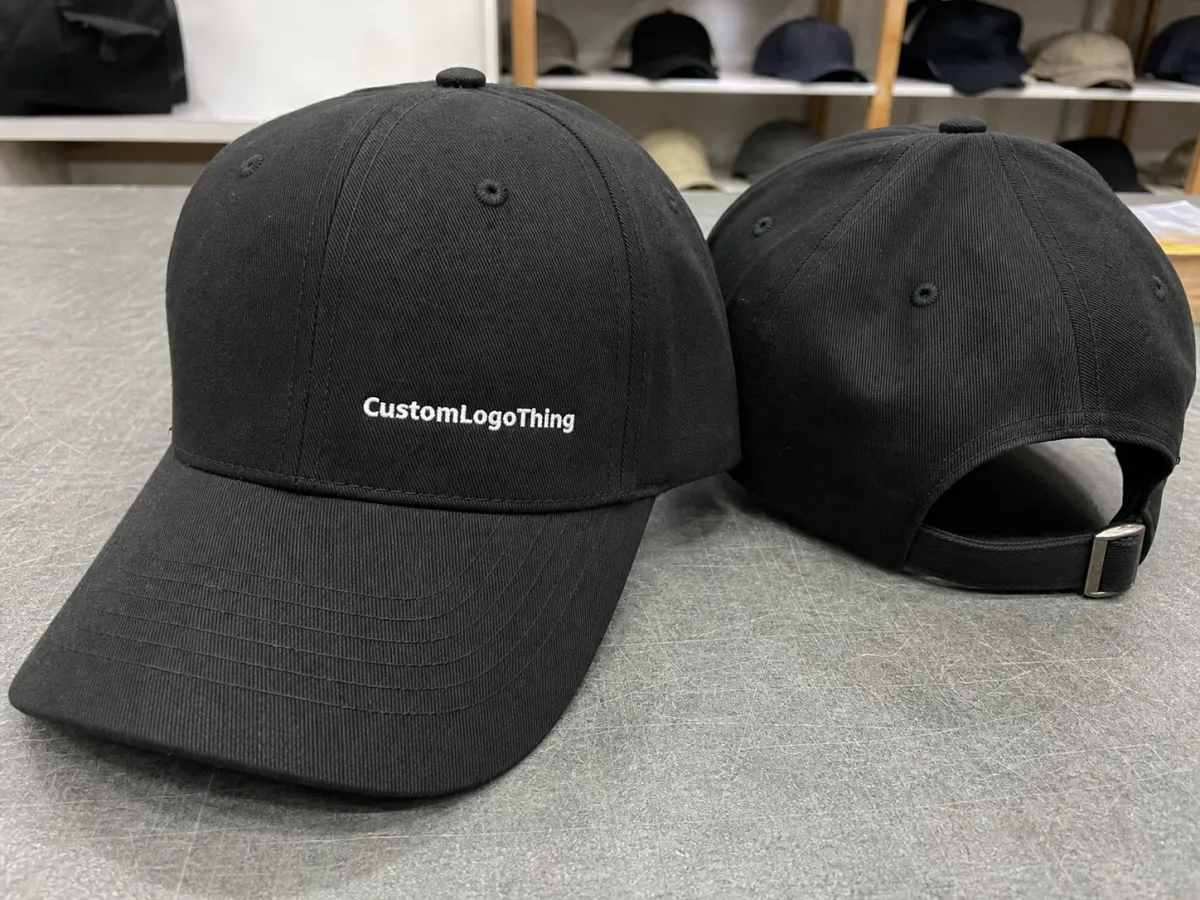
The first decision should be how the cap will actually be worn. Structured crowns hold a logo upright and create a more polished front panel, which works well for trade show crews, sales staff, and launch teams. Unstructured caps feel softer and more casual, which can suit service teams or internal giveaways. Neither option is better in the abstract; each solves a different problem.
Profile changes the tone too. Low-profile caps sit closer to the head and read as less promotional. Mid-profile styles give the front logo more room and usually help with legibility from a distance. Curved brims remain the safest choice for most field use because they shade the eyes and keep the cap familiar. Flat brims can work for a more fashion-forward tech brand, but they shift the message quickly.
Electronics buyers usually order caps for repeatable situations: installers working on rooftops, account managers visiting customers, booth staff standing all day, and partner teams who need a uniform look for launches. Those scenarios push the spec in different directions. Outdoor crews often need lighter fabric and a darker color that hides grime. Indoor teams may accept a denser, more polished embroidery build.
That is why planning should begin with wearability, not decoration. If the cap is for technicians, a brushed cotton twill body with a sweatband that does not rub after several hours is more useful than a flashy finish. If the cap is going into a distributor kit, the buyer may care more about packaging consistency and a compact shape that sits neatly in the carton. Bulk planning works best when the cap is treated as apparel, not as a logo carrier with a bill attached.
Fit still decides whether the item gets worn or abandoned. A cap that sits well tends to stay in rotation. A cap that pinches, rides too high, or feels flimsy ends up in a drawer or glove box. That is the quiet reason electronics Embroidered Baseball Caps Bulk Order Planning pays off: it reduces the odds of buying a branded item that fails on comfort before it ever fails on style.
Product details that influence the final sample
Fabric is the first spec buyers usually feel once a sample arrives. Brushed cotton twill is a classic choice because it feels durable, takes embroidery well, and usually delivers a familiar retail-style hand. Chino twill has a cleaner surface and can make the cap look a little more refined. Performance polyester dries faster and works better in heat, humidity, or active field use. Mesh-back styles improve airflow, but they also make the cap feel more casual and may not suit a polished electronics program.
Decoration method changes the final look as much as the fabric does. Direct embroidery is still the standard for most branded caps because it is durable, tactile, and easy to read from a distance. Patches can be the better choice when the logo has a lot of fine detail, a larger shape, or a visual style that benefits from a framed edge. Tonal embroidery, where thread stays close to the cap color, can work for a quieter premium effect on internal teams or executive kits.
Hardware affects daily comfort more than many buyers expect. A fabric strap with a metal buckle feels traditional and adjusts well. A snapback is quick and simple, though it reads more casual. Hook-and-loop closures are easy to size, but they can feel less refined. The sweatband matters too, especially for outdoor crews; a softer inner band helps during long wear, while a basic band may be fine for event use.
Small style details can alter the whole tone of the cap. Eyelets, contrast stitching, sandwich brims, piping, and piping color all add visual noise if they are not doing a real job. For electronics branding, restraint often wins. A field-ready cap usually looks stronger with a clean crown and a focused logo than with a pile of decorative extras that compete with the mark.
Two material notes help with expectation-setting. Midweight cotton twill in the 250-300 gsm range tends to hold structure better than thin fashion-grade fabric. Performance polyester usually feels lighter and dries faster, but can show embroidery puckering if the stitch density is too high and the stabilizer is too weak. Those are not defects in the concept; they are the kinds of production trade-offs that need to be discussed before the sample is approved.
The sample should answer three questions at once: does it fit well, does the logo read clearly, and does the cap match the way it will be used? If any answer is weak, the spec needs another round before production starts.
For buyers who care about carton presentation or insert materials, certification can matter on the packaging side. If you want a reference point for forest-source paper components, the FSC system is a practical benchmark. If the caps will move through parcel networks or mixed freight, the transit logic used by ISTA is worth reviewing as well.
Stitch count, panel shape, and logo placement specifications
Stitch count is one of the main drivers of both appearance and cost. Simple one-color logos are usually the easiest to produce cleanly. Dense artwork, tiny type, or marks with several line breaks take more machine time and usually need more careful digitizing. If a logo includes text smaller than about 4 mm, the design may need to be simplified to keep it legible after stitching. Thread has limits that print files do not.
Panel shape changes how the logo lands on the cap. A six-panel structured crown offers a wide front area, but the center seam can interrupt a large logo if the design is stretched too far across it. Most front logos need enough breathing room above the brim so they do not feel crowded. If the brand mark is long or the product name is detailed, scaling for clarity usually works better than forcing the logo to fill every inch of front panel space.
Placement should be decided before quoting. Front-only embroidery is usually the most economical. A front-and-side combination adds cost and setup time, but can make sense for launch kits or distributor programs. Back hits are useful for smaller brand marks or team identifiers, though they require careful spacing so the closure does not interfere with the stitch area.
The proof should show more than a pretty mockup. The production file needs exact placement, approximate stitch direction, and the relationship between the logo and the seam. If the embroidery map is vague, the bulk run can drift from the approved sample in ways that are hard to fix later. A clean proof is one that a machine operator can follow, not just one a marketing team can admire.
Quick spec list to lock before quoting:
- Cap style and crown profile
- Logo size in inches or millimeters
- Thread colors and match tolerance
- Front, side, or back placement
- Any required patch or tonal treatment
- Approval method for the embroidery proof
Electronics brands also run into seam limitations more often than expected. A logo that looks balanced on a flat mockup may sit awkwardly once the crown curves. The same applies to thin outlines, small counters inside letters, and heavy use of negative space. Embroidery is forgiving in some places and unforgiving in others. Buyers who understand that usually get better results on the first sample.
Pricing, MOQ, and unit cost drivers
Pricing moves in predictable ways: quantity, stitch complexity, number of logo locations, cap body choice, and whether digitizing or setup fees are included. A buyer ordering one simple logo on a stock cotton twill cap will usually pay less than a buyer asking for a two-location design on a premium performance style with custom thread matching. That difference is normal. Comparing quotes only works if the specs are actually the same.
MOQ depends on the build. Blank caps may have a lower stock minimum, but decorated bulk orders often start higher because embroidery setup takes time and the supplier needs enough volume to make the run efficient. For many standard decorated programs, a realistic minimum often falls around 48 to 144 pieces. Simpler stock styles can sometimes go lower; more complex builds may require more. The real floor depends on the cap source, decoration method, and machine time.
| Order size | Typical unit range | Common setup costs | Best fit |
|---|---|---|---|
| 48-99 caps | $6.50-$10.00 | $35-$90 digitizing/setup | Small launch teams, pilot programs, short-event needs |
| 100-499 caps | $4.25-$7.25 | $35-$90 digitizing/setup | Field crews, dealer kits, internal brand rollouts |
| 500-999 caps | $3.60-$5.50 | Often lower per-unit effect | Channel programs, repeated promotions, wider team distribution |
| 1,000+ caps | $3.25-$4.75 | Usually spread across the run | National programs, recurring inventory, large events |
Those ranges are estimates, not guarantees. Fabric choice, logo detail, thread count, and shipping method can move them up or down. They do help buyers identify quotes that are too high or suspiciously low. A very cheap quote often hides something: a lighter-grade cap body, a reduced embroidery area, no sample charge, or shipping that was left out of the math.
Unit cost usually falls as quantity rises, but not in a straight line. There is a point where the cap price flattens because embroidery setup has been absorbed. After that, extra savings come slowly. If a buyer only needs a small pilot run, paying slightly more per unit can still be the right call if it avoids over-ordering inventory that never moves.
Compare quotes with this checklist:
- Decoration method and number of locations
- Digitizing, setup, and sample charges
- Cap brand, fabric, and closure type
- Shipping terms and carton pack count
- Approval edits included before production
For buyers building a broader branded apparel program, pricing usually makes more sense when hats are compared against the rest of the kit, not in isolation. The cap may be a small line item, but repeat orders and reorders can change the economics fast.
Process and lead time from proof to delivery
A solid order usually follows the same path: request for quote, artwork review, digitizing, digital proof, sample approval, bulk production, inspection, packing, and shipment. The sequence sounds obvious until one step gets rushed. If the logo file is unclear, digitizing takes longer. If the proof is approved too quickly, placement errors can slip through. If the sample is not checked against the real use case, the bulk run can be off even when the mockup looked fine on a monitor.
Lead time depends on how ready the artwork is and how quickly approvals move. A straightforward cap order with a clean vector logo and one decoration location can move relatively quickly. A more complex order with thread revisions, patches, or multiple internal reviewers can take longer. Seasonal demand matters too. Trade show seasons, launch windows, and holiday gifting schedules all compress production capacity.
As a planning baseline, many buyers can expect about 12-15 business days from proof approval to completion on a standard decorated cap run, plus shipping time. Simple stock styles can move faster. Orders that need a physical sample first, special packaging, or artwork corrections can take longer. Overseas transit, customs review, and final delivery scheduling add more time again, so receiving plans should be set before the cartons leave the warehouse.
Sample approval protects the full order. It confirms thread color, logo size, and exact placement before hundreds or thousands of pieces are made. A good sample process is not a delay. It is insurance. If the team wants a particular shade of navy or a subtle metallic thread, that needs to be checked on the actual cap, not guessed from a screen.
If the caps will ship with product literature, inserts, or other carton contents, think through how the receiving team will handle the pallet or parcel. Mixed freight and parcel carriers are rough on corners. Carton count, pack configuration, and labeling matter because they determine how fast the order can be sorted once it lands. For buyers who want a standards-based view of transit stress, ISTA guidance is a useful reference point.
Good electronics Embroidered Baseball Caps Bulk Order planning also includes internal receiving time. A perfect production run can still miss the event if no one planned the sort by location, department, or channel partner. The carton may arrive on schedule and still be late in practice if distribution inside the company was never mapped.
Typical process checkpoints:
- Confirm quantity, placement, and deadline
- Approve a digitized embroidery proof
- Review a sample or pre-production reference
- Release the bulk run only after sign-off
- Plan shipping and receiving by team or region
How we keep logo consistency across every carton
Consistency is where production discipline becomes visible. On a long run, quality control should begin with a first-article check, then move into thread tension review, placement verification, and carton-level inspection before anything ships. If the first few caps are off-center or the fill density looks different from the approved sample, the issue should be caught immediately. The worst time to notice a problem is after the cartons are sealed.
Small material changes can create visible differences. Dye lots shift slightly. Closure hardware can vary by batch. Even a subtle change in crown structure can alter how the logo sits. Buyers planning repeated orders should hold onto approved specifications, thread references, and placement notes so the next run starts from the same baseline. That matters a lot when different departments reorder the same item at different times of the year.
Communication is another common source of drift. Procurement may care most about unit price. Marketing may care about visual consistency. Field operations may care about comfort and durability. If those priorities are not aligned before the quote goes out, the order can bounce between stakeholders and lose time. A short internal approval sheet usually solves more problems than a long email chain.
For repeated branded orders, the payoff is simple: fewer art surprises, fewer corrections, and fewer mismatched caps on reorder. That also helps with inventory planning. If a cap is going into a recurring distributor kit or a quarterly field rollout, the buyer can use the same approved spec and avoid re-learning the order every time.
The same logic applies to packaging. If the cap is part of a larger kit, matching carton count and pack configuration can save receiving labor. In some programs, a small improvement in carton planning matters more than a slight unit-price difference because it reduces sorting time, shipping damage, and internal handling.
Quality control checkpoints worth asking for:
- First-article sample check against approved proof
- Thread color confirmation before full production
- Placement check on front, side, or back hits
- Random carton inspection before shipment
- Reorder file retention for repeat runs
What to prepare before you request a quote
The fastest quote requests answer the production questions up front. Start with the cap style, quantity by color, logo file, preferred placement, deadline, ship-to address, and any packaging instructions. If a sample is required first, say so. If the buyer is ready to move after digital proof approval, say that too. A complete brief shortens the back-and-forth and usually produces a better number.
It also helps to gather decision makers before the request goes out. If procurement, marketing, and operations all need to weigh in, get them into the same review loop early. That avoids the common problem where a buyer thinks the order is approved, then learns the logo needs to be smaller or the closure style should be different. One round of alignment is easier than three rounds of corrections.
Here is the short version of what most buyers need:
- Cap style: structured, unstructured, low-profile, or mid-profile
- Quantity: total order and any split by color or location
- Artwork: vector logo, brand colors, and placement notes
- Timeline: delivery target, event date, or launch window
- Packaging: carton count, labeling, or kit-sorting needs
One useful habit is to include acceptable ranges instead of only a single ideal. If the logo can tolerate a small change in placement, say so. If the team prefers a darker thread match but can accept a close alternative, say that too. A little flexibility can keep the order moving when supplies or timing tighten, and it prevents late-stage approval stress.
That is the practical core of electronics Embroidered Baseball Caps bulk order planning: define the use case, lock the spec before quoting, approve the embroidery map instead of a loose mockup, and plan shipping with receiving in mind. Do that well, and the cap looks right, wears well, and reorders without avoidable friction.
FAQ
How many electronics embroidered baseball caps should I order for a first bulk run?
Start with the number of people who need a cap, then add a buffer for replacements, sample approval, and late additions. If the order supports events or field teams, many buyers add extra units for new hires, VIPs, or transit damage. It also helps to price two or three quantity breaks so you can see where the unit cost drops enough to justify a larger run.
What affects MOQ for embroidered baseball cap bulk orders?
MOQ usually depends on decoration setup, stitch complexity, fabric choice, and whether the cap is a standard stock style or a custom build. Multiple logo locations, special thread matching, or premium trims can raise the minimum because setup time increases. A simpler single-logo order on one cap style is usually the easiest way to keep MOQ manageable.
How long does electronics cap bulk order planning usually take?
Timing depends on artwork readiness, proof approvals, sample needs, and current production load. Orders move faster when the logo files are clean, the cap style is already chosen, and the proof is approved quickly. Build in extra time if the order has a seasonal deadline, complex placement, or a tight event date.
Can I mix colors or placements in one embroidered cap order?
Yes, but mixing colors or logo placements can affect pricing, MOQ, and production efficiency. The cleanest approach is usually one base cap style with a limited color set and the same embroidery position across the run. If you need variations, ask for a quote that separates the options so the cost impact is easy to compare.
What files do you need for a fast quote on electronics embroidered baseball caps?
Send a vector logo file if possible, along with cap quantity, preferred style, logo placement, and target delivery date. Include any Pantone targets, reference photos, or notes about a subtle versus high-visibility finish. The more exact the spec sheet, the faster the quote, proof, and production plan can move.