Custom Logo Things
Trade Show Logo Patch Beanies Bulk Order for Event Teams
A trade show logo patch beanies bulk order makes practical sense for a simple reason: cold people stay longer, and people who stay longer see more of your brand. That sounds almost too plain to matter, but booth work is full of plain facts. A flyer gets ignored in seconds. A beanie gets worn for hours. On a winter show floor, near a loading entrance, or in a convention center with uneven heating, that difference changes how many impressions a giveaway can actually earn.
Patch beanies also solve a common trade show problem: they look intentional without requiring a large print area. A stitched or woven patch gives a logo a defined edge, which reads better from a short distance than a crowded graphic printed on a soft knit. The item feels useful, but it still carries the brand forward in photos, hallway traffic, and offsite dinners after the event. That is why buyers keep coming back to the same format. It does not sit in a bag and disappear.
From a procurement angle, the item is easier to manage than many promo pieces. One base style. One patch. One size range. Less room for variation, fewer surprises in packing, and a cleaner reorder history the next time the event calendar fills up. That combination is hard to beat if the goal is brand visibility per dollar spent.
Why a bulk beanie order works on the show floor
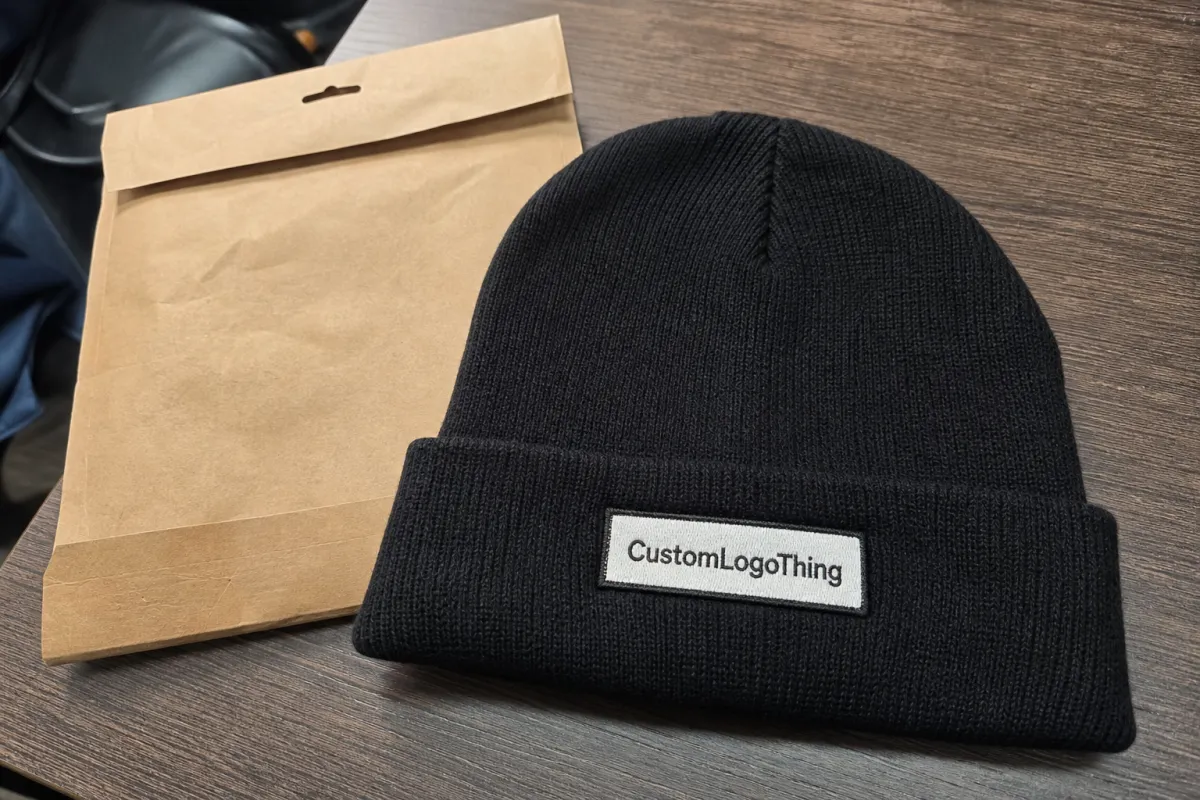
Most trade show giveaways are judged on first contact only. That is a narrow way to think about them. A beanie keeps working after the handshake, after the session, after the attendee leaves the hall and heads to dinner. It becomes part of the wardrobe, not just part of the swag bag. For teams trying to stretch a budget, that matters more than a glossy one-time handout.
There is also the visibility factor. A patch has shape and depth, which means the logo can stay legible even when the knit stretches or folds. On a cuffed beanie, a patch around 2 to 2.5 inches usually gives enough room for clean branding without swallowing the whole front panel. Smaller can work, but only if the artwork is simple and the text is short. Once the logo has fine lines or more than a few words, scale becomes the enemy.
Be aware of the environment. A beanie that performs well at an outdoor expo can be too warm for a mild conference hall. A lighter acrylic knit or a thinner cuff may be better for spring events, while a wool blend or heavier-gauge acrylic makes more sense for winter markets, ski-adjacent shows, or venues where people move between indoor and outdoor spaces all day. The best item is not just branded; it is wearable enough that attendees do not remove it after ten minutes.
Staff use is another reason the format works. Event teams often need a consistent look, and a patch beanie does that without turning the booth into a costume. If the same item can serve staff, VIPs, and walk-up guests, the order becomes easier to justify. Fewer SKUs. Less packing clutter. More value out of the same production run.
Practical rule: if the event is cold, crowded, or split between indoor and outdoor spaces, a logo patch beanie usually outperforms paper goods, and often by a wide margin.
Patch types, knits, and cuff builds that change the result
The patch material shapes the personality of the item. Woven patches are the most precise. They hold small text and thin lines better than embroidery, which makes them a strong choice for logos with detail. Embroidered patches bring more texture and a more classic feel. PVC patches look bold and dimensional, which fits outdoor brands or anything that needs a modern edge. Leather patches lean premium, especially on darker beanies with restrained branding.
Each choice comes with tradeoffs. Woven patches are excellent for detail, but they can look flat if the art is too simple. Embroidered patches add texture, yet very small type can blur into the stitch density. PVC feels durable, but it is heavier and less subtle. Leather looks refined, although it is not the best fit for logos that depend on multiple colors or fine outlines. The wrong patch style can make a solid brand mark feel awkward. The right one makes the knit and logo look like they were designed together.
The beanie construction matters just as much. Acrylic remains the most common base because it is warm, light, and cost-effective for broad distribution. A wool blend typically feels richer and may hold warmth better, but it also costs more and may require a buyer to explain the value of the upgrade internally. Performance blends sit in the middle when stretch, recovery, and moisture control matter more than a soft hand feel. That tradeoff shows up quickly in event work. A softer knit can feel better on the shelf, but a more durable knit often looks better after a day of wear, shipping, and unpacking.
Cuff style changes the branding area. Cuffed beanies give a flat, stable zone for a patch, which is the safest layout for most bulk orders. Uncuffed styles look cleaner and more minimal, but the logo may sit lower or distort more easily. Slouch beanies have a casual feel and can read more fashion-forward, though the patch can shift position depending on how the wearer styles the hat. For staff uniforms, a cuff usually wins. For giveaways, the answer depends on how much brand visibility you want versus how trendy the item needs to feel.
Patch styles buyers compare most often
For quick sorting, the pattern is simple: woven for detail, embroidered for texture, PVC for dimension, leather for a polished finish. That is not a universal law. It is the most reliable starting point across event orders.
| Option | Typical use | Common MOQ | Ballpark unit cost | What it changes |
|---|---|---|---|---|
| Woven patch on acrylic cuffed beanie | Staff wear, broad promos | 100-250 | $4.25-$6.75 | Best value when artwork has fine lines or small text |
| Embroidered patch on acrylic or wool blend | Simple logos, school or team branding | 100-250 | $4.75-$7.50 | More texture, slightly less detail than woven |
| PVC patch on performance blend | Bold event branding, outdoor use | 250+ | $5.50-$8.75 | More dimensional, often feels more premium |
| Leather patch on premium knit | VIP gifts, executive gifting | 250+ | $6.50-$10.50 | Higher perceived value, less visual clutter |
Those numbers are ranges, not promises. Quantity, yarn weight, patch size, backing type, and packing method can move a quote quickly. A 500-piece run usually lands better on unit cost than a 200-piece run because setup gets spread across more units. That is why buyers sometimes save money by ordering slightly more than they think they need, especially if the event calendar already has a second use for the same item.
One more detail often gets overlooked: patch backing. Sew-on backing is common for beanies because it holds well on knit surfaces and survives repeated wear. Adhesive-only solutions can be tempting during prototype discussions, but they are a poor fit for a product that will stretch, get folded, and spend time in transit. If a supplier cannot explain how the patch is attached, that is a warning sign.
Size, artwork, and placement specs that prevent rework
The easiest way to slow a production run is to send a logo that works on a screen but breaks at patch size. For a trade show Logo Patch Beanies bulk order, the cleanest artwork package is usually a vector file in AI, EPS, or PDF format with outlined fonts and separated color areas. If the logo includes tiny text, gradients, or very thin strokes, simplify it before proofing. A patch is not a billboard. It has to stay readable at a small scale and under uneven lighting.
Patch size should match the knit area, not the other way around. On most cuffed beanies, 2 to 2.5 inches is a practical front patch range. Smaller patches can work on minimalist logos, but the visibility drops fast if the artwork has multiple words. Oversized patches can overwhelm the cuff and make the beanie feel heavy or unbalanced. There is a narrow middle ground where the logo looks deliberate without turning the hat into a signboard. That is the zone most event buyers want.
Placement affects legibility more than many buyers expect. Center cuff is the safest choice because it keeps the logo flat and front-facing. Side cuff placement can feel more fashion-driven, though it usually reduces visibility in photos and from a distance. Front panel placement works better on some slouch styles, but only if the knit and patch size are matched carefully. If the item must read from ten feet away on a crowded show floor, choose the position that stays centered and does not buckle when worn.
Head size and fit are worth asking about, even if the product is labeled one size fits most. Most cuffed acrylic beanies stretch into a roughly 21 to 24 inch head circumference range, though the feel depends on yarn weight and stitch tightness. Oversize or youth options can matter for mixed groups. If the order is for staff uniforms, ask for the same fit across all units. Reordering gets easier when the silhouette stays consistent.
What to send before proofing
- Vector logo file with outlined text
- PMS references for brand-critical colors
- Patch preference such as woven, embroidered, PVC, or leather
- Placement notes for center cuff, side cuff, or front panel
- Target quantity and ship-to ZIP code
- Deadline tied to booth setup, not only event day
A useful proof should show the beanie color, cuff position, patch scale, and final artwork in one view. If any of those pieces are missing, the approval process usually drifts. Small changes multiply fast once production starts, and most of them are avoidable before the first sample is made.
Pricing, MOQ, and unit cost drivers to compare
The price of a trade show logo patch Beanies Bulk Order is shaped more by complexity than by the beanie itself. The major drivers are easy to identify: patch style, number of colors, knit quality, private labeling, packaging, and shipping method. A simple cuffed beanie with one patch is usually the most efficient build. Add specialty yarn, custom hang tags, individual polybags, or split color runs, and the quote rises because the factory has more handling steps.
MOQ matters too. Some suppliers can start around 100 pieces on a standard stock beanie with a basic patch. Others want 250 or more once the patch is custom made. If the order is for a staff event, a first run, or a test of response on the show floor, it is worth asking where the price changes between tiers. In many cases, the jump from 250 to 500 units is smaller than buyers expect, because the setup cost is already absorbed.
Common extras should be treated as real line items. Sampling can add $35 to $120 depending on patch method and freight. Individual polybags, branded belly bands, or insert cards cost more, but they can reduce handling at the booth and simplify receiving if the goods are distributed in kits. Freight also deserves careful attention. A low unit cost can disappear if the shipping plan is vague, late, or split across multiple destinations.
For deadline-driven event work, the cheapest quote is not always the safest one. Faster proof cycles and cleaner packing plans often protect more value than a tiny price cut.
If the beanies travel inside kits or through several handoffs, packaging quality matters as much as the item itself. Cartons should be labeled clearly, case packs should be easy to count, and inner packing should stop the product from shifting around in transit. The ISTA test framework is useful here because it reminds buyers to think about vibration, stacking, and handling rather than only about the finish on the hat.
One practical buying observation: the lowest quote is often built on assumptions that are easy to miss. Maybe the patch size is smaller than expected. Maybe the color match is "close enough" rather than exact. Maybe packing is loose. Buyers who compare the full spec, not just the headline price, usually avoid the most expensive surprises later.
Proofing, production steps, and turnaround timing
A trade show logo patch Beanies Bulk Order usually moves through the same sequence: inquiry, quote, mockup, proof approval, production, packing, and shipping. The order only stays fast if the first request is complete. Send quantity, logo files, color preferences, patch style, and destination up front, and the first mockup can be close. Leave out the basics, and the process slows before production has even begun.
Turnaround depends on three things: stock availability, patch method, and order size. Simple stock beanies with a standard patch can often move through production in 12 to 15 business days after proof approval. Custom knit builds, revised art, or more complex patch work can extend that timeline. Sampling adds time as well. If a sample is needed before the main run, plan for another 3 to 7 business days before full approval.
The best schedule is built backward from the event date. A buyer who counts forward from the quote is usually late. For straightforward stock orders, locking the proof at least three weeks before the event gives some breathing room. For orders with revisions, split shipping, or multiple delivery points, four to five weeks is safer. If the beanies are going into kits or vendor-managed inventory, packing detail matters just as much as the item itself. Clear case packs and readable labels save time at receiving and reduce avoidable handling errors.
Ask for the earliest ship date in writing. Then confirm who approves the proof. That single step prevents one of the most common delays: production pauses while marketing waits for sales, or sales waits for leadership. A short approval chain beats a perfect but slow one. In event work, timing is usually more valuable than theoretical perfection.
Quality control should happen before shipping, not after the first attendee notices a problem. The important checks are simple: patch alignment, seam finish, stitch consistency, color match, and pack count. If the beanie color and patch color are too close, the logo can vanish under convention lighting. A careful supplier should flag that before production. A careless one will explain it after the fact.
For order basics and standard questions, the FAQ and Wholesale Programs pages are useful starting points before the first quote goes out. If the packout includes printed inserts or eco-minded packaging, ask whether FSC-certified paper options are available. The reference at FSC helps when you need a paper standard that can be explained internally without guesswork.
Why repeat buyers source from a packaging-first partner
Repeat buyers rarely care only about the per-piece cost. They care about whether the next order behaves like the last one. Did the patch land in the same position? Did the cuff height stay consistent? Did the cartons arrive in clean counts with no repacking? Those are the details that make reordering feel manageable. A packaging-first partner tends to think in those terms because the job is not just making the beanie; it is getting the beanie where it needs to go without creating extra work.
This matters even more when the beanies are part of a larger event system. Many teams ship them with inserts, product samples, welcome notes, or bundled gift packs for meetings and sponsor activations. A supplier used to packaging work is more likely to understand carton configuration, pack sequence, and how to keep mixed items tidy. That reduces missing pieces and messy repacks. It also helps when goods need to flow through a distribution center instead of going directly to a booth.
There is a quieter benefit too: files and specs stay easier to manage over time. Good repeat-order behavior looks boring. The same logo file. The same patch note. The same color reference. The same approved placement. Boring is useful. It keeps event work from turning into a chase for the last version of a last-minute revision.
Material consistency also matters. If a buyer liked a charcoal acrylic beanie in one quarter, the same color should mean the same thing in the next run. Dye lots can shift. Yarn suppliers can change. Patch backing can vary if the specification is too loose. Those are small changes, but they show up immediately in a booth environment where people compare one piece against another under bright lights and fast movement.
How to place a fast bulk order without delays
If you need the order moving quickly, the first message should contain the facts that drive the quote: quantity, deadline, ship-to address, logo file, patch style, and beanie color. Add booth number or receiving window if the goods are going directly to a venue. That tiny detail can prevent a late shipment from sitting at the dock all morning. A schedule saved by one line of shipping information is still a schedule saved.
Speed also depends on decision quality. Choose one person to approve the proof. If three departments need to sign off, the clock slips. If you are unsure about patch style, describe the brand goal instead of asking for a blank recommendation. Premium, fashion-forward, budget-conscious, staff-only, VIP gift. That kind of language gives a supplier something useful to work with, and it usually narrows the quote range faster than a loose request for "something nice."
- Send quantity, deadline, and ship-to address.
- Attach vector artwork and PMS colors.
- Confirm beanie style, patch type, and placement.
- Review the mockup and approve quickly.
- Lock production, then confirm freight timing.
The shortest path is usually the cleanest one. If the artwork is not final, start the conversation anyway. A strong supplier can often help simplify the logo while the quote is being built. If the event date is fixed, do not wait for a perfect file before getting the order into motion. In trade show work, the best outcome is usually the one that arrives on time, looks right, and does not create extra work at receiving.
That is especially true for a trade show logo patch beanies bulk order. The item is simple, but the process is not forgiving. The best orders start with clear specs, a realistic timeline, and a buyer who knows which details cannot be left open.
How many trade show logo patch beanies should I order for a booth?
Start with the number of staff, then add a buffer for VIPs, walk-up prospects, and replacements. For a first event, many buyers plan for headcount plus 20% to 30% so they do not run out too early. If the event has multiple shifts or companion sessions, moving up to the next production tier can lower the unit cost.
What artwork do you need for a logo patch beanie order?
A vector logo file is the safest choice because it keeps edges clean at patch size. Include PMS color references, the desired patch style, and placement notes. If the logo uses thin lines or very small text, ask for a simplified version before proofing.
How long does production usually take after proof approval?
Timing depends on quantity, patch type, and whether the beanie style is in stock. Add extra time if a sample is required, if the artwork needs revisions, or if the order ships to multiple locations. For a fixed event date, ask for the earliest ship date in writing and approve proofs quickly.
Can I mix colors or patch styles in one bulk order?
Often yes, but split runs can change MOQ expectations and raise the unit cost. The simplest path is one base beanie style with one patch design, then separate colorways only when the order is large enough to absorb the setup. Ask whether the supplier can keep the same artwork while changing the knit color or cuff color.
What lowers the unit cost on beanie orders the most?
Higher quantity is usually the fastest way to reduce cost per piece. Standard materials, a single patch style, and fewer proof revisions also keep pricing tighter. Consolidated shipping and one clear approval round can save both time and hidden fees.


