A Ceramic Studio Kraft Paper Bags material guide only becomes useful once you stop looking at the mockup and start thinking about the handoff. A bag can look clean on screen and still fail the moment a customer adds a boxed mug, a wrapped bowl, and a receipt envelope. The real test is not visual. It is weight, handle pull, bottom support, and whether the bag still feels stable after a few minutes of carrying.
Kraft remains the default for a reason. It gives ceramic retail packaging a natural, tactile look, prints cleanly enough for most studio branding, and fits the practical story many makers want to tell. But “kraft bag” is not a complete spec. Paper grade, basis weight, handle style, reinforcement, finish, and even the way the bags are packed for freight all change performance. A light single-item purchase can use a simple build. A mixed order of fragile, boxed ceramics usually cannot.
That difference matters because ceramics are dense, awkward, and often wrapped in layers of protection before they ever reach the bag. The bag is carrying product, but it is also carrying shape. Once the load shifts, weak seams and undersized handles show up fast. A smart spec protects the product, the staff, and the customer experience at the same time.
“Most bag failures are ordinary failures: the handle stretches, the bottom bows, or the side seam opens before the bag even leaves the register.”
Ceramic Studio Kraft Paper Bags Material Guide: Start Here
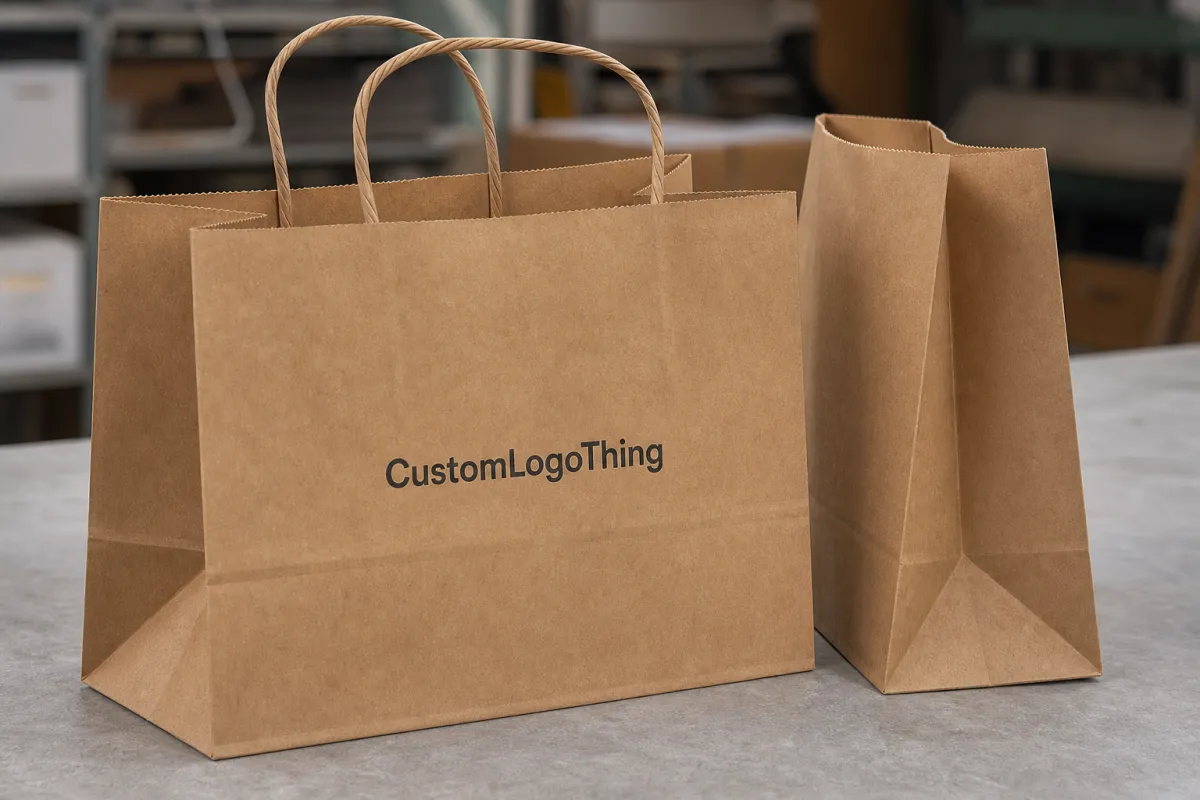
Start with the heaviest typical order, not the lightest one. A studio that sells one mug at a time has a different bag requirement from a shop that sends out two mugs, a bowl, and a small add-on purchase in one transaction. The first asks for presentation. The second asks for structure. A useful ceramic studio Kraft Paper Bags material guide begins with load, then works back to appearance.
Kraft has three advantages in this setting. Long-fiber paper generally resists tearing better than decorative stock of similar weight. The texture fits handmade goods better than glossy alternatives. And it can support a lower-plastic packaging story if the bag is kept simple and the inks and coatings are chosen carefully. That last point gets overstated often; kraft is not automatically sustainable just because it looks natural. The full build still matters.
The practical question is not whether the bag can hold something. It is whether the bag can hold the order your team actually packs during a rush. Dense square boxes, nested bowls, tissue paper, bubble wrap, and gift wrapping all change the geometry of the load. A bag that seems oversized in a sample room can look undersized once real product goes in.
For many ceramic shops, the best starting point is a standard kraft bag with a reinforced bottom and a handle matched to the expected load. That setup handles common retail scenarios without drifting into unnecessary custom work. If the bag will carry premium sets or heavier boxed pieces, the structure deserves more attention than the print.
How Kraft Paper Performs in Real Packing Work
Kraft gains much of its strength from fiber length and sheet construction. In bag use, that usually means better tear resistance along the edges and better tolerance when the load shifts during carry. Caliper matters too. A thicker sheet does not automatically mean a stronger bag, but it usually improves stiffness, bottom support, and the way the side panels hold shape under stress.
The common mistake is assuming all paper bags behave similarly once they are folded and glued. They do not. Thin stock with weak seam adhesive can fail at the gusset even when the front panel looks fine. A heavier kraft sheet with a properly folded bottom and reinforced top edge can support a more useful load. For ceramic retail, that is often the difference between a bag that merely contains a purchase and one that delivers it safely.
Kraft also compares well with thinner coated stocks in day-to-day use. It tends to feel less slippery in the hand, which matters when customers are carrying something awkward or slightly heavy. It often hides scuffs better than glossy alternatives. And it reads as more recyclable to many shoppers, although the actual end-of-life outcome depends on coatings, inks, laminations, and local recycling systems. A natural look is not the same thing as a simple material build.
Paper weight is usually specified in gsm, and for retail bags in this category, many buyers land somewhere between 120 and 200 gsm for standard use. Heavier ceramic orders often justify 200 gsm or more, especially if the bag is carrying boxed ware or needs to survive repeated reuse. The heavier spec adds cost, but it also reduces the chance of a very visible failure at the counter.
When is a simple kraft bag enough? Single mugs, small dishes, lightweight accessories, and lighter gift purchases. When do you need more structure? Multi-item orders, boxed ceramics, or anything that is likely to be carried longer distances. Reinforced bottoms, stronger gussets, and a paper insert can prevent the bag from mushrooming under load. In many cases, a small insert board is the cheapest way to add confidence.
Choosing Paper Grade, Handles, and Print Finish
The first material choice is usually virgin versus recycled stock. Virgin kraft is more consistent in fiber length, color, and tear resistance. Recycled stock, including high post-consumer content, can still perform well, but it needs closer sample review because quality can vary more from mill to mill. A recycled sheet can support a strong brand story, though it should be backed by the right basis weight and construction rather than messaging alone.
Natural brown kraft gives a warmer, more understated look. Bleached kraft creates brighter print contrast and a cleaner field for logos, but it can show scuffs more easily and feel less aligned with a rustic handmade aesthetic. Neither is automatically better. A studio that sells minimal porcelain may prefer the sharper print on bleached kraft. A maker of stoneware with visible variation may find natural brown more honest and more forgiving.
Handle choice affects the customer experience more than many buyers expect:
- Twisted paper handles are economical, widely used, and suitable for midweight retail bags.
- Flat paper handles feel tidy and work well for lighter loads, but they are not ideal for heavier ceramic orders.
- Rope handles add comfort and a more premium feel, especially on larger bags or repeated carry use.
For a shop that sells higher-value pieces, rope handles can justify the extra spend because they improve comfort and perceived value. For a fast-moving gift counter, twisted paper usually makes more sense. The right choice depends on the order weight, carry distance, and whether the bag is meant to feel casual or premium.
Finish deserves the same level of scrutiny. Uncoated kraft keeps the tactile feel and usually hides fingerprints and light abrasion better. A matte varnish can improve resistance without making the bag feel coated in a heavy way. Light gloss improves color clarity, but it can make handling marks more obvious. If the artwork includes fine lines or small type, ask for a print proof on the actual stock, not just a digital proof. Ink behavior changes with fiber mix, recycled content, and coating level.
If sourcing claims matter, look for FSC certification through the chain-of-custody system at FSC. If you want a better reference for how packages are commonly evaluated under handling stress, the test methods published by ISTA are a useful benchmark.
Process and Lead Time: From Spec Sheet to Shipment
A clean order process saves more time than almost any cosmetic upgrade. The sequence is straightforward: define size, confirm paper grade, choose handle type, approve artwork, review a sample, run production, inspect the cartons, then arrange freight. Delays usually happen at the handoff points. Someone sends a logo without dimensions. Someone approves a proof before checking the load. Someone picks a handle style that needs longer procurement.
For straightforward custom paper bags, a realistic production window is often 12 to 15 business days after proof approval. Special handles, additional inserts, or more complex print matching can extend that. If the artwork needs spot color matching, allow for extra proof cycles. If the order uses FSC-certified kraft or a particular recycled blend, confirm whether the mill stock is already on hand or still needs sourcing. That one question can eliminate a lot of uncertainty early.
Freight affects lead time too. Flat-packed bags store and ship more efficiently, which matters if back-room space is limited. Pre-packed bundles can reduce receiving labor, but they cost more. Quotes should be compared on the same basis: same bag structure, same freight terms, same packing method, same sample expectations. A lower unit price means little if shipping and sampling are excluded.
Before requesting quotes, send a complete brief:
- Exact bag dimensions, including gusset and handle drop.
- Estimated load weight and the heaviest common packed order.
- Quantity by size and print color count.
- Paper preference, such as natural brown kraft, bleached kraft, or recycled kraft.
- Finish, reinforcement, and insert requirements.
- Target delivery date and shipping destination.
That list makes suppliers quote against the same assumptions you are using. Without it, you are comparing estimates instead of specifications.
Cost, Pricing, and MOQ Tradeoffs for Ceramic Shops
Price is driven by a small set of variables: paper weight, bag size, print coverage, handle choice, reinforcement, and how the bags are packed for shipment. The surprise for many buyers is how quickly the total moves when one variable changes. Switching from one-color print to full-coverage art, or from twisted paper handles to rope handles, can alter unit cost more than moving from one paper grade to another.
Minimum order quantity matters because setup cost has to be spread across the run. A 3,000-piece order and a 10,000-piece order may use the same construction, but the larger run often lowers the per-unit cost by roughly 15% to 30%, depending on print method and supplier. That is why smaller ceramic studios often do better with one or two standard sizes instead of a new bag for every collection.
| Bag option | Best use | Typical unit cost at 5,000 pcs | What changes the price most |
|---|---|---|---|
| Standard natural kraft, twisted paper handle | Single mugs, small accessories | $0.18-$0.28 | Paper weight, print colors, bottom reinforcement |
| Heavier kraft, reinforced bottom, twisted paper handle | Boxed bowls, mixed ceramic sets | $0.24-$0.38 | Gsm, gusset size, insert board, freight packaging |
| Premium kraft, rope handle, matte finish | Gift purchases, higher-value retail | $0.32-$0.52 | Handle material, finish, print coverage, special folding |
These numbers are planning ranges, not promises. Seasonal capacity, freight, ink matching, and packaging method can all move the final price. A quote that looks cheaper but excludes shipping, sampling, or inserts is not really cheaper. Compare like with like, and ask whether carton labeling and pre-production samples are included.
There is also a tradeoff between aesthetics and efficiency. A highly customized bag can reinforce a premium brand, but if you reorder often, the setup cost may outweigh the visual gain. Many ceramic shops get better results by choosing a strong, repeatable format and varying only the print or insert card by collection.
The hidden cost is often rework. A bag that fails in use may require staff to double-bag purchases, replace damaged stock, or repackage orders at the counter. A few cents saved on paper can disappear quickly if the structure is too light for the actual load.
Common Mistakes That Make Studio Bags Fail
The first mistake is underestimating the load. Ceramic items are dense, and weight builds faster than many teams expect once tissue, bubble wrap, or a box is added. A bag that holds one unboxed mug may fail with two boxed mugs and a small add-on item. The failure may show up first at the handle, then at the top edge, and finally at the base.
The second mistake is choosing a decorative bag that looks premium but lacks structure. Buyers often focus on print and ignore the bottom board, side seam strength, or handle attachment area. That is the wrong order of priorities. If the bag is part of retail packaging, construction has to come before finishing touches. A richer ink effect cannot compensate for a weak gusset.
The third mistake is ignoring the store environment. Bags sit in humid storage rooms, get handled quickly during weekend rushes, and are sometimes reused. Dust shows on certain finishes more than others. A matte uncoated build hides scuffs well, but in damp storage or a shop with frequent condensation, a light protective finish may be the safer choice.
Another easy mistake: approving artwork before confirming the blank size. That leads to logos too close to folds, handles crowding the top edge, or a design that looks stretched once the bag is assembled. The fix is simple. Approve the structure first, then place the print. It is basic, and it is still one of the most common ways a bag order goes wrong.
Short version: the best spec avoids surprises in the store, not just in the sample.
Expert Tips for Sample Testing and Vendor Comparisons
Sample testing does not need to be elaborate. Put the heaviest normal order in the bag, lift it several times, and watch the handle attachment points, the top fold, and the bottom seam. Then hand it to someone else. Different grip angles expose different weaknesses, and that matters in a shop where customers carry bags in all kinds of ways.
Compare vendors using the same spec sheet. Otherwise the pricing will not mean much. One supplier may quote a thicker sheet, another may quietly use a smaller handle, and a third may exclude reinforcement or inserts. Suddenly the cheapest quote is not really comparable. Ask for structure samples, print proofs, and a written material description. If recycled content matters, ask for the percentage. If sourcing matters, ask for the certificate trail rather than a logo on the quote.
A good vendor review should answer five questions:
- Does the bag hold the heaviest planned order without handle stretch?
- Does the print remain readable after light scuffing?
- Do the seams stay flat and aligned?
- Does the paper feel match the brand story?
- Does the quote clearly state freight, packing method, and MOQ?
If any of those answers are vague, the order is not ready. That is where a practical ceramic studio Kraft Paper Bags material guide earns its keep. It gives the buyer a common language for discussing strength, finish, and usability instead of drifting into broad language like “premium” or “eco-friendly” without evidence.
Test the bags in the same conditions they will face in the shop. A sample that passes on a clean desk can still fail under real-world pressure: gloved hands, moisture, packed weekends, repeat use, or a customer carrying the bag longer than expected. The best sample is the one that still behaves after inconvenience.
Next Steps: Build a Better Bag Spec and Request Quotes
If you are ready to order, keep the decision tree short. Define the heaviest load first. Pick one target size. Choose a handle based on carry comfort and brand tone. Then decide whether you need natural brown kraft, bleached kraft, or recycled kraft, and whether the finish should stay uncoated or include a light protective layer.
After that, request two or three quotes on the same basis. Compare paper weight, reinforcement, MOQ, production time, freight terms, and whether the supplier can provide a sample that reflects the final build. If the bag supports a premium ceramic line, a tiny unit-cost difference should not override structural confidence. A bag that fails at the counter costs more than a bag that costs a little more on paper.
For many buyers, the strongest path is a standard format with a few well-chosen details: sturdy kraft paper, a handle that matches the load, a finish that protects the print, and a bottom structure that does not collapse under normal use. That combination is usually enough for a clean retail presentation without turning the order into a complicated custom project.
Use this ceramic studio Kraft Paper Bags material guide as a checklist, not just background reading. If the sample matches the load, the look, and the quote you approved, you are close to the right spec. If it does not, adjust before full production. That final review is usually cheaper than fixing a bad run.
How thick should ceramic studio kraft paper bags be for mugs and bowls?
Choose a heavier kraft grade when the bag will carry boxed ceramics, wrapped items, or multiple pieces in one order. For many retail builds, 120 to 200 gsm covers lighter use, while heavier packed orders often justify 200 gsm or more with reinforced bottoms and stronger handles. Match the spec to the heaviest normal order, not the lightest one.
Are recycled kraft paper bags strong enough for a ceramic studio order?
Yes, if the recycled stock has the right basis weight and the bag is built with reinforced seams and bottom support. Test recycled and virgin options side by side, because performance depends more on construction than on the recycling label alone. A good recycled bag can work very well in retail use, but it should be proven in samples rather than assumed.
What print finish works best for ceramic studio kraft paper bags?
Uncoated or matte finishes usually suit kraft best because they preserve texture and reduce scuff visibility. A light protective finish helps if the bags travel often or sit in high-touch retail areas. Gloss improves contrast, but it can make wear more visible and change the feel of the bag.
How long does a custom ceramic studio kraft paper bag order take?
Lead time often runs 12 to 15 business days after proof approval for straightforward orders, with extra time needed for specialty handles, inserts, or color matching. Sampling, freight booking, and stock sourcing can add more days. If the order has a fixed launch date, build a buffer rather than planning to the last day.
What should I include in a quote request for kraft paper bags?
Send exact dimensions, quantity, paper grade, handle style, print colors, finish, and any reinforcement or insert requirements. Add your target delivery date and packaging needs so vendors can quote a realistic production plan instead of a rough estimate. A complete brief saves time and makes the quotes easier to compare.

