Ceramic Unstructured Dad Hats Material Sample Guide to Order
Soft caps look simple until you approve one in person. A ceramic-toned unstructured dad hat can read refined on a product page and still feel limp, warm, scratchy, or oddly stiff once it is in hand. That gap between appearance and wearability is exactly where a material sample earns its keep.
For buyers comparing promotional headwear, retail basics, or private-label accessories, the ceramic Unstructured Dad Hats material sample guide is less about chasing the perfect swatch and more about testing whether the cap can actually be produced consistently. The shade matters, but so do the crown drape, brim recovery, closure behavior, and the way the fabric reacts after a few bends. A good sample answers those questions before quantity turns small imperfections into expensive problems.
Why This Sample Can Change the Whole Hat
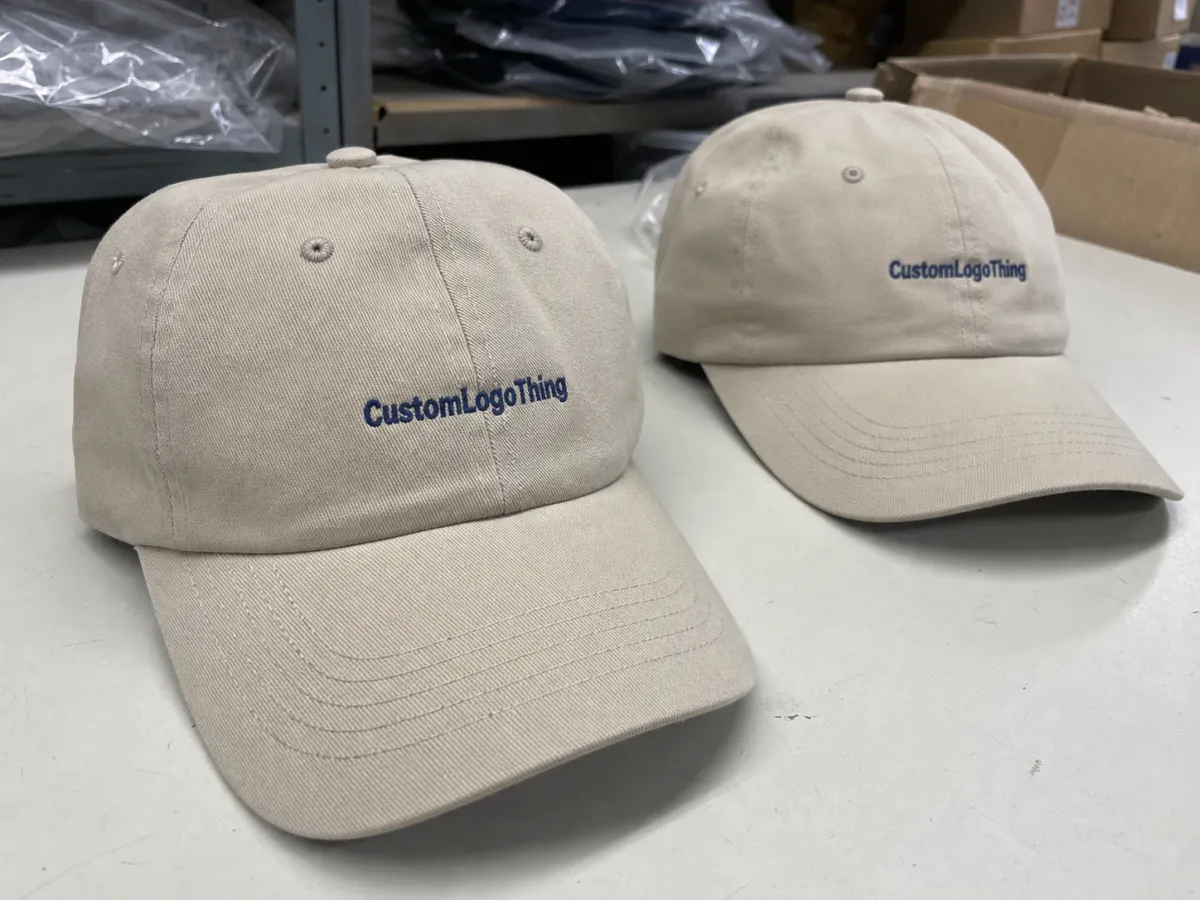
Unstructured Dad Hats are deceptively difficult to judge from a spec sheet. There is no firm front panel to hide a weak cloth, and there is very little internal support to force the cap into shape. The fabric carries the whole look. If it is too light, the crown collapses. If it is too heavy, the hat starts to look boxy and loses the relaxed profile that buyers usually want from this style.
The ceramic tone adds another layer. Under daylight, it may look clean and muted, almost chalk-like. Under warmer indoor lighting, the same fabric can shift toward cream, beige, or even a slightly dusty gray. That does not sound dramatic on paper, but it changes how the cap photographs, how it sits in a display wall, and whether the color feels premium or simply faded. Small shifts like that are why a sample matters more than a digital render.
From a sourcing standpoint, the sample is the first real proof of whether the product brief can hold up in production. It is not just a color check. It is a structural check, a finishing check, and a comfort check. If the hat is for giveaways, consistency may outweigh subtle style details. If the hat is for retail, the sample has to do both jobs: look intentional and repeat reliably.
A useful sample should answer one question clearly: if the order started tomorrow, would the finished run still feel on brief?
That is the standard worth using. A pretty sample that cannot be repeated is not a useful sample. A slightly imperfect sample that accurately reflects the production method is far more valuable.
Ceramic Unstructured Dad Hats Material Sample Guide Basics
A proper sample should show fabric hand, surface finish, stitch quality, closure behavior, and overall fit. If a supplier sends only a mockup image, the buyer is still guessing about the details that control the final product. A screen cannot show crown depth. It cannot show how the brim rebounds after being bent. It cannot tell you whether the strap pulls smoothly or catches at the buckle.
That is why the sample should come before any final approval of the artwork. The hat itself is the working reference. A brushed cotton twill behaves differently from a washed canvas. A self-fabric strap with a brass buckle feels different from a snapback or a fabric slider. Even the sweatband changes the experience; narrow bands, rough backing, and poorly finished seams are the kind of flaws people notice after a short wear test, not during a sales call.
It also helps to understand what one sample cannot prove. One piece does not guarantee that every unit in bulk production will match exactly. Dye variation can appear across different fabric rolls. Thread tension changes slightly from machine to machine. Wash processes may soften one run more than another. None of that is unusual, but the sample should show the acceptable range and make the risk visible before the order is locked in.
Packaging is part of the sample story too. A cap packed neatly in corrugated cardboard with kraft paper or a protective insert tells you something about the supplier's handling discipline. If the carton uses recycled materials or FSC certified paper, that may matter for brands with stricter sourcing claims. Buyers who care about lower-impact shipping usually ask whether biodegradable packaging is practical without crushing the crown or warping the brim.
For transit standards and paper sourcing definitions, the International Safe Transit Association publishes packaging test methods at ISTA, and the Forest Stewardship Council outlines chain-of-custody requirements at FSC. Those references are useful when packaging needs to do more than just arrive intact. The goal is not a sustainability buzzword. It is a packout that protects the cap and matches the brand story.
Read the spec sheet beside the hat, not apart from it. The sheet should identify fabric content, weight, finish, closure type, decoration method, and any special treatment such as garment washing or enzyme washing. If the paperwork is vague, the sample becomes harder to trust. The more clearly the sheet and the physical cap match, the easier it is to approve production with confidence.
Fabric Weight, Finish, and Fit Factors That Matter
For a low-profile dad hat, fabric weight does a lot of the visual work. A midweight cotton twill around 220-280 gsm usually gives a useful balance: enough body to keep the hat from collapsing, but still soft enough to preserve the relaxed shape. Lighter cloth breathes better and tends to feel more casual, though it can appear flimsy if the crown is not cut carefully. Heavier cloth gives more structure, but it can make the cap feel warmer and less broken-in.
Finish matters just as much as base fabric. Garment washing softens the crown and can mute the ceramic tone slightly. Enzyme washing reduces surface harshness and often gives the hat a more worn-in feel from day one. Pigment dyeing can add depth and a washed visual texture, which works well for brands that want a lived-in retail look rather than a bright, flat cap. These treatments are not cosmetic extras. They influence handfeel, appearance, and how quickly the hat breaks in after use.
Fit is where approval mistakes happen fastest. Unstructured hats are forgiving, but not infinitely forgiving. A shallow crown can look sleek on one head and short on another. A brim that is too stiff may resist the gentle curve most buyers expect from a dad hat. A brim that is too soft may buckle after a few bends and never recover cleanly. The fit is not just about circumference; it is about how the whole cap settles on the wearer.
Decoration changes the silhouette as well. Dense embroidery adds weight to the front panel and can pull the crown forward slightly. Woven patches, printed patches, and labels each influence drape differently. On a soft cap, that effect is visible. A large embroidered mark can make the hat feel more premium, but it can also make the front look heavier than intended. That is why decoration should be judged on the actual sample, not in isolation.
For quick comparison, these are the common fabric directions buyers usually weigh:
- Brushed cotton: soft hand, clean decoration surface, easy all-day wear.
- Cotton twill: familiar, durable, and usually the safest baseline for custom caps.
- Washed canvas: stronger texture and more visual character, sometimes a rougher hand.
- Garment-washed fabric: relaxed finish with a more broken-in look from the start.
A practical rule helps here: choose the fabric that supports the logo without fighting the shape. If the art is dense, the cloth should have enough body to carry it. If the brand wants a softer, more vintage profile, the fabric should be chosen for drape first and sharpness second.
Sample Request Process and Production Timeline
The sample process works best when the brief is complete before cutting begins. Send the artwork, Pantone or close color reference, target quantity, closure preference, decoration method, and any hard requirements for stitching, sweatband, eyelets, or trims. If the cap is part of a ceramic color collection, the color reference should be treated as a production decision, not a casual suggestion. A supplier can only match what is written down.
It also helps to separate the approval stages. A blank sample proves the pattern, fabric, crown depth, brim shape, and closure function. A decorated pre-production sample proves logo placement, stitch density, thread behavior, and how the artwork changes the drape. On larger orders, approving both is usually the safer route. One catches build issues. The other catches decoration issues. They are not interchangeable.
- Request: share artwork, specs, color target, and quantity.
- Setup: the supplier confirms fabric, trims, and decoration method.
- Build: a blank or decorated sample is produced.
- Transit: the sample ships for hands-on review.
- Revision: feedback is sent if anything misses the brief.
- Approval: written sign-off releases production.
Timelines vary, but the pattern is predictable. A blank hat sample often takes 5-8 business days to prepare, then another 2-5 business days to ship depending on route and destination. A decorated pre-production sample usually needs 7-12 business days before shipping. If revisions are required, the full cycle can stretch to 15-20 business days or more. Complex embroidery, a custom wash, or a difficult ceramic shade can add more time than most buyers expect.
That extra time is not wasted time. It is usually where the cost of a bad decision gets reduced. Rushed approvals tend to hide problems until the bulk order is already underway. A sample that arrives on time but gets reviewed badly is still a failed sample.
Packaging should be part of the timeline conversation too. If the cap must arrive presentation-ready, confirm whether it ships flat, nested inside a corrugated carton, wrapped in kraft paper, or protected by a reusable bag. If the brand is using recycled materials or biodegradable packaging, ask whether those choices affect the crown shape during transit. Protection and presentation are often in tension; the sample should tell you where that line sits.
Pricing, MOQ, and Unit Cost Questions to Ask
Sample pricing should be transparent enough to compare across suppliers. A blank sample may run about $20-$45 depending on fabric, construction, and freight. A decorated pre-production sample often lands around $45-$120, especially if digitizing, patch setup, or special trim work is involved. Rush requests can rise to $60-$150 because they interrupt normal production planning. Those figures are not universal, but they are realistic enough to frame a buyer conversation.
MOQ affects the economics quickly. Some suppliers will produce a sample before any minimum order discussion. Others want to see a serious order path first. For a basic unstructured dad hat, MOQs often begin around 100-300 pieces, but custom closure hardware, garment washing, or specialty decoration can push that higher. Ask whether the sample fee is credited back against production. Sometimes it is. Sometimes it is not. That should be written down before anyone starts cutting.
Unit cost changes with volume, fabric yield, decoration complexity, and packaging. A cotton twill dad hat with a simple front logo may sit around $2.80-$5.50 per unit at 300-500 pieces, then fall to roughly $1.85-$3.20 at 3,000 pieces or more. Add woven labels, more stitching, a special wash, or branded hangtags, and the price climbs. Cheaper is not always better if the cap loses shape, arrives with rough seams, or needs extra handling to look acceptable.
| Sample Type | Typical Cost | Typical Timeline | Best Use |
|---|---|---|---|
| Blank sample | $20-$45 | 5-8 business days | Check fabric, shape, closure, and fit |
| Decorated pre-production sample | $45-$120 | 7-12 business days | Check logo placement and final finish |
| Rush sample | $60-$150 | 3-5 business days | Meet a tight launch or presentation deadline |
Ask for the quote to separate blank cap cost, decoration cost, packaging cost, and freight. That breakdown matters because one unusually low headline price can hide setup charges, while one high sample fee may include work that another supplier bills separately. Comparing the total, not the headline, gives a clearer view of the real cost.
Common Mistakes When Approving Hat Samples
The first mistake is approving from photos alone. Images flatten texture and hide small problems. A clean picture can make a soft crown look more stable than it is, or make the brim curve seem more natural than the material really allows. A photo is useful for sharing, not for final approval.
The second mistake is testing on only one head size. Unstructured hats are more forgiving than structured caps, but fit still varies. A cap that feels right on a narrow fit may sit too deep on a broader head. A quick round of try-ons across two or three wearers exposes more issues than a single mirror check ever will.
The third mistake is ignoring finish details that affect daily use. Sweatband comfort matters. Seam alignment matters. Eyelet placement matters. Closure smoothness matters. These are the kinds of details that seem minor until a customer wears the cap for a full day and notices the band rubbing, the buckle catching, or the inside seam feeling rough.
Some quick checks are worth doing every time:
- Check the sample in natural light and indoor light.
- Wear it for at least 10-15 minutes to catch pressure points.
- Bend the brim several times and watch how it recovers.
- Inspect logo placement from straight on and at a slight angle.
- Test the closure for smooth tightening and release.
One more error comes up often: approving a blank sample and assuming the decorated bulk run will feel the same. Dense embroidery changes the balance of an unstructured cap. So does a patch. So does a heavier thread choice. If the final order will carry artwork, the decorated sample should be treated as the real approval point, not a formality.
What to Check Before You Release the Order
Before production starts, build one approval sheet that combines the sample, the spec, and the written notes. Include the exact fabric description, ceramic color reference, logo placement, closure type, packaging requirement, and any tolerance that can be accepted without debate. If a slight shade shift is fine, say so. If the stitch color has to match a specific thread tone, say that too. Clear sign-off reduces arguments later.
Then compare the sample to the original brief side by side. This is where many buyers notice that they have been more forgiving than they should be. Maybe the brim feels good, but the crown is a little shallow. Maybe the color is right, but the closure hardware feels heavier than the brand wants. Maybe the logo is perfect, but the sweatband needs a softer finish. Catching that now is cheaper than discovering it in bulk.
A practical release checklist usually includes the following:
- Fabric: content, weight, finish, and handfeel match the brief.
- Shape: crown depth, panel height, and brim curve look right.
- Decoration: logo size, placement, and stitch quality are approved.
- Closure: strap, buckle, or slider works without catching.
- Packaging: mailer, tissue, inserts, or hangtags are confirmed.
- Documentation: approval is written, dated, and photo-backed if needed.
If the cap is going into retail, packaging deserves as much attention as the hat itself. Some brands want a clean folded presentation in kraft paper inside FSC certified cartons; others want a lower-cost shipper with recycled materials and post-consumer waste content. Neither option is automatically better. The right choice depends on the brand promise, freight budget, and how much of the packaging the customer will actually see.
The sample is the last low-cost place to fix the product. Once the order moves forward, every small mistake compounds. That is the real value of a careful ceramic Unstructured Dad Hats Material Sample guide: it turns a soft, easy-looking product into something measurable before the bill gets large.
FAQ
How do I compare ceramic unstructured dad hat material samples from different suppliers?
Use the same light source, the same artwork, and the same wear test for each sample. Compare fabric hand, crown drape, brim firmness, stitch consistency, and closure behavior side by side. If the suppliers used different decoration methods, separate the fabric comparison from the logo comparison so the results stay clean.
What fabric weight is usually best for ceramic unstructured dad hats?
A midweight fabric is often the safest place to start because it balances comfort, drape, and shape retention. Lighter cloth breathes better but can look limp, while heavier cloth holds the crown more firmly but may feel warm or less relaxed. The best choice depends on whether the cap is meant for all-day wear, retail presentation, or a softer vintage look.
How much should a material sample cost before production?
Expect the price to reflect setup work, shipping, and decoration complexity. A blank sample usually costs less than a decorated one, and rush work costs more because it interrupts the normal schedule. Ask for the cost split in writing so you can compare suppliers on the same basis.
How long does sample approval usually take before production starts?
A blank sample often moves faster than a decorated pre-production sample, and any revision adds more time. Shipping time matters too. Build buffer into the schedule, especially if the order is tied to a launch date, trade show, or retail delivery window.
What should I check on the final sample before I approve the order?
Check fit, stitch quality, fabric feel, logo position, closure function, and how the hat looks after a short wear test. Confirm that your written approval matches the physical sample, because that object becomes the production reference if questions come up later.