restaurant unstructured dad hats Bulk Order Planning sounds straightforward until the first sample arrives with a crown that sits too high, a logo that feels oversized, or a strap that already looks tired. That is usually the moment a buyer realizes the lowest quote was missing the most expensive part: consistency. In a restaurant, hats are not display pieces. They get sweat, steam, heat, grease, constant adjustments, and the occasional shove into a pocket or apron loop between shifts. The product has to survive all of that without turning the uniform program into a patchwork.
Unstructured Dad Hats fit hospitality better than stiff promotional caps because they read casual without looking careless. They work for front-of-house teams, cafes, food trucks, breweries, catering crews, and neighborhood spots that want a softer silhouette. The hard part is not picking a cap style. It is making sure 40, 80, or 200 hats look like one deliberate program instead of a series of near misses.
That is why the buying process should start with shape, decoration, and repeatability before anyone approves a proof. Screen renders can hide weak front panels, inconsistent closures, and logos that only look balanced at full size on a monitor. In real life, a hat is judged from a few feet away, under bad lighting, while someone is moving fast. That is a less forgiving test.
Why restaurant unstructured dad hats bulk order planning gets tricky
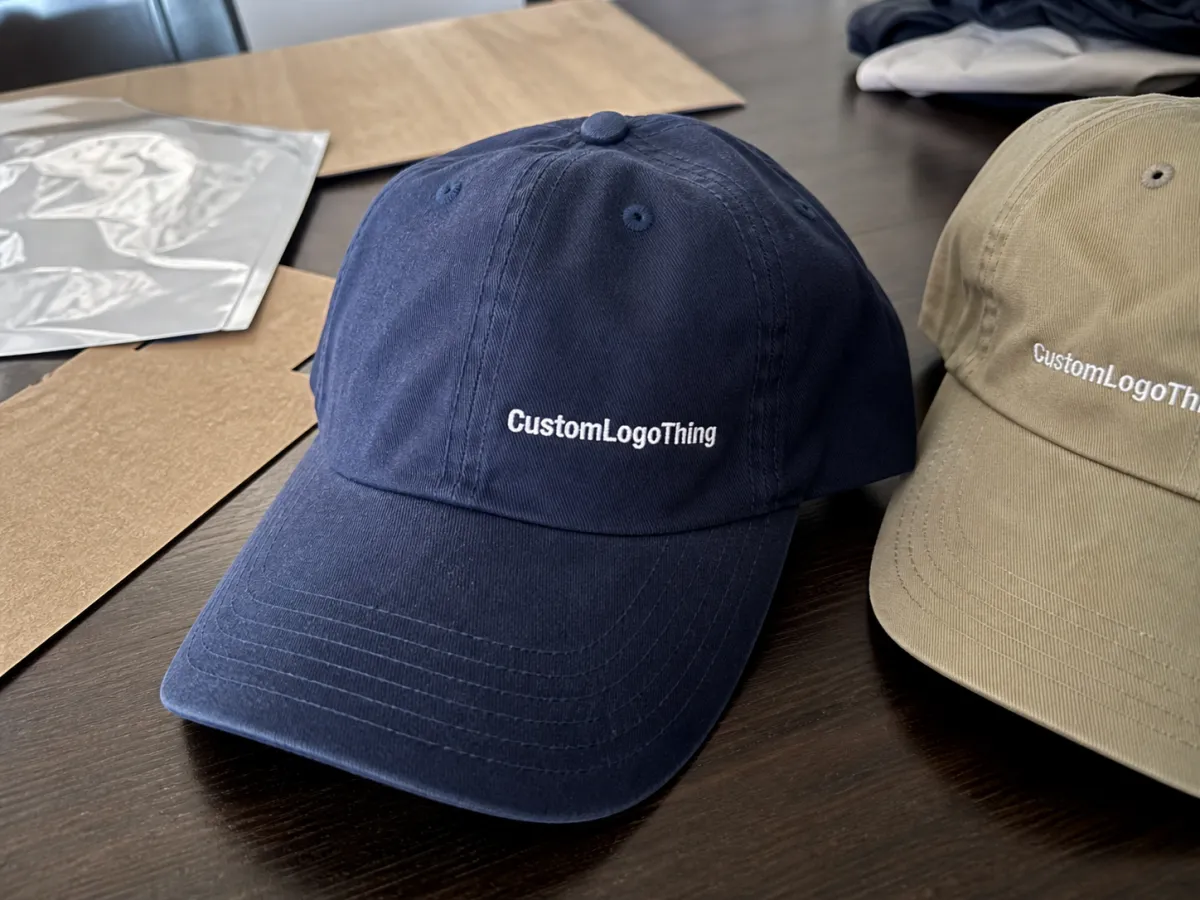
The cheapest-looking cap often becomes the most expensive mistake. A buyer sees a low unit price, signs off, and then the second batch comes back with a slightly different shade, a different buckle finish, or a front panel that does not hold the artwork the same way. Now the team is wearing mixed hats, and the whole uniform read gets weaker. In a restaurant, that inconsistency is visible immediately.
Unstructured crowns are appealing because they sit lower and feel broken-in from day one. That matters in hospitality, where the hat should support the brand rather than overwhelm it. A rigid promo cap can look awkward in a bakery, taco shop, taproom, or catering line. A softer crown usually belongs there. It feels like part of the uniform, not a giveaway that wandered in from an event booth.
Bulk planning also protects the details that seem small until they are repeated across a whole order. Logo placement, thread color, panel count, brim curve, and strap hardware all need to be locked before production starts. If one cap has a brass buckle, another has matte black hardware, and a third uses Velcro, the order reads as inconsistent even if the logo is identical. On a clean table, that may look minor. On staff, it does not.
A restaurant hat program should be judged by how it looks after 30 shifts, not how it looks in the proof file.
Practical buyers usually think in terms of wear, wash frequency, brand presentation, and tolerance for real-world handling. That is the right framework. A good sample is not enough on its own. The cap still needs to hold its shape after repeated adjustments, survive storage in back-of-house conditions, and keep the decoration readable once the team has worn it for a month. That is where thoughtful planning earns its keep.
For repeat orders, ask how specs are stored and whether the artwork, thread colors, and closure details are documented. A supplier that keeps those records properly saves time on every reorder. More importantly, it reduces the odds of a second batch drifting away from the first one. For uniforms, that is the difference between a program and a guess.
Product details that change the look, fit, and wear
Unstructured means the front panel has no rigid support. The crown bends more naturally, the cap sits lower on the head, and the whole profile feels less formal. That usually works well for restaurant branding, as long as the logo and proportions are matched to the softer shape. Oversized artwork on an unstructured cap looks awkward fast. So does a logo that depends on crisp geometry and tiny details.
Fabric choices
Cotton twill is the steady choice for clean color and dependable hand-feel. It is common for a reason. Washed cotton has a softer, more worn-in finish that suits casual hospitality better than glossy merch. Cotton-poly blends can dry a little faster and wrinkle less, which helps if hats are worn in hot kitchens or moved between shifts in a bag or locker. None of these choices is perfect for every use case. The job is to match the fabric to the pace of the operation.
Color matters more than many buyers expect. Dark navy, black, charcoal, olive, and stone tend to hide wear better than bright novelty colors. Sun fade, sweat marks, and food splashes show up quickly on light caps. If the hats will be used on patios, in open kitchens, or in delivery roles, choose a color that ages gracefully. A restaurant hat is not a billboard; it is a working item.
Closure options
Fabric strap with a buckle usually looks the most finished and holds up well in daily use. Velcro is quick and forgiving for mixed-size teams, but it can collect lint and wear down sooner. Slider or tuck closures create a cleaner profile and avoid the bulk of larger hardware, though they may not feel as adjustable for teams with frequent staff changes. The closure affects both comfort and appearance, so it should be chosen with actual wear patterns in mind.
Decoration choices
Flat embroidery is the safest option for most restaurant logos because it keeps the line work controlled on a soft crown. 3D puff embroidery can work for bold initials or very simple marks, but it does not suit tiny text or intricate icons. Woven patches preserve fine detail better than direct stitching. Leather patches add texture and a more rustic finish, though they do not fit every brand language and can feel out of place on some hospitality concepts.
Decoration choice should follow the hat, not fight it. A soft front panel can pucker if the artwork is too large or too dense. A patch can solve detail problems, but it can also feel too heavy if the cap itself is very light. Heat-applied transfers are sometimes proposed for small quantities, yet they are not always the best long-term choice for restaurant wear and repeated washing. If the logo needs to survive hard use, embroidery or a sewn patch usually ages better.
| Option | Best For | Typical Added Cost Per Hat | Notes |
|---|---|---|---|
| Flat embroidery | Small to medium logos | $0.80-$2.25 | Clean look, repeatable, and usually the easiest to approve |
| Woven patch | Fine detail or high contrast | $1.25-$3.50 | Better than stitching for tiny text, but edge finish should be checked |
| Leather patch | Rustic or premium branding | $1.50-$4.00 | Works well on darker caps, though it is not universal |
| 3D puff embroidery | Bold initials or simple marks | $1.00-$2.75 | Strong visual impact, limited detail space |
If the restaurant wants the hats to feel premium without becoming precious, keep the decoration system simple. One cap style, one primary logo treatment, one hardware finish. The more variables added, the harder it becomes to repeat the order cleanly later. That is especially true when different roles wear the same base hat with minor changes. Once the system gets too elaborate, reorders slow down and mistakes multiply.
Specification checklist before you approve samples
Start with panel count and crown structure. A five-panel cap and a six-panel cap do not carry the same logo the same way. One may give the artwork a broad, clean front. The other can shift the placement enough to distort the visual balance. That is not a small detail. It changes the entire read of the cap.
Next, lock embroidery size, stitch density, and minimum line thickness. Thin letters and delicate icons collapse when the stitch count is too low or the art is scaled too small. For unstructured caps, bold marks and thicker type generally produce a better result than hairline details. If the logo depends on narrow strokes, simplify it before production rather than after disappointment.
Check the less glamorous parts too: sweatband material, eyelet style, brim curve, seam finish, and internal taping. These affect comfort and durability more than most mockups suggest. A sample can look fine from three feet away and still feel wrong during a long shift. The inside matters because staff feel it all day.
Review front, side, and back views together. Buyers often focus only on the logo and forget the rest of the cap. Then the strap lands awkwardly, the side seam cuts into placement, or the back closure sits too high. If private-label elements, tear-away labels, or woven tags are part of the order, they need approval as well. Otherwise the cap can look like a blank with a logo attached, which is rarely the goal.
Before approving a larger run, ask for one physical sample if timing allows. A screen proof shows placement and color direction, but it does not show fabric hand, crown collapse, thread shine, or how the logo behaves in daylight. For soft hats, those differences are real. A proof is useful; a sample is safer.
If the caps will be packed with other merch or shipped to multiple locations, the carton and packout details matter too. Hats crushed in transit lose shape quickly, especially when stacked too tightly or packed with heavier items. Transit standards such as ISTA are more relevant than they might seem at first glance. A damaged box can undo good production in one delivery.
Pricing, MOQ, and unit cost for bulk restaurant hats
MOQ is driven by blank stock, decoration complexity, and whether the supplier must do custom color matching. A simple embroidered order can often start lower. Patch work, multiple logo locations, and custom closures generally push the minimum higher. That is normal. It also explains why the lowest quote on paper is not always the best order in practice.
For restaurant unstructured dad hats Bulk Order Planning, the useful quantity bands are usually 24-48 pieces for a pilot run, 72-144 pieces for more efficient pricing, and 300+ pieces for the strongest unit cost. Those breakpoints shift by vendor and decoration method, but the pattern stays consistent. Higher quantity spreads setup cost across more hats. Lower quantity keeps risk down if the design or fit still needs testing.
The key is landed cost, not just unit price. Unit price plus digitizing, setup fees, sample charges, decoration upgrades, carton packing, and freight tells the real story. A $5.90 hat with $180 in setup and $65 in shipping can easily cost more than a $6.80 hat with cleaner terms and fewer surprises. Buyers who only compare the headline number usually miss that math.
| Order Band | Typical Unit Range | Best Use Case | Tradeoff |
|---|---|---|---|
| 24-48 pcs | $7.50-$11.50 | Small team, pilot run, or new concept launch | Setup cost has a heavier impact per hat |
| 72-144 pcs | $5.80-$8.75 | Busy restaurant teams and multi-shift staffing | Better value without excess inventory |
| 300+ pcs | $4.20-$6.90 | Chain rollouts, catering groups, and regional programs | Lower unit cost, higher inventory exposure |
Digitizing usually costs extra if it has not been done before, and small artwork tweaks can also trigger rework charges. Sample hats commonly run in the $25-$75 range, plus shipping, depending on the decoration and whether blank inventory is on hand. Those costs are easy to overlook because they sit outside the unit price, yet they are part of the final spend. A supplier who explains them clearly is easier to budget around than one who buries them in the quote.
Reorders get easier when the artwork file, thread colors, cap body, and closure choice are all recorded from the first run. A supplier that stores those details well is worth more than one that only offers a low opening quote. The first order is the test. The second order tells you whether the process is actually managed.
Production timeline, proofing, and turnaround expectations
A normal order moves through quote confirmation, artwork review, digital proof, sample approval if needed, production, packing, and shipping. None of those steps is complicated on its own. Delays usually come from waiting on the wrong file, the wrong approval, or a logo version that no one had standardized. Restaurant orders often lose time at the proof stage rather than the sewing stage.
A digital proof is fast and useful, but it is still only a screen file. If the logo is small, uses several colors, or needs precise placement, a physical sample is the safer choice. That adds days, sometimes a little more, yet it can prevent a costly mistake from being repeated across the whole order. For a uniform item, that tradeoff usually makes sense.
Typical turnaround for a straightforward embroidered run is often 12-15 business days after proof approval. Patch work, mixed decoration, or color matching can extend that window. Add time if the order includes multiple logo positions or a new hat color that has to be sourced. The cap body is rarely the bottleneck. Artwork clarity is.
Common delay points are dull but predictable: missing vector art, undecided colors, late sign-off, and too many opinions on final placement. One person wants the logo centered. Another wants it lower. A third wants to see one more version. Every revision adds time and increases the chance of a mistake. The cleanest orders are the ones with one clear decision-maker and a finished art file.
Rush production only helps when the order is already clean. It does not rescue indecision. If an in-hand date matters, state it early and work backward from delivery, not from wishful thinking. That is especially true for restaurant programs tied to openings, launches, or seasonal staffing, because a delayed hat order can disrupt the whole uniform rollout.
Packaging details can matter more than buyers expect if the hats are shipping to several sites or being bundled with other merchandise. Simple paper inserts, size labels, or hang tags on FSC-certified stock can keep the presentation orderly without adding much complexity. Small detail, clearer handoff.
Supplier checks that keep reorder quality consistent
Repeatability is the real quality test. The first batch can look fine even if the process is shaky. The question is whether the next run matches the first one. That means the same crown shape, the same thread palette, the same patch stock, the same closure hardware, and the same placement file. If those variables drift, reorders become a gamble.
Check the details customers notice without training: stitch density, strap finish, panel symmetry, logo alignment, and color consistency across the batch. Those are the spots where weaker production shows up first. Nobody dining in the room is comparing spec sheets. They are noticing whether the hats look like one uniform or a collection of almost-right samples.
Communication is part of quality control. Clear proof rounds prevent confusion before production starts. Realistic lead times prevent panic later. If the supplier answers quickly but cannot explain decoration limits, that is not service. It is noise. A good vendor should be able to say which logos need simplification, which cap bodies carry artwork best, and which closure style is more likely to wear well.
Ask for real product photos, not only studio renders. A hat can look polished in a mockup and still sit oddly on an actual head. What matters is the way the crown breaks, how the brim curves in daylight, and whether the logo remains readable from normal viewing distance. A polished image is useful. It is not proof of how the cap behaves in use.
Some restaurant programs benefit from a small test run before the larger order. Others need several logo versions for different roles or locations. Either way, the supplier should be able to keep the order organized without turning it into a custom project with no notes. The less guesswork there is on the back end, the more consistent the repeat order will be.
Next steps to place the order without guesswork
Start with headcount by role and shift. A front-of-house team, kitchen crew, catering staff, and managers rarely need the same quantity. Build the order around actual use, then add spare inventory for turnover and loss. Ten to 15 percent extra is a reasonable buffer for most restaurant programs. It is enough to cover the usual surprises without overbuying.
Choose one primary decoration method and one backup option. If the logo is too detailed for direct embroidery, move to a patch before approving a flawed stitch file. Send vector art, target quantity, color notes, and the in-hand date together. That gives the quote real context instead of a placeholder number that falls apart once production questions start.
Request pricing at two or three quantity breaks so the real value is visible. A 48-piece order may be right for a pilot run. A 144-piece order may be the smarter choice if staffing is expanding. Confirm the reorder path before the first batch is approved. That is how the second order stays simple instead of becoming a reconstruction project.
The cleanest restaurant hat programs are usually the least dramatic ones. Pick a cap body that fits the brand, keep the decoration honest, and plan for repeatability rather than novelty. That approach keeps restaurant unstructured dad hats Bulk Order Planning grounded in the realities that matter: fit, consistency, and how the hat actually holds up once the staff starts wearing it.
FAQ
What MOQ makes restaurant dad hat bulk orders cost-effective?
Simple embroidered runs often become workable around 24-48 pieces, but pricing usually improves at 72-144 pieces. Patch work, custom color matching, and multiple logo locations can raise the minimum. If the first order is a trial run, ask for a locked reorder price so the second batch is easier to budget.
Should a restaurant team choose embroidery or a patch for unstructured dad hats?
Embroidery is cleaner for small logos and usually feels more integrated on a soft crown. Patches are better when the design needs texture, contrast, or more detail than stitching can hold. If the logo has tiny text, a patch is often the safer way to keep it legible.
How many extra hats should I add to a staff order?
Plan for at least 10-15% above headcount to cover turnover, loss, and size surprises. Add more if the hats will be shared across multiple shifts, seasonal staff, or off-site catering crews. A few spares are cheaper than a rushed reorder.
What slows down restaurant unstructured dad hat production?
Incomplete artwork, undecided colors, and late proof approval cause most delays. Complex decoration, multiple logo locations, and sample revisions can also extend the timeline. Shipping speed matters too, so the in-hand date should be known before the quote is finalized.
What artwork do you need for a bulk restaurant hat quote?
Vector artwork is best because it keeps the logo clean at embroidery size and makes digitizing faster. Include Pantone or clear color notes if brand matching matters, especially for thread and patch colors. If the logo has thin strokes or small text, ask which details need to be simplified before production.

