Cheap Personalized Plastic Bags can be a sensible purchase, but only if they do two things well: protect the product and carry the brand without looking flimsy. The lowest unit price is rarely the best deal. A weak seam, muddy print, or wrong size creates waste, complaints, and reorders that erase the savings quickly.
From a packaging buyer’s point of view, value comes from matching the bag to the use case. A simple one-color print on a standard size often performs better than a flashy design on a custom shape. Bags are also among the few packaging items customers reuse. A small print decision can keep working long after checkout.
Custom Logo Things focuses on the practical side: what affects cost, what changes lead time, and where buyers can trim spend without damaging the result. If you are comparing cheap personalized Plastic Bags for Retail, events, or shipping support, the details below should help you buy with fewer surprises.
When a low-cost bag still needs to look premium
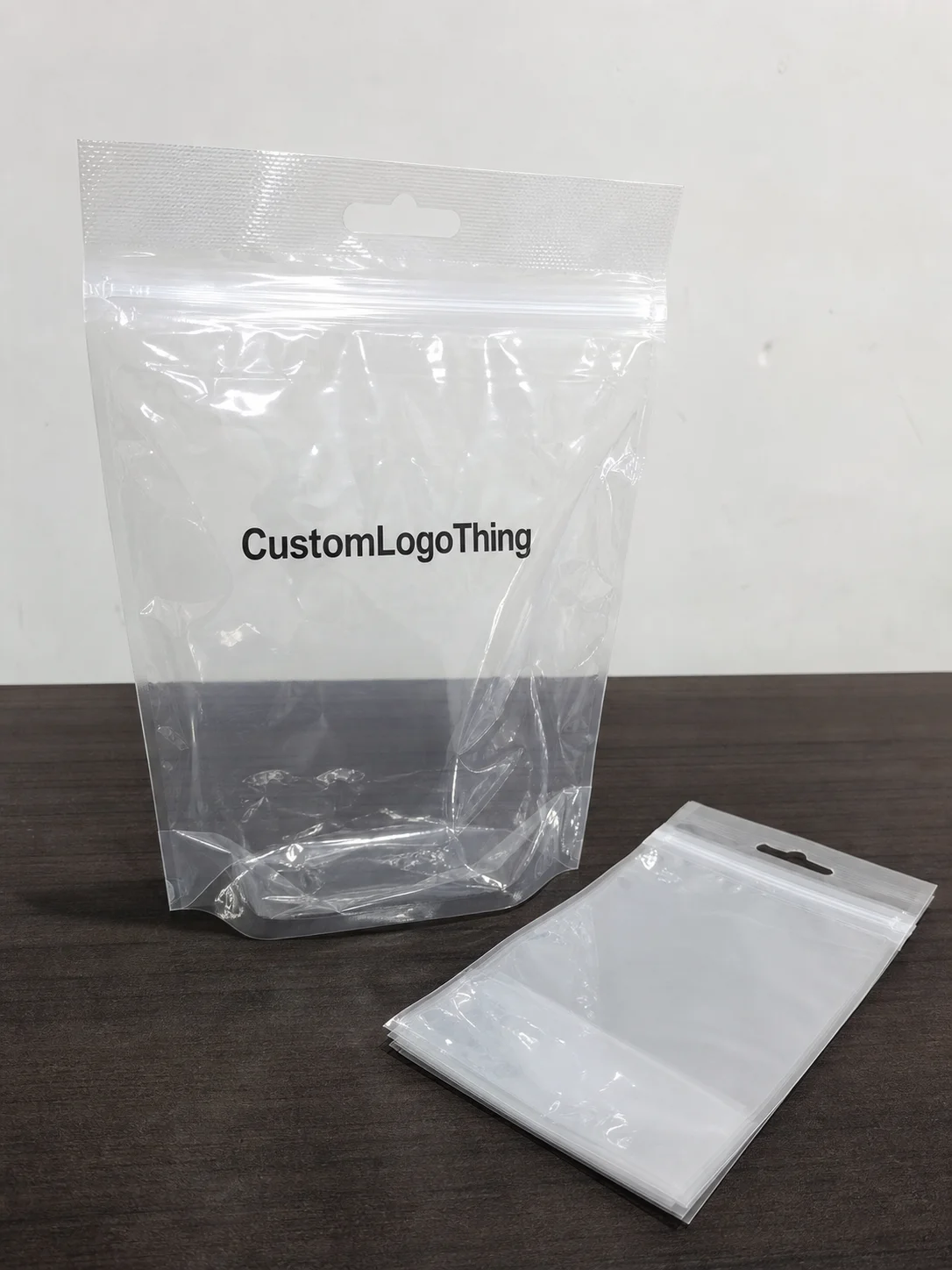
A bag is often the last physical touchpoint a customer keeps. That matters. A flyer gets tossed. A receipt gets ignored. A bag goes out into the street, into a car, onto a desk, sometimes into a second or third use. That gives even cheap Personalized Plastic Bags more brand mileage than many marketers expect.
The tension is simple. Brands want a low unit cost, but they also want clean branding, dependable handling, and a bag that does not tear at the handle on the first use. In practice, that means the cheapest option is not always the least expensive option overall. If the bag fails, the order has to be replaced, and the savings disappear.
Simple designs usually win here. One strong logo, a clear typeface, and thoughtful print placement often outperform a crowded layout. Put the brand where the eye lands first. Avoid tiny text that disappears on flexible film, especially on glossy LDPE or HDPE surfaces where fine detail can soften during printing.
“Cheap” should describe the unit price, not the outcome. If the bag feels thin, prints unevenly, or stretches badly in use, the product is no longer inexpensive.
There is another reason Cheap Personalized Plastic Bags can make sense: reuse amplifies visibility. A bag that survives three or four uses can do more for awareness than a one-time insert or sticker. That is not hype. It is a simple volume problem. More impressions, same production cost.
For buyers, the useful question is not “How low can the price go?” It is “What is the lightest spec that still protects the product, prints cleanly, and survives the real handling conditions?” That shifts the conversation from wishful savings to actual spend control.
Bag styles, print methods, and branding choices that control results
Different bag formats solve different problems. The most budget-friendly options are usually standard stock-style bags with custom printing, because tooling and setup are lighter than with fully bespoke dimensions. The main formats buyers compare include die-cut, thank-you, merchandise, boutique, mailer-style, and gusseted bags.
Die-cut bags are common for retail and trade show use. They have a cut-out handle and a cleaner presentation than a basic flat bag. Thank-you bags usually work well for convenience retail and food service. Merchandise bags and boutique bags lean a little more premium in appearance, while gusseted bags give more room for boxed items, folded apparel, or bulkier products. Mailer-style plastic bags are often used for shipping support or e-commerce outer packaging where a tamper-evident feel matters.
Print method changes the economics quickly. A one-color spot print is usually the cheapest route. It uses less setup, fewer ink passes, and lower production complexity. Two colors cost more. Three or four colors cost more again. Full-surface printing or wraparound art can look excellent, but it is not the economical path if the goal is cheap personalized plastic bags at a competitive unit price.
Material also matters. LDPE tends to feel softer and more flexible. HDPE can be thinner yet surprisingly strong for its gauge. Co-extruded films are often used for mailer-style applications where tear resistance and opacity matter more than hand feel alone. Thickness, often measured in mils or microns depending on the supplier, directly influences perceived quality and load capacity.
One practical point gets overlooked: a thinner bag can still be the right bag if the contents are light and the handles are reinforced. Over-specifying film thickness adds cost faster than many buyers expect. In many retail applications, the extra material does not improve the customer experience enough to justify the spend.
Here is a useful way to compare common options:
| Bag type | Typical budget level | Best use case | Cost impact |
|---|---|---|---|
| Standard thank-you bag | Lowest | Retail counters, food service | Simple shape, low print complexity |
| Die-cut bag | Low to moderate | Promotions, apparel, events | Better presentation, slightly higher tooling |
| Gusseted merchandise bag | Moderate | Boxes, folded items, heavier goods | More material, more volume capacity |
| Boutique-style bag | Moderate to higher | Gift retail, fashion, specialty brands | Premium look, usually higher print expectations |
| Mailer-style plastic bag | Moderate to higher | E-commerce shipping support | Performance requirements often raise cost |
The most budget-friendly combinations are the ones that keep the structure simple: standard size, standard film thickness, one-color print, and one print side. Costs rise when buyers add larger print areas, custom sizes, special handle cuts, or a thicker film because the bag has to do more work.
Match the bag to the product weight and the customer experience. A lightweight accessory does not need a heavy-gauge bag. A boxed item might. Many first-time buyers overspecify the bag because they are trying to protect a low-value purchase with a high-cost package. That is usually backwards.
Specifications that matter before you request a sample
Before you ask for a sample, lock down the basic specs. If those are vague, the sample will only prove that the bag exists. It will not tell you whether it works in your operation.
The key fields are simple: dimensions, film thickness, handle type, gusset depth, base color, and print coverage. These details control durability, presentation, and how the bag packs for storage or shipping. A bag that looks acceptable on screen can behave very differently once loaded with product.
- Dimensions: Confirm width, height, and gusset if applicable.
- Thickness: Ask for the actual gauge or micron spec, not just “standard.”
- Handle style: Die-cut, loop handle, or reinforced handle each changes feel and cost.
- Color: White, clear, black, or tinted film each affects print visibility.
- Print coverage: One side, two sides, or wrap print all change pricing.
Artwork needs the same discipline. Suppliers typically want vector files such as AI, EPS, or high-resolution PDF. That matters because raster artwork can blur or break down when scaled. Pantone references are useful for brand consistency, although exact color matching on plastic film is not always identical to what you see on coated paper. Ink, substrate, and surface finish all influence the final result.
Leave bleed and safe margins in place. Flexible packaging shifts slightly during printing, and artwork placed too close to the edge can look cramped or get clipped. A good supplier will usually flag this, but buyers save time by building the file correctly from the start.
Sampling should answer a few practical questions, not just show a logo on plastic. Does the handle cut feel comfortable in the hand? Does the seam hold once the bag is loaded? Does the print stay legible after folding and shipping? Those are the real checks that matter when an order has to perform in the field.
Basic performance and compliance checks
Not every order needs the same level of testing, but the bag should still match the load and the channel. For retail handouts, check handle comfort and seam integrity. For transit or shipping support, ask whether the bag has been evaluated against relevant performance expectations, such as drop or distribution handling. Where required, packaging buyers may also want to align with industry references like ISTA test methods or sustainability guidance from EPA.
The simplest rule works best: the lighter the contents and the simpler the branding, the easier it is to keep costs under control. Once a bag must carry more weight, protect more product, or present a more premium look, the spec has to move up with it.
Cost, pricing, and MOQ: what changes your unit cost
Unit price is shaped by a handful of variables, and buyers who understand them negotiate better. The main drivers are quantity, bag size, material thickness, print colors, setup fees, and whether the artwork runs on one side or both. Those are the knobs. Turn one, and the quote moves.
Quantity is usually the biggest lever. A supplier may quote a small run at a much higher unit price because the setup cost is spread across fewer pieces. Increase the run, and the unit cost drops, even if the total order value goes up. That is why cheap personalized plastic bags often become truly cheap only at a more useful order size.
MOQ, or minimum order quantity, varies by style and print method. A stock-format bag with a simple one-color logo may have a lower MOQ than a fully custom shape or a full-coverage design. More complicated customization often requires a higher minimum because the production setup is more involved.
Here is a practical pricing ladder buyers often see:
- Entry-level runs: Suitable for small shops, pop-ups, and test orders, usually with the highest unit cost.
- Mid-volume runs: A better fit for regular retail use, with more favorable pricing once the order reaches a stronger tier.
- High-volume runs: Best for distributors and repeat programs, where setup costs get diluted across large quantities.
Customization becomes expensive when the order asks the factory to do too much at once. Special colors, nonstandard dimensions, thicker film, extra print coverage, or a complex logo with small type all add pressure to the cost base. Even the side count matters. Two-sided printing almost always costs more than one-sided print, and large solid color blocks can affect ink usage and consistency.
Buyers should compare total landed cost, not just the quoted piece price. Freight, packing format, palletization, and storage space can change the real budget. A low quote that requires expensive shipping or awkward warehouse handling is not low cost anymore. That is especially true for larger orders where carton count and cube volume start to matter as much as the print spec.
For buyers comparing suppliers, a fair benchmark for basic Custom Printed Plastic bags often starts in a lower-cost band for simple runs and climbs quickly with added complexity. Exact numbers depend on quantity and spec, but the pattern stays consistent: standard size, one color, and limited coverage will always beat custom size, multiple colors, and heavy film.
There is also a timing effect. Rush orders tend to cost more because they interrupt the production schedule and may require air freight, overtime, or a narrower material window. If the budget is tight, building a little lead time into the order can save more than trimming a few cents from the print spec.
Process and turnaround: from artwork approval to delivery
The ordering flow is straightforward when the buyer has the details ready. It usually goes like this: quote request, specs confirmation, artwork submission, proofing, production, quality check, and shipment. Each step seems small. Together, they decide whether the order lands on time.
Fast orders happen when the buyer submits ready-to-print artwork and finalized specs. That means dimensions are fixed, the print count is known, and the logo file is usable without redesign. If the buyer still wants to adjust the bag size after proofing, the schedule slows immediately.
Typical delays come from three places: missing artwork files, color changes after proof approval, and late size revisions. These are ordinary problems, not exceptional ones. They happen because teams approve packaging before the product team has confirmed the actual load or because marketing sends an old logo file that was never meant for print.
A realistic turnaround framework for standard custom orders is often around 12–15 business days after proof approval, though quantity and production load can extend that. More complex orders take longer. If the artwork needs correction or the bag requires a custom structure, the lead time can grow beyond the standard window. Production should only begin after the proof is signed off.
Pre-production proofing is not a box-ticking exercise. It is the cheapest insurance in the order. A proof catches scale errors, print placement issues, and color mismatches before material is cut and ink is applied. A bad proof approval is one of the fastest ways to create avoidable reprints.
For buyers managing launch dates, event schedules, or retail resets, the lesson is simple. Finalize the spec first. Then approve the proof quickly. That is usually the difference between a controlled order and one that keeps slipping.
One operational detail matters more than most brochures admit: packing format can affect downstream handling. Bags bundled too loosely waste storage space; bags packed too tightly can crease or block handle areas. Ask how the cartons are packed and whether that matches how your team receives and counts product.
Why working with a custom packaging supplier reduces ordering risk
A supplier that handles both quoting and production gives buyers fewer handoffs and clearer accountability. That sounds basic because it is. The fewer times your order moves between unrelated parties, the fewer opportunities there are for a size note, artwork detail, or print instruction to get distorted.
Quality control matters more than many buyers expect. A good supplier checks print clarity, seam strength, and consistency across the run, not just the first sheet or first carton. On a long order, variation between batches can become visible if the production process is not controlled tightly.
Specialist suppliers usually give better guidance than general resellers. They can suggest whether the bag should be 1.5 mil, 2 mil, or heavier. They can explain when a one-color design will look cleaner than a busy multi-color layout. They can also flag whether the requested size is likely to be inefficient in production, which can save money before the order is placed.
For first-time buyers, artwork support is worth real money. A supplier that helps with bleed, resolution, and safe margins can prevent expensive revisions. That is not a soft benefit. It is operational value. A corrected file on the front end is cheaper than a corrected bag on the back end.
If a low quote arrives with no guidance, no proofing help, and no detail on material or production standards, treat that quote carefully. The lowest number is not useful if the bags arrive late, print poorly, or fail in use. A credible supplier gives the buyer enough information to make an informed trade-off.
Packaging buyers who want more context on materials and sustainability can also review industry resources from the FSC if their program includes paper or mixed-material components. Plastic bags themselves are a different category, but the broader packaging discipline is the same: specify clearly, test intelligently, and buy for fit, not just price.
In practice, the best suppliers are the ones that ask uncomfortable questions early: What is the actual product weight? Will the bag be carried by hand or nested inside another package? Do you need a glossy finish, or is a matte surface enough? Those questions can feel slow at the start, but they are exactly what prevents a cheap order from becoming an expensive one.
How to place the right order and avoid expensive revisions
The cleanest path to cheap personalized plastic bags starts before the quote request. Confirm the bag style, finalize dimensions, choose the print colors, prepare artwork, and set a realistic quantity target. If you do those five things well, the order becomes much easier to price accurately.
- Choose the bag type based on product weight and presentation needs.
- Lock the dimensions against the actual item or package being carried.
- Limit print colors where possible to keep setup and production costs down.
- Submit vector artwork and clear Pantone references if color matters.
- Request a proof and compare it with the real product before approval.
Before checkout, ask three questions: What is the MOQ? What is the turnaround after proof approval? What changes the unit cost most? Those answers reveal the actual buying logic behind the quote. If the supplier cannot explain the price structure clearly, the order may be harder to control than it looks.
It also helps to order slightly above expected usage if the bags are part of a recurring retail or event program. A small cushion reduces the risk of emergency reorders, and emergency reorders are where packaging budgets get damaged. Buying exactly to the edge looks efficient on paper and expensive in practice.
One more buyer habit saves time: keep a spec sheet for every repeat order. That should include dimensions, film thickness, print colors, artwork version, and the approved proof file. Reorders go faster when nobody has to reconstruct the order from email threads.
For buyers trying to keep a program stable over several months, consistency matters as much as price. A bag that is technically cheap but changes color, handle feel, or carton count from one order to the next creates hidden labor. Teams spend time rechecking counts, reworking storage, and explaining variations that should never have reached the dock.
The best cheap order is boring in the right ways. The dimensions are right, the print is clean, the packs count correctly, and the bags hold up in use. That is the standard buyers should use when comparing quotes.
What affects the price of cheap personalized plastic bags the most?
Quantity usually has the biggest impact on unit price. Bag size, thickness, number of print colors, and custom features also raise cost. Artwork complexity and special finishes can add setup or production expense.
What is the usual MOQ for personalized plastic bags?
MOQ varies by bag style and print method. Standard stock-style bags often have lower minimums than fully custom sizes. Higher minimums usually come with better unit pricing.
How long does production usually take after artwork approval?
Turnaround depends on quantity, print complexity, and current production load. Orders move faster when artwork is final and specifications are confirmed. Proof approval is the key trigger before production begins. Standard runs are often completed in about 12–15 business days after approval, though larger or more complex jobs can take longer.
Can I get a sample before placing a full order?
Yes, sampling is useful for checking size, handle feel, and print appearance. Ask whether the sample is blank, digitally printed, or production-matched. Use the sample to confirm fit with your actual product.
How do I keep personalized plastic bags affordable without losing quality?
Use a simple design with limited print colors. Choose a standard size and material thickness that fits your product needs. Increase order quantity where possible to lower unit cost. Most importantly, avoid changing specs after the proof stage unless the revision is truly necessary.


