If you are comparing opp plastic Bags for Retail brands factory pricing guide options, start with the part that is easiest to miss: a clear bag can change how a product sells. OPP has a crisp, glass-like finish that makes apparel inserts, stationery, cosmetics, and small retail goods look cleaner and more premium without adding much weight or bulk.
That is why buyers should not treat “clear bag” as a commodity. In real purchasing, the gap between a standard sleeve and a retail-ready OPP pack shows up in shelf appeal, packing speed, seal quality, and freight cost. The lowest quoted price is not always the lowest total cost once the order reaches the line.
What OPP Bags Are and Why Retail Brands Use Them
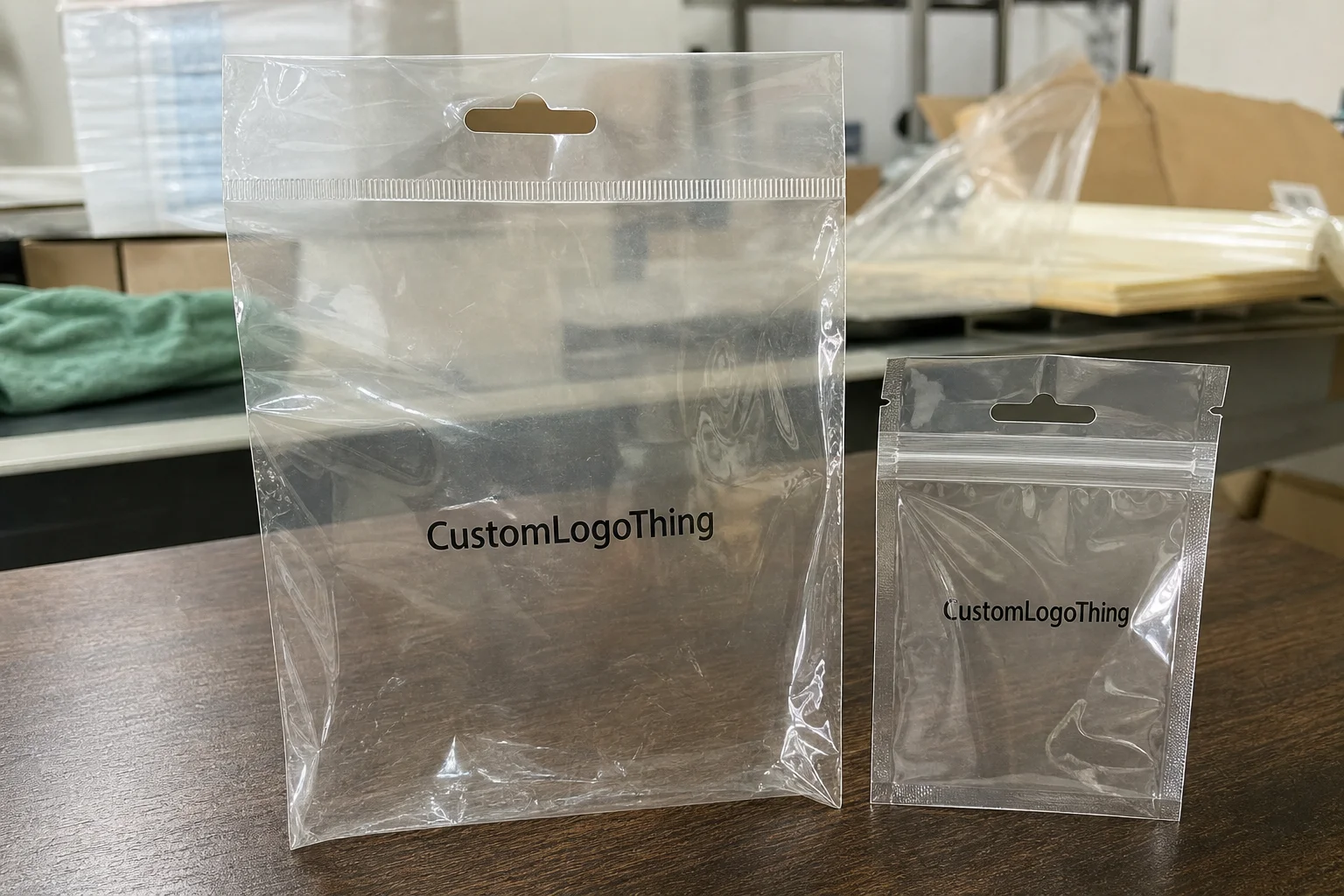
OPP stands for oriented polypropylene, a film made to be stiffer and more transparent than many other flexible packaging materials. Retail buyers favor it because it presents products neatly, gives basic dust and moisture protection, and keeps its shape well enough to look polished in store or in fulfillment.
From a packaging buyer’s standpoint, OPP bags are usually chosen for three reasons: visibility, protection, and speed. The product stays visible. The bag blocks light handling dirt and minor moisture. And because the film is light, it does not add much to shipping weight or carton cost.
Retail brands use OPP most often for:
- Apparel such as socks, folded tees, and accessories
- Stationery and paper goods
- Cosmetics inserts and small gift items
- Impulse retail products that need hanging display
The format matters. A plain clear pouch is not the same as a retail-ready bag with a self-seal flap, euro hole, warning print, or a custom size that fits the product exactly. Those extras improve presentation and usability, but they also change the quote. A useful opp plastic Bags for Retail brands factory pricing guide starts with the product, not the bag.
“A bag that fits badly is visible immediately. A bag that fits well disappears, and that is usually the goal.”
One caution: OPP is primarily a presentation and light-protection solution, not a heavy-duty shipping pouch. If the product needs puncture resistance, rough-handling tolerance, or long transit durability, another structure may be the better fit. Industry groups such as the ISTA can help frame transit-testing expectations when packaging must survive more than a retail shelf.
How OPP Bag Production Works From Film to Finished Pack
Most OPP bag production follows a fairly simple chain: film is sourced or extruded, then cut, folded, sealed, perforated if needed, printed, and packed for shipment. The flow looks straightforward. In practice, small variables can change the final bag quality more than most buyers expect.
Seal strength is one of the first places problems appear. If the heat seal is inconsistent, the bag may split at the edge or open too easily during packing. Edge consistency matters too, especially on retail lines where staff are moving quickly. If the bag sticks, curls, or opens unevenly, the line slows down.
Retail buyers commonly request a few standard formats:
- Side seal bags for clean, flat presentation
- Bottom seal bags for basic pouch shapes
- Resealable flap bags for repeated opening and closing
- Euro-hole hang bags for peg display
- Gusseted versions when extra depth is needed
Printing adds another layer of decision-making. Simple one- or two-color artwork is usually easier to run than dense graphics or full-coverage designs. That is not only a cost issue. It also affects registration, drying, and whether the print stays crisp when the bag is folded or stacked. Clean artwork generally produces more consistent results and fewer surprises.
Packaging engineers tend to look at the less glamorous details first: static control, opening behavior, and how the bag feeds on a line. A sample can look excellent in a photo and still frustrate staff if it clings together or the hang hole is off by a few millimeters. That mismatch is exactly why sample testing matters.
Two details deserve extra attention during production review. First, clarity should be checked under the same lighting the product will see in store, because glare and haze can change the way a garment or insert reads on shelf. Second, sealed edges should be inspected for scorching, waviness, or micro-channel leaks, which are easy to miss until a batch starts failing in packing.
For buyers building a packaging program rather than placing a one-off order, process consistency matters more than a polished sample. One factory may produce a beautiful first article and then drift slightly on future lots if the spec is vague. Another may appear less glamorous on paper but hold dimensions and seal quality better across repeated runs. That difference is often what separates a smooth replenishment cycle from constant re-approval.
Factory Pricing, MOQ, and Unit Cost Drivers
The opp plastic Bags for Retail Brands factory pricing guide conversation usually comes down to five cost drivers: material thickness, dimensions, print coverage, bag style, and order quantity. Once those are understood, supplier quotes become much easier to read.
Material thickness is usually measured in microns or mils depending on the market. A thinner bag can save money, but if it wrinkles easily or feels flimsy, the product may look lower value on shelf. A thicker film may improve stiffness and clarity, but it adds material cost. There is no single “best” thickness; it depends on product weight, packing speed, and the brand position.
MOQ, or minimum order quantity, exists because factories carry setup costs. They need to prepare film, plates or cylinders, cutting tools, seals, and inspection time. If you order 3,000 pieces, those fixed costs are spread across fewer bags. If you order 30,000, the same setup gets diluted and unit pricing usually drops sharply.
Here is a practical comparison of common quote types:
| Bag Type | Typical Use | Cost Range per Unit* | What Drives the Price |
|---|---|---|---|
| Plain clear OPP bag | Basic retail packing | $0.02–$0.05 | Film thickness, size, quantity |
| Self-seal OPP bag | Apparel, inserts, light goods | $0.04–$0.09 | Closure strip, labor, inspection |
| Printed hang-hole bag | Peg display retail packaging | $0.06–$0.14 | Print setup, die-cut, registration |
| Custom retail pouch with flap | Premium presentation | $0.08–$0.18 | Artwork complexity, sealing, packing spec |
*Ranges vary by size, material, order volume, and freight terms. They are useful for budgeting, not final quoting.
There are also hidden charges buyers should ask about early. Plate fees and cylinder fees can matter a lot on printed work. Sample charges may apply. Packaging method inside cartons can affect both cost and damage rates. Freight terms are another one. A quote that looks lower ex-works can become more expensive once shipping is added.
One of the most practical pricing tactics is asking for tiered quotes at several volumes. Get a price at 5,000, 10,000, and 20,000 pieces. You will often see the real break point where the cost drops enough to justify a larger run. That is more useful than a single number on a spreadsheet.
For planning purposes, it also helps to separate the true bag cost from the landed cost. A unit price that looks attractive can still lose once cartons, freight, import handling, and a second round of sampling are included. Buyers who compare only the bag price often discover the gap after they have already approved artwork.
Step-by-Step Buying Process and Lead Time Planning
If you want accurate pricing, start with a clean brief. A supplier should know the product dimensions, intended use, print requirements, and sales channel before they quote. A bag for a boutique apparel line is not the same as a sleeve for mass retail and should not be priced as if it were.
For a good quote request, include:
- Exact bag dimensions
- Film thickness
- Material finish or clarity target
- Closure style
- Print colors and coverage
- Quantity tier
- Delivery destination
The timeline usually runs through sampling, artwork approval, production scheduling, inspection, packing, and transit. A plain order may move faster than a printed custom one. Complex artwork, special perforations, or a die-cut hang hole can extend the schedule because those steps require extra setup and checking.
For many retail programs, lead time is often 12–15 business days from proof approval for standard production, though that can stretch when factories are busy or when the spec is unusual. Freight then adds its own clock. Ocean shipping and customs are a very different story from domestic trucking, so buyers need to separate production time from transit time.
One useful habit is building in buffer time for revisions. A pre-production sample can catch a wrong flap length, an off-center logo, or a seal issue before the whole order is made. That small delay is usually cheaper than a full re-run.
Seasonal launches demand even tighter discipline. If a holiday collection depends on packaging being ready in a narrow window, the order should move backward from the selling date, not forward from the day the artwork is approved. The schedule should include time for sample review, one round of corrections, carton labeling, and any required compliance text. A delay of even a few days can matter when retail calendars are fixed months ahead.
For brands that care about material sourcing and sustainability messaging, reference points from groups like the FSC can be useful when pairing OPP with paper inserts or other certified components. The bag itself may not carry FSC claims, but the broader packaging system sometimes does.
Common Buying Mistakes That Raise Cost or Hurt Shelf Appeal
The fastest way to overspend is choosing the wrong thickness. Too thin, and the bag can look cheap or feel fragile. Too thick, and you may pay for stiffness you do not need. Retail buyers often aim for the middle: enough structure to present well, not so much film that the bag becomes overbuilt.
Fit errors are another expensive mistake. A bag that is 5 mm too narrow can wrinkle the product. A bag that is too tall can leave excess headspace and weaken shelf presentation. Even small dimension mistakes can make an otherwise good design look careless.
Printing is where buyers sometimes spend for effect that no one will notice. A simple logo and clean warning line can look stronger than a cluttered layout with multiple ink zones. More ink coverage adds cost, but it does not always add retail value. For high-volume commodity items, simpler artwork often performs better economically.
Closure and handling are easy to ignore until staff complain. If the bag is hard to open, packing slows down. If the flap does not reseal properly, the product may lose protection after opening. If the hang hole is off, the bag may sit crooked on a hook. Those are small issues on paper. On a retail floor, they are visible.
Skipping sample approval is the final classic mistake. Color shifts, seal weakness, and print misalignment are much easier to correct in a sample than after mass production. A good supplier should be willing to provide a proof or pre-production sample, even if it adds a few days to the process.
Another common miss is ignoring how the bag behaves in carton packing. If the bags nest too tightly, workers spend extra time separating them. If they are too slick, they slide and deform during boxing. These are small labor costs, but on repeated orders they can become material. A bag that saves half a second per pack can matter on a high-volume line.
“The cheapest quote is often the one that hides the most assumptions.”
Expert Tips to Improve Quote Accuracy and Supplier Comparisons
If you want suppliers to quote accurately, make them compare the same spec set. Buyers often send one supplier a size, another a photo, and a third a rough sketch. The prices then look different because the jobs are different. You are not comparing apples to apples.
A better method is to request a line-by-line breakdown:
- Material cost
- Printing or plate cost
- Packing cost
- Shipping or freight terms
- Sample and setup fees
That breakdown helps you see where the margin sits. A supplier with a slightly higher material price may still be cheaper overall if their setup is lower or their packing is more efficient. Conversely, a low material price can hide expensive printing and freight charges.
Use a simple decision rule. If the product is premium, prioritize clarity, fit, and print quality. If the item is high-volume and price-sensitive, prioritize economy and line efficiency. That rule sounds basic, but it prevents a lot of poor procurement decisions.
Check proofing standards before you approve anything. Ask how the factory handles color matching, seal testing, and defect tolerance. Some buyers are fine with minor shade drift. Others want tight control because the bag is part of a branded retail presentation. The standard should be clear before production begins.
Negotiation works best on volume and timing, not vague pressure. If you can give a flexible production window, a supplier may offer better pricing because they can fit your order into a more efficient schedule. That usually creates more value than trying to shave pennies off artwork that already looks optimized.
Compare the packaging system, not only the bag. A clear OPP sleeve may work well with a printed insert, barcode sticker, and folding carton, while a heavier pouch may not. If the bag is only one part of the retail pack, the best choice is the one that supports the whole sequence: packing, display, scanning, and customer handling.
Next Steps for Specifying the Right Retail Bag Order
The easiest way to reduce risk is to create a one-page spec sheet. Keep it simple, but make it precise. Include the product size, bag size, material thickness, closure type, print colors, target quantity, and delivery location. Add a note about whether the bag is for shelf display, mailing prep, or in-store handling. Context changes the quote.
Then gather three quotes using that same sheet. Ask each supplier to confirm MOQ, sample policy, and lead time in writing. If one quote is much lower than the others, find out why. Sometimes there is a real efficiency advantage. Sometimes a hidden assumption is missing.
Test one sample under real retail conditions. Can staff pack it quickly? Does it hang straight? Does the product look premium once inserted? Can the customer open it without tearing the flap? These questions sound small, but they decide whether the bag supports the brand or fights it.
Here is a quick final checklist:
- Confirm dimensions against the product itself, not just a drawing.
- Approve artwork after checking logo placement and readable warnings.
- Verify thickness and finish.
- Ask for delivery terms and transit timing.
- Get sample approval before mass production.
Be direct about the priority. If you want the lowest unit cost, say so. If you want premium shelf presentation, say so. If you need faster turnaround, say so. Suppliers can usually optimize for one of those goals, but not all three at once. That is the practical lesson behind the opp Plastic Bags for Retail brands factory pricing guide: the smartest buy is the one that fits the product, the shelf, and the launch calendar.
What affects opp plastic bags for retail brands factory pricing the most?
Bag size, thickness, print coverage, order quantity, and sealing style usually drive price the most. Setup fees and freight can matter a lot on smaller orders, while volume matters more on larger runs.
What MOQ should I expect for retail OPP bag orders?
MOQ depends on whether the bag is plain or printed and whether it uses standard tooling or custom features. Printed and custom-sized bags usually require higher minimums than stock-style clear bags.
How long is the typical timeline for custom OPP bags?
Timeline usually includes sampling, artwork approval, production, inspection, and shipping. Complex printing or special features can extend lead time, so buffer time is important.
Are OPP bags better than PP bags for retail presentation?
OPP is often chosen when clarity and a crisp, premium look matter most. PP can be better for flexibility in some applications, but OPP usually wins on visual sharpness.
What should I send to get an accurate quote for retail OPP bags?
Send exact dimensions, thickness, closure style, print details, quantity, packaging requirements, and delivery location. A simple spec sheet helps suppliers quote the same product and reduces pricing surprises.


