If you are comparing personalized Plastic Bags Wholesale options, the headline price is only the first filter. The better question is whether the bag fits the product, protects it through handling, prints cleanly, and arrives in a specification your packing team can repeat without improvising. A bag that looks fine on a quote can still create headaches if the dimensions are off by half an inch, the seal is weak, or the print area is too small for the logo to read properly.
That is why buyers who think past the unit price usually end up with less waste and fewer surprises. Standardizing bag size and print layout can cut down on packaging substitutions, reduce rework on the packing line, and keep the presentation consistent across locations or product lines. For businesses that reorder often, that consistency is worth real money.
Why personalized plastic bags wholesale can cut packaging waste and cost
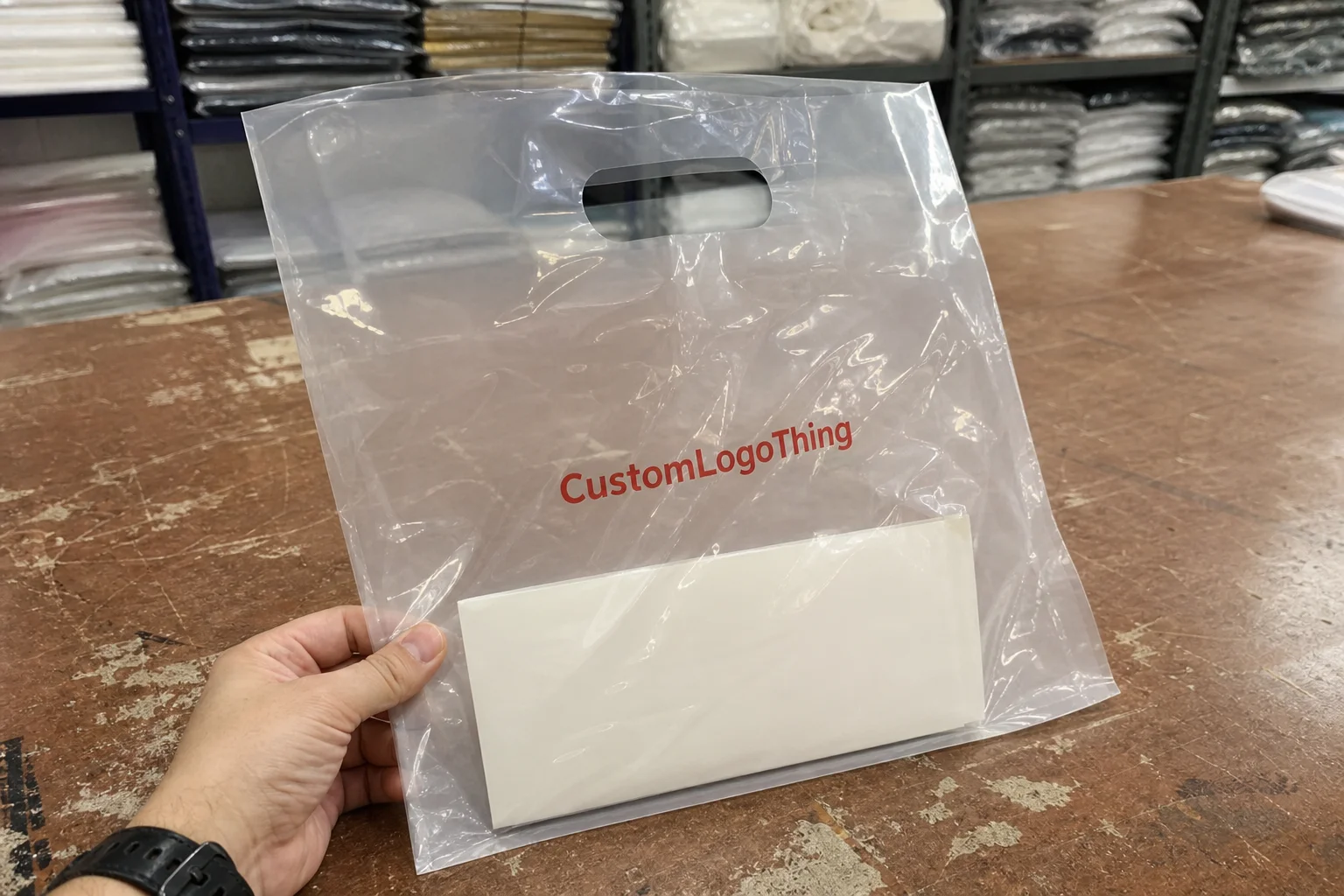
Wholesale ordering starts making sense when stock bags keep missing the mark. Maybe the product lineup includes several sizes, maybe seasonal promotions need a cleaner presentation, or maybe the team keeps using a bag that is larger or heavier than the item really needs. In practice, that usually means more material consumed than necessary and more time spent making each pack look presentable.
With personalized Plastic Bags Wholesale, the supply becomes much easier to control. You lock in one dimension set, one artwork layout, and one repeatable buying pattern. That matters for boutiques, subscription brands, promotional kits, trade show materials, and light industrial or retail applications where the packaging has to look the same every time it is used.
There is also a simple math advantage. Setup costs are spread across a larger quantity, so the per-unit price usually falls as volume rises. The savings are not magical, but they are real. A buyer moving from short-run, ad hoc bag purchases to planned wholesale ordering often sees less dead stock, fewer emergency buys, and fewer cases of staff using whatever bag happens to be available.
Branded bags do more than hold product. They improve checkout presentation, help a package feel intentional, and can reduce the need for separate labels or inserts in some use cases. A clean one-color logo on the right film often does more for presentation than a complicated design printed badly on the wrong material.
“The best wholesale bag purchase is the one that behaves like an internal standard: it fits, prints clearly, and reorders without forcing the team to relearn the spec.”
For companies with recurring packaging needs, predictability is the quiet benefit. Stable dimensions, film thickness, and print placement make it easier to forecast inventory and less risky to switch between reorder cycles.
For broader packaging planning, some buyers pair custom bag orders with Wholesale Programs so replenishment stays orderly across seasons and campaigns.
Product types, materials, and customization options
Not every plastic bag is designed to do the same job. Flat poly bags are common for lightweight goods, replacement parts, folded apparel, and accessory packs. Gusseted bags create extra room for thicker products, boxed items, or retail goods that need more interior depth without increasing footprint dramatically. Resealable and zipper bags are better when the item will be opened and closed more than once, while carry Bags with Handles are built for checkout and handoff use.
Material choice affects clarity, stiffness, feel, and sometimes cost more than buyers expect. LDPE is generally softer and more flexible, which helps when stretch and a smoother hand feel matter. HDPE is usually crisper and often selected where strength-to-weight is a priority. Polypropylene tends to offer stronger clarity and a brighter visual presentation, which can be useful when the product needs to be seen clearly on display.
Customization ranges from basic to highly specific. Some buyers only need a one-color logo on a clear bag. Others want multi-color branding, frosted film, custom sizing, a matte look, or a closure style matched to a particular packing workflow. Clear bags with labels remain a practical middle ground when the budget is tight but brand visibility still matters.
Common construction features include:
- Die-cut handles for easy carry-out use
- Reinforced seals for heavier fills
- Hang holes for retail display
- Gussets to add capacity without oversizing the footprint
- Tear notches for quick opening on sealed packs
The right bag spec should follow the product, not force the product to adapt to the bag. A lightweight accessory pack does not need the same construction as a heavier retail bundle, and a food-facing application may require different film choices and compliance checks than a general merchandise order. If a supplier cannot explain those differences clearly, keep asking until they can.
Size, thickness, print area, and performance specifications
The details that cause the most problems are usually the ones buyers confirm last. They should be confirmed first. Before placing an order for Personalized Plastic Bags wholesale, the core specifications are width, height, gusset depth, thickness measured in mils, closure type, and the usable print area. If one of those is vague, production can still move forward, but the finished bag may not match the intended fit or appearance.
Thickness affects more than durability. A thinner film can work well for lightweight products and lower-cost distribution, but it may look and feel flimsy or show more wrinkling under print. A thicker film usually improves puncture resistance, seal confidence, and hand feel, though it increases cost and may change how the bag folds, stacks, or fills.
Print rules matter just as much. Artwork generally needs a safe zone, and fine lines can disappear if they are too small. Small type, gradient effects, and heavy color coverage require more careful setup. Good production teams usually ask for vector artwork, Pantone references when color matching matters, and a clear decision on whether the bag should show the product inside or cover it fully.
A few practical size habits save expensive mistakes:
- Measure the actual item packed, not just the product listing dimensions.
- Allow for inserts, folds, or irregular shapes.
- Check whether the bag needs room for sealing, closing, or top clearance.
- Confirm whether the bag should lie flat or stand with a gusset.
| Spec | Why it matters | Common buyer mistake |
|---|---|---|
| Width and height | Controls fit and presentation | Ordering by estimate instead of measuring the finished packed item |
| Gusset depth | Creates room for thicker products | Choosing a flat bag for a bulky product |
| Mil thickness | Helps determine strength and feel | Choosing the thinnest option without checking load needs |
| Print coverage | Impacts branding and cost | Trying to place too much detail in a small printable area |
| Closure style | Changes usability and protection | Using the wrong seal or zipper style for the handling cycle |
Sample approval is one of the simplest ways to avoid a costly mismatch. A digital proof confirms layout, placement, and copy. A physical sample gives a much better sense of size, thickness, seal behavior, and how the bag actually hangs or folds. For orders where fit matters, both are worth reviewing.
For packaging that will move through distribution or shipping channels, some buyers also look for testing aligned to recognized standards such as ISTA procedures for transit performance, especially when the packaging needs to survive more than a short retail handoff.
Cost, pricing, MOQ, and quote factors buyers should compare
Pricing for personalized plastic bags wholesale depends on several moving parts, and the cheapest-looking quote is not always the lowest-cost purchase once freight, setup, and finishing are included. Bag size, material type, thickness, number of print colors, quantity, and packaging format all influence the number you see on the page.
Minimum order quantity, or MOQ, is part of the wholesale model. Larger quantities generally lower the per-unit cost because the production line runs more efficiently and setup cost is spread across more pieces. That said, MOQ is not the same for every style. Flat bags, gusseted bags, and printed bags can each carry different minimums depending on tooling and printing method.
For buyer planning, a useful rough range is often more helpful than a fantasy bargain. Simple unPrinted Poly Bags may cost only a few cents each at scale, while custom printed, thicker, or specialty-finished bags can move much higher depending on size and quantity. Freight can become a meaningful line item, especially on larger cartons or palletized shipments.
Here is a practical way to compare quotes:
- Confirm the exact bag dimensions and thickness.
- Check whether the quote includes artwork setup or plate charges.
- Ask about freight, cartons, and pallet requirements.
- Compare print method, not just unit price.
- Review whether rush fees or special finishing are included.
| Order factor | Typical effect on price | Buyer question to ask |
|---|---|---|
| Higher quantity | Usually lowers unit cost | What quantity breaks improve pricing? |
| More print colors | Raises setup and production complexity | Can the design be simplified without losing brand impact? |
| Thicker film | Raises material cost | Is the added strength necessary for the product weight? |
| Custom sizing | May add tooling or setup cost | Could an existing size work with minor artwork changes? |
| Special finishing | Can increase cost meaningfully | Is frosted film or a specialty closure worth the premium? |
A fair quote should help you understand total landed cost, not only the sticker price. Freight, carton count, pallet configuration, and whether bags ship flat or packed in smaller retail-ready units can change the real cost per bag enough to matter. If the order is for repeat use, buyers should also ask whether the same spec can be reordered later without changing the setup charge or artwork file requirements.
Production steps, proofing, and turnaround expectations
The path from inquiry to delivery is straightforward only when the buyer sends complete information early. It usually begins with a spec review, then artwork submission, then a proof or sample, followed by production, inspection, and shipping. Missing details slow that sequence immediately, especially when dimensions or print placement are unclear.
Digital proofs are useful for checking logo placement, copy, dimensions, and color direction. A pre-production sample becomes more valuable when the order has a tight fit, exact branding requirements, or a functional detail such as resealability or a particular handle shape. One common production problem is easy to miss on screen: the bag looks correct in a flat digital layout, but the actual product fills it differently once packaged.
Turnaround depends on order size and complexity. Simple single-color runs can move faster than multi-color or highly customized bags. Lead times are also affected by proof approval speed, material availability, and whether the order is entering a busy production window. Rush options exist, but they usually cost more and they do not solve unresolved artwork problems.
Buyers should prepare these items early:
- Vector logo files
- Pantone references for color matching
- Final bag dimensions
- Desired thickness or film target
- Order quantity and reorder plan
- Requested delivery date
Good quality control should include seal checks, print registration checks, carton labeling, and count verification before shipment. For businesses that need packaging to hold up in transit, some also reference general packaging guidance from the EPA when they are balancing material use, waste reduction, and recycling considerations. The goal is not simply to print a bag; it is to receive one that performs the same way from the first carton to the last.
Lead times vary, but a practical buyer should expect customization to add days, not minutes. Complex artwork, special film, or a higher MOQ can extend the schedule. If timing is tight, the real accelerant is clean information, not pressure.
How buyers can manage reorders and quality over time
For repeat purchasing, the real advantage is not just a smooth first order. It is whether the second and third order match the first without reworking the spec. That requires a little discipline on both sides. Keep the approved drawing, note the exact film thickness, record the print colors used, and store the carton count and pallet pattern if the shipment method matters.
Quality drift can happen quietly. Film lots can feel slightly different. Ink density can change. A supplier may offer an “equivalent” material that technically meets the brief but does not behave quite the same in packing or on display. These changes are not always problems, but they should be flagged before a reorder gets finalized.
Practical buyers usually ask for three checkpoints on repeat orders: confirm that the art file is unchanged, confirm that the material spec is unchanged, and confirm that the production method is unchanged. If any one of those shifts, the product may still be acceptable, but it should not be treated as identical without review.
There is also a storage consideration that often gets ignored. Plastic bags stored in damp, hot, or sunlit areas can be affected over time, especially if cartons sit too long before use. Keeping inventory dry, cool, and away from direct light helps preserve appearance and handling. That is a small operational detail with a surprisingly large effect on consistency.
For buyers managing multiple SKUs, a short internal spec sheet can save more time than another round of email. One page with dimensions, mil thickness, artwork notes, and reorder instructions is often enough to prevent the most common ordering errors.
Next steps to order personalized plastic bags wholesale
If you are ready to order personalized plastic bags wholesale, start by collecting the basics: bag dimensions, thickness target, quantity, artwork file, and preferred delivery date. If you are still deciding between two formats, ask for both quotes so you can compare appearance, protection, and total cost side by side.
Request a proof before production. That step helps confirm print placement, sizing, and overall presentation, and it gives you a chance to catch issues before material is committed. Also confirm carton counts, pallet needs, and whether the order is shipping to one location or multiple destinations.
If the design will stay in use across stores, seasons, or recurring promotions, it is smart to plan for reorder volume now. That makes future purchasing easier and often improves pricing stability.
Action step: send the full spec set, review the proof carefully, approve the run, and move into production with a clear schedule. That is the cleanest way to Buy Custom Bags with fewer surprises and better long-term value.
What is the minimum order for personalized plastic bags wholesale?
MOQ depends on bag size, material, and print complexity. Larger quantities usually lower unit cost and improve production efficiency. Ask for the exact minimum on the style you need, since flat, gusseted, and printed bags can differ.
How much do custom printed plastic bags usually cost?
Pricing is driven by quantity, thickness, dimensions, print colors, and setup requirements. Freight, artwork prep, and special finishing can affect total cost. The best comparison is total landed cost per bag, not just the quote line item.
How long does production take for wholesale custom plastic bags?
Turnaround depends on order size, print method, and proof approval speed. Simple runs move faster than multi-color or highly customized bags. Approving artwork quickly is one of the best ways to keep the schedule on track.
Can I get a sample before placing a full order?
Yes, sample or proof options are important for verifying size, color, and print placement. A sample helps reduce the risk of expensive production errors. Ask whether the sample is a physical sample or a digital proof, since both serve different purposes.
What artwork do I need for personalized plastic bags wholesale?
A vector logo file is usually best for sharp printing and scalable sizing. Pantone color references help when color matching matters. Final dimensions and print area preferences should be confirmed before proofing starts.


