Chocolate woven label beanies Unit Cost Review for Buyers who need the price, the tradeoffs, and the practical limits
Chocolate is a strong color for knitwear because it reads rich without looking loud. It sits in a useful middle ground between black, which can feel heavy, and gray, which can disappear in photos. On a retail shelf, in a gift box, or under harsh warehouse lighting, chocolate tends to hold its shape visually. It also hides a little more lint, handling wear, and small shade variation than lighter neutrals.
This is why a chocolate Woven Label Beanies unit cost review matters for buyers who want the product to feel premium without paying for unnecessary complexity. The body color, the woven label, the packaging, and the freight all land in the final number. A quote can look sensible on the first read and still be off once setup charges, packing choices, or shipping are added.
That gap is where most purchasing mistakes happen. The front-end price is only one line in the math. The landed cost is the number that decides whether the beanie works as merch, retail stock, staff issue, or a seasonal gift.
A low teaser price means very little if the label is crooked, the yarn shade drifts, or the cartons arrive in a format that needs rework before resale.
Why chocolate beanies sell the premium look without premium waste
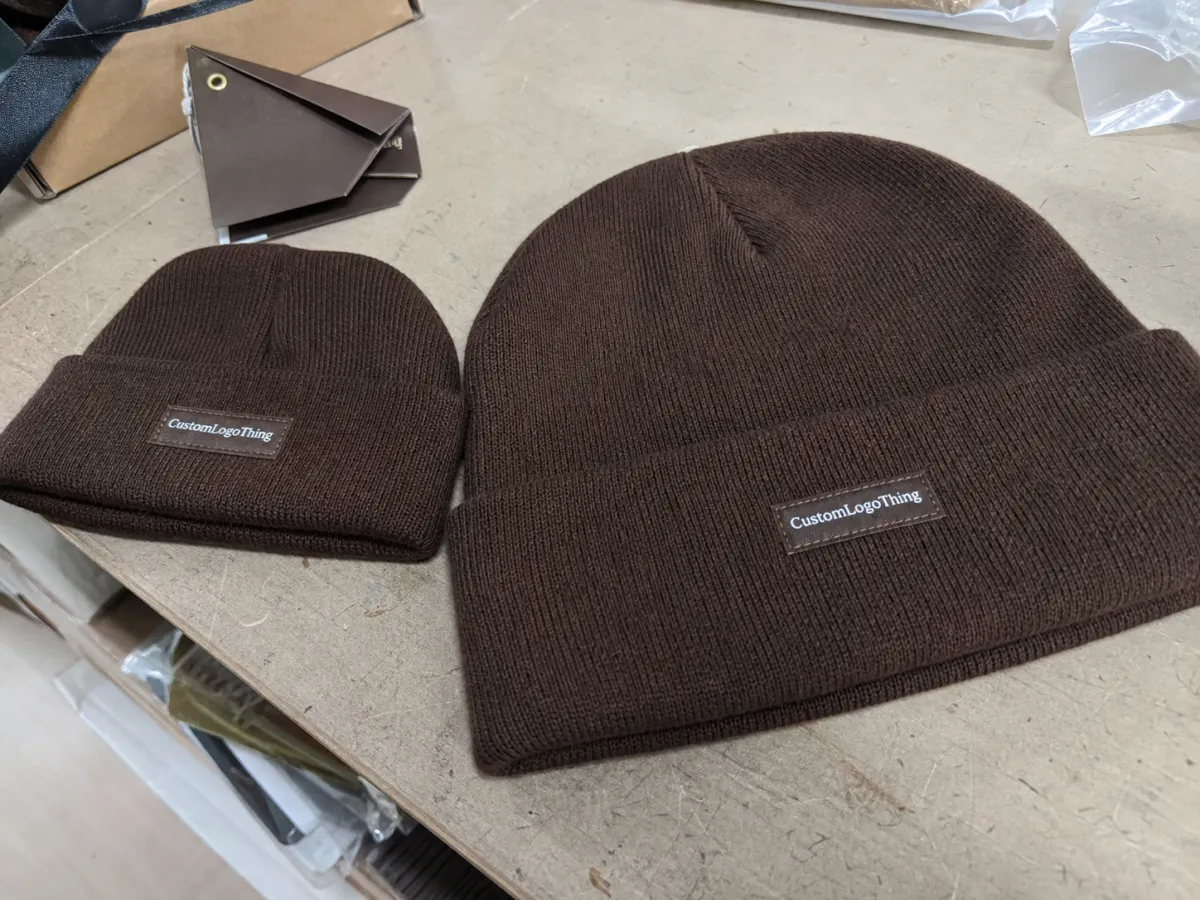
Chocolate has an advantage that is easy to miss if a buyer is looking only at color swatches. It communicates intention. The shade feels warmer than black and less generic than gray, which helps when the beanie needs to support a brand story instead of simply filling a seasonal SKU slot. It pairs well with cream, tan, gold, muted green, and black, so the same base can fit several visual systems without feeling forced.
That flexibility matters for branded merchandise. A coffee shop team beanie, a boutique winter drop, and a corporate gift program all benefit from a color that does not fight the logo. Chocolate does not shout across the room, but it also does not vanish. That balance makes it easier to sell or distribute without looking like leftover stock.
Woven labels raise the perceived value because they behave like part of the garment, not an afterthought printed onto it. The texture gives the brand a more finished presence. On knitwear, that matters more than on flat goods. A woven label can survive handling better than a brittle print, and it keeps the branding readable after the beanie has been folded, packed, and unpacked several times.
There is also a practical reason buyers keep coming back to chocolate. It is forgiving in product photography. Slight pilling, minor lint, or small difference in batch tone are usually less obvious than on pale knit colors. That does not excuse weak QC, but it reduces the risk that a normal production variation will look like a defect in e-commerce images.
The buyer question is not whether the beanie looks good in isolation. It is whether the color and label work together at the right cost point. Chocolate with a woven label often does, especially when the order needs a premium appearance without expensive finishing.
Woven label construction, placement, and finish options
A beanie order looks simple on paper: knit body, woven label, attachment method, and packing. In production, each of those decisions affects labor, comfort, appearance, and approval time. The label is not just decoration. It is a build choice that can add cost or save it depending on how much detail the artwork demands.
Placement is the first decision that changes the result. Center front cuff gives the most retail visibility and is usually the safest choice for branded resale. Side cuff feels cleaner and quieter. Hem edge or a small woven tab can create a more minimal, modern finish. Interior branding keeps the outside clean, which can work for compliance or subtle corporate programs, but it weakens shelf impact.
- Front cuff: best for recognition and display, but stitching is easier to see.
- Side cuff: more understated, useful when the brand wants a softer presentation.
- Hem tab: small footprint and durable, though visibility is lower from a distance.
- Interior label: good for secondary branding or care details, not a main sales feature.
Label construction deserves more attention than many buyers give it. A woven logo with very fine type can look sharp in artwork software and blur once the weave is translated into thread counts. The tighter the detail, the more likely the factory will need a larger label size or a simplified weave map. If the artwork uses small lettering or thin lines, a strike-off is safer than approving a proof on screen alone.
Finish options change both comfort and appearance. A merrowed edge is common and durable. A folded woven label can look cleaner on premium goods. A satin backing softens skin contact if the label sits near the forehead or inner seam. A sewn-in tab stays low-profile and works well for minimal branding. For a chocolate base, cream, tan, black, muted green, and gold usually hold up visually. Neon accents can work in some youth markets, but they often make the piece look cheaper than the rest of the build.
Attachment method matters too. A label stitched onto a cuff reads differently from one inserted into a seam. The former is faster and usually cheaper. The latter can look more integrated, but it adds labor and can slow production. Buyers should ask whether the attachment choice is cosmetic or structural, because the answer changes both the quote and the risk of rework.
Specs that change fit, feel, and reorder consistency
Before a buyer compares prices, the body spec has to be fixed. Acrylic, recycled acrylic, wool blend, and mixed yarn all behave differently in hand, in shipping, and after wear. Acrylic usually produces the lowest unit cost and gives the widest color control. Wool blends feel warmer and often read as more premium, but they raise the price and can extend lead time if the right yarn is not already in stock.
Fit is the next variable that gets underestimated. Cuff height, knit gauge, stitch density, and stretch recovery all influence how the beanie sits on the head. A shallow cuff can crowd the label near the crown seam. A loose knit can look soft in a mockup and sloppy after packing. A dense knit may feel better and hold shape longer, but it also increases material use and can push the quote up.
That is why reorder consistency matters so much. A first run can be fine even if the spec is a little loose. The second run exposes any weakness. If the crown shape shifts, the cuff depth changes, or the yarn blend gets swapped, the product stops matching itself. Buyers notice that immediately, even when the logo and color are technically the same.
Branding details beyond the woven label need to be locked early. Care tags, size indicators, hangtags, and retail packaging all affect the final job. A basic promotional order can stay simple. A retail order usually cannot. If the beanie needs shelf-ready packaging or a specific insert, that should be written into the quote request before anyone starts sampling.
Good quote questions are plain, because plain questions expose the real spec:
- What head size range is the fit built for?
- Is the beanie for retail, staff issue, or a giveaway?
- Will the body be winter weight or a lighter knit?
- Should the label stand out or stay subtle?
- Is margin more important than the heaviest possible fabric?
The more clearly those points are answered, the less likely the buyer is to receive a quote for a product that does not match the intended use.
Chocolate woven label beanies unit cost review: pricing, MOQ, and bulk pricing
The cost structure is straightforward once the spec is fixed. Yarn choice, label size, number of label colors, placement complexity, packing method, and quantity all pull the price in different directions. A chocolate beanie with a simple woven label and basic polybag packing usually lands at a cleaner price point than a fully decorated soft good with multiple trims and custom retail packaging.
MOQ changes the math fast. Setup, sampling, and labor are spread across fewer pieces in a small run, so the unit cost rises. As the order gets larger, the cost per piece drops because the fixed work is distributed more efficiently. That is not a sales trick; it is just how soft goods production behaves.
| Run size | Typical cost per piece | Setup / tooling fees | Best use case |
|---|---|---|---|
| 50-99 pieces | $5.20-$8.40 | $35-$90 | Sampling, small staff run, local event test |
| 100-199 pieces | $4.10-$6.20 | $25-$75 | Small launch, boutique resale, internal approval |
| 200-499 pieces | $3.05-$4.75 | $15-$50 | Retail rollout or branded merch program |
| 500-1000 pieces | $2.35-$3.80 | Often reduced or absorbed | Better margin control and lower per-piece overhead |
Those numbers assume a standard acrylic or acrylic-blend body, a single woven label, and basic packing. If the order shifts to wool blend yarn, adds extra label colors, or requires custom retail packaging, the quote climbs. Often quickly. That is normal. It reflects more material, more labor, or both.
Hidden charges deserve more scrutiny than they usually get. Sample fees, artwork cleanup, weaving setup, carton marking, and freight can all change the landed cost. On some orders, those numbers are small. On smaller runs, they can decide whether the project is viable. A quote that leaves them out is incomplete even if the headline unit cost looks attractive.
From a buyer’s point of view, the useful comparison is not just piece price versus piece price. It is body quality, label clarity, packaging, and freight against the target margin. If one supplier is ten cents cheaper but requires more correction work or generates more defects, the “cheaper” order becomes more expensive in practice.
To get a cleaner number, send exact quantity, artwork file, label dimensions, placement, color target, and ship-to region. If the supplier has to guess, the quote will be soft. The timeline usually will be too.
Production process and turnaround from proof to delivery
Good production follows a predictable sequence: brief, art check, digital proof, sample or strike-off, bulk production, QC, packing, and shipment. If a supplier skips one of those steps, the order is not moving faster. It is moving with less control.
Turnaround depends on how ready the artwork is and whether the yarn is already available. A proof can come back in 1 to 2 business days if the file is clean. Sampling usually takes 5 to 10 business days. Bulk production for a straightforward beanie run often falls around 12 to 18 business days after approval, assuming there are no yarn shortages or queue delays.
Shipping deserves more planning than it usually gets. Air freight raises landed cost but can rescue a time-sensitive launch. Sea freight reduces per-unit shipping cost on larger orders, yet it requires more lead time and a tighter schedule. If cartons or master packs need transit standards, ISTA guidance is useful. If the order includes paper hangtags or inserts, FSC-certified stock is a cleaner baseline for buyers who care about paper sourcing.
Most stalls happen at approval points that look minor until they are not. Label placement, weave color confirmation, logo spelling, carton marking, pack count per carton, and care-tag wording can all stop a run. A buyer who changes quantity after quoting can also reset the economics. A factory pricing 300 pieces will not treat 180 pieces the same way after sampling is already underway.
Clean approvals save more time than persistent chasing. A clear spec sheet prevents more delays than a stack of follow-up emails. Buyers who lock the details early usually get better consistency, because the factory is not guessing which version is the final one.
What separates a dependable beanie supplier from a cheap one
Price matters, but reliability is the real value metric. A lower quote can be fine if the spec is simple and the supplier communicates clearly. The problem is that cheap quotes often leave out the cost of correction. One crooked woven label, one bad dye lot, or one sloppy carton count can erase the savings very quickly.
In a chocolate woven label Beanies Unit Cost Review, four checks usually tell the story early: label registration, knit tension, color stability, and packing discipline. If those four are solid, the rest is easier to manage. If they are weak, the order becomes expensive in ways the quote never showed.
A weak supplier often shows the same failure patterns:
- Crooked or off-center woven labels
- Loose knit tension that changes the fit between runs
- Chocolate yarn that shifts too red, too flat, or too dusty
- Retail packaging that arrives incomplete or inconsistent
- Vague confirmation on label size, placement, or pack count
A stronger supplier can review the tech pack, confirm the color target, produce a sample or strike-off, and keep a reorder aligned with the first run. They should also be honest when the spec is too ambitious for the target margin. That answer is less flattering than a yes, but it prevents a bad order.
Transparency in the quote is another useful signal. A useful quote separates body cost, label cost, packaging, and freight. A vague quote that bundles everything together is harder to audit and easier to pad later with add-ons. Setup charges and tooling fees should be visible, not hidden behind generic “other costs.”
Defect control matters more than a small price gap. Fewer claims, fewer reworks, fewer returns, and less time spent fixing a problem after goods are already in transit. That is the kind of operational detail buyers feel in the margin, even if it never shows up in the product photos.
What to send next for a fast quote and sample plan
A clean quote starts with a complete brief. Send the quantity, desired fit, artwork file, woven label size, placement, color reference, and destination address in one message. If there is a hard ship date, include it. If there is a backup quantity, include that too. The supplier can work with a tight brief. They cannot fill in missing facts with accuracy.
It also helps to classify the order before asking for numbers. A sampling order, a launch order, and a reorder should not be priced as if they are the same job. Sampling carries more setup work per piece. A launch order needs more packaging control. A reorder should reward consistency and smoother production.
Use a short checklist before requesting a quote:
- Target budget and acceptable range
- Exact quantity and backup quantity
- Label dimensions and placement choice
- Packaging requirement: polybag, hangtag, retail box, or none
- Shipping deadline and ship-to region
- Whether rush production is worth the premium
Ask for a sample photo, revised mockup, or pre-production approval before bulk starts. If the supplier cannot show what changed from proof to sample, that is a warning sign. The approval chain should be visible. Otherwise the buyer is accepting a guess.
If the spec is still being compared across trims and labels, keep the naming consistent and review the options in one place. That avoids the common problem where the beanie, label, and tag are all redesigned separately, then the team has to reconcile three different versions of the same product.
For a focused request, include the exact phrase chocolate woven label beanies Unit Cost Review in the subject or body, then attach the spec sheet. That keeps the discussion centered on cost, timing, and build details instead of drifting into vague language about making it look premium. Premium is not a spec. Measurements are.
How does chocolate woven label beanies unit cost change with MOQ?
Unit cost usually drops as MOQ rises because setup, sampling, and labor are spread across more pieces. The biggest swings come from yarn type, label complexity, and packaging choices, not quantity alone.
What is the usual MOQ for custom woven label beanies?
Many factories can start around 50 to 100 pieces for simple builds, but pricing improves faster at 200 to 500 pieces. If the label has multiple colors or special packaging, the practical MOQ may be higher.
How long does production take after artwork approval?
A straightforward order often moves from approval to shipment in about 2 to 4 weeks, depending on queue and shipping method. Sampling, revisions, or stock shortages can push that timeline longer.
Can the chocolate color be matched exactly to Pantone?
Knit colors usually match by yarn availability rather than exact Pantone precision, so close visual matching is more realistic than perfect ink-style matching. Ask for yarn swatches or lab dips if the shade has to stay within a narrow brand standard.
Where should the woven label go on a chocolate beanie for best resale value?
Front cuff placement gives the strongest retail visibility and usually works best for branded merchandise. Side or interior placement is better if the buyer wants a subtler look or a cleaner premium presentation.


