Beauty embroidered baseball caps Unit Cost Review requests usually begin with the wrong question. Buyers ask what the cap costs before they know what is actually being priced. That sounds minor, but it is where most quote comparisons go sideways. A cap with simple flat embroidery, standard packaging, and a stock blank is not the same job as a retail-ready piece with custom thread matching, inserted cards, and tighter quality control. The invoice may look similar at first glance. The production path is not.
For beauty brands, these caps do a lot of quiet work. They appear in staff kits, retail add-ons, salon promotions, creator mailers, launch events, and gift-with-purchase programs. Each use case changes the balance between appearance, durability, and cost. A cap meant for a mailer has different requirements than one destined for a boutique shelf or a field team uniform. The first can tolerate a simpler blank if the branding is clean. The second may need firmer structure, better thread sheen, and more consistent packing.
The real unit-cost question is not just whether the quoted number fits the budget. It is whether the cap can be produced consistently, arrive on time, and hold its shape and finish in the setting where it will actually be used. Once those points are clear, the pricing begins to make sense.
Beauty Embroidered Baseball Caps: What Buyers Notice First
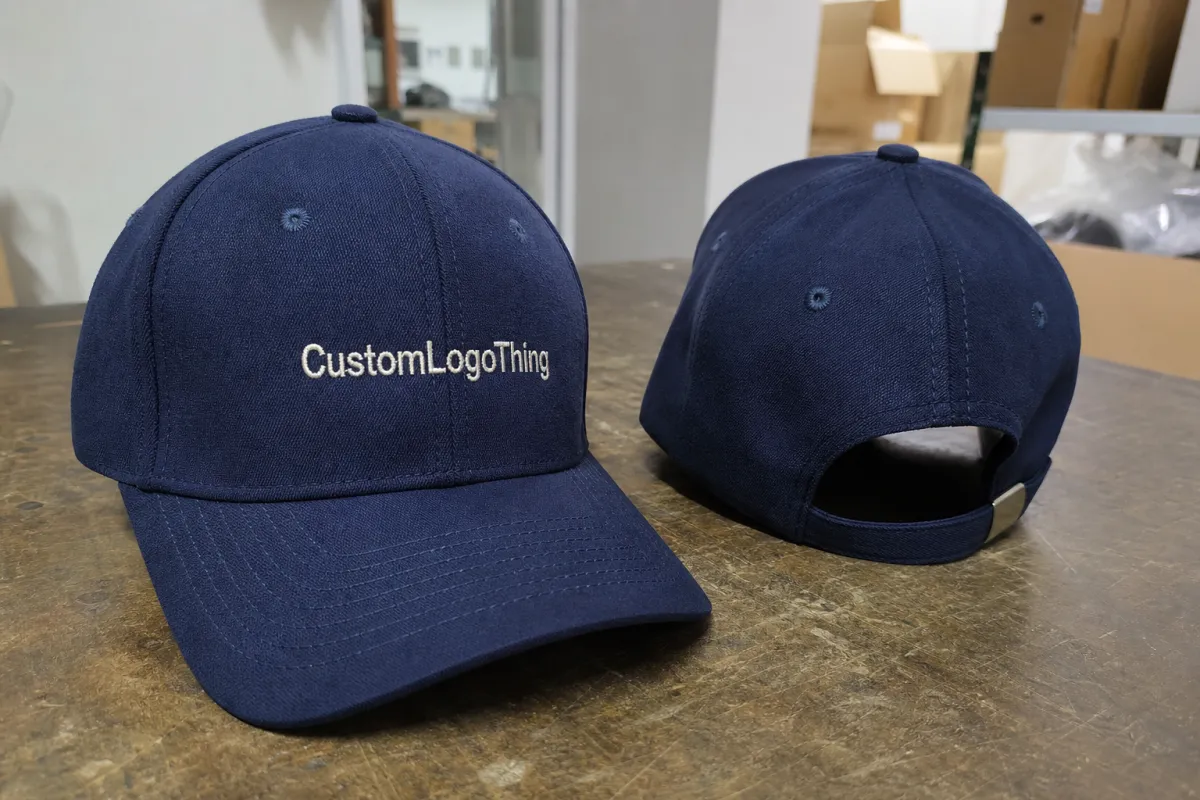
The logo is rarely the first thing a buyer evaluates. The first impression comes from how the embroidery sits on the crown. If the front panel is too soft, stitches can sink into the fabric and the design loses definition. If the thread is overly glossy or the fill is too dense, the mark can look crowded and less premium. A well-spaced, modest logo often reads more expensive than an oversized design packed with detail the cap cannot support.
That matters in beauty because the cap usually sits next to products that already carry a visual promise. Haircare, fragrance, skincare, and cosmetics all depend on finish, texture, and presentation. A cap used in that environment should feel intentional, not promotional. Buyers usually want something wearable enough for everyday use, clean enough for product photography, and stable enough that a reorder looks like the first run.
Front-panel shape makes a bigger difference than most teams expect. A structured six-panel cap gives embroidery a flatter surface and usually keeps a logo cleaner than an unstructured style. Mid-profile crowns tend to work well for beauty branding because they balance comfort and visibility. Low-profile caps can feel more fashion-led, but they reduce the available embroidery area. That often forces the artwork to be simplified. Nothing is wrong with that, but the artwork should be adjusted deliberately, not squeezed in after the quote is approved.
Buyers also notice whether the cap looks retail-ready or promotional. The difference is subtle until you compare two samples side by side. A retail-ready cap usually has tighter seam alignment, more controlled thread trimming, and a clearer relationship between the logo and the crown shape. A promotional cap can still be well made, but it often relies on standard blanks and lighter finishing. For a beauty brand, the right choice depends on whether the cap needs to support margin, visibility, or volume.
That is why a beauty embroidered baseball caps unit cost review should begin with use case, not price. A 300-piece event order and a 5,000-piece retail program should not be priced like the same project. Smaller runs need more of the setup cost absorbed per cap. Larger runs often reward a cleaner process and a lower per-piece cost, as long as the artwork and packaging stay controlled.
Product Details That Shape the Final Look
The cap build affects the final appearance before a stitch file is even created. Fabric choice, panel count, crown height, and closure style all influence how the embroidery will sit. Cotton twill remains a common choice because it offers a stable surface and a familiar hand feel. In many programs, a weight in the 260gsm to 300gsm range provides enough body without making the cap feel heavy. Brushed cotton can feel softer and more premium, while polyester blends often hold color better and can be more predictable across longer runs.
Closure choice also changes the tone of the piece. Plastic snaps are common and cost-effective. Metal buckles can feel more finished. Fabric straps read slightly softer and are often preferred when the cap is meant to feel less promotional. Hook-and-loop closures are practical for some staff programs, but they can weaken the premium impression if the rest of the build is meant for retail.
Front-panel space matters because many beauty logos are simple marks, monograms, or short wordmarks with negative space built into the design. That space helps the logo breathe. It keeps the cap from feeling overworked. On a smaller panel, though, the artwork may need to be reduced or simplified so the stitch paths do not cross awkwardly over seams. That adjustment is normal. It is better to cut back on detail than to force a complex logo into a shape that cannot support it.
Buyers usually compare four decoration paths:
| Decoration option | Visual effect | Typical setup impact | Best use |
|---|---|---|---|
| Flat embroidery | Clean, controlled, and versatile | Moderate setup, easy to repeat | Most beauty logos, wordmarks, and monograms |
| 3D puff embroidery | Bolder and more dimensional | Higher digitizing care and more machine time | Short text, bold initials, stronger streetwear direction |
| Woven label | Flat, fine detail, lower bulk | Label tooling fees may apply | Small marks or secondary branding |
| Patch application | More textured and branded | Extra materials and application steps | Heritage styling, mixed-media branding, or distressed looks |
For beauty packaging programs, flat embroidery is usually the safest option. It reads cleanly, handles soft sheen thread well, and avoids the inflated look that can pull a cap toward novelty. A small front mark, a neat side logo, or a restrained back strap detail often feels more polished than a large design that covers every available inch.
Thread finish, stitch direction, and placement relative to the seam all affect the final result. A very glossy thread can look rich under retail lighting, but it can also exaggerate flaws if the stitch density is too high. Matte thread can feel quieter and more modern, though it may disappear more easily in photos if the color is too close to the cap body. These details sound small until they are visible across hundreds of units.
Specifications That Control Fit, Stitch Quality, and Reorders
Before pricing can be trusted, the key specifications need to be locked down. A buyer should confirm fabric weight, panel count, closure hardware, sweatband construction, eyelet style, and whether the cap is structured or unstructured. Those choices determine not only the look but also how consistently the line can produce the order.
Fit is easy to underestimate. Most adult baseball caps sit around a 56 cm to 60 cm head circumference range, though the usable range depends on the closure. For mixed audiences or staff programs, that spread matters. A cap that fits cleanly on a narrow sample group may feel too tight or too loose in the broader audience. If the order is for consumer resale, a more forgiving adjustment range can reduce returns and complaints. If it is for a uniform use case, the fit should be checked against the actual wearers rather than guessed from the spec sheet.
Stitch quality depends on more than machine skill. Artwork structure matters just as much. Fine text, very thin lines, and tight internal spaces often need simplification so the embroidery can hold its shape on a curved panel. More stitches are not automatically better. A logo with 7,000 to 10,000 stitches can look excellent if the shape supports it. The same count can look overworked if the art was never meant to be embroidered on a cap. The goal is not density for its own sake. The goal is clean edge control, stable fill, and readable detail.
Practical order details should be supplied early, ideally before sampling starts:
- Logo file: Vector artwork is best, especially AI, EPS, or PDF with editable paths.
- Color callouts: Pantone references help, but thread charts still need approval because finish affects appearance.
- Placement: Front center, left panel, side, back strap, or mixed placement should be confirmed before digitizing.
- Packing: Individual polybags, tissue wraps, barcode stickers, or retail inserts all change labor and cost.
- Carton plan: Inner counts, master carton counts, and label requirements affect freight and warehouse receiving.
Reorder discipline is one of the clearest signs that a supplier understands branded programs. If the approved sample is documented properly, the stitch file, thread sequence, placement notes, and packaging instructions can be reused with much less drift. That matters because beauty calendars move quickly. A launch window may reopen months later, and nobody wants to rebuild a cap from scratch because the old approvals were not saved correctly.
For shipment planning, packaging strength should not be treated as an afterthought. Caps are light, but they are still vulnerable to crushed crowns, bent brims, and loose inserts if cartons are packed badly. Standards groups such as ISTA are useful references for distribution risk, especially when products pass through several handling points. If the order uses custom board, printed inserts, or mixed-material packaging, checking waste and material guidance from the EPA can also help teams think through packaging choices more carefully.
Beauty Embroidered Baseball Caps Unit Cost Review
A useful beauty Embroidered Baseball Caps Unit Cost review breaks the quote into pieces the buyer can compare directly. Most pricing is built from a blank cap cost, embroidery labor, setup or digitizing charges, packaging, and freight. Some suppliers separate digitizing. Others fold it into the unit price. Some list sample costs clearly. Others bury them in revision language. If the quote does not show the structure, the buyer does not really have a comparison yet.
Here is a practical way to read the numbers:
| Cost element | What it covers | Typical impact |
|---|---|---|
| Blank cap | Body, visor, closure, sweatband, basic finishing | Often the largest fixed material portion |
| Digitizing / setup charges | Artwork conversion, stitch path setup, approval work | Usually fixed, so small runs carry a higher share |
| Embroidery labor | Machine time, thread use, trimming, in-line checks | Driven by stitch count, colors, and placement complexity |
| Packaging | Polybag, insert card, hang tag, barcode label, carton pack | Can be modest or significant depending on retail needs |
| Freight | Domestic or international transport, carton weight, consolidation | Changes with volume, destination, and timing |
For a standard beauty cap with a simple one- to two-color flat embroidery design, a 300-piece order will usually carry a higher unit price than a 1,000-piece order, even if the artwork is identical. That is not a markup trick. It is the arithmetic of setup spread across fewer units. A buyer might see blank cap prices around $2.20 to $4.20 each, embroidery and setup contributing another $1.50 to $3.50 per cap depending on stitch count and complexity, and retail-style packaging adding $0.20 to $0.80 if the order needs individual presentation. That places many mid-run orders in a rough range of $4.50 to $8.50 per unit before freight. Orders with custom-dyed bodies, dense logos, or premium packaging can move beyond that quickly.
MOQ exists because the setup work has to be absorbed somewhere. A short run still requires digitizing, thread loading, sample approval, line setup, and inspection. If a factory changes thread colors and rethreads machines for only a few hundred units, the cost per cap climbs fast. Buyers can still request smaller quantities, but they should expect a higher per-piece rate and sometimes fewer choices in blank styles or colors. Standard cap colors and standard closures usually keep the number lower than custom builds.
Several decisions can lower cost Without Cutting Quality:
- Use fewer thread colors and keep the stitch layout simple.
- Keep the logo centered and standard rather than unusually large or offset.
- Choose a stock cap color, closure, and fabric instead of a custom-dyed body.
- Consolidate packing instructions so the line is not stopping for special handling.
- Approve the artwork quickly so revisions do not stretch setup time.
Buyers often ask whether a woven label is cheaper than embroidery. Sometimes it is, sometimes it is not. A woven label can reduce machine time for very small marks, but label tooling and application steps can erase the savings if the quantity is too low. For beauty branding, the visual fit should come first. A cheaper decoration that looks out of place is not a savings.
A clean quote also depends on what is excluded. Freight, sample shipping, carton labeling, and insertion labor can all move the final landed cost. Two quotes with the same unit price may end very differently once packing and transport are added. That is why the lowest sticker price is not the most useful number. The meaningful number is the landed cost per approved, pack-complete cap.
Process and Lead Time From Artwork to Shipment
The production flow is usually straightforward, but every step has a place where delays can creep in. First comes artwork review. Then digitizing turns the logo into stitch instructions. After that, the supplier sends a stitch proof or digital mockup for approval. Once the buyer signs off, a sample or pre-production piece may be produced for final checks. Bulk production follows, then inspection, packing, and shipment.
The approval stage creates most of the friction. Three things deserve close attention: logo scale, thread color match, and placement on the cap. A design that looks balanced on a flat screen may not translate cleanly onto a curved front panel. Fine text can close up. A thin outline can disappear. Small symbols often need to be enlarged a little to hold their shape. None of that is unusual. It is the normal behavior of embroidery on a curved product.
Buyer note: a clean sample saves money more reliably than a rushed signoff. If spacing, curve behavior, and thread sheen are not checked carefully, the bulk run can look technically correct and still miss the brand feel.
Lead time should be read in three parts: sample time, production queue, and transit. Sample time may take 2 to 5 business days depending on the artwork and the supplier’s schedule. Bulk production often runs 10 to 18 business days after approval for a standard order, but that can stretch if the line is busy or if the order needs custom packaging. Transit can add a few days or several weeks depending on the shipping method and destination.
Packaging changes timing more than buyers expect. Individual polybags, custom insert cards, barcode labels, and retail-ready cartons add handling. That does not make the project inefficient; it just means the timeline should be realistic. A simple packed cap can move faster than one that needs staged labeling and extra quality checks. If the order is tied to a launch window, those extra steps should be built in from the start instead of discovered after sampling.
Freight-sensitive orders benefit from a packaging plan early in the process. Carton count, unit packing, and outer dimensions all influence the shipping quote. A slightly larger carton footprint may not matter on the production floor, but it can matter a great deal once the order is palletized. Practical packaging guidance from industry organizations such as Packaging.org can help teams think through inserts, board, and presentation standards before the order is locked.
Why a Detail-First Supplier Reduces Rework and Reorders
A detail-first supplier is not just producing caps. They are protecting repeatability. That matters because beauty programs often reorder the same item for seasonal launches, influencer drops, staff updates, and regional events. The difference between a smooth replenishment and a frustrating one usually comes down to records: saved stitch settings, approved thread references, clear placement notes, and packaging instructions that did not get lost between jobs.
Digitizing is the first safeguard. If the stitch file is built carefully the first time, the same shape and density can be repeated later with far less drift. Thread sourcing matters too. The same color name can look slightly different from one lot to the next, so a disciplined supplier keeps physical reference standards and checks them against the approved sample instead of trusting the label alone.
Inspection during production makes a bigger difference than most quotes reveal. In-line checks catch placement shifts, thread tension issues, and trim problems before a full batch is complete. That kind of control does not appear as a marketing feature, but it often determines whether the buyer receives a clean shipment or a mixed batch that needs sorting. Rework is expensive. Sorting is worse because it consumes time after the product has already left the line.
There is a commercial angle as well. A supplier who asks about artwork scale, target retail price, use case, and packaging requirements early can quote a realistic job instead of guessing. That usually means fewer revisions, fewer surprises, and fewer awkward conversations after sample approval. For a beauty brand trying to protect margin, that is not small. It is the difference between a product line that is easy to reorder and one that has to be re-explained every season.
Most buyers feel the benefit on the second order. If the first run was documented well, the reorder should match in crown shape, logo size, thread finish, and presentation. Without that documentation, every refill becomes a fresh negotiation, and the original approval work disappears. That is the hidden value in a careful beauty Embroidered Baseball Caps unit cost review: not just lower cost, but fewer downstream problems.
Next Steps: Send Specs for an Accurate Quote
If the goal is an accurate quote, the fastest path is to send a complete spec package in one pass. The most useful items are the logo file, cap style, placement, quantity, thread colors, packaging needs, and target delivery date. If the final artwork is not ready, a rough sketch and a reference cap photo are still useful because they show direction, scale, and the level of finish expected.
Ask for a sample or digital mockup if you are comparing finishes. Embroidery density, thread sheen, and crown shape can change the appearance more than most buyers expect, and those differences are easier to judge before bulk production begins. A sample also shows whether the cap feels right on the head instead of only looking right on a screen.
For quote comparison, use the same spec sheet with every supplier. That is the only honest way to compare options. If one quote includes setup charges, another hides tooling inside the unit rate, and a third excludes packaging, the cheapest number may not be the best value. What matters is the landed cost, the approval path, and the confidence that the reorder will match the first batch.
Send the specs cleanly, confirm the sample, and compare the details with discipline; that is the most reliable route to a controlled beauty Embroidered Baseball Caps unit cost review that fits both the brand and the budget.
What drives the unit cost for beauty embroidered baseball caps?
The biggest drivers are blank cap price, stitch count, setup time, and how many thread colors the logo uses. Packaging, freight, and sample revisions can also move the final cost if the order needs retail-ready packing or extra approvals. The more customized the cap becomes, the more the quote shifts away from the blank price and toward labor and handling.
What MOQ should I expect for embroidered beauty baseball caps?
MOQ depends on cap style, decoration complexity, and whether the order uses a standard blank or a custom build. Smaller quantities are usually possible, but the per-cap price rises because setup and machine time are spread across fewer units. If a supplier gives a very low MOQ, check whether the finish, packaging, or color options are also limited.
How long does the process and lead time usually take?
Timing typically includes artwork review, digitizing, sampling, bulk production, inspection, and transit, so each step should be planned separately. A simple order moves faster than a design that needs thread matching, placement revisions, or custom packing inserts. The approval stage is often the slowest part, especially if the logo needs simplification for embroidery.
What artwork works best for a clean cap embroidery quote?
Vector artwork is best because it shows clean edges, scale, and spacing before digitizing begins. Fine text, thin lines, and tiny details may need simplification so the stitched result stays readable on the cap crown. A logo that looks strong at small sizes usually performs better than one with lots of internal detail.
Can I lower the unit cost without lowering quality?
Yes, by reducing thread colors, choosing standard cap colors, and keeping the logo placement simple and centered when possible. Grouping shipments and approving the sample quickly can also avoid avoidable time and rework costs. The best savings usually come from controlling complexity, not from cutting the material quality that gives the cap its shape and finish.


