Skincare embroidered beanies unit cost review is the right lens for a branded winter accessory because the number that matters is rarely the first number on the quote. A beanie for a skincare launch may be used in retail, a gift-with-purchase set, an influencer mailer, or staff uniforms, and each use case changes what should be included in the price. Decoration, packing, setup, and freight can move the total more than the blank garment itself.
That is the part many buyers learn the hard way. A sample can look polished and still sit outside budget once embroidery digitizing, carton packing, hangtags, and delivery are added. The useful question is not “What is the cheapest beanie?” but “What does one finished, approved, shipped piece really cost?”
For skincare brands, that distinction matters because presentation is part of the product story. The beanie may be the only wearable item in a kit, so its handfeel, logo quality, and packaging affect how premium the whole bundle feels. A clean quote should show the cost of the beanie body, the decoration, and the finishing separately. If those parts are blended together, comparing suppliers becomes guesswork.
Why skincare embroidered beanies change the unit-cost math
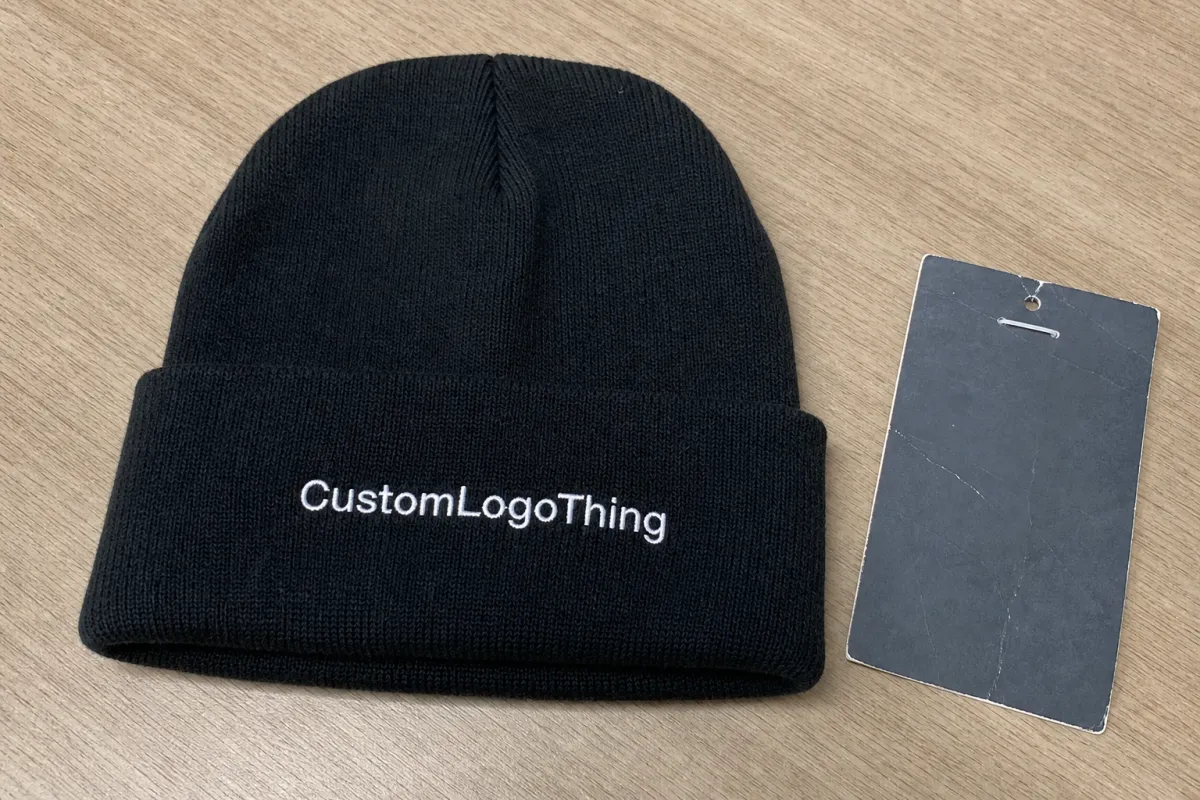
A skincare program usually asks a beanie to do several jobs at once. It needs to be warm enough to justify itself, polished enough for a camera, and economical enough to fit into a margin-sensitive promotion. That combination makes the quote more sensitive to details than a basic apparel order.
Embroidery is usually the most practical decoration method. It gives a crisp logo, holds up through wear, and avoids the flat, plastic feel that some print methods create on knit fabric. A print can be fine on paper and still fail on a ribbed beanie: the surface moves, the ink can sit unevenly, and small text may lose clarity. Embroidery handles the texture better, provided the stitch count and placement suit the knit body.
The cost picture changes quickly once the program is tied to more than one variant. A single colorway with one logo location is simple. Add a second beanie color, a different thread match, a branded hangtag, or a custom polybag, and the unit cost shifts. Small changes in presentation have outsized effects at low quantity.
A useful quote separates the parts that behave like fixed cost from the parts that scale with quantity. That is the only way to judge whether a higher-looking offer is actually expensive or simply more transparent.
For a skincare buyer, the most practical quote format is to request three versions:
- Blank stock beanies to see the raw garment price.
- Decorated beanies to isolate embroidery and setup charges.
- Packed beanies to include labels, bagging, inserts, and shelf-ready finishing.
That structure prevents false comparisons. A bare beanie with no finishing is not comparable to a retail-ready piece sitting in a branded box or polybag. The same applies to internal use versus customer-facing packaging. A staff cap can tolerate a simpler spec. A gift item usually cannot.
Embroidery styles, knit bodies, and retail-ready details
The beanie body is not a neutral background; it changes how the logo behaves. Acrylic remains the workhorse because it is consistent, warm enough for promo use, and usually the easiest material to hold near the lower end of the price range. Recycled acrylic and rPET blends are useful when the brand wants a cleaner sourcing story, though yarn behavior can vary slightly under needle tension. That means stitch definition should be checked, not assumed.
Wool blends feel more premium, drape well, and often photograph beautifully. They also raise the cost per piece and can narrow the decoration window if the knit is less forgiving. In practice, the buyer is balancing softness, stitch clarity, and price rather than chasing one perfect material.
Gauge matters too. A tighter knit usually gives cleaner embroidery because the surface is more stable. A looser knit can read casual and seasonal, but small lettering may sink into the texture. Cuff depth, crown height, and stretch recovery all change how the beanie sits after folding and shipping. Two samples with the same logo can look and feel very different once they are worn.
Placement affects both aesthetics and unit economics. Front cuff embroidery is the safest choice for skincare and beauty brands because the logo is easy to read and easy to repeat consistently. Side placement can feel more fashion-led, but it often leaves less room for detail. Tonal embroidery keeps the look quiet and premium; multi-color embroidery needs more thread changes and can take more machine time. A woven patch can look refined, though it may bring tooling or separate setup fees.
One mistake shows up often: overcomplicated art on a small knit surface. A 40 mm wordmark with moderate stitch density is usually easier to control than a dense crest with filled sections and tiny lettering. The difference is not just cosmetic. Dense embroidery increases machine time, thread consumption, and the chance of puckering on stretch fabric. Buyers sometimes think they are improving value by making the logo larger or more detailed. On a beanie, that can do the opposite.
Retail-ready details deserve a close look because skincare orders are frequently judged as kits rather than isolated products. Ask how the beanie will be folded, whether the fold fits the carton dimensions, whether a barcode label is required, and whether the polybag is clear enough for the knit texture to show. If the product will sit beside jars, tubes, and inserts in a gift box, the fold needs to survive transit and still look tidy on arrival.
Useful checks at this stage include:
- Logo placement tolerance in millimeters, not vague approval language.
- Thread color match against a Pantone reference or a physical swatch.
- Inside-back comfort where the embroidery backing touches skin.
- Fold width and bag size so the piece fits the carton cleanly.
Skincare embroidered beanies unit cost review: pricing tiers and MOQ thresholds
A proper skincare Embroidered Beanies Unit Cost Review needs quantity bands, not one floating number. A quote only becomes useful when it shows how pricing changes at a test order, a launch run, and a restock run. That is where minimum order logic and setup amortization become visible.
| Program type | Typical unit cost | MOQ behavior | Best use |
|---|---|---|---|
| Blank stock beanie | $1.05-$2.20 | Often 100-300 per color | Local decoration, internal use, or sample buying |
| Single-location embroidery | $2.15-$4.10 | Usually tied to style, color, and logo version | Most skincare promotions and staff kits |
| Retail-packed beanie | $2.60-$4.85 | May rise with labels, inserts, or custom bagging | Shelf-ready sets, e-commerce, and distributor orders |
Those ranges assume a stock body with a single embroidery position and no unusual packing. If the order is 250 pieces, a $65 digitizing charge adds about $0.26 per unit. At 1,000 pieces, the same charge falls to roughly $0.07. At 5,000 pieces, it becomes almost invisible. That is why a line item that looks minor on paper can matter on a small launch.
Setup fees are where buyers often miss the real spread. Digitizing is only one possible charge. Woven patch tooling, custom labels, branded inserts, and specialty bagging can each add cost. A woven patch program may introduce a tooling fee in the $60-$180 range depending on size and complexity. A hangtag might add only a few cents per piece, but even that becomes meaningful when the order is small and margin is tight.
MOQ also needs to be read carefully. Minimums may apply per color, per style, per decoration version, or per order line. Three colors and two logo placements can quickly become six separate production commitments. The unit cost rises when the order is split, because each split may require its own thread match, sample check, and packing setup. A quote that hides this detail is not helping the buyer.
The cleanest way to compare offers is to look at landed cost rather than base garment cost. Freight, carton packing, and finishing can move the final number enough to change the decision. A cheaper blank that needs more hand labor in packing may end up costing more than a slightly higher blank with simpler finishing.
Three breakpoints help most buyers read the quote properly:
- Test order: validate handfeel, logo scale, and color accuracy.
- Launch run: balance margin and presentation for the first shipment.
- Restock run: reduce cost per piece once the spec is proven.
The strongest price sheet shows what changes the number: yarn, stitch count, finishing, or freight. If savings come from a lighter knit or simpler packing, that should be obvious before approval.
Production steps, lead time, and approval checkpoints
Once artwork is approved, the path is usually straightforward, but each step can affect timing. A clean order starts with artwork review, then digitizing, then a proof or sample, then bulk embroidery, inspection, folding, packing, and shipment. If the artwork file is unclear or the logo needs cleanup, time gets lost before the first stitch is made.
The early stage should lock down the beanie body, the decoration position, the thread colors, and the embroidery size. Good digitizing turns a flat logo into a machine-ready file that respects the knit structure. If the logo is too small, details collapse. If it is too dense, the embroidery can feel stiff or cause puckering. That is why the first proof matters more than the last approval email.
For a straightforward stock acrylic beanie with one embroidery position, 10-15 business days after approval is a reasonable planning window. If the order includes custom labels, retail bagging, or multiple colorways, 15-25 business days is more realistic. Rush work is possible when the blanks are already in stock, but rush timing usually leaves less room for revision and can raise the unit cost even if the quantity stays the same.
The production flow usually follows this sequence:
- Artwork cleanup and logo scaling.
- Digitizing and thread matching.
- Sample, photo proof, or pre-production approval.
- Bulk embroidery and in-line quality checks.
- Folding, labeling, bagging, and carton packing.
- Freight booking and shipment.
Buyers shorten the timeline when they send complete information up front. Quantity, destination, required arrival date, and packaging details should be in the first brief. If the beanie needs a barcode, a specific carton count, or split delivery, that should be stated immediately. The more complete the request, the fewer surprises in the quote and the fewer revisions before production.
Fit, handfeel, and packaging checks before bulk approval
Soft handfeel matters in skincare because the customer is evaluating the whole object, not just the logo. A rough or oddly stiff beanie can weaken the presentation the moment it is lifted out of the box. That is especially true in gift-with-purchase programs, where the unboxing moment carries a lot of weight, and in staff kits, where comfort influences whether the item gets worn again.
Fit is equally important. Most cuff beanies sit somewhere around 8.5 to 10 inches from cuff to crown, but the right shape depends on whether the brand wants a snug profile or a more relaxed silhouette. Stretch range, crown height, and cuff structure all change how the item photographs and how it looks after shipping. If the beanie must sit neatly inside a gift box, the folded dimensions need to be confirmed before bulk approval, not after.
Embroidery backing can change the feel inside the beanie. A dense fill and a large logo may look fine on a flat table and still feel irritating after a few hours of wear. A smaller, readable mark often performs better than an oversized one that crowds the fabric. If the logo sits near the forehead, thread density and underlay should be checked carefully so the inside does not feel scratchy.
Practical QA beats vague reassurance. The approval sample should be checked for color consistency, logo placement tolerance, loose threads, fold consistency, and packaging presentation. If there are multiple colorways, review each one against the approved reference before signing off. Small knit-tone shifts can be visible under retail lighting even when they are hard to spot in a photo.
- Confirm the logo sits in the approved position on every sample.
- Check that the fold stays tight after handling.
- Look for loose threads inside and outside the cuff.
- Inspect thread colors under bright white light, not only warm indoor light.
- Verify labels, barcodes, and hanging points against the retail plan.
A cleaner spec sheet lowers rework risk and protects margin. It also keeps the final beanie aligned with the rest of the skincare package, which matters more than buyers sometimes admit. One weak component can make the entire kit feel less considered.
Why a packaging-minded supplier improves total landed cost
Not every embroidery supplier thinks like a packing department, and the difference shows up in the quote. A packaging-minded partner understands that the beanie may ship with a mailer, a promo box, an insert card, or a shelf tag, so decoration and pack-out should be planned together. That can reduce waste, prevent damage, and eliminate the need to coordinate several vendors for simple finishing work.
This matters because total landed cost is larger than the garment line. A supplier that can fold, bag, label, carton pack, and coordinate freight gives the buyer one place to review art, one schedule to track, and one set of specs to approve. That does not guarantee the lowest number on paper, but it often produces the better practical cost after errors and delays are removed from the equation.
For a skincare promotion, presentation is part of the product. If packing is treated as an afterthought, the shipment can look less polished even when the embroidery itself is fine.
There is also a sourcing angle. If the beanie includes paper hangtags or printed inserts, FSC certification helps document responsible paper sourcing. For transit validation, ISTA methods are a useful reference point for carton and parcel testing, especially if the product moves through multiple distribution steps before reaching stores or subscribers. A buyer does not need to become a packaging engineer, but it helps to know whether the shipment plan has been thought through.
The commercial benefit is straightforward. A quote that clearly separates material, embroidery, packing, and freight makes it easier to compare a basic version, a premium retail version, and a rush version without guessing. That clarity protects margin and brand perception at the same time.
What to send for a faster quote and cleaner next step
The fastest quote starts with a complete brief. Send the target quantity, the number of colorways, the decoration location, and whether the order should be blank, decorated, or retail-packed. Those four details alone can change the MOQ, the unit cost, and the production plan. If the supplier has to guess, the first quote will only be an estimate.
Artwork should be clean and easy to size. Vector files are best, and if the brand has Pantone references or strong visual color targets, include those too. For embroidery, the logo does not need to be oversized to look premium. In many cases, a simpler mark with readable stroke weight gives better results and fewer revisions than an elaborate crest packed with tiny details.
Shipping information matters just as much. Add the destination zip code or country, the required in-hand date, and any split-shipment needs. If the order is going to more than one distribution center, state that early. Freight can move the final landed cost enough to matter, especially on lower-volume programs. If the beanie is part of a beauty kit, include the carton count and whether the packing has to match another product line.
It also helps to ask for two or three options side by side. A lower-unit-cost version can show the price of a basic acrylic body and a single embroidery position. A premium retail version can add softer yarn, better folding, and branded labels. A rush option can show how the timeline affects cost. That side-by-side view is usually the clearest way to make a decision without stretching the budget.
If the goal is a realistic buying decision, request a skincare embroidered beanies Unit Cost Review with the exact spec sheet rather than a loose description. The closer the request is to the actual product, the more useful the quote will be and the easier it becomes to compare vendors on the same basis.
What drives skincare embroidered beanies unit cost the most?
The biggest drivers are quantity, knit body material, stitch count, logo size, and how many thread colors appear in the artwork. Packaging, labeling, and freight can move the landed cost enough to matter, so buyers should ask for a line-item quote instead of a single blended number.
What MOQ should I expect for embroidered beanies for skincare brands?
MOQ usually depends on the beanie style and whether the minimum is set per color, per logo, or per production run. For stock bodies with a simple cuff embroidery, many programs start around 100-300 pieces per color, but the real answer depends on blank availability and the decoration plan.
How long does production usually take after artwork approval?
For a straightforward order, 10-15 business days after approval is a fair expectation. More complex programs with custom labels, multiple colorways, or retail packing often need 15-25 business days, and rush work usually narrows the revision window.
Which beanie material is best for a premium skincare promotion?
Soft acrylic and select blends are usually the best balance of comfort, decoration clarity, and price. If the goal is a warmer, more premium feel, wool blends can work well, but they usually raise the cost per piece and may reduce the decoration window a little.
What should I send to get the fastest quote on custom embroidered beanies?
Send quantity, color choice, artwork file, decoration placement, target delivery date, and packaging requirements. If you need a comparison, ask specifically for a skincare embroidered beanies Unit Cost Review with separate lines for blank cost, embroidery, packing, and freight so the quote matches the order you actually intend to place.

