Clear Resealable Poly Bags are a practical fit for nonprofit campaigns because they help teams package donor gifts, volunteer packets, educational inserts, and event handouts without adding unnecessary cost or complexity. The right bag keeps contents visible, protected, and easy to verify during fast assembly.
For buyers, the main question is not whether the bag looks impressive. It is whether the bag fits the kit, seals reliably, supports the needed print treatment, and lands at a quantity and price that work for the campaign. That is where Clear Resealable Poly Bags for nonprofit campaigns and MOQ planning become a useful decision point rather than a generic packaging choice.
Why clear resealable bags make nonprofit kit packing easier
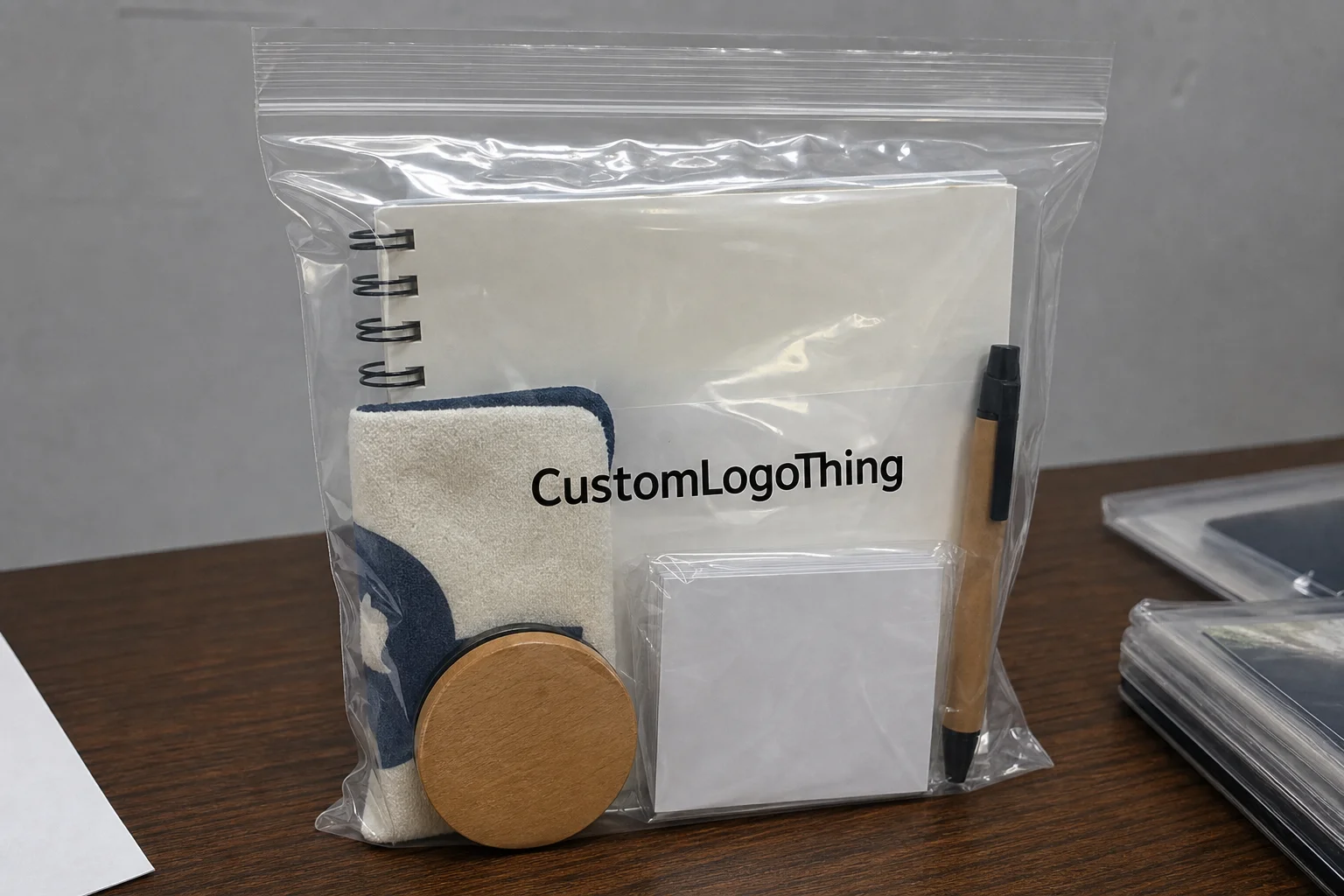
Nonprofit kits are often assembled under deadline pressure, with volunteers or staff packing many units in a short time. Clear bags let the team confirm contents visually without opening each package, which reduces sorting mistakes and speeds up assembly.
Resealable closures also help. A zip seal or press-to-close bag protects paper inserts from dust and handling during storage, and it is more forgiving than an open-top sleeve when materials are moved multiple times. If the contents are packed once and distributed immediately, an adhesive flap may be enough, but it is less flexible during assembly.
For donor mailers, awareness campaigns, educational packets, and event handouts, the value is straightforward: one package format that is easy to fill, easy to inspect, and clean in presentation. Nonprofits usually do not need elaborate packaging. They need a bag that works consistently and can be reordered without revisiting the spec every time.
“The right bag should make the packing table calmer, not busier. If volunteers can see the contents and seal it in one motion, the whole campaign runs better.”
Clear packaging also gives the kit a more organized look, even if the bag itself is plain. That can improve the donor or attendee experience without requiring a printed carton or extra finishing steps.
Bag construction, materials, and closure options that affect performance
Most bags in this category use polyethylene, usually LDPE or a similar blend, because it provides clarity, flexibility, and a soft hand feel. Thickness affects both durability and appearance. A lighter gauge is often fine for folded brochures or thin insert sets, while a thicker film is better for multi-piece kits, sharper corners, or repeated handling.
Clarity matters more than many buyers expect. A bag that looks transparent on a sample may still show haze once filled. If the campaign depends on visible branding, color-coded inserts, or product samples, ask for a film that stays readable at a normal viewing distance. Clarity should be part of the quote discussion, not a late-stage surprise.
Closure style changes how the bag works in practice. A zip seal or press-to-close closure is usually best when the contents may be opened and adjusted during packing. An adhesive flap works for one-time distribution or simple mailing, but it is less forgiving. Some bags also include hang holes, gussets, or stronger bottom seals for display or capacity, and each feature can affect cost and lead time.
If the contents have special handling needs, confirm that early. Food-contact use, archival storage, or product-safety requirements may apply in some campaigns. For general nonprofit handouts, standard clear polyethylene is often sufficient.
| Bag style | Best use | Typical strengths | Tradeoff |
|---|---|---|---|
| Flat clear resealable bag | Brochures, donor cards, slim packets | Simple, economical, fast to fill | Less capacity for bulky kits |
| Gusseted resealable bag | Thicker kits, bundled handouts, multi-piece giveaways | More room and better shape retention | Often higher cost per piece |
| Adhesive flap bag | One-time mailing or short-term distribution | Quick close, clean presentation | Not ideal for repeated opening |
| Zip seal bag | Volunteer packets, reusable kit handling | Best reseal performance | Can cost a bit more than a basic flap |
For sustainability-minded teams, it is reasonable to ask about material sourcing or recovery information where appropriate. If the project also uses FSC paper inserts or recycled-content components, those choices can be coordinated with the packaging plan. Useful references include the FSC site for paper sourcing standards and the EPA for broader material and waste guidance.
How to choose dimensions and print specs for campaign inserts
Start with the largest item in the kit. Measure the tallest insert, the widest folded brochure, or the bulkiest object first, then add clearance for hand loading. A bag that is too tight slows packing and raises damage risk, while a little extra room usually improves speed and usability.
Flat bags work well for slim packet sets with consistent folded items. Once the kit gets thicker, a gusseted bag often performs better because it opens wider and holds a bundle without resistance. A flat style may be enough for a few sheets and a card, while a gusseted version is better for a brochure pack plus a pen, sticker sheet, or small giveaway.
Print specs matter if the bag carries branding. Clear film leaves less room for heavy decoration than an opaque package, so artwork needs to be planned carefully. Logo size, placement, and color count affect the final appearance. White ink can improve contrast on clear material, but it may add setup charges and change the production path. Spot-color printing can be economical for simple branding, while full-coverage designs usually cost more and may increase prepress steps.
For many nonprofits, standardizing a few sizes is smart. If one bag size can serve multiple events, reorders become easier and future planning gets simpler. That consistency is especially helpful when different departments need packaging for different programs but want the same presentation standard.
- Measure the largest insert first, then add clearance for easy loading.
- Choose flat bags for slim kits and gusseted bags for thicker bundles.
- Keep artwork simple if the goal is to control setup charges and lead time.
- Leave blank space if labels, barcodes, or donor-specific stickers will be added later.
For clear film, the best results usually come from a logo that is sized for legibility rather than drama. If you need a custom logo on the bag, provide vector artwork and clear instructions on whether the print should read from the outside or the filled side of the bag.
For standard packaging support, many teams also keep a reference list of reusable specs and order notes in the FAQ and internal product pages so each event does not start from zero.
Pricing and MOQ planning for nonprofit purchasing teams
For Clear Resealable Poly bags for nonprofit campaigns and MOQ planning, the pricing conversation starts with four things: film thickness, bag size, closure type, and print coverage. Then quantity enters the picture. Stock bags with no print usually have the lowest entry point, while custom sizes or printed bags move into a different cost structure.
The MOQ often rises when a bag is custom sized, custom printed, or built with special features. That is tied to production efficiency. A simple stock-style clear resealable bag may allow a lower minimum, while a custom run with print plates, color matching, or special dimensions needs more volume to make sense.
A practical planning method is to estimate total campaign volume, add a buffer for spoilage or late additions, and then compare the nearest efficient run sizes. For nonprofits, rounding up often makes more sense than ordering too close to the edge. A 5% to 10% buffer is common for events, and a little more can be wise if volunteer packing is involved.
It also helps to compare total campaign cost, not just unit price. A slightly higher unit cost may still be the better choice if it saves labor, cuts sorting errors, or improves presentation. A bag that packs faster and protects inserts better can lower the real cost per finished kit.
For an accurate quote, be ready with the following:
- Bag dimensions and preferred thickness
- Closure style: zip seal, press-to-close, or adhesive flap
- Blank stock or printed branding
- Estimated quantity and target MOQ
- Delivery destination and required arrival window
- Contents of the kit, especially if the load is bulky or fragile
Below is a simple comparison that many nonprofit buyers find useful when balancing bulk pricing and presentation:
| Quantity break | Typical unit cost trend | Best for | Planning note |
|---|---|---|---|
| Lower quantity | Higher cost per piece | Pilot campaigns, urgent events | Good when speed matters more than bulk pricing |
| Mid quantity | Moderate cost per piece | Repeat programs, local events | Often the best balance of MOQ and budget |
| Higher quantity | Lower cost per piece | Multi-event calendars, seasonal campaigns | Best when storage space and cash flow allow it |
Good quote requests make the response faster because the supplier can compare stock versus custom options and identify whether the project needs a higher MOQ or a different closure choice. That gives the buyer a clearer view of unit cost before committing.
Process and timeline from quote approval to delivery
The normal workflow starts with spec review: size, thickness, closure, print needs, and quantity. Then artwork is checked for resolution, bleed, and placement. After that, proof approval confirms what will be produced. Only then does the job move into scheduling, production, quality checks, packing, and shipment.
Simple stock-style orders often move faster because there is less to validate. Custom printed or custom sized bags usually take longer because they involve more review points and sometimes more than one proof cycle. If the artwork is final and the size is standard, the job can move much more quickly than a request that changes several times before release.
Samples can save time later. A digital proof is often enough for straightforward jobs, but physical samples are useful when the contents are unusual or the fit has to be exact. If the campaign is sensitive to dimensions, test the largest insert in the sample before approving production.
Several things can extend turnaround: artwork edits, spec changes after approval, seasonal factory congestion, and freight method changes. If the order has to arrive before a volunteer pack day, treat the packaging timeline as part of the campaign calendar. Build in a cushion.
For teams that also use other promotional packaging, it is often efficient to coordinate the bag order with broader campaign materials, such as labels, inserts, or mail-ready components. If your program also needs outer shipping options, the Custom Poly Mailers page can be a useful companion reference.
For packaging standards, organizations such as ISTA provide useful guidance on transit testing and handling expectations, especially when items must survive shipping or repeated movement. Not every nonprofit kit needs formal testing, but handling risk should still inform the film thickness and seal style.
If the timeline is tight, ask directly whether the order can be staged or split by shipment. A good supplier should explain the tradeoff clearly rather than making vague promises.
Why Custom Logo Things works well for nonprofit packaging orders
Custom Logo Things is a practical fit for nonprofit teams because the conversation stays focused on the actual packaging job: what the kit contains, how it will be packed, what quality level is needed, and what the budget can support. Buyers do not need jargon; they need a usable spec and a realistic path to approval.
For Clear Resealable Poly Bags for nonprofit campaigns and MOQ planning, the value is in clear communication on materials, sizing, closure choices, and expected cost. When the team can compare options cleanly, it becomes easier to choose between a stock bag, a custom size, or a printed version. That clarity also helps with internal approval, because purchasing and program staff can see what they are paying for.
Consistency matters as well. When a nonprofit runs the same type of donor mailer, educational packet, or event handout more than once, repeatability saves time and reduces errors. Clean printing where applicable, consistent sizing, and reliable fulfillment support that repeatability. If several programs are ordering at once, that can be the difference between a rushed approval and a smooth reorder.
Most nonprofit packaging problems are not about wanting something fancy. They are about needing the right bag, the right number, and the right timing. That is where a focused supplier earns its place.
Next steps for requesting a quote and locking in specs
Before you request pricing, gather the basics: bag size, thickness preference, closure type, quantity, print needs, and delivery location. If possible, also describe the kit contents and how the bag will be used. A bag for a one-time donor mailing is not the same as a bag that will be opened and resealed multiple times at an event table.
Ask for a unit-cost comparison at a few quantity levels. That will show where the MOQ becomes efficient and where the order starts to benefit from bulk pricing. It also makes it easier to decide whether the campaign should stay with a simpler spec or move to a custom version.
Confirm proof timing, sample needs, and the required delivery window before approving production. If the bags need to arrive before a volunteer day, do not leave that cushion to chance. A strong packaging plan starts early, stays specific, and avoids guesswork.
For teams comparing options across programs, the best move is usually to send the first spec set early and keep the request straightforward. That is how Clear Resealable Poly Bags for nonprofit campaigns and MOQ planning stay on schedule, stay within budget, and arrive ready for assembly.
What details do I need for clear resealable poly bags for nonprofit campaigns MOQ planning?
Bag dimensions, thickness, closure style, quantity, artwork needs, and delivery location are the core details needed for an accurate quote. If the bags will hold brochures, apparel, or mixed kits, include the contents so sizing can be checked against the actual packed load.
How do I lower the unit cost without hurting the campaign presentation?
Use a standard size when possible, keep print coverage simple, and compare pricing at multiple quantity breaks to find the most efficient run. Choosing the right film thickness for the contents can prevent over-specifying the bag and paying for more material than the job requires.
What MOQ should a nonprofit expect for custom resealable poly bags?
MOQ usually depends on whether the bag is stock or custom, and whether it needs printing or special dimensions. The more customization involved, the more likely the minimum quantity will increase to cover setup and production efficiency.
How long does production usually take for printed clear poly bags?
Turnaround depends on proof approval, print complexity, order size, and current production capacity. Simple stock orders are generally faster than custom printed orders, and shipping method also affects when the bags arrive.
Can resealable clear bags be used for mailing campaign inserts safely?
Yes, as long as the bag size, seal type, and film thickness are appropriate for the contents and handling requirements. For mailers, it is smart to confirm whether the package will need extra outer protection, labels, or compliance details.


