For boutique buyers, frosted zipper Poly Bags for Boutique Retailers moq planning is not a packaging footnote. It affects shelf presentation, reorder timing, unit cost, and how much labor your team spends fixing avoidable packaging problems. The right bag makes a small product look finished before a shopper even picks it up. The wrong one makes a good product feel cheap. Packaging is rude like that.
Frosted Zipper Poly Bags show up in apparel accessories, cosmetics, stationery, curated gifts, and seasonal sets because they do a few jobs at once. They protect, they present, and they simplify storage. The frosted finish softens glare, which matters more than buyers expect under bright retail lighting. The zipper closure adds a cleaner customer experience than a plain open-top bag, especially for products that may be handled, resealed, or repacked.
The sourcing question is not whether the bag looks nice. That part is obvious. The real question is whether the construction, MOQ, and lead time fit the way the boutique actually buys and replenishes inventory.
For retailers comparing Custom Packaging Products, the best starting point is to define the product, the display condition, and the order rhythm before asking for pricing.
Why frosted zipper poly bags help boutique products sell better at shelf
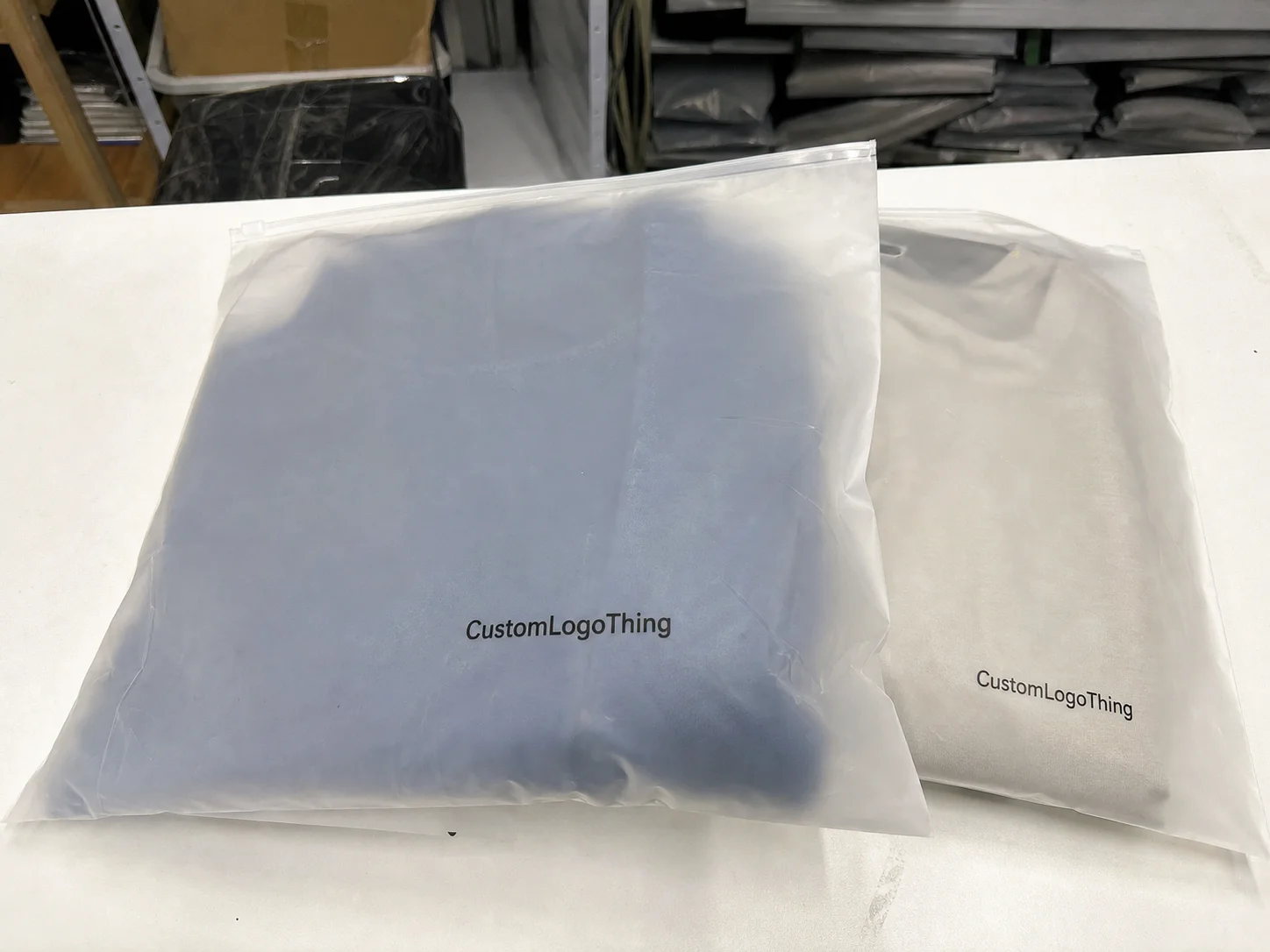
Frosted film has a softer appearance than clear poly. That matters because clear bags can reflect hard light, show scuffs quickly, and make a shelf display look overly utilitarian. A frosted finish diffuses glare and gives the product a calmer frame while still letting shoppers see color, texture, and shape.
That balance is the appeal. Customers can identify the item, but the packaging does not fight for attention. For folded apparel, socks, scarves, and small accessories, the frosted surface keeps the presentation tidy. For cosmetics, stationery sets, and gift items, it adds a more curated feel without moving the package into full premium territory. That middle ground is often exactly what an independent retailer needs.
The zipper matters for practical reasons, not just appearance. A re-closeable bag makes returns, storage, and customer handling easier. It also feels more deliberate during unboxing or at-home use. Compared with a heat-sealed or plain open-top poly bag, a zipper closure signals that the packaging was designed for retail handling, not only for shipment.
Many boutique packaging decisions get overcomplicated. Usually the win is simple: reduce glare, improve handling, keep the contents visible, and avoid a bag that looks like it came off a warehouse line built for nothing but speed.
There is also a practical inventory benefit. One bag family can often support several product lines if the sizes are chosen well. That cuts down on packaging SKUs, simplifies reordering, and reduces the odds that your team is hunting for a different bag for every category. For smaller retailers, fewer packaging variables usually means fewer mistakes.
Material build, frosted finish, and zipper options that affect performance
Most Frosted Zipper Bags for retail use are made from LDPE or a similar flexible poly film. Thickness matters more than many first-time buyers expect. A lighter gauge may work for lightweight, low-stress items. A heavier gauge gives the bag more body, better hand feel, and better resistance to pinching, creasing, or tearing during handling.
The frosted appearance usually comes from the film formulation or surface treatment. The result is a softer, less glossy finish that hides minor scratches better than clear film. It also looks more consistent under mixed store lighting. If your boutique has bright LEDs, windows, or a lot of day-to-day handling, that softer finish can keep a display looking cleaner for longer.
Zipper construction deserves the same attention. A standard single-track resealable zipper is common, but buyers should still ask about closure strength, opening force, and repeated-use durability. If the product will be opened and closed often, the zipper should feel smooth and stay closed without popping open. For heavier items, a thicker film and stronger closure are usually worth the extra cost.
Useful options to ask about early include:
- Hang holes for peg display or hook merchandising
- Euro slots for retail hanging systems
- Custom print areas for logos or simple brand marks
- Writable panels for size, SKU, or batch notes
- Anti-static treatment for sensitive product categories
If you are packaging food-adjacent items, samples, or products that touch sensitive contents, check the compliance requirements before quoting. Not every frosted bag needs the same construction, and not every category needs the same approvals. For general recycling and packaging context, the EPA recycling resources and the Association for Packaging and Processing Technologies are useful references. They will not choose a bag for you, which is probably for the best.
Specifications boutiques should confirm before requesting a quote
Before asking for pricing, define the bag the way a production team would. That means finished width, finished height, gusset if needed, film thickness, zipper style, print coverage, color tone, and closure direction. A vague request like “medium frosted zipper bag” tends to trigger extra back-and-forth. That wastes time on both sides and often leads to an inaccurate quote.
Dimensions should reflect the actual product plus anything that goes inside the package. If you use a header card, tissue, insert, hang tag, or sizing label, the bag needs room for it. Leave enough internal clearance so the item is not jammed against the zipper track. A pack that fits on paper and a pack that fits on a line are two different things.
Printing decisions should be made with restraint. Some boutique retailers want a small logo near the bottom edge. Others want a larger mark or a repeating pattern. Frosted film usually looks best when branding stays controlled, because heavy ink coverage can bury the surface finish that makes the bag look appealing in the first place.
Here is the spec checklist that actually saves time:
- Finished bag width and height
- Gusset requirement, if any
- Film gauge or thickness target
- Zipper style and closure direction
- Print method and ink count
- Logo artwork files and placement notes
- Labeling or hang-hole requirements
- Expected use: retail display, storage, or shipping
For buyers comparing packaging categories, our Custom Poly Mailers page is also a helpful reference point. Poly mailers and Frosted Zipper Bags solve different problems, but the planning logic is similar: define dimensions, handling conditions, and tolerance limits before asking for a quote.
MOQ, pricing, and unit cost planning for smaller boutique orders
MOQ usually depends on bag size, film usage, print setup, and whether the order is stock-style or fully custom. An unprinted bag often has a lower entry point than a printed version because decoration adds setup time and cost. Once artwork enters the picture, tooling fees or print setup charges may appear depending on the method and complexity.
For a boutique launch, the better question is not simply “What is the MOQ?” It is “What quantity matches my sell-through plan without tying up cash in slow-moving packaging?” A first run that is too small can raise the cost per piece and leave you short during a good sales stretch. A first run that is too large can trap money in inventory while your assortment changes. Packaging is supposed to support inventory, not become it.
Common pricing drivers include:
- Film thickness — heavier gauges cost more but improve feel and durability
- Zipper quality — smoother, tighter closures usually cost more
- Print coverage — one-color logos are usually cheaper than full-surface graphics
- Bag size — larger bags use more material and increase unit cost
- Special features — hang holes, writable areas, or custom perforations add complexity
A useful quote request should include several quantity tiers. That shows where unit cost starts to improve and where the larger buy actually makes sense. A difference of a few cents per bag can look minor until it scales across 10,000 units, at which point it becomes a real budget line.
| Order style | Typical MOQ behavior | Relative unit cost | Best fit |
|---|---|---|---|
| Unprinted stock-style bag | Lower entry point | Lowest | Fast retail launch, simple packaging |
| Custom printed bag | Moderate MOQ | Mid-range | Brand-forward boutique presentation |
| Heavier gauge with premium zipper | Often higher MOQ | Higher | Repeated-use packaging, heavier products |
| Highly customized format | Highest MOQ | Highest | Special merchandising or seasonal campaigns |
For frosted zipper Poly Bags for Boutique retailers moq planning, estimate monthly sell-through first, then add a buffer for damaged units, sampling, and reorders. That gives you a more realistic target than a guess pulled from a round-number spreadsheet. If you want a general packaging reference while comparing categories, our FAQ page is a good place to start.
Process, proofing, and lead time from artwork to delivery
The workflow is usually straightforward: spec review, quote confirmation, artwork preparation, digital proof approval, production, quality check, and shipment. Each step matters. Delays usually do not come from manufacturing alone. They come from missing information at the start or slow approvals in the middle.
Artwork is a common bottleneck. Low-resolution logos, unclear placement instructions, and missing color references can add revision cycles that nobody enjoys. Vector files are the cleanest starting point. Include the print area, logo placement, and whether the mark should sit centered, corner-placed, or repeated across the surface.
Digital proofs help confirm size and placement, but they do not always show every detail of the final bag. If finish, color tone, or zipper appearance is critical, a pre-production sample may be worth the extra time. That is especially true for retailers launching a branded line or switching from clear poly to frosted material for the first time.
Lead time depends on size, quantity, and print complexity, but custom packaging should be scheduled ahead of launches, seasonal drops, and promotions. Internal approvals matter too. If multiple people need to sign off on the package, that is real time on the calendar, not a theoretical delay in a spreadsheet.
Transit testing can be useful for higher-value or heavier packaging programs. Standards like ISTA are commonly used for shipping validation, and the ISTA testing organization provides guidance on package performance. Not every boutique order needs formal lab testing, but larger programs benefit from knowing how the bag and carton behave in transit.
Production quality checks that protect retail presentation
Quality control should focus on what the customer will actually see and touch. First is seal integrity. If the zipper track is inconsistent or the closure area is weak, the bag loses both function and polish. Then comes zipper performance, because a sticky closure or one that opens too easily can make the product feel cheap even if the contents are fine.
Visual consistency matters just as much. Frosted film should look even from bag to bag, with no obvious haze variation, scratches, or scuff-heavy cartons. In a curated retail line, small inconsistencies stand out quickly. One odd-looking bag in a display can make the whole batch feel less intentional.
Packing method is part of quality control too. If bags are compressed too tightly, they can pick up marks in transit or deform at the zipper edge. Good carton packing keeps them flat, reduces abrasion, and helps finished goods arrive ready for use instead of needing a quick triage session at receiving.
When the order arrives, check count, carton labels, dimensions, and print placement against the approved proof. If your team plans to use the bags immediately, confirm how they are packed for receiving. Sorted cartons, clear labeling, and predictable case counts save labor. A packaging order should reduce work, not create a second sorting project.
How boutique retailers should order, reorder, and scale next
The cleanest way to order boutique packaging is to build a final spec sheet before requesting a formal quote. Put dimensions, zipper type, print details, finish preference, and target quantity in one place. That single document removes guesswork and gives the supplier a real basis for pricing.
If several product lines share similar dimensions, group them into one bag family. A single format can often cover multiple accessories or gift items if the visual presentation stays consistent. Fewer SKUs mean easier ordering, easier storage, and fewer chances of mixing the wrong bag with the wrong product.
Reorder planning should follow sales velocity, not enthusiasm from the launch order. A boutique that sells through a display in six weeks needs a much faster reorder rhythm than one that moves product seasonally. Waiting until the last few days to reorder invites rushed production, expensive freight, and unnecessary stress. Nobody needs that kind of excitement.
Before approving the order, ask for sample timing, production window, freight options, and total landed cost. A low unit quote is only useful if the timeline fits your launch and the shipping method fits your budget. Smart buyers compare unit cost, setup charges, and replenishment timing together because that is what determines real value.
For that reason, frosted zipper poly bags for boutique retailers moq planning works best as a cost-and-schedule exercise, not a surface-level packaging choice. Send the product dimensions, artwork, finish preference, and target MOQ, and the quote gets more accurate, the timeline gets more realistic, and the final bag is more likely to do the job you actually need.
What MOQ should I plan for when buying frosted zipper poly bags for boutique retailers?
MOQ usually depends on bag size, film thickness, and whether the order is printed or unprinted. Smaller boutiques can plan better by matching MOQ to a realistic 3- to 6-month sell-through window. A quote with multiple quantity tiers helps show the most economical order level.
Are frosted zipper poly bags good for apparel and accessory packaging?
Yes. The frosted finish creates a more elevated presentation while still showing the product. They work well for folded apparel, scarves, jewelry pouches, small gifts, and stationery. The zipper closure adds reusability and keeps the package neat after opening.
How do I estimate unit cost for frosted zipper poly bags with custom print?
Unit cost is driven by size, material gauge, print coverage, zipper style, and order quantity. Larger orders usually lower the per-bag price because setup costs are spread across more units. Ask for quotes at several volumes so you can see where the cost curve improves.
How long does production usually take after artwork approval?
Lead time depends on order size, print complexity, and whether samples or proofs are required. The fastest projects are those with final dimensions, clean artwork, and quick proof approval. Retail buyers should plan ahead of launches to allow for production and freight time.
What information should I prepare before requesting a quote for frosted zipper poly bags?
Prepare product dimensions, desired bag size, quantity, artwork files, and any special features like hang holes or custom labeling. Include whether you need printed or unprinted bags and what finish or thickness you prefer. Clear specs reduce back-and-forth and lead to a more accurate quote.


