If you are planning Clear Resealable Poly Bags for wellness brands moq planning, the hard part is rarely finding a bag. It is choosing a spec that looks clean, protects the product, and does not trap cash in packaging inventory you are not ready to move.
Wellness products get judged fast. A buyer sees the color of gummies, the texture of bath salts, or the shape of a kit almost immediately. Visibility helps conversion. A resealable closure keeps the package practical after first open. That combination is why clear bags show up so often in supplement, sample, and accessory lines.
The mistake is assuming all Clear Poly Bags behave the same. They do not. Film type, thickness, closure style, and print method all change the final result. So does MOQ. A brand launching a limited DTC run needs a different setup than a retailer stocking multiple stores. Packaging decisions should match the sales plan, not the mood board.
Why clear resealable bags make wellness products look retail-ready fast
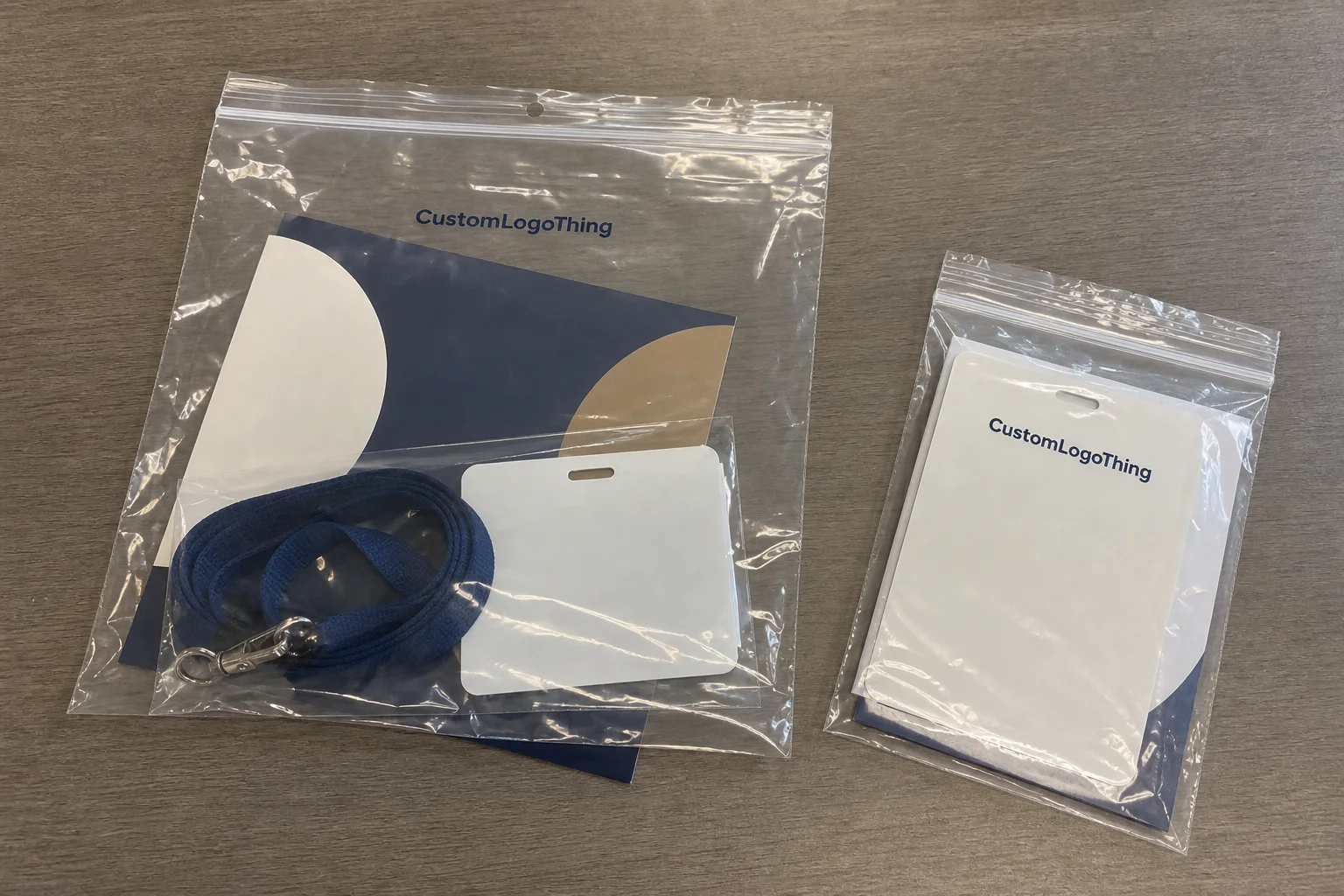
For supplements, sample sachets, herbal blends, cotton rounds, and small device accessories, a clear bag often does more useful work than a heavy custom box. You get product visibility without paying for rigid packaging, extra structural material, or longer manufacturing steps. Buyers can inspect fill level, color, and texture before they commit. That reduces hesitation on shelf and in unboxing.
Resealability matters more in wellness than many brands admit. Consumables get opened, closed, and reopened. Travel kits get packed, unpacked, and packed again. A press-to-close zipper or slider makes the package functional instead of decorative. That function can be the difference between “thoughtful” and “throwaway.”
Clear bags are not automatically cheap-looking. Spec them properly and they can look more credible than a fancy package that hides the product. A shiny outer carton means little if the buyer still cannot see what is inside. In wellness, clarity often does the selling for you.
“A clean clear bag often sells the product better than a fancier package that hides it.”
In practice, the decision usually comes down to film thickness, closure style, and MOQ. A small Shopify brand selling limited-run wellness kits does not need the same structure as a national retail program. That is where Clear Resealable Poly Bags for wellness brands moq planning becomes a real buying exercise instead of a guess.
For brands trying to keep ordering simple, it helps to compare bag types against the actual use case. Some products need visibility above all else. Others need puncture resistance or better barrier performance. If you are also sourcing outer cartons, labels, or inserts, keep the packaging stack tight. Broader options are available through Custom Packaging Products, and practical examples can be reviewed in the Case Studies section.
Product details that affect performance, shelf appeal, and compliance
Not all clear poly bags are built the same. LDPE, CPP, and laminated clear poly behave differently, and that matters when the product is heavier, sharper, moisture-sensitive, or expected to look premium. LDPE is flexible and common for soft goods and sample packs. CPP offers better clarity and stiffness. Laminated structures add protection and usually improve seal performance, but they cost more and can complicate recycling claims.
For wellness brands, closure style is just as important as film type. A standard zipper is fine for many dry goods. A slider adds convenience and often feels more premium. A press-to-close closure is economical and reliable. If tamper resistance matters, a heat-seal plus zipper format gives you a clear first-open indicator while keeping resealability after opening.
Clarity changes perception. Ultra-clear film shows product details sharply, which is useful for colorful gummies, loose herbal blends, or neatly packed accessories. Glossy finishes make products pop. Anti-fog film helps with cold-pack or moisture-prone items. Frosted accents can soften the look, though too much opacity defeats the point of using a clear bag in the first place.
For printing, most wellness brands do not need full coverage on the bag itself. A one-color logo, a label, or a simple brand mark is usually enough. That keeps cost per piece under control and avoids unnecessary setup charges or tooling fees. If your order is small, spend the money on the right film and closure first. Decoration comes second.
| Option | Best for | Typical tradeoff | Approx. cost impact |
|---|---|---|---|
| LDPE clear zipper bag | Samples, soft goods, lightweight wellness kits | Good flexibility, moderate clarity | Lowest unit cost |
| CPP clear resealable bag | Retail presentation, better stiffness | Higher clarity, less forgiving on rough handling | Mid-range pricing |
| Laminated clear bag | Heavier items, stronger presentation | Better protection, more expensive | Highest cost per piece |
| Heat-seal plus zipper | Supplements, regulated wellness items, tamper-conscious SKUs | More process steps, longer lead time | Moderate to high |
For brands handling food-contact or supplement-adjacent items, documentation matters. Ask for material composition, ink details, and any relevant compliance statements before you approve production. If your product falls under packaging requirements, review industry references from PMMI / packaging.org and shipment guidance from ISTA. That is not glamorous work, but it prevents expensive surprises.
And if the packaging has to survive shipping, ask about drop handling and seal performance. A nice-looking bag that splits at the seam is just expensive trash.
Specifications buyers should lock before requesting a quote
Buyers often ask for a “clear resealable bag quote” with no specs, then act surprised when pricing comes back all over the map. That is not the supplier being difficult. That is the supplier trying to guess. The better the brief, the tighter the quote.
Start with dimensions. You need more than outer width and height. Include gusset depth, usable fill area, and seal margin. A bag that measures 6 x 8 inches externally may have only 5.25 inches of true fill height once the zipper and top seal are counted. That difference matters when the product is powdered, chunky, or oddly shaped.
Then lock thickness. For lightweight samples or sachets, thinner film may work. For jars, heavier pouches, or items with sharp edges, you usually want more puncture resistance. In many wellness runs, that means thinking in the range of roughly 2.5 to 6 mil depending on product weight and shipping conditions. Pick thickness because the bag survives use, not because it feels “premium” in your hand.
Closure details matter too. Decide whether you want an easy-open notch, a hang hole, tear resistance, or a child-resistant feature. If you are packaging regulated wellness products, confirm whether your use case needs special safety language or documentation. If the answer is “maybe,” get it checked before production, not after.
Here is a simple spec checklist that saves time:
- Product type: powder, solid, liquid, herbal blend, accessory, or sample kit
- Finished dimensions: width, height, gusset, and seal margin
- Product weight: net fill weight and gross packed weight
- Closure: zipper, slider, press-to-close, or heat-seal plus zipper
- Printing method: label, one-color print, or no print
- Storage conditions: dry room, chilled storage, moisture exposure, or shipping only
- Target MOQ: sample, pilot, first run, or reorder volume
For brands that want to avoid rework, send a spec sheet instead of a loose email. It reduces quote confusion and cuts down on back-and-forth. If you need a starting point, the FAQ page can help answer common packaging questions before you send a brief.
Pricing, unit cost, and MOQ planning for small and mid-size runs
Clear Resealable Poly Bags for wellness brands moq planning gets easier once you understand what drives cost. Size is one factor. Thickness is another. Closure style matters. Printing matters. Documentation matters. If you want a realistic quote, all of those need to be on the table.
For unprinted stock bags, the entry point is usually lower and the unit price is friendlier. Custom sizes push the MOQ up because the line has to be set for that specific bag. Printed bags add more cost because you are paying for setup, color matching, and production control. A simple one-color logo is much cheaper than full coverage decoration. That should be obvious, but somehow it still gets ignored.
Typical pricing logic looks like this:
- Sample order: highest unit cost, useful for fit and quality checks
- Pilot run: enough quantity to test sell-through without locking too much cash
- First production run: better bulk pricing, often where the order becomes commercially sensible
- Reorder: lower cost per piece if the spec stays the same
For a basic unprinted clear zipper bag in a standard size, pricing may land around $0.05 to $0.14 per unit at higher quantities, depending on material and size. Add custom sizing, heavier film, or printing, and that can move into the $0.12 to $0.35 range quickly. If the bag needs a special closure, barrier layer, or compliance support, pricing rises further. That is normal. Packaging is never just the bag.
Also watch the hidden costs that sneak into landed price: tooling fees for custom dimensions, setup charges for print, freight, duties, and any repacking or insert requirements. A quote that looks cheap ex-works can stop being cheap once it lands on your shelf. Buyers get burned when they compare only the headline number instead of the total.
Inventory planning is where wellness brands either stay sane or bury themselves in boxes of unused packaging. If your SKU is new, start with a smaller MOQ and a tighter reorder plan. Better to run out of bags once than to sit on twelve months of packaging for a product that has not proven velocity yet. Yes, buying too much packaging is still buying too much, even if it looks “efficient” on paper.
For comparison, here is a practical pricing ladder:
| Run type | Quantity behavior | Cost profile | Best use case |
|---|---|---|---|
| Sample | Very low quantity | Highest unit cost, fastest decision-making | Fit test, shelf mockup, product trial |
| Pilot | Low to mid quantity | Moderate unit cost, limited inventory risk | New SKU launch, DTC testing |
| Production run | Mid to high quantity | Better bulk pricing, lower cost per piece | Stable sales, retail replenishment |
| Reorder | Repeat quantity | Best pricing if specs stay locked | Steady demand and predictable sell-through |
Process and lead time: from artwork approval to shipping
The ordering sequence should be boring. That is good. Inquiry. Spec confirmation. Quote. Proof or sample. Production. QC. Shipment. If a supplier cannot explain that in plain language, expect problems later.
Stock bags can move quickly, often in roughly 7 to 12 business days after confirmation if inventory is available and no print is involved. Custom sizes or printed bags usually take longer, often 12 to 20 business days from proof approval, sometimes more if the closure style is specialized or the order needs extra documentation. Rush orders are possible, but they usually cost more and reduce flexibility. Fast is not free.
Most delays happen for the same reasons:
- Dimensions are vague or inconsistent.
- Artwork changes after proof approval.
- Compliance details are missing.
- The requested closure is not well stocked.
- The brand approves a sample too slowly.
Insist on a digital proof first. For larger or regulated orders, request a pre-production sample. A physical sample is especially useful if your product is powder-heavy, moisture-sensitive, or has a sharp edge that could threaten the seal. You are not being fussy. You are preventing a return pile.
QC should include size tolerance, seal inspection, print placement if applicable, and basic closure testing. If shipping is rough or product value is high, ask whether the bag has been tested to relevant handling expectations. ISTA testing standards are a practical reference point for shipment readiness, even if your product does not require a formal report.
If your timeline is tight, be honest about the hard deadline from the start. Suppliers can usually tell you where the pressure points are. What they cannot do is magically compress a custom run after you approve the wrong spec. Time lost to reproofs is still time lost.
How to compare suppliers without getting fooled by a low quote
A low quote is not a win if the spec is weaker, the print is off, or the bags arrive packed badly and split in transit. Compare true parity. Same film. Same closure. Same print method. Same count per carton. Same QC expectation. If one quote is missing those details, it is not cheaper. It is incomplete.
Factory capability matters too. Suppliers that handle extrusion, printing, bag-making, and QC under one roof usually reduce mistakes and timeline drift. That does not mean every integrated supplier is excellent. It means fewer handoffs, fewer excuses, and fewer opportunities for someone to blame the other department. Convenient how that works.
Ask these questions before you pick a source:
- What are your size tolerances?
- How do you check seal strength?
- Can you show clarity or haze specs?
- What testing do you provide for shipping-heavy products?
- Do you share a clear sample approval process?
Communication quality is a buying signal. Clear answers, exact dimensions, and specific lead times usually indicate a supplier that knows its process. Vague answers and endless hedging usually mean you will be doing more follow-up later. Not ideal if your launch date is already set.
Custom Logo Things focuses on practical packaging planning, not packaging poetry. Buyers need proof, not fluff. If you want to compare format options against your broader packaging stack, a useful starting point is the Custom Poly Mailers page for outer-packaging comparisons, especially if your wellness order ships Direct To Consumer. For environmental packaging references, FSC is a solid standard to check if paper components or branded inserts are part of the program. And if you are evaluating materials or waste handling, the EPA has useful guidance on packaging and materials management.
Next steps for ordering the right bag spec without wasting budget
Start with four decisions: product weight, required clarity, closure type, and target MOQ. That is enough to narrow the field before you ask for quotes. If you skip those decisions, you will get a pile of prices that cannot be compared cleanly. That is how brands waste time.
Send one brief. Not three separate emails with different dimensions. Include finished size, fill weight, product type, artwork status, and deadline. Mention whether your item is powder, solid, liquid, or moisture-sensitive. Those details affect material choice and pricing fast.
Ask for two options: a best-value stock spec and a fully custom spec. Then compare unit cost, storage needs, and branding value side by side. In many cases, the stock option wins for a first run. In others, the custom size saves enough fill efficiency to justify the higher MOQ. The right answer depends on the SKU, not the brand deck.
Request a sample or comparable photo before approval, especially if the product has delicate components or packaging failure would be expensive. A small pre-check can save a large reprint. That is not caution. That is basic buying discipline.
If you want the cleanest path, keep the ordering logic simple: confirm the spec, approve the proof, schedule production, and map the reorder threshold before you launch. That is how Clear Resealable Poly Bags for wellness brands moq planning supports growth instead of eating cash. The packaging should help sell the product, not become the product.
What is the typical MOQ for clear resealable poly bags for wellness brands?
MOQ depends on whether the bag is stock or custom-sized, and whether printing is included. Unprinted stock bags usually allow lower entry quantities; custom dimensions and print raise the minimum. Ask for both a pilot quantity and a re-order threshold so you can plan inventory realistically.
Which thickness works best for wellness products in resealable poly bags?
Lightweight samples may only need thinner film, while powders, jars, and accessories need more puncture resistance. Choose thickness based on product weight, sharp edges, and shipping conditions, not just perceived quality. If the item is fragile or heavy, test a sample before placing the full order.
Can clear resealable poly bags be used for food-grade or supplement packaging?
Yes, if the material and printing meet the needed food-contact or product safety requirements. Request documentation for material composition, inks, and any compliance statements before ordering. For regulated wellness items, confirm the exact use case with your supplier early.
How do I estimate unit cost for my packaging budget?
Start with bag size, thickness, closure type, and print count because those drive most of the price. Then add freight, possible tooling, and any sample or setup charges to get landed cost. Use a price ladder: pilot run, standard run, and reorder pricing.
What should I send for an accurate quote on resealable bags?
Send finished dimensions, fill weight, product type, closure preference, print artwork status, and target quantity. Include whether the product is powder, solid, liquid, or moisture-sensitive, since that affects material choice. If you need speed, mention your hard deadline upfront so the supplier can quote realistic lead time.


