If you are sorting out Clear Resealable Poly Bags for startup brands moq planning, the real job is to find a bag that fits the product, presents well, and does not tie up too much cash before you know demand. The right first packaging choice should protect the item, simplify packing, and give you enough flexibility to adjust after launch.
For many startup teams, clear resealable bags are the practical starting point because they balance visibility, protection, and low commitment better than more complex packaging. They can support samples, retail, fulfillment, and early e-commerce without forcing you into a large print program too soon.
Why clear resealable bags are often the smartest first packaging buy
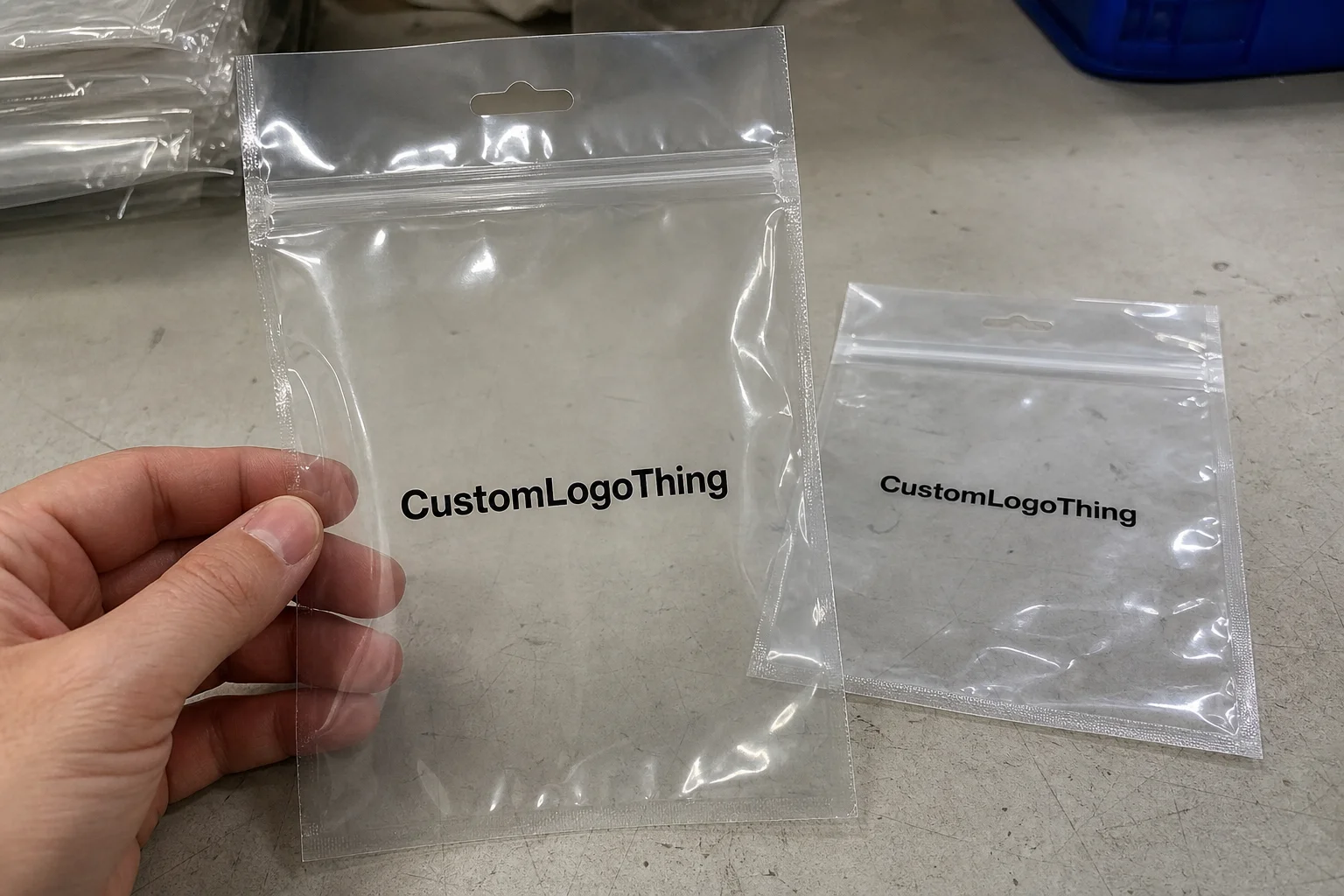
From a buyer’s point of view, Clear Resealable Poly Bags do three useful jobs at once: they protect the product, show it clearly, and keep launch risk manageable. That matters when sales are still unproven. Every added packaging layer increases material cost, labor, and inventory exposure. If the product sells slower than expected, excess packaging becomes dead stock just like the product itself.
Clear packaging also helps customers evaluate what they are buying. If the product has color, texture, stitching, hardware, or small parts that matter visually, the bag should not obscure them. For retail display and online photography, the pack often looks cleaner and more credible when the product is visible without extra handling.
Resealability adds practical value. A zipper lock or press-to-close closure is useful for items that get opened more than once, such as samples, accessories, craft goods, bath and beauty items, or small hardware kits. It also helps with warehouse kitting and part control, where keeping pieces together matters as much as the first presentation.
The common mistake is to focus only on the lowest unit price. A cheaper bag is not cheaper if it clouds, tears, or forces a re-order because the size was wrong. For startup brands, the right purchase is usually the one that balances presentation, basic protection, and MOQ discipline.
“A clear bag is often a test of discipline more than design. If the size, closure, and film thickness are right, the packaging supports the brand without becoming the budget problem.”
For teams comparing packaging formats, it can also help to review broader options such as Custom Packaging Products and, for shipping-heavy programs, Custom Poly Mailers. Different packaging solves different problems.
Product details that matter before you request a quote
Before asking for pricing, lock in the basic construction. Common film choices include LDPE and CPP. LDPE is usually softer and more flexible, which works well for hand packing and repeated opening. CPP is often crisper and gives stronger clarity, which may suit retail display better. The right option depends on how the bag will be used and handled.
Closure type matters just as much as film. A zipper lock is a good fit when the bag will be opened often. A press-to-close closure performs a similar function, though the feel can vary by construction. An adhesive flap is usually enough for lightweight goods or promo sets that are sealed once. Heat-seal-compatible bags work better when you want a permanent closure during packing.
Thickness, often shown in gauge or microns, is where many startup orders go wrong. Thin film may be fine for lightweight items, but it wrinkles more and punctures more easily. Heavier products, sharp corners, and rigid parts generally need more film. The goal is not the thinnest acceptable bag. It is the bag that survives packing, transit, and customer handling.
| Option | Best for | Typical buyer tradeoff |
|---|---|---|
| LDPE clear resealable bag | Flexible products, sample kits, items opened often | Softer feel, usually easier to pack by hand |
| CPP clear resealable bag | Retail display, sharper presentation, stronger clarity | Crisper feel, may cost more depending on spec |
| Adhesive flap bag | Lightweight goods, promo sets, one-time sealing | Simple closure, not ideal for repeated opening |
| Heat-seal-compatible bag | Controlled packing lines, permanent closure needs | Requires sealing equipment or a sealing step |
Optional features should be added only when they serve a purpose. Hang holes help with peg display. Gussets add depth for bulkier products. Vent holes may help in specific applications, but they are not right for every item. Custom sizing becomes more attractive once the product line is stable, though it can increase MOQ, tooling Cost, and Lead Time.
For quality and transit questions, two useful external references are the International Safe Transit Association for shipping performance testing and the U.S. Environmental Protection Agency for broader material and waste guidance.
Specifications startup teams should lock in first
Startup teams save time when they settle core specs before requesting quotes. At minimum, confirm finished size, material type, thickness, closure style, print requirements, and carton pack count. If one of those is still open, say so clearly. A supplier can price multiple options side by side, but a vague request usually produces a vague quote.
Size should account for the product plus any insert card, label, accessory, or extra clearance needed for the closure. Too many buyers size the bag to the flat product only, then find the zipper sits awkwardly, the product crowds the seal area, or the final pack looks pinched. A bag can look correct on paper and still be wrong in hand.
Common mistakes show up repeatedly. Some teams under-specify seam allowance. Others choose a film that is too thin for a heavy or rigid item. A few forget that the end user needs enough room to open and close the bag comfortably. These are small misses, but they create returns, complaints, and rework. Spec confirmation is cost control, not just admin.
If food contact or regulated content is part of the plan, ask for the relevant material confirmation and documentation before approval. Not every clear resealable bag needs the same compliance path, but some products do. Suppliers should be able to explain material declarations, intended-use limits, and whether the construction matches the requirement.
- Finished size: include room for the product and any inserts.
- Material: LDPE, CPP, or another approved film structure.
- Thickness: match to weight, edges, and handling frequency.
- Closure: zipper, press-to-close, flap, or heat-seal option.
- Print: none, one-color, full print, or label-ready.
- Carton pack count: helps warehouse planning and receiving.
clear resealable poly bags for startup brands moq planning: what drives price
Pricing for Clear Resealable Poly Bags for startup brands moq planning usually moves with size, thickness, closure type, print complexity, and total quantity. A larger bag uses more film. A thicker bag uses more material. A special zipper or adhesive feature adds process time. Print adds setup, color matching, and extra handling.
Lower MOQs can make sense for startup brands because they let you test demand before committing to a larger run. The tradeoff is unit cost. Setup charges, print prep, and tooling fees are spread over fewer pieces, so the price per bag rises. Once the order gets larger, unit cost usually drops. That is why a 1,000-piece order can be reasonable for launch while a 5,000-piece or 10,000-piece order may be better for unit economics later.
Buyers often miss the hidden costs. Artwork prep can carry setup fees. Custom print jobs may require plates or other production prep. Freight can become meaningful if the bags are bulky or the delivery window is tight. Rush production can also change the math. If the pack method needs individual bagging, carton labeling, or special inner packs, those details should be quoted up front.
| Order profile | Typical pricing behavior | Best use case |
|---|---|---|
| Low MOQ stock bag | Higher unit cost, lower cash commitment | Testing a product line or selling early units |
| Mid-volume standard custom | Better unit cost as setup spreads out | Validated products with predictable monthly sales |
| Higher-volume printed run | Lowest cost per piece in many cases | Established SKUs and repeat orders |
A good quote comparison should be apples to apples. Compare the same dimensions, same film, same closure, same print coverage, same carton pack, and same shipping terms. If one quote is cheaper because it uses thinner film or a looser tolerance, it is not the same product. The lowest number only matters if the bag performs the same job after it arrives.
For brands building a wider packaging system, our Case Studies and FAQ pages can help with other packaging tradeoffs, especially where fulfillment speed and repeat ordering affect the buying plan.
Process and timeline: from sample approval to delivery
The workflow is usually inquiry, spec confirmation, sampling or proofing, purchase order approval, production, quality inspection, packing, and shipment. If the order is straightforward and the specs are already locked, it can move quickly. If dimensions are unclear or artwork changes midstream, the schedule stretches.
Most delays happen before production starts. Incomplete artwork, shifting sizes, or slow sample review can hold up the order. A supplier may also need time to confirm film stock, closure components, or print setup. If the launch date is fixed, build in buffer time. Freight timing matters, and customs matters even more if the shipment crosses borders.
For planning, many startup orders need room for proofing, production, and transit. If a quote says 12 to 15 business days after proof approval, that is not the same as 12 to 15 days from the first email. That distinction catches people constantly. The earlier you approve the final spec sheet, the less likely the order is to slip.
Clear communication shortens the process. Send the product dimensions, a photo or sample if possible, your target quantity, and the exact closure preference. If you need a pack format for retail, warehouse use, or kitting, say that too. It is much easier to design the bag correctly once than to redesign it after the first run has already exposed the problem.
For buyers who need a framework for transit performance, ISTA standards are a useful reference. Not every program needs formal testing, but packaging should survive the real journey, not just the sample table.
How to compare suppliers on quality, consistency, and support
Price matters, but it should never be the only filter. For clear resealable bags, look closely at dimensional consistency, seal strength, clarity, material uniformity, and packaging cleanliness. If the bags vary too much in size, they slow down packing. If the zipper feels weak or the film looks hazy, the product loses shelf appeal. If cartons arrive dusty or badly packed, that usually says something about process control.
Support matters too. A supplier should be able to confirm specs, explain MOQ tradeoffs, and tell you what happens on a reorder. That repeat-order consistency is especially valuable for startup brands that may scale quickly after one successful launch. You do not want a supplier who quietly changes the film feel or closure profile on the second run and then acts surprised when you notice.
Ask for sample bags, a written quote, and a spec sheet listing every included option. If the order includes print, ask what artwork prep includes and whether any tooling fees apply. If the quote mentions setup charges, make sure you know exactly what they cover. Clear pricing on the front end usually prevents awkward back-and-forth later.
Here is a simple way to judge suppliers:
- Do they answer fit and material questions clearly?
- Can they quote the exact spec you need, not just a rough size?
- Do they explain how MOQ changes with print, size, or custom features?
- Will they send samples that resemble the production bag?
- Do they support repeat orders without changing the spec quietly?
For brands looking beyond bags, the broader packaging selection on Custom Packaging Products can help show how different formats support different channels, from shelf display to e-commerce shipping.
Next steps to order with confidence and avoid costly revisions
Before requesting a quote, gather the product dimensions, estimated quantity, closure preference, print needs, and any special features like hang holes or gussets. If you already have a sample of the product, send it. A photo helps, but a physical sample is better because it lets the supplier think through fit and closure use instead of guessing.
Once you have the first quote, ask for a sample or proof and review the final spec sheet against the actual product. Check the bag width, height, seal area, closure feel, and pack count. Verify that the finished bag still leaves enough room for the product to slide in and out without strain. This is the point where small adjustments are cheap. After production starts, they are not.
It also helps to plan the first reorder point early. If sales go well, packaging can become the bottleneck faster than people expect. That is especially true for Clear Resealable Poly Bags for startup brands moq planning when the first order was sized for launch, not for momentum. A sensible reorder plan keeps inventory moving without forcing an emergency rush order.
My practical advice is simple: define the specs early, compare quotes carefully, and approve samples before production. Do those three things and the buying process stops feeling like a guessing game. The right bag should support the product, protect the brand image, and keep your cash flow intact while you grow.
FAQ
What MOQ is typical for clear resealable poly bags for startup brands?
MOQ varies by size, material, closure style, and whether the bags are printed or unprinted. Smaller startup-friendly runs are often possible on standard constructions, while custom sizes and printed work usually require higher minimums. Ask for the MOQ tied to each exact spec, because even a small change can move the minimum order.
How do I choose the right thickness for resealable poly bags?
Use thinner film for lightweight items and thicker film for products with sharper edges, heavier weight, or frequent handling. Consider how the bag will be used in shipping, retail display, or repeat opening and closing. If the product can puncture or stretch the film, increase thickness rather than relying on the zipper alone.
Can I get clear resealable poly bags with my logo at low quantities?
Yes, but logo printing, custom sizing, and special finishes usually affect MOQ and unit cost. For very small runs, some buyers use labels or inserts first, then move to printed bags once demand is proven. Request both printed and unprinted quotes to compare the real cost of each route.
How long does production usually take after approval?
Timeline depends on whether the bag is stock or custom, plus whether the order needs printing, samples, or special materials. Once specs and artwork are approved, production is usually faster than the earlier quoting and proofing stage. Freight time should also be included in your launch schedule so inventory arrives before sell-through.
What should I send when requesting a quote for startup packaging?
Send product dimensions, desired bag size, approximate quantity, closure preference, print needs, and any special features like hang holes or gussets. Include a photo or sample of the product if possible, since that helps confirm fit and closure usability. The more complete the first request, the faster the supplier can give an accurate price and MOQ.


