If you are comparing clear Zipper Bags for Outdoor Brands unit cost, the question is not only what the bag costs to make. It is also what the bag saves in handling time, shelf confusion, and returns once the product moves through wholesale, retail, and direct-to-consumer channels. A clear bag shows color, hardware, and size at a glance. That sounds minor until you see how often buyers, warehouse teams, and store staff rely on fast visual checks.
For outdoor brands, visibility is practical. A trail accessory, repair kit, dog gear item, or small apparel add-on often sells better when the package does not hide the product. Store teams can verify contents without opening the bag. Customers can confirm what they are buying. Product photography is easier because the packaging does not compete with the item itself. In small or shifting assortments, a plain clear zipper bag is often cheaper than a printed option because it avoids setup costs that do not improve the product’s presentation enough to justify them.
Reference points help here. The Packaging Institute is useful for common packaging terms and basics, while ISTA is the better benchmark if the package has to survive parcel handling and distribution testing. A bag can look fine on a spec sheet and still fail after the buyer has approved the sample. That is usually where the hidden cost starts.
Why clear zipper bags can lower risk for outdoor retail packaging
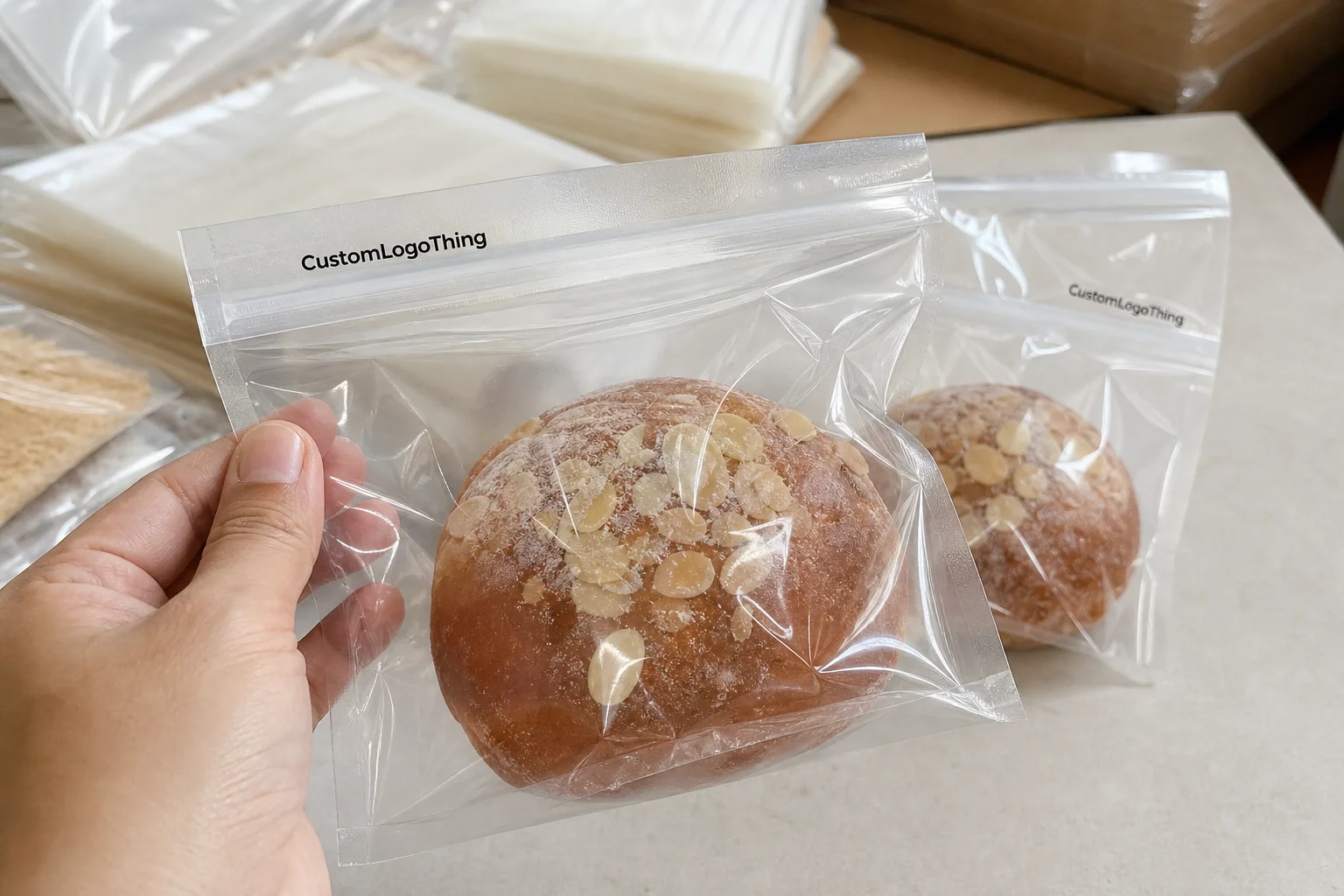
Clear zipper packaging reduces the distance between the product and the buyer. If the item is visible, retail teams can confirm color, shape, and included parts without opening the bag. That matters for items like patch kits, stove accessories, pole parts, gloves, laces, and spare hardware, where the product itself is part of the selling point. In those cases, the bag should frame the item, not obscure it.
The cost structure is the other reason buyers use it. Many people assume custom printing is the default for branded packaging, but that is often the most expensive first step. A plain clear zipper bag with the right size and closure can be a lower-risk option for a new SKU, a seasonal add-on, or a product line that changes often. If the spec is straightforward, the unit cost stays low enough that packaging does not distort margin. That is usually the point.
There is also an operational angle that gets ignored too often. Clear packaging makes it easier for warehouse staff and store teams to identify product types, which reduces mis-picks and rework. For outdoor brands selling through wholesale, DTC, and seasonal retail at the same time, that speed matters more than decorative extras. A bag that lets people identify the item quickly saves time at receiving, during inspection, and when setting up shelves.
A clear bag does not need to be plain in the wrong way. If the film is right, the zipper closes cleanly, and the size fits the item without extra slack, it can present better than a more expensive package with the wrong structure.
The decision frame is simple. Material choice, closure type, thickness, and order quantity move the cost per piece much more than most buyers expect. That is why the first quote should be based on the actual item and the way it will be used, not on a catalog dimension guessed from a photo.
Material and build details that affect clarity, durability, and feel
Not all clear bags feel the same. LDPE is the most common starting point because it is flexible, easy to seal, and usually economical. It gives a soft hand and enough clarity for many accessory and apparel applications. PP feels stiffer and looks crisper, which can improve shelf presence, but it is less forgiving if the product has sharp corners or if the bag is folded tightly in shipping. EVA sits closer to the premium end of the range; it is softer and often smoother, but the price usually rises with it.
Thickness matters more than many buyers expect. For light outdoor goods such as patches, cords, labels, or soft inserts, 2 to 3 mil can be enough. When the product has metal hardware, buckles, clips, or a corner that can press against the film, 4 mil or a tougher blend is usually safer. That extra gauge can raise the quote, but it often prevents puncture claims and keeps the package looking better after handling.
The closure matters too. A standard press-to-close zipper is usually the most economical. It works well for items opened once or twice and then stored. A slider zipper costs more, but it gives a more premium feel and is easier to use with gloves or with larger items in the field. Reinforced top seams, stronger zipper tracks, and better end seals all improve confidence, but each one changes the MOQ and the unit price in a different way.
Other details should be decided early:
- Hang holes for peg display.
- Euro slots for retail fixtures.
- Gussets for bulkier kits or folded apparel.
- Anti-static treatment for electronics-adjacent accessories.
- Frosted or ultra-clear film depending on how much scuff visibility you can tolerate.
Ultra-clear film can look excellent, but it also shows scratches and shipping rub marks faster. That is the tradeoff. If the package will be handled a lot in transit, a slightly less glossy film can preserve the premium look longer. If the product includes paper inserts or hang tags, FSC-certified board can keep the paper component aligned with sustainability claims without changing the bag structure.
Specifications to lock before you request a quote
A clean quote starts with a complete spec. If the supplier has to infer the size or closure style, the response usually comes back with a wider price band and more revisions. For outdoor brands, the fastest path is to measure the item in its packed form, then build the bag around that footprint instead of the product’s flat dimension alone. A rolled strap, folded shell, or multi-part kit needs more clearance than a simple flat accessory.
Before you ask for pricing, lock these details:
- Internal dimensions, not just outer dimensions.
- Film type and thickness.
- Zipper style and seal style.
- Print area, if any branding is needed.
- Hang hole, euro slot, or tamper feature.
- Whether the item has sharp edges or heavy hardware.
If the product has variable thickness, a sample fit check is worth the time. That is especially true for outdoor products with clips, buckles, carabiners, or metal pieces that can press against the film during transit. A bag that looks fine on paper can fail in use if the zipper is too close to the product or if the top seal has no margin. A quick review with a physical sample often prevents a costly replacement run later.
For performance-sensitive projects, ask whether the supplier has basic film testing references and whether their packaging logic aligns with parcel-handling expectations. You do not need a lab program for every bag, but you should know if the package only needs to sit on a shelf or if it also needs to survive cartons, stacking, and parcel sorting. Those uses do not require the same spec.
A practical buyer checklist is simple:
- Measure the packed product.
- Choose the closure first.
- Select the lowest thickness that still protects the item.
- Decide whether branding on the bag is truly necessary.
- Request a sample or dieline review before approval.
That sequence keeps the discussion on the real tradeoff: not just how the bag looks, but how it behaves on a packing line and in a retail environment.
Cost, pricing, MOQ, and unit cost drivers
The main drivers behind clear zipper Bags for Outdoor brands unit cost are predictable once you break them down. Material grade, thickness, zipper style, bag size, print coverage, and order quantity all matter. The less visible items matter too: setup charges, tooling for special features, sample costs, and freight. A quote that looks low at the unit level can still become expensive once the shipment is packed and delivered.
MOQ changes the math quickly. When a supplier spreads setup and labor across 500 units instead of 5,000, the bulk pricing advantage disappears fast. That is why smaller orders usually carry a higher cost per piece, even if the bag is plain. For a buyer launching a new outdoor accessory, that may be acceptable if demand is uncertain. For a repeating item with stable volume, a larger order can lower unit cost enough to justify the added inventory.
There is a point where plain packaging is the smartest option. If the product already has strong visual appeal and the bag only needs to protect it, a clear zipper bag with no print can keep the economics clean. If the package needs to support retail presentation or stronger brand recognition, a printed panel, custom zipper, or reinforced feature may be worth the extra spend. The right answer depends on shelf strategy, not on habit.
Here is a practical comparison of common options:
| Option | Typical MOQ | Typical unit cost | Best use | Main tradeoff |
|---|---|---|---|---|
| Plain LDPE press-to-close bag | 1,000-5,000 | $0.10-$0.22 | Accessory kits, soft goods, test launches | Lowest presentation value |
| Thicker clear bag with reinforced zipper | 2,000-5,000 | $0.18-$0.35 | Items with hardware, sharper edges, retail display | Slightly higher material cost |
| Slider zipper with clearer film | 3,000-10,000 | $0.25-$0.48 | Premium outdoor accessories, repeated open/close use | Better feel, higher cost |
| Custom-printed clear bag | 5,000+ | $0.30-$0.65 | Brand-forward retail packaging | Setup charges and longer lead time |
Those ranges are not universal. Region, material source, and freight method all move the landed number. Even so, they are useful enough to stop bad comparisons. If one quote includes freight, sample approval, and a stronger zipper while another leaves those items open, the lower number is not really lower.
Ask for tiered pricing. A useful quote should show at least three volume breaks, because the difference between 3,000 and 10,000 units can be large enough to change the packaging strategy. That is how buyers find the order size that supports margin without tying up too much cash.
If you need a second reference point, review prior packaging projects and compare how size, closure, and finish changed the numbers. That comparison is usually more useful than a generic rate card because it shows how the spec affects the final quote, not just the headline price.
The cheapest quote is not the best quote if the bag fits poorly, scuffs in transit, or needs a reorder after the first shelf set.
Process, timeline, and turnaround from quote to shipment
A realistic schedule starts with the inquiry, but it only moves once the spec is clear. The usual sequence is straightforward: inquiry, spec confirmation, sample or dieline review, artwork or tooling check if needed, production, inspection, packing, and shipment. If everyone agrees on the details early, the run moves faster and the chance of last-minute rework drops.
Lead time depends on complexity. A simple clear bag with no print usually moves faster than a custom size or a pouch with special features. Once the proof is approved, a straightforward order often takes around 12 to 15 business days in production. More complex bags can take longer, especially if tooling or revised samples are involved. Freight adds its own timing, and the inland leg can matter as much as the production window if the launch date is tight.
Most delays come from the same few places:
- Dimensions that were estimated instead of measured.
- Artwork that was approved late.
- Sample revisions after the first fit check.
- Changing quantities after pricing was issued.
- Special inspection requirements added after the order started.
That is why the target delivery date should be stated at the start. If the supplier knows the inventory deadline, they can tell you whether the project needs an air shipment, a faster production slot, or a simpler structure. A vague deadline usually leads to a vague answer, and that is not useful for a launch plan.
Freight deserves the same attention as production. A bag can finish on time and still miss the shelf date if the shipping plan is not handled carefully. For outdoor brands that depend on seasonal retail or event-driven sales, that difference can decide whether the bag supports the launch or sits in a warehouse after the window closes.
How we keep outdoor-brand packaging consistent across repeat orders
Repeatability matters because outdoor brands rarely sell one SKU in isolation. The same zipper bag may need to work across repair kits, replacement parts, accessory bundles, or seasonal promotions. If the bag spec drifts from one reorder to the next, the result is mismatched inventory, uneven shelf appearance, and more receiving questions than necessary.
The fix is practical. Keep a saved spec sheet, an approved sample, and clear production notes on file. That record should include film thickness, zipper type, finished dimensions, tolerances, and any packaging feature that cannot change without approval. When those details are documented, reorders become more predictable, and the supplier can keep the packaging aligned across different product lines or rollout phases.
Quality checkpoints should stay focused. For Clear Zipper Bags, the important checks are seal strength, zipper alignment, film consistency, dimensional accuracy, and overall clarity. If the bag is going into wholesale and DTC channels at the same time, consistency matters even more because the same package has to look right on a shelf, in a shipping carton, and in a customer’s hands.
That is also why approval discipline matters. The best packaging teams do not try to fix problems after shipment. They confirm the spec before production, then keep it unchanged unless there is a real business reason to revise it. That discipline avoids surprise cost changes and makes repeat orders easier instead of harder.
Common ordering mistakes that inflate bag cost or delay launch
The most expensive mistakes are usually the simplest ones. Guessing the size instead of measuring the packed product can create a fit problem that forces a replacement order. Comparing quotes only on unit price can hide a weaker zipper, thinner film, or freight terms that make the landed cost worse. Skipping the sample is especially risky for outdoor items with hard edges or bundled parts because the first production run then does the work the sample should have done.
Another common problem is changing the spec after approval. A new print file, a wider bag, or a different closure style almost always adds time and cost. Sometimes the change is justified, but it should be treated as a new decision, not a minor tweak. The same is true for MOQ. Ordering too little creates a cycle of rush buys and higher unit cost. Ordering too much ties up cash and increases the risk of obsolete inventory if the product line changes.
To keep the project under control, ask three questions before you sign off:
- Does the bag fit the product with enough clearance?
- Does the closure match the way the customer will use it?
- Does the order quantity support the launch without creating excess stock?
If those answers are clear, the package usually behaves well. If they are fuzzy, the quote may look acceptable but the project will cost more in time, freight, and corrections. A few minutes spent aligning the spec can save far more than trying to recover after the bags are already on the way.
Quote comparison also needs discipline. If one vendor includes setup charges, sample approval, and shipping while another leaves those items open, the comparison is not real. That is how launches slip. A landed view is more useful than a bare factory number because it shows the actual cost of getting usable bags into inventory.
Next steps to get an accurate quote and move into production
Before you request pricing, gather three things: the product dimensions in its packed form, the target quantity, and the features that cannot be compromised. If the item is irregular, send a photo or a sample. That saves time because the supplier can see the shape, not just the numbers. If the product has a rigid part, a zipper pull, or a bundled accessory set, that detail changes the bag spec quickly.
Then ask for tiered pricing. A good quote should show the unit cost at different volumes so you can compare launch quantity against reorder quantity instead of guessing. This is where a buyer can decide whether a plain clear bag is the right move, or whether a slightly upgraded closure or print treatment justifies the extra spend.
From there, the workflow should stay simple:
- Request a spec check.
- Confirm sample timing.
- Review freight terms and delivery windows.
- Approve production only after the fit and finish are right.
That process keeps the quote honest and the launch on schedule. It also keeps the packaging choice tied to the product itself, which is how outdoor brands avoid overbuying inventory while still presenting the item clearly in retail and online channels. If you are pricing clear zipper Bags for Outdoor brands unit cost right now, the fastest path is to lock the spec first, then compare the landed numbers against the margin target, not against the lowest line item alone.
Frequently asked questions
What affects clear zipper bags for outdoor brands unit cost the most?
Material thickness, zipper style, bag size, print requirements, and order quantity are the main drivers. Freight, samples, and rush timing can also raise total landed cost. A low quote is not automatically a good quote if the bag is too thin or the fit is off.
What MOQ should an outdoor brand expect for clear zipper bags?
MOQ depends on size, film type, and whether the bag is plain or custom. Smaller runs usually cost more per piece because setup and labor are spread across fewer units. Tiered pricing is the cleanest way to compare launch quantities with reorder volumes.
How do I choose the right size for a clear zipper bag?
Measure the product in its packed form, not only by its flat dimensions. Leave room for the zipper, seals, and any hardware that could press into the film. If the item is irregular or bulky, ask for a sample fit check before production.
Can clear zipper bags be customized for outdoor brands?
Yes. Common custom options include printed branding, hang holes, euro slots, slider zippers, and thicker film. Those features can improve presentation and handling, but they usually increase unit cost and lead time, so the design should stay focused on the real use case.
How long does production usually take after approval?
Simple clear bags usually move faster than custom bags with printed branding or special features. The schedule depends on sample approval, artwork readiness, quantity, and freight method. Confirm turnaround before you place the order so the inventory plan and launch date stay aligned.


