Apparel Bags Look Cheap When the Details Are Cheap
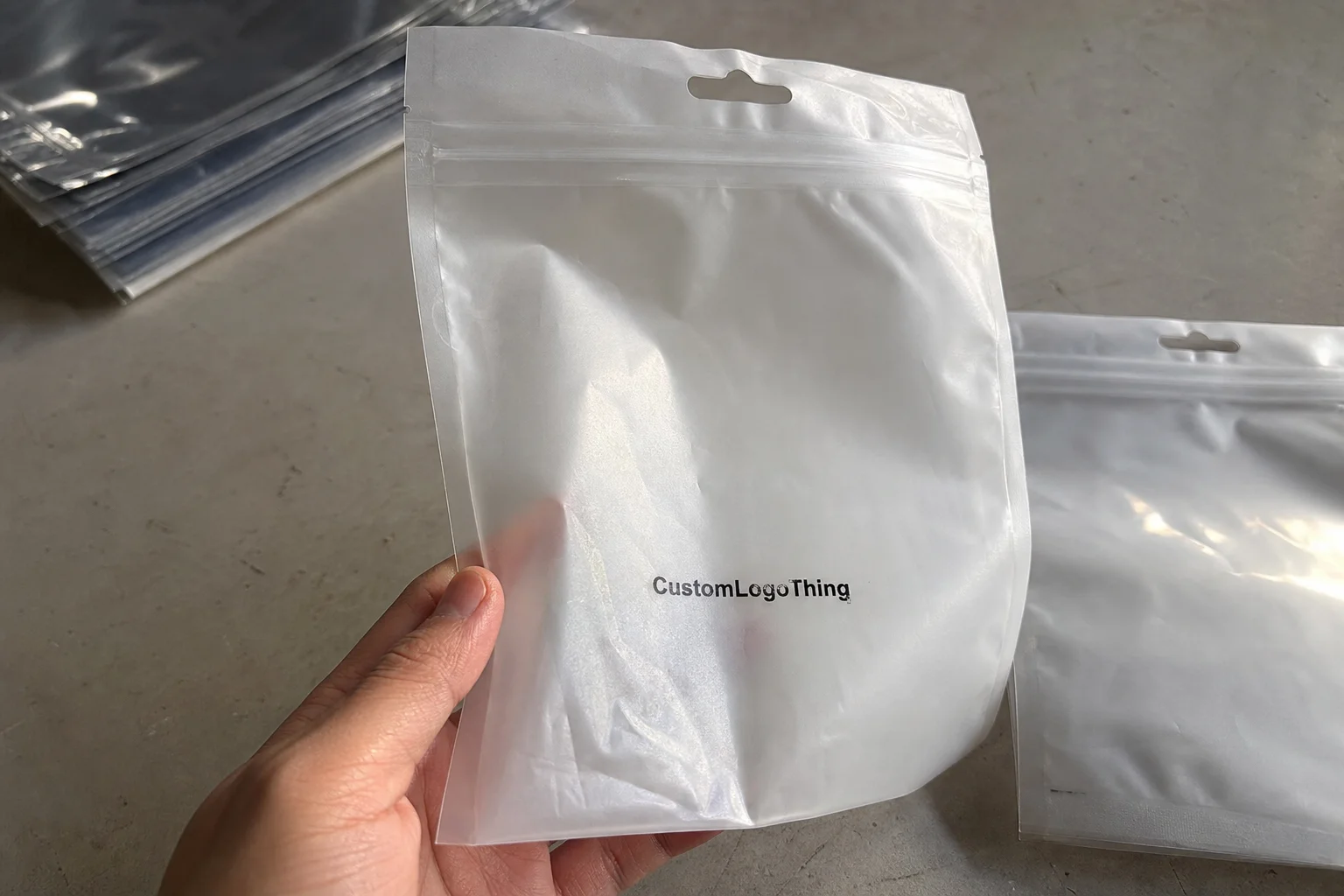
A premium hoodie can lose value before the customer touches the fabric. Put it in a cloudy, thin, wrinkled bag with a weak zipper, and the garment may still be well made, but the first impression has already taken a hit. Buyers searching for Clear Zipper Bags unit cost for apparel usually are not browsing for inspiration; they need a real number, a realistic MOQ, and packaging that will not make the product look careless.
Clear zipper apparel bags are simple, useful packaging. They protect garments from dust, moisture, warehouse handling, returns, shelf scuffs, and the general abuse of fulfillment. They also keep the product visible, which matters for tees, hoodies, socks, activewear, swimwear, denim accessories, kidswear, and subscription apparel where pickers, packers, retailers, and customers need to identify what is inside without opening every bag.
Packaging does not need to be fancy. It needs to look intentional.
Self-seal poly bags are cheaper and can work well for basic inner-pack jobs, but they are not built for repeated opening and closing. Frosted bags can feel more elevated, though they hide garment color and print detail. Paper wraps photograph nicely, then struggle with moisture, returns, and warehouse abrasion. Pick the tool for the job, not the prettiest photo on a packaging mood board.
For many apparel brands, zipper bags sit in the practical middle: better presentation than a disposable poly insert, more protection than tissue, and less cost than rigid retail packaging. The tradeoff is that unit cost depends on real specifications: size, thickness, material, print method, order volume, zipper quality, and packing requirements. Any quote given without those details is mostly a guess.
Clear Zipper Bags Unit Cost for Apparel: What Drives the Number
The fastest way to get an honest quote is to understand what changes the price. Clear Zipper Bags unit cost for apparel is shaped by bag size, film thickness, plastic type, zipper style, print coverage, number of print colors, quantity, and added features such as vent holes, suffocation warnings, hang holes, barcode zones, gussets, or counted carton packing.
Small basic clear zipper bags for socks or accessories can land around $0.08–$0.18 per piece at higher volumes, depending on film gauge and print. Medium custom logo apparel bags for tees often fall around $0.14–$0.32 per piece. Larger hoodie or sweatshirt bags with thicker film, cleaner zipper tracks, and one-color printing may land around $0.28–$0.65+ per piece. Specialty materials, heavy print coverage, and low quantities push pricing higher, so treat these as working ranges rather than promises.
Size is one of the largest cost levers. A sock bag uses far less film than a hoodie bag. Oversizing by two inches across 10,000 bags is not harmless; it means paying for extra material, shipping more carton volume, storing more plastic, and making a neatly folded garment look like it is floating in a loose sleeve.
Thickness matters as well. Folded tees can often use lighter gauges, commonly around 2–3 mil, depending on handling needs and how customer-facing the bag is. Hoodies, denim, resale packaging, and bags intended for repeated use often benefit from 3–5 mil film or a sturdier blend. Thicker film improves hand feel and durability, but it also raises material cost and carton weight.
Printing has its own cost curve. One-color logo printing is usually the practical sweet spot for apparel brands because it gives the bag a branded look without adding excessive setup and inspection complexity. Full coverage artwork, gradients, multiple spot colors, and tight registration add waste risk and production time. That can mean higher cost per piece, higher setup charges, and occasionally a longer lead time.
Buyer warning: the cheapest quote often cuts thickness, zipper quality, print durability, or all three. If the bag splits during fulfillment, the savings disappear quickly.
| Bag Type | Typical Use | Common Thickness | Estimated Unit Range | Best Cost Control Move |
|---|---|---|---|---|
| Small clear zipper bag | Socks, kidswear, accessories | 2–3 mil | $0.08–$0.18 | Use a stock-like size and one-color print |
| Medium apparel zipper bag | Tees, activewear, swimwear | 2.5–4 mil | $0.14–$0.32 | Combine similar SKUs under one bag size |
| Large garment zipper bag | Hoodies, sweatshirts, denim | 3–5 mil | $0.28–$0.65+ | Avoid oversizing and heavy full-area print |
| Retail-facing premium bag | Subscription apparel, boutique presentation | 4–5 mil or specialty blend | $0.45–$0.90+ | Spend on film feel before decorative extras |
Bag Materials, Zippers, and Print Options That Actually Matter
Material choice affects clarity, feel, flexibility, stiffness, and price. Common options for clear zipper apparel bags include LDPE, HDPE blends, CPE, EVA blends, and recycled-content options where available. LDPE is flexible and widely used. HDPE blends can feel crisper, though they may be noisier or stiffer. CPE has a softer, frosted-style feel. EVA blends can improve softness and flexibility, usually at a higher price point.
Recycled-content film requires a little extra care during quoting. Availability changes, clarity can vary, and environmental claims need to match the actual material and applicable rules. If you plan to print recycling language, post-consumer recycled content, or any sustainability claim on the bag, get the material details in writing before production.
Clarity is not only cosmetic. High-clarity film helps retail teams and customers see garment color, print placement, and size labels. Softer translucent film can feel more premium, but it reduces product visibility. If apparel color is central to the sale, do not hide it behind murky film.
Zipper selection is another quiet detail that becomes very noticeable when it fails. Standard press-to-close zippers usually make the most sense for apparel because they balance cost and function. Slider zippers may be available for certain designs, but they add cost and can complicate packing. Reinforced zipper tracks are useful for heavier garments or bags intended for repeated use. For most tee and hoodie packaging, a consistent press zipper beats a clever closure that introduces new problems.
Print methods vary by quantity and design. Flexographic printing is common for volume orders and repeat production. Screen printing can work for simpler runs, especially bold one-color logos. Digital options may fit certain short-run or sample needs, but they are not always economical for bulk apparel packaging. Before quoting, confirm logo placement, ink color, print area, and whether the layout needs a size label panel, barcode label zone, or suffocation warning area.
Practical branding choices include a front center logo, small corner logo, repeating pattern, printed size panel, clear barcode label zone, and back-panel warning text. Keep the hierarchy clean. A bag covered in logos does not automatically look premium; often it just looks overworked.
Finish options include glossy clear film, matte frosted looks, soft-touch style films, vent holes, hang holes, gussets, and label-friendly surfaces. If the bag is mainly for warehouse protection, keep it simple. If it is customer-facing, spend first on film feel, zipper consistency, and clean logo placement before adding decorative complexity.
Apparel Bag Specifications to Confirm Before You Ask for Pricing
Good quotes start with complete specs. Weak specs create vague pricing, surprise tooling fees, sample delays, and long email threads that still do not answer the basic question: what exactly is being made?
Prepare these details before asking for pricing:
- Flat bag size, such as 10 x 14 inches or 12 x 16 inches
- Usable inner size, allowing for zipper placement and seals
- Film thickness, usually stated in mil or microns
- Material preference, such as LDPE, CPE, EVA blend, or recycled-content option
- Zipper type, usually standard press-to-close for apparel
- Print color count, such as one-color logo or two-color print
- Logo size and placement, with artwork file supplied if available
- Quantity, plus target reorder volume if known
- Packing method, such as bulk packed or counted bundles per carton
- Shipping destination and target delivery date
To size clear zipper bags for clothing, measure the garment after it is folded the way your team will actually pack it. Add enough room for easy insertion and a clean zipper close. Do not add so much empty plastic that the product slides around. Tight bags slow fulfillment; oversized bags look lazy and cost more than they should.
Socks and accessories need smaller bags. Tees usually need medium flat bags. Sweatshirts and hoodies need larger sizes and often thicker film. Bulky sets may need gusseted designs. If you sell multiple apparel SKUs, one or two shared bag sizes may cover most products and improve bulk pricing. That is usually smarter than creating six slightly different bags nobody can tell apart once they are on a packing table.
Compliance planning belongs in the specification stage, not after production. Suffocation warnings may be required depending on bag opening size and sales market. Barcode stickers, size labels, country-of-origin labels, recycling marks, and retailer routing labels should be mapped before printing. For general packaging guidance, groups like ISTA publish testing standards used across distribution, while the EPA provides resources related to materials, recycling, and environmental claims.
Plastic bags also have manufacturing tolerances. Size, thickness, seal width, zipper alignment, and print placement can vary within agreed limits. Serious suppliers state tolerances upfront. Perfect precision at bargain pricing is not a realistic production expectation.
If you are unsure, send garment photos or folded dimensions. Better yet, send both. It prevents expensive sampling loops and keeps pricing tied to the actual product instead of a guess.
MOQ, Quote Ranges, and How to Lower Your Per-Bag Price
Custom Clear Zipper apparel bags usually have an MOQ because setup happens before the first sellable bag comes off the line. Film preparation, printing plates or screens, ink setup, machine time, proofing, trimming, conversion waste, and packing labor all have to be absorbed somewhere. They land in the price, either as a visible setup charge or as part of the unit cost.
MOQ changes based on whether the bag is stock size or custom size, printed or unprinted, one-color or multi-color, standard material or specialty film, common thickness or nonstandard gauge. If a production run can be grouped with similar work, minimums may be friendlier. If the bag uses an unusual size, uncommon material, special zipper, or heavy print coverage, expect higher minimums and possibly added setup charges.
Volume improves the cost curve because setup gets spread across more units. Material purchasing can also improve, and labor impact per bag drops. A 2,000-piece order may feel safer for cash flow, but a 10,000-piece order may reduce the cost per piece meaningfully. The tradeoff is inventory. You save on bags, then pay in storage space and tied-up cash. There is no free lunch, just better math.
To lower the per-bag price without weakening the finished package, use standard sizes where possible, print one color, avoid full-coverage artwork, keep thickness appropriate rather than excessive, combine SKUs under one bag size, and order realistic replenishment quantities. Ask for tiered pricing at two or three quantities, such as 3,000, 5,000, and 10,000 pieces. That makes the cost curve visible.
Do not cut zipper strength, film consistency, or correct sizing. Those are the parts customers touch and fulfillment teams notice immediately when they fail. Cutting them to save two cents can lead to repacking labor, damaged presentation, and avoidable complaints.
For buyers comparing quotes, the smartest request is not “how cheap can you make it?” It is “quote this size, this thickness, this print, at these quantities, with shipping.” Same assumptions. Fair comparison.
Production Steps, Lead Time, and Approval Timeline
A normal custom zipper bag order follows a predictable path: quote request, spec confirmation, artwork review, layout proof, sample or pre-production approval when needed, material preparation, printing, bag conversion, quality inspection, packing, and shipping. Skip steps and you usually create a more expensive problem later.
Simple unprinted stock-like bags move faster because fewer decisions are involved. Custom printed bags take longer because artwork has to be reviewed, plates or screens may need to be prepared, material has to be scheduled, ink needs drying or curing time, and converted bags need inspection. A practical production window for custom printed apparel zipper bags is often around 12–25 business days after proof approval, depending on quantity, complexity, and material availability. Shipping time is separate.
Orders slow down for predictable reasons: unclear dimensions, low-resolution logos, artwork changes after proofing, unusual materials, multi-color print registration, holidays, freight congestion, and delayed payment approval. None of this is glamorous. It is just production reality.
Approval points matter. Confirm the size, zipper orientation, print location, ink color, warning text, carton packing, and shipping method before production. Fixing a typo after bags are printed is not a revision. It is a reprint.
Physical samples are useful for new sizes, premium retail packaging, or first-time orders where film feel matters. For repeat bags, digital proofing and retained production standards may be enough. If your launch date is tight, say that before quoting. Air shipping is faster but expensive. Sea freight lowers landed unit cost for larger orders, but it needs more planning. Decide whether speed or unit economics matters more before the schedule gets uncomfortable.
For a clean timeline, approve artwork within 24–48 hours, send print-ready vector files, lock the shipping address, and avoid “one tiny change” after proof approval. That small change can reset the clock.
Quality Checks That Protect Your Apparel Brand
Zipper apparel bags fail in specific ways. Film can arrive cloudy. Thickness can drift. Zipper tracks can separate. Side seals can split when packers insert hoodies. Print can scuff. Logos can land too close to the zipper. Carton counts can be off. These are not abstract quality issues; they create real fulfillment friction.
Quality control should check film clarity, thickness consistency, zipper seal strength, bag opening alignment, side seal durability, print adhesion, ink color, logo placement, warning text, and carton count accuracy. For shipped apparel, basic distribution thinking also matters. ISTA-style handling expectations are useful because bags do not live in a showroom; they travel through cartons, conveyors, warehouses, trucks, and return bins.
There are also practical checks buyers can do when production samples or first cartons arrive. Open and close the zipper several times. Insert the actual folded garment, not a similar item. Tug lightly at the side seals. Rub the printed area with a clean dry cloth to check obvious scuffing. Confirm that labels stick where they are supposed to stick. Count a bundle. These checks are simple, but they catch problems before a full packing shift discovers them.
Manufacturer guidance can save money quickly. One shared bag size across several SKUs can reduce complexity. A slightly smaller print area can lower registration headaches. The right thickness can prevent overpaying for plastic nobody needs. Better carton packing can reduce crush damage and count disputes.
If a supplier cannot write down what they are making, that is not a supplier. That is a surprise generator.
Buyers should receive clear proofing, written specs, quantity tiers, production assumptions, and shipping options. Apparel brands do not need fluffy packaging talk. They need bags that fit, zip, protect, print cleanly, and arrive close to the agreed schedule.
Next Steps to Get an Accurate Custom Zipper Bag Quote
To get a fast, accurate quote, send the bag size or folded garment dimensions, quantity, thickness preference if known, logo file, print color count, delivery location, target in-hand date, and whether the bag is retail-facing or warehouse-only. If you do not know the thickness, describe what the bag needs to do. A tee insert, hoodie resale bag, and subscription apparel presentation bag are not the same job.
Ask for a quote package that includes pricing at multiple quantities, production lead time, shipping estimate, material recommendation, print method, and any setup charges. That makes quote comparison cleaner. A low line-item bag price can look attractive until freight, plates, packing, or weak material ruins the landed cost.
Decision rules are simple. If budget is tight, start with standard sizing and one-color print. If the packaging is customer-facing, prioritize film clarity, zipper feel, and clean logo placement. If the bag mainly supports fulfillment, prioritize speed, consistency, easy packing, and carton organization.
- Confirm folded garment dimensions.
- Choose the closest practical bag size.
- Approve artwork placement and print color.
- Verify suffocation warning or label requirements.
- Choose bulk packing or counted bundles.
- Approve a sample if the size or material is new.
- Lock the shipping method before production starts.
The fastest way to understand Clear Zipper Bags Unit Cost for apparel is to send real specs and compare quantity tiers using the same material, thickness, zipper, print, packing, and freight assumptions. The best quote is not always the lowest number on the page. It is the number attached to a bag that fits the garment, survives handling, presents the product cleanly, and can be reordered without starting over every time.
FAQ
What is the typical clear zipper bag unit cost for apparel orders?
It depends on size, thickness, material, zipper type, print coverage, and quantity. Small, simple, high-volume bags cost less per unit than large hoodie bags with thicker film and custom printing. For a useful quote, provide dimensions, quantity, logo artwork, thickness target, and shipping destination.
What MOQ should I expect for custom clear zipper apparel bags?
MOQ depends on whether the bag is stock size, custom size, printed, or made with special material. Printed custom bags require higher minimums because setup, printing, and machine time need to be absorbed. Ask for tiered pricing so you can compare the minimum order against better volume pricing.
How do I choose the right size clear zipper bags for clothing?
Measure the garment after it is folded the way your team will pack it. Add enough space for easy insertion and a clean zipper close, but do not oversize dramatically. If you sell multiple apparel SKUs, consider whether one or two shared bag sizes can cover most products.
Do printed clear zipper bags cost much more than plain bags?
Printed bags cost more because of artwork setup, ink, plates or screens, press time, and added quality checks. One-color logo printing is usually the most cost-effective branded option. Full-coverage prints, multiple ink colors, and tight registration increase cost and production complexity.
How long does production take for custom zipper bags for apparel?
Lead time depends on material availability, artwork approval, print complexity, order quantity, and shipping method. Simple repeat orders move faster than first-time custom printed bags that need proofing or samples. To avoid delays, approve dimensions, artwork, warning text, and shipping method before production starts.


