Get a Printed Clear Zipper Bags Quote for Apparel
Request a Printed Clear Zipper Bags Quote for apparel with the right specs, MOQ, lead time, print details, and pricing factors for retail-ready garment packing.
Printed Clear Zipper Bags Quote for Apparel: What You’re Really Buying
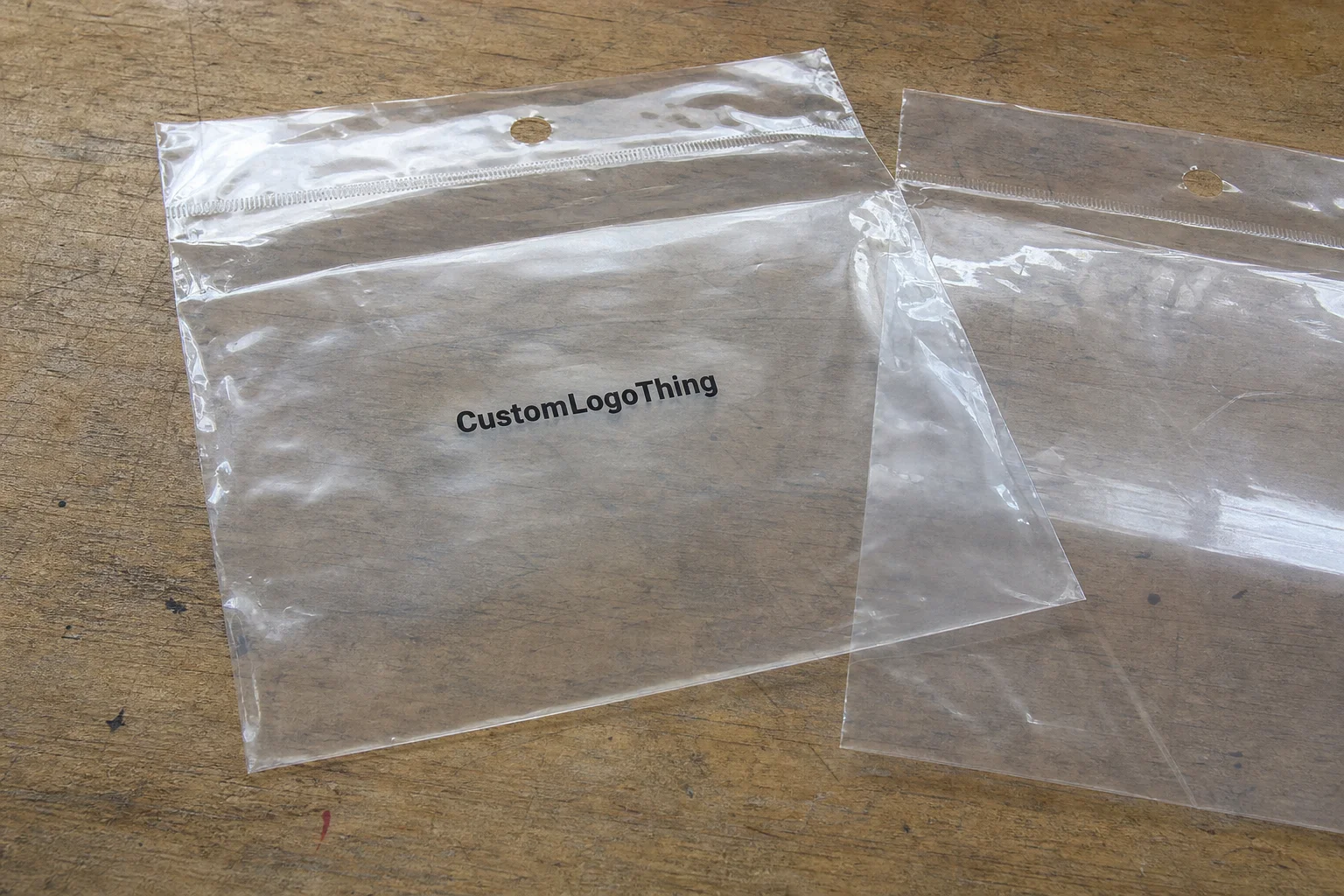
A soft cotton tee can leave finishing neatly folded, then arrive at receiving wrinkled, scuffed, cloudy, or difficult to identify because the bag was too thin, too tight, or sealed in the wrong place. A printed Clear Zipper Bags quote for apparel is not only a price request. It is a packaging decision that affects presentation, garment protection, packing speed, barcode visibility, return handling, and how quickly a warehouse team can find the correct style and size.
Clear Zipper Bags do a straightforward job well. They let a buyer, picker, showroom rep, or end customer see color, fold quality, style, and size markings without opening the package. The resealable zipper adds practical value for returns, sample lines, subscription apparel, uniforms, event merchandise, showroom collections, and e-commerce fulfillment where the garment may be inspected more than once before final use.
Printing makes the bag feel planned rather than generic. A one-color logo, size callout, suffocation warning, recycling mark, SKU block, QR code, or care icon can reduce extra labeling work and help the packaging feel connected to the brand. On mixed-size apparel runs, fewer secondary labels can also mean fewer opportunities for mislabeling.
The quote should be built from measurable details: bag width, bag height, usable opening, film thickness, resin type, zipper style, print coverage, pack count, carton weight, and destination. Change one of those, and the unit cost can move. Sometimes the difference is minor. Sometimes adding half an inch to the width changes film usage, carton cube, packing count, and converting efficiency.
Practical callout: the cheapest clear bag on paper is not always the lowest-cost bag in the operation. If workers fight the opening, over-compress garments, or relabel every unit by hand, the savings can disappear quickly.
Custom Logo Things helps apparel teams turn garment dimensions and packing goals into production-ready specifications before quoting. That front-end work matters because purchasing, marketing, and fulfillment all need the same answer: what the bag is, how it prints, how it packs, what it costs, and what lead time to expect.
Apparel Bag Features That Affect Protection and Presentation
The basic product is simple: a clear plastic zipper bag made for folded garments and soft goods. Common uses include T-shirts, leggings, socks, underwear, kidswear, swimwear, uniforms, branded merchandise, accessories, and promotional apparel kits. The practical details separate packaging that works all day from packaging that only looks acceptable on a spec sheet.
Clarity is one of the first features buyers notice. A high-clarity polyethylene film gives the package a cleaner retail or warehouse-ready appearance, and it supports fast color checks during fulfillment. If a pick team is sorting black, navy, charcoal, and heather gray tees under fluorescent lighting, cloudy film can slow the line down and increase double-checking.
The zipper needs to close consistently without feeling brittle or loose. A reliable press-to-close zipper depends on alignment, seal strength around the zipper profile, and enough header or lip area for a person to open and reclose the bag without tearing the film. Small accessories can usually use a lighter zipper structure. Bulkier fleece, uniforms, denim, or multi-piece kits often need more clearance and a stronger hand at the zipper area.
Safety and distribution details deserve early attention. Many apparel bags require suffocation warnings, especially when the opening exceeds size thresholds or the product enters channels with strict packaging rules. Some programs also need hang holes, vent holes to release trapped air, adhesive label zones, or barcode panels. For distribution planning, standards organizations such as ISTA provide useful context on how packaged goods move through shipping environments, even though an individual apparel polybag is only one part of the full transport package.
Print can stay clean and useful: spot logo printing, one-color instructions, warning copy, size grids, SKU blocks, care icons, recycling guidance, or a light brand pattern. Simple art often performs best on flexible clear film. Heavy coverage may look strong in a mockup, but it can reduce garment visibility, add ink cost, and make scuffs or registration movement more noticeable.
Small usability details matter more than they seem. An easy-open lip, smooth loading area, correct opening orientation, and enough room for folded garment thickness all affect packing speed. A bag that is technically large enough but tight at the opening can slow operators by several seconds per unit. Across 10,000 garments, those seconds become real labor.
The best apparel zipper bag balances protection, speed, and presentation. Lowest price has a place, but a bag that protects a folded garment, scans cleanly, reseals well, and looks like it belongs with the brand usually gives better overall value.
Specifications to Confirm Before Requesting a Custom Zipper Bag Price
An accurate custom zipper bag price starts with a clear specification. The basics are bag width, bag height, usable opening, zipper placement, film thickness, order quantity, print colors, artwork location, and packing format. If freight is included, the delivery address or shipping zone becomes part of the cost picture too.
For apparel, size the bag around the folded garment, not the flat garment pattern. A medium T-shirt may fold into one footprint, while a heavy hoodie in the same labeled size can need much more depth and loading room. Measure the folded width, folded height, and stacked thickness, then allow clearance for the zipper and for easy insertion. A practical allowance is often about 0.5 to 1.0 inch around the folded garment, though bulky fleece, denim, and multi-item kits may need more.
Film thickness affects protection, feel, and cost. Lighter gauges can work for socks, lightweight tees, underwear, and small accessories. Heavier gauges improve hand feel, puncture resistance, and reuse, especially for thicker garments or sample bags that may be opened many times. Depending on the application, buyers often review film in the range of roughly 1.5 mil to 4 mil, although the right choice depends on garment weight, handling conditions, and presentation goals.
Material selection should be practical, not overpromised. LDPE and related polyethylene films are common for soft, flexible clear zipper bags because they provide good clarity, a flexible hand, and reliable sealing behavior. Different film structures can affect stiffness, haze, zipper feel, print performance, and unit price. If recycling claims are used, confirm the exact material structure and the market where the product is sold. The EPA recycling resources are a useful starting point for general recycling language, but packaging claims still need review against local rules and retailer requirements.
Print method matters as well. Simple line art, solid logos, and one-color warning text tend to print cleaner on flexible plastic. Heavy ink coverage, tight registration, gradients, and tiny reverse text require extra review because film can move slightly during printing and converting. Strong branding is possible; the artwork just needs to be designed for the material rather than copied directly from a paper hangtag or rigid box.
Compliance details should be gathered before artwork approval. That includes suffocation warning language and size, recycling marks, country-specific text, barcode readability, retailer routing requirements, and internal SKU labeling rules. A barcode that scans perfectly on a white label may behave differently if printed directly on clear film over a dark garment.
Good inputs prevent bad quotes. Send photos of current packaging, target garment examples, folded-size measurements, and any retailer packaging guide. If the goal is a quote that can move into approval without repeated revisions, avoid guessing on dimensions and required copy.
Cost, MOQ, and Unit Price Factors for Printed Apparel Zipper Bags
Pricing is driven by film material, bag dimensions, thickness, zipper type, print colors, print coverage, order quantity, tooling or plate needs, carton packing, and freight. That list is exactly why a structured quote is useful. Each line item helps explain why one bag may cost $0.09 and another may cost $0.24.
MOQ, or minimum order quantity, is the lowest production run that makes setup, printing, converting, inspection, counting, and packing economical. Custom printed flexible packaging has setup work before the first finished bag comes off the line. Larger quantities usually reduce unit cost because artwork handling, machine preparation, print setup, and quality checks are spread across more units. Total project cost rises, but each bag generally costs less.
Bag size is a direct cost factor. A wider or taller bag uses more film and may increase carton cube. A small adjustment can sometimes help price without hurting function. If two folded shirt sizes can share one bag size without looking sloppy, for example, a brand may reduce SKU complexity and buy at a better quantity break.
Print also influences cost. A one-color logo with warning copy is usually more economical than multi-color artwork with heavy coverage. Tight registration on flexible film may require more setup attention and waste allowance. White ink, black ink, and strong single brand colors often give the cleanest visual read on clear bags.
| Specification Option | Typical Use | Common Cost Behavior | Buyer Consideration |
|---|---|---|---|
| Light clear film, one-color print | Single tees, socks, lightweight accessories | Often lowest unit cost at production quantities | Best when handling is light and premium feel is not required |
| Mid-weight clear film with logo and warning | E-commerce apparel, uniforms, subscription items | Balanced cost, appearance, and durability | Good default for many folded garment programs |
| Heavier film with larger print area | Fleece, denim, sample kits, reusable presentation bags | Higher unit cost due to film weight and ink coverage | Better hand feel and stronger protection for bulkier items |
| Multi-color branded print | Retail-facing packaging or promotional launches | Higher setup and print cost | Artwork should be reviewed carefully for registration and visibility |
As a planning range, simple printed apparel zipper bags can sometimes land around $0.08 to $0.18 per unit at stronger quantities, while heavier, larger, or more heavily printed bags may move into the $0.18 to $0.35+ range. These are not fixed promises. Resin pricing, order quantity, print design, carton pack, and freight can shift the final number.
Freight and storage deserve a line in the budget. Clear zipper bags are lightweight, but cartons can take up space because the product has air, film bulk, and zipper profiles. A 20,000-piece order may not weigh much compared with rigid packaging, yet it can still occupy meaningful warehouse space. Ask about carton counts, carton dimensions, and shipping terms if your receiving dock or storage area is tight.
Request quantity breaks. A good-better-best structure, such as 5,000, 10,000, and 25,000 pieces, lets purchasing compare unit cost against cash flow and forecasted apparel turns. Custom Logo Things can prepare a printed clear zipper bags quote for apparel based on clear specs and point out cost-saving adjustments without stripping away the features the program needs.
Artwork, Branding, and Print Details That Keep Bags Looking Clean
Clear zipper bags usually look best when the artwork supports the garment instead of hiding it. The shopper, packer, or receiver should still be able to identify the item quickly unless the bag is designed for a specific retail presentation. For most apparel programs, clean and useful beats crowded.
Common artwork placements include a logo near the bottom panel, a brand mark near the top header, a suffocation warning on the back or lower panel, and size or SKU information in a consistent corner. Barcode placement needs special attention. Sometimes a white label area is better than printing a barcode directly on clear film, especially if the garment color behind the code changes from unit to unit.
Vector files are preferred for logos, icons, line art, size grids, and warning copy. AI, EPS, or clean PDF files usually give prepress better control than a low-resolution PNG pulled from a website. If raster artwork is used, it should be high resolution and reviewed at final print size, not just viewed on a screen.
Plastic film behaves differently from paper. Film can stretch or shift slightly during printing and converting, so tiny type, hairline rules, and very tight multi-color registration may need adjustment. Reverse text can fill in. Fine lines can disappear. Pale colors can vanish against heather fabrics, dark garments, or busy prints. In many apparel applications, white ink, black ink, or a strong single brand color reads better than subtle tones.
Proofing should not be rushed. Review artwork size, orientation, zipper location, warning copy, logo placement, barcode area, and whether the print faces the front or back. Confirm the opening direction too. A beautiful logo on the wrong side of the bag still causes trouble if warehouse staff must flip every unit to scan or sort.
Good packaging copy earns its space. Logo, garment size, style number, QR code, recycling guidance, return instructions, and care icons can all be useful. Too much copy makes the bag feel busy and can reduce garment visibility. One common mistake in clear apparel packaging is treating the bag like a brochure instead of a protective, scannable, brand-supported container.
If artwork is not final, send what is available during the quoting stage and flag it as preliminary. Custom Logo Things can still estimate print color count, coverage, and placement, then refine the production proof before the order moves ahead. For direct help preparing files and specs, apparel teams can reach Custom Logo Things through Contact Us.
Process, Timeline, and Lead Time from Quote to Delivery
The quoting process works best when the first request includes the practical details: bag size or folded garment dimensions, quantity, film thickness target, print artwork, garment type, destination, and retailer requirements. From there, a structured quote can show the specification, unit price, MOQ, estimated lead time, and any assumptions that need approval.
Proofing or sampling depends on the project. Some buyers review a digital proof showing artwork placement, bag orientation, warning copy, and zipper position. Others may request a material reference to judge clarity, thickness, or zipper feel before committing to a larger run. Pre-production samples may be appropriate for more complex projects, although they can add cost and time.
The production path is plain factory work: material planning, print setup, film printing where applicable, zipper bag converting, sealing, cutting, inspection, counting, carton packing, and shipment preparation. Each step has control points. Seal quality, zipper alignment, print position, count accuracy, carton labeling, and visible film defects should all be checked before goods ship.
Lead time depends on artwork approval speed, material availability, order quantity, print complexity, seasonal production load, and shipping method. Many custom printed flexible packaging projects are planned in business-day windows after proof approval, not from the first inquiry. A straightforward repeat order may move faster than a new printed bag with revised dimensions, new warning copy, and multiple print colors.
Revisions add time. Changing bag size after proofing can require a new quote. Changing warning text may require artwork reapproval. Increasing quantity can affect production scheduling and carton planning. None of these changes are unusual, but they should be made before production details are locked.
Build a buffer for apparel launches, retailer ship windows, subscription box schedules, campus programs, event merchandise, or seasonal inventory pushes. Finished garments sitting in a warehouse without approved packaging create stress for production, customer service, sales, and shipping.
The cleanest timeline comes from complete information, fast proof approval, and a final specification sheet that both purchasing and production understand. If you need help organizing that request, use Contact Us and include your folded garment size, target quantity, and artwork file if available.
Next Steps to Get an Accurate Apparel Zipper Bag Quote
Gather the information before asking for price. It does not need to be perfect, but the closer it is to the real packing condition, the more useful the quote will be.
- Folded garment dimensions: width, height, and thickness of the packed item.
- Garment type: tee, hoodie, leggings, socks, uniform set, swimwear, underwear, kit, or accessory.
- Target bag size: if known, include width, height, and opening orientation.
- Quantity: first-run order, annual estimate, or quantity breaks to compare.
- Film thickness target: standard lightweight, mid-weight, or heavier premium feel.
- Artwork: logo file, print color count, warning copy, barcode, QR code, or SKU panel.
- Special features: hang hole, vent hole, easy-open lip, label area, or specific zipper preference.
- Delivery details: ship-to address, carton requirements, and any receiving instructions.
Send one or two photos if you have them. A real image of the folded apparel inside the current bag often reveals fit problems that a spreadsheet misses: a zipper pressing into the collar, corners stretching, trapped air, or an opening that forces workers to over-compress the garment.
Confirm special requirements before quoting. Retail programs may require specific suffocation warning language, barcode position, carton pack count, routing labels, or country-specific compliance language. E-commerce programs may care more about resealability, return instructions, and quick picking. Sample distribution may need a heavier hand feel because the bag will be opened repeatedly.
Ask for multiple quantity breaks and, if needed, two spec options. A standard mid-weight version and a heavier premium-feel version can help the team compare cost against brand presentation. For buyers managing cash flow, a lower first run may be sensible. For stable apparel programs, a larger run may reduce unit price enough to justify the inventory.
Be honest about the use case: retail shelf, warehouse picking, e-commerce shipment, sample line, event merchandise, subscription kit, or return-ready packaging. Each one points to slightly different decisions on thickness, print placement, zipper strength, and labeling.
To receive a focused apparel zipper bag quote, send the specs, artwork, and quantity target to Custom Logo Things so the team can confirm materials, print approach, MOQ, pricing, and lead time before production begins. Start through Contact Us and include any retailer guide or current bag photo you want reviewed.
Frequently Asked Questions
What information do I need for a printed clear zipper bags quote for apparel?
Provide the bag size or folded garment dimensions, quantity, film thickness target, print colors, logo artwork, zipper preference, delivery location, and any retailer or safety labeling requirements. If you are unsure about size, send the garment type and a photo of the folded item so the bag can be sized with proper loading room instead of a tight theoretical fit.
What MOQ should I expect for custom printed clear zipper apparel bags?
MOQ depends on bag size, material, print method, and production setup requirements. Higher quantities usually reduce unit cost because setup and printing costs are spread across more bags, so requesting quantity breaks is the best way to compare options against forecast, storage space, and cash flow.
Can clear zipper bags for apparel include a suffocation warning and logo?
Yes, many apparel zipper bags include both branding and required warning text. The artwork should be laid out so the logo stays visible, the warning remains readable, and neither element interferes with barcode scanning, SKU labels, or the customer’s ability to see the garment color and style.
How thick should printed clear zipper bags be for clothing?
The right thickness depends on garment weight, handling conditions, and desired feel. Lightweight apparel may work with a thinner film, while denim, fleece, multi-item kits, uniforms, or reusable presentation bags often benefit from a heavier gauge with better puncture resistance and a stronger zipper area.
How long does production take after approving a custom apparel zipper bag quote?
Lead time depends on artwork approval, material availability, order quantity, print complexity, production load, and shipping method. To keep the timeline moving, approve proofs quickly and avoid changing bag size, artwork placement, warning text, or quantity after production details are confirmed.


