Clear Zipper Bags for Cosmetics Buyers
Choosing a Clear Zipper Bags Wholesale Supplier for cosmetics shapes more than packaging cost. It affects how quickly a shopper reads the product, how clean the shelf looks, how easy the line is to pack, and how often the warehouse has to stop and verify contents. A clear bag gives the customer a direct view of shade, quantity, and presentation, which removes hesitation before the product is even picked up.
That matters in beauty because the package often has to do part of the selling before the formula is tested. A travel set looks more organized when the contents are visible. A sample kit feels less like a mystery. A refill pack can look more credible when buyers can inspect the fill and confirm the item they expect is actually there.
For brands managing multiple SKUs, the same bag format can also reduce friction behind the scenes. It helps merchandisers, packers, and receiving teams identify the right item faster, and it keeps the visual language of the line consistent across collections and replenishment runs.
Why a clear zipper bags wholesale supplier for cosmetics matters on shelf
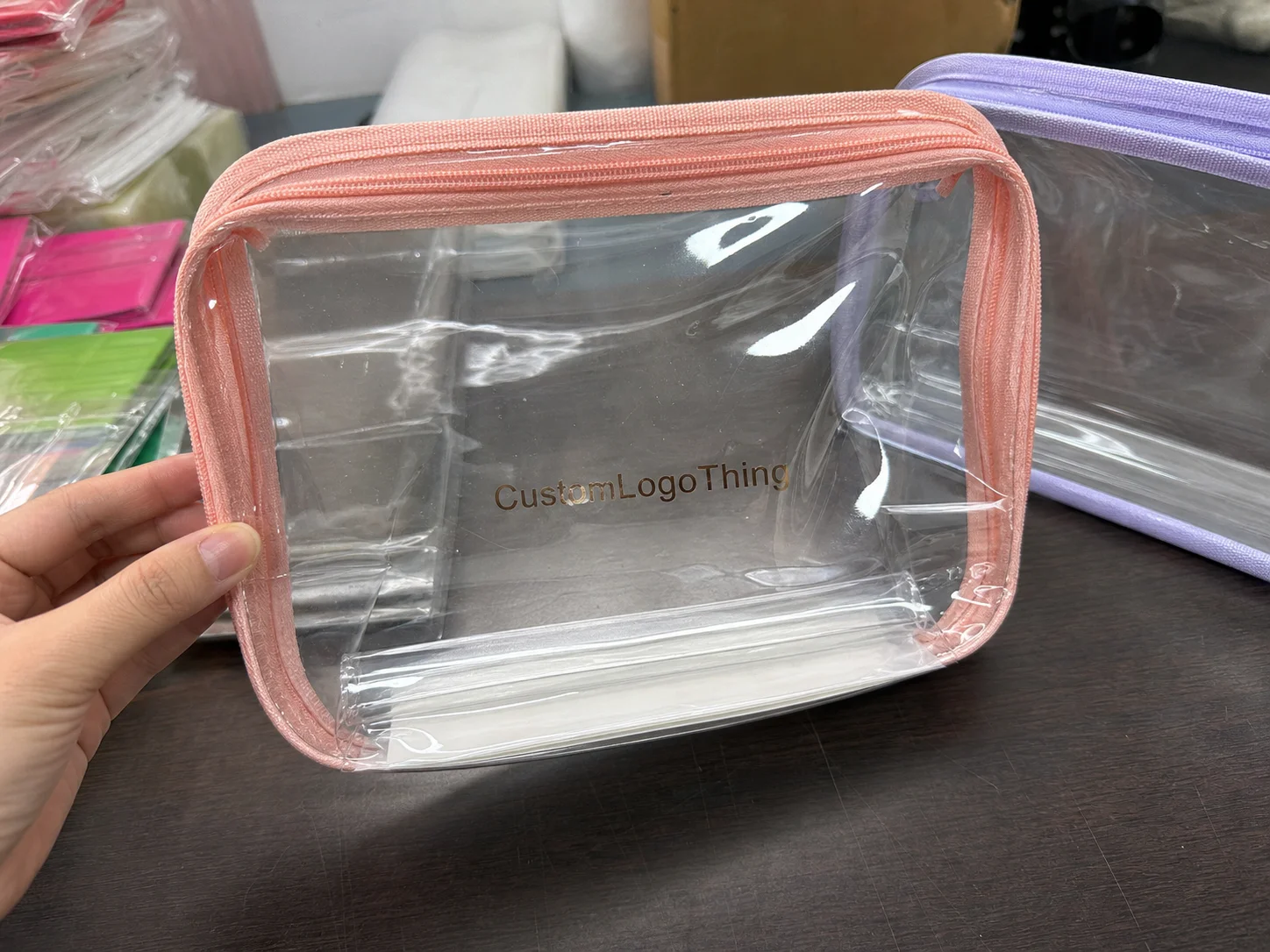
Retail packaging has one job before the buyer touches the product: reduce uncertainty. Clear Zipper Bags do that well because the customer can see the color range, accessory count, and approximate size without opening anything. In stores, at pop-ups, and in subscription fulfillment, that quick read can shorten decision time and reduce handling errors.
From a packaging buyer’s point of view, the value is practical rather than decorative. Transparent bags make inventory checks faster, support faster pick-and-pack work, and help consumers confirm that the item they selected matches the label. Opaque packaging can hide mix-ups until after shipment, which is the least efficient time to discover them.
Common cosmetic uses are fairly consistent:
- Sample sets for skincare and color cosmetics
- Travel-size bundles for minis and trial packs
- Makeup tools, applicators, brushes, and sponges
- Bath salts, scrubs, and small wellness add-ons
- Promotional gift sets and seasonal bundles
- Refill packs that need quick visual identification
Wholesale sourcing matters because consistency compounds. If one batch of bags is slightly clearer, thicker, or more rigid than the next, the difference shows up in packing speed and shelf presentation. A dependable Clear Zipper Bags wholesale supplier for cosmetics keeps dimensions, closure feel, and material behavior stable across repeat orders. That stability matters more than buyers usually expect, because packaging only works as a system if the reorders behave like the original approval sample.
“If the contents can be identified quickly, the pack-out team moves faster and the shopper trusts the purchase sooner.”
Many beauty brands standardize on a clear format once a SKU starts moving steadily. That reduces the odds of mis-picks, keeps assembly instructions simple, and avoids the visual clutter that comes from changing bag styles every time a new promotional bundle is launched.
Product Details: Materials, Closure Styles, and Cosmetic Use Cases
Material choice drives the look, the feel, and the price. LDPE is common because it is flexible, economical, and easy to seal. It has a softer hand and works well for lightweight cosmetic kits, sample packs, and items that do not need a stiff display shape. EVA generally costs more, but it tends to hold form better and often looks smoother under retail lighting. PET blends can be useful when clarity and surface finish matter more than softness, especially if the bag must present crisply on a shelf or inside a gift set.
Buyers usually choose among three closure styles. Standard zipper closures are the most common and the most affordable. Slider closures are easier for consumers to open and reclose, which helps when the bag will be handled repeatedly. Press-to-seal options can deliver a cleaner closure with less hardware, although the tactile feel varies from one manufacturer to another.
The contents should determine the closure, not the other way around. Lip gloss sets and mini skincare bottles benefit from a closure that opens cleanly without snagging inserts. Makeup tools need enough internal room so the zipper does not press against sharp edges or awkward handles. Bath salts and loose-fill products need tighter seal integrity than a simple sample pouch, especially if the bag is expected to travel through parcel networks.
Practical options can also change how the bag performs in retail and fulfillment:
- Hang holes for peg display
- Gussets for extra depth and volume
- Frosted accents for softer branding without losing visibility
- Custom print zones for logos, usage notes, or size markers
- Tamper-evident seals where security matters more than reusability
Not every cosmetic line needs a premium pouch. A basic clear bag is often enough if the product itself already carries the visual weight and the goal is efficient packing. A gift set, a limited release, or a high-margin kit may justify a better-finished pouch because the packaging helps support the retail price. The right answer is usually the simplest structure that still fits the brand and survives the actual handling conditions.
For teams sourcing through Wholesale Programs, it helps to match the structure to the channel. A club pack, a salon kit, and a direct-to-consumer sample bundle do not need the same bag specification, even if they all carry items from the same cosmetic family.
Specifications Buyers Should Verify Before Ordering
Most packaging problems show up in the spec sheet before they show up in the warehouse. Start with thickness, dimensions, zipper width, seal strength, and clarity level. If a supplier only says “good quality,” ask for measurable data. A useful quote should list film gauge, finished size, tolerance range, and whether the dimensions are inside or outside measurements.
Thickness affects puncture resistance, rigidity, and how well the bag holds shape. A thin bag may be fine for a cotton pad set, but not for a bundle that includes mascara tubes, metal tools, or boxes with sharp corners. In beauty packaging, buyers often work somewhere between 8 and 20 mil depending on the application, though that range is only a starting point. The right thickness depends on product weight, abrasion risk, and whether the bag is meant for consumer reuse or only for inner packing.
Size deserves the same attention. If the bag is too large, products slide around and the presentation looks loose. If it is too tight, the zipper line takes stress and the corners can wrinkle or split. For compact cosmetic sets, ask for a fit test against the largest item in the bundle, not the smallest. That is usually where weak assumptions surface.
Surface finish and print compatibility matter too. Some films accept a logo cleanly without clouding the clear area. Others become hazy once ink coverage increases or a label is applied. If you need printed branding, inserts, or stickers, confirm that the material still reads clearly after decoration. A logo should support the product, not turn the pouch into a fogged panel.
Quality control should be spelled out before mass production starts. Request sample units and a written spec sheet. Ask for the expected variation in dimensions, zipper alignment, and visual clarity across the run. If the supplier cannot describe tolerances or inspection steps, the order carries avoidable risk. Cosmetic packaging should not rely on guesswork.
Transit testing deserves attention as well. If the bags will ship inside cartons, ask how the supplier validates outer packaging against drop, vibration, and compression risks. Industry methods such as those published through the ISTA community are a better reference point than casual hand inspection. If printed inserts or paper cards are included, you may also want documentation around paper sourcing through organizations such as the FSC where responsible forestry claims are relevant.
Cost, Pricing, and MOQ: What Drives Unit Cost
Price rarely comes from one variable. It is usually the result of material grade, bag size, thickness, closure type, print coverage, and packaging configuration. Freight changes the equation again. That is why a quote that looks cheap on a unit basis can still finish higher once cartons, delivery, and handling are added.
Here is a practical comparison buyers can use when evaluating a clear zipper bags wholesale supplier for cosmetics:
| Option | Typical MOQ | Indicative Unit Price | Best Fit | Watchouts |
|---|---|---|---|---|
| Stock LDPE clear zipper bag, unprinted | 1,000-3,000 | $0.06-$0.12 | Simple sample kits, internal use, fast replenishment | Limited branding, fewer size choices |
| Custom size, unprinted | 3,000-5,000 | $0.09-$0.18 | Better fit for specific cosmetics sets | Setup fees, longer lead time |
| Printed logo bag | 5,000-10,000 | $0.15-$0.28 | Retail-ready branding and promotional bundles | Artwork approval and print setup costs |
| EVA or PET premium pouch with slider | 5,000+ | $0.22-$0.45 | Gift sets, higher-margin launches, premium kits | Higher material cost and tighter spec control |
Those figures are directional, not fixed. A 5,000-piece order with heavy print coverage will cost more than the same bag with a one-color logo. A low-MOQ order can be useful for testing a new kit, but the tradeoff is usually higher per-piece pricing. For brands with uncertain demand, that flexibility can still be worth the premium.
Setup fees matter as well. Custom dimensions, plates, color matching, and special finishes can add $80 to $300 or more before the first bag ships. Buyers should compare total landed cost, not just base unit price. Freight, customs handling, local delivery, and inventory carrying costs all belong in the same calculation.
If your team is comparing several quotes, use a simple framework: product cost, customization cost, freight, and inventory risk. A slightly higher unit price may still be the better choice if it reduces overstock, cuts repacking labor, or avoids a second packaging change later. The lowest number on the quote is not always the lowest number in practice.
For structured sourcing, many buyers use Wholesale Programs to compare stock formats against custom production before locking the specification. That comparison is especially useful when a launch date is fixed and the packaging choice affects the sell-through plan.
Process, Timeline, and Lead Time From Quote to Delivery
The buying flow is usually predictable. First comes inquiry and spec confirmation. Then the supplier prepares a quote and, if needed, sample units. After sample approval, production begins, followed by quality checks, packing, and shipment. The sequence looks simple, but missing details can add a week here and a week there.
Sample approval is the most valuable checkpoint in the whole process. It catches sizing problems, zipper friction, clarity issues, and fit problems before mass production starts. A bag that looks fine in a listing can feel too stiff, too loose, or too flimsy in hand. A real fit test with the actual cosmetic product usually reveals those issues quickly.
Lead time depends on whether the bags are stocked or custom. Stock items can often leave the warehouse in a few business days once payment clears. Custom-made bags typically need about 12 to 15 business days after proof approval, and larger or more complex runs can extend into the 18 to 25 business day range depending on queue, tooling, and order complexity. Air freight shortens transit, but it changes the economics fast.
Packaging buyers should also ask how quality checks are handled. Is inspection visual only, or does it include measured dimensions, zipper function, and carton count verification? Is there a defined acceptance threshold for defects? A supplier that can answer those questions clearly is usually easier to work with when the launch calendar gets tight.
For shipments moving through parcel networks, ask whether the outer carton setup has been reviewed against recognized transit methods. The bag itself may pass inspection, but the shipper still has to survive drop, compression, and vibration. The better suppliers talk about logistics as part of the packaging system, not as an afterthought.
Build buffer time into launches. If the cosmetics line is tied to a retailer deadline, a trade show, or a seasonal promotion, leave room for one proof revision and one transit delay. That is standard risk control, not pessimism.
What a Reliable Cosmetics Packaging Supplier Should Prove
A strong supplier does more than quote a low number. It should prove consistency. That means documented quality control, repeatable material sourcing, on-time shipping history, and communication that answers questions directly. If the supplier cannot explain tolerances, the chance of variation goes up.
The best clear zipper bags wholesale supplier for cosmetics will usually provide a spec sheet, sample support, and guidance on artwork placement. That matters because cosmetics buyers often reorder the same format multiple times a year. One off-size bag can force a new insert, a new carton layout, or a new fulfillment instruction sheet.
Ask for use-case experience, not just general packaging claims. A supplier that has handled sample sets, travel kits, and beauty accessory packs is more likely to understand why clarity, zipper feel, and nesting behavior matter. Generic bag sourcing is not the same as cosmetics packaging support.
You should also expect the supplier to be upfront about stock versus custom lead times, minimums, and reorder consistency. A good partner will tell you where the tolerances sit instead of promising perfection. That kind of honesty saves time later because it keeps the order spec aligned with production reality.
There is another practical advantage. A supplier that supports both small test runs and larger replenishment orders makes it easier to move from launch to steady-state supply without changing packaging partners. That helps brands that want to test a bundle in one quarter and scale it in the next while keeping the same visual format on the shelf.
“A supplier earns trust by being specific: dimensions, materials, lead times, and defect tolerances, not slogans.”
Specificity is usually the clearest sign that a supplier understands the work. If the answer to every question is a vague promise, the risk lands back on the buyer. If the supplier can explain what is standardized, what is custom, and what tolerances apply, the order is easier to manage from the first proof through the next reorder.
Next Steps to Order Clear Zipper Bags for Your Cosmetics Line
Before requesting a quote, prepare three things: your target bag size, your expected quantity, and whether you need branding or custom features. If the bag is carrying a full kit, include the dimensions of the largest item and the total fill weight. That gives the supplier a real starting point instead of a guess.
Request a sample pack and compare three things in hand: closure feel, clarity, and product fit. Then check whether the bag still looks clean once inserts, labels, or seals are added. A bag can pass a digital proof and still look wrong on the shelf if the surface changes after printing or if the contents shift too much inside.
Confirm the shipping destination, target launch date, and any retailer compliance rules before approving production. If the order must meet an internal packaging standard, spell it out. If there is a preferred carton count, write it down. If the product will be re-ordered monthly, say so now. Those details are cheaper to settle before production than after arrival.
Then compare at least two or three quote scenarios: stock, custom, and premium. The stock option shows your baseline. The custom option reveals the cost of a better fit. The premium option shows what extra presentation is worth to the brand. That comparison usually makes the decision obvious without forcing the choice too early.
For brands ready to buy, the smartest move is not chasing the lowest number. It is choosing a clear zipper bags wholesale supplier for cosmetics that can prove fit, repeatability, and response time while keeping the packaging aligned with the product and the channel. Start with the specs, compare the landed cost, and approve production only after the sample behaves the way the final run needs to behave.
What size clear zipper bag works best for cosmetics sample sets?
Choose the size based on the largest item in the set, not the smallest. Leave room for inserts, swatches, or a small cushion so the zipper does not press against the contents. A sample fit test is the safest way to avoid a bag that looks fine on paper but feels cramped in production.
Can a clear zipper bags wholesale supplier for cosmetics customize branding?
Yes, many suppliers can add logo printing, labels, or custom inserts. The available method depends on the bag material, the surface finish, and the production setup. Ask for artwork guidelines and a proof before you approve the full run, because print coverage can affect clarity.
What is the typical MOQ for wholesale cosmetics zipper bags?
MOQ varies by size, material, and whether the bag is stock or custom. Stock items usually come with lower minimums, while custom dimensions and printed bags often require larger quantities. It helps to compare MOQ against your reorder plan instead of treating the minimum as a one-time decision.
How do I compare pricing from different wholesale suppliers?
Compare unit price, setup fees, shipping, and any custom charges as one total. Ask whether sample approval and packaging are included in the quote, because those costs sometimes appear later. The fairest comparison is landed cost, not the lowest headline price.
How long does production usually take for custom clear zipper bags?
Lead time depends on customization level, order size, and stock availability. Once the proof is approved, many custom runs need roughly 12 to 15 business days, while larger or more complex orders can take longer. Build extra time if the bags are tied to a launch or retail deadline.


