A corporate gifting Custom Poly Mailer Bags material spec guide sounds technical for a reason: the bag is not an accessory, it is part of the product experience. If the mailer arrives scuffed, split, or oversized, the gift inside loses value before anyone opens it. A polished outer layer can make a modest kit feel deliberate. A weak one makes even expensive contents look rushed.
Buyers often start with artwork because artwork is visible and easy to approve. The actual risk sits in the structure. Film gauge, seal design, opacity, print method, and closure strength decide whether the bag survives the last mile or turns into a complaint. That difference is not abstract. On gift programs, one damaged shipment can affect the perception of an entire campaign.
This guide focuses on the parts that move performance, cost, and appearance in real production. Not theory. Not showroom packaging. The kind of decisions that matter when a fulfillment team has to pack hundreds or thousands of units on a deadline.
What the corporate gifting custom poly mailer bags material spec guide should cover
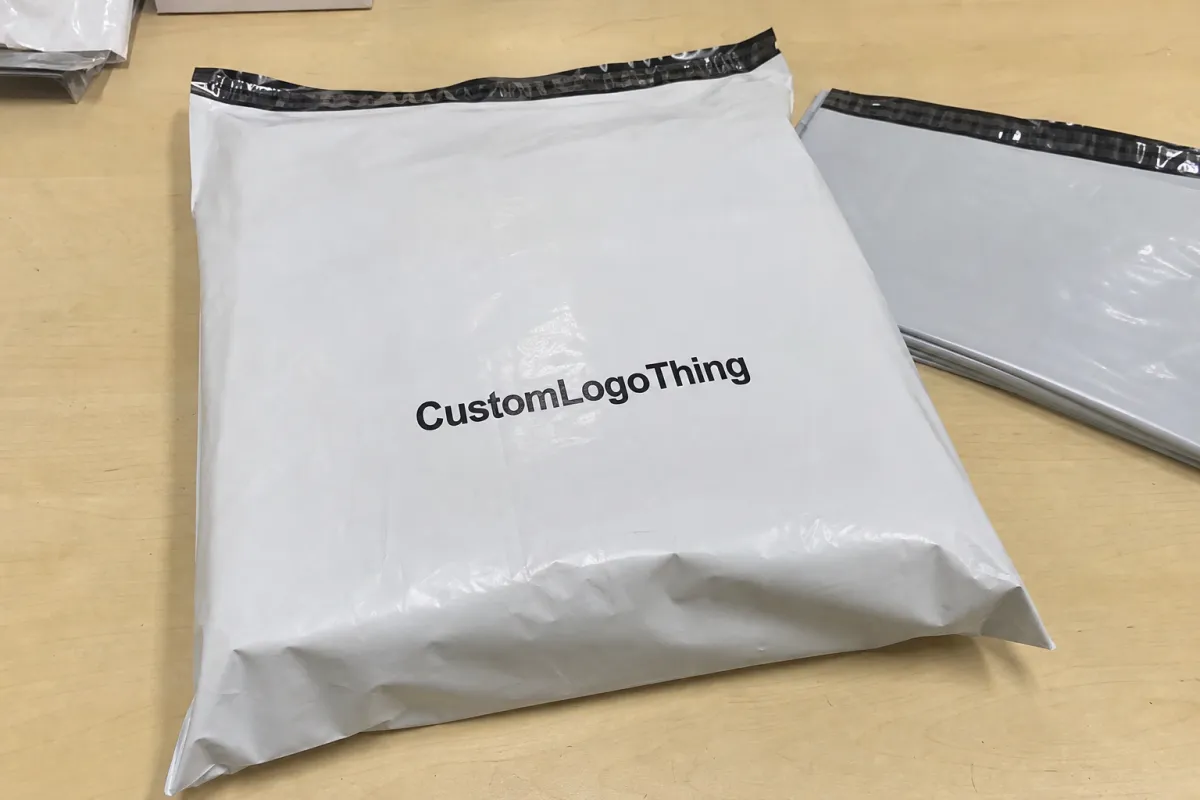
The job of a Custom Poly Mailer is straightforward on paper: hold the contents, protect them, seal cleanly, and present the brand well. The practical version is messier. A mailer for soft apparel behaves differently from one carrying boxed gifts, rigid samples, or mixed kits with inserts and cards. That is why a useful spec guide starts with the contents, not the logo.
For gifting programs, the bag usually has to do four things at once. It needs to resist punctures and seam stress, allow quick packing, hide or reveal contents as intended, and survive carrier handling without looking tired. If one of those pieces is wrong, the whole package feels off. A glossy printed mailer with weak side seams is still a weak mailer.
The mistake most teams make is approving a design before they understand the build. Size, thickness, closure style, and print coverage shape the final result more than the artwork file does. A logo can be adjusted. A bad film choice is harder to rescue.
- Protection: the bag should survive drops, stacking, corner pressure, and normal warehouse handling.
- Presentation: it should look like part of the gift, not a generic shipping sack with branding added later.
- Production: the spec should run consistently without constant exceptions or hand-finishing.
- Repeatability: a reorder should match the approved sample closely enough that the program does not drift.
The best spec sheets are boring in the right way. They remove guesswork. They also give suppliers a chance to price the job honestly instead of padding for uncertainty. Vague briefs create vague quotes, and vague quotes usually become expensive later.
Material specs that change durability, feel, and print
Thickness gets the most attention, but the film type matters just as much. Low-density polyethylene, or LDPE, has a softer hand feel and better flexibility. It folds easily and tends to pack neatly. Higher-density blends feel stiffer and can hold a cleaner shape, which some teams prefer for a more structured look. Recycled-content films are increasingly common too, especially where procurement wants a sustainability story that can survive questions from legal or brand teams.
Gauge is usually expressed in mils or microns. For light apparel inserts, flat collateral, or soft goods that do not have corners, 2.5-3 mil is often enough. Once the contents become heavier, boxed, or angular, 3.5-5 mil gives more margin against puncture and seam failure. That extra material adds cost, but it also buys fewer returns and less rework. In packaging, a saved penny can become a lost shipment.
Several structural features influence performance more than buyers expect:
- Side seams: cleaner seams reduce split risk and help the bag lie flatter during packing.
- Bottom seal width: a wider seal usually handles heavier loads better, especially on mixed-content kits.
- Adhesive strip: the closure should stay tacky after exposure to dust, temperature swings, and brief handling delays.
- Opacity: opaque film hides contents and gives the brand a cleaner field; semi-clear film is better when the product should be visible.
- Puncture resistance: this matters when the gift includes boxes, tins, rigid inserts, or anything with corners.
Print behaves differently depending on the finish. Gloss film tends to make color look brighter and contrast sharper. Matte film can feel more premium and less retail-standard, but it may mute saturation and show scuffs differently. Dark films and recycled blends can also shift ink coverage, especially on large solid areas. If the artwork depends on a precise brand color, ask for a proof that is closer to production conditions than a screen mockup.
Quality teams often reference standards such as ASTM D882 for tensile properties and ASTM D1709 for dart impact when they want a more objective conversation about film strength. For distribution testing, ISTA methods help evaluate how the package behaves under drop, vibration, and compression. Those tests do not guarantee perfection, but they expose the weak points before customers do.
That is why the corporate gifting Custom Poly Mailer Bags material spec guide should never stop at color and logo placement. The bag has to be treated like a packaging system, not a printed accessory.
How the process and timeline usually work
The production sequence is usually predictable: confirm size, confirm material, approve artwork, review proofs, run the order, pack, and ship. The schedule is less predictable. Most delays come from approvals and revisions rather than from the press itself.
A common pattern looks like this. The design is approved, then someone realizes the gift box changed by half an inch. Or the kit is heavier than expected, so the original gauge no longer looks safe. Or the brand team asks for one more color after the proof cycle has already started. Each change seems minor in isolation. Together they can add days or weeks.
Typical lead times vary by method and complexity:
- Stock-size digital runs: often 7-12 business days after proof approval for simpler jobs.
- Custom-size flexographic runs: commonly 15-25 business days, depending on tooling and color count.
- Heavier gauges or multi-color jobs: often 20-35 business days when setup and drying time are longer.
- Special programs: recycled-content sourcing, unusual cartons, or specialty finishes can add more time.
For high-value gift programs, the packaging quote should start before the campaign is fully frozen. That may feel early, but it is usually the safest way to avoid shipping a great gift in the wrong mailer. The bag is part of the timeline, not a detail to deal with at the end.
A mailer is often the first physical proof that the brand cared enough to package the gift properly.
Validation is also worth the time. If the contents are expensive or fragile, ask for a sample and, if possible, a quick fit test on the actual packing line. A photo proof can hide problems that show up immediately when a human tries to fold, seal, and label the bag at speed. A good spec should survive real hands, not just a PDF.
Pricing, MOQ, and quote drivers to watch
Unit price moves with size, gauge, print coverage, color count, and whether the bag is a stock format or fully custom. MOQ matters too. Smaller runs keep risk low, but the per-unit cost rises quickly. Larger runs improve the price, then introduce storage, cash flow, and the possibility that the artwork changes after production is already underway.
For planning purposes, these are useful ballpark ranges for branded gift mailers at modest production volumes. Exact numbers depend on region, material, and finish, but the ranges help separate workable quotes from fantasy pricing.
| Option | Typical MOQ | Common unit price range | Best fit | Main watchout |
|---|---|---|---|---|
| Stock-size digital print | 500-1,000 | $0.34-$0.75 | Smaller gift drops, short campaigns, variable artwork | Higher unit cost and fewer finish options |
| Custom-size flexographic | 5,000+ | $0.18-$0.32 | Repeat gifting, stable artwork, larger programs | Plate or setup fees and longer lead time |
| Heavy-gauge multi-color | 5,000-10,000 | $0.28-$0.55 | Boxed gifts, premium kits, rougher shipping routes | Freight and weight can rise faster than expected |
| Recycled-content blend | 5,000+ | $0.22-$0.42 | Programs with sustainability messaging and simple branding | Clarity, stiffness, and print behavior can vary by blend |
Ask for pricing in three ways: per bag, per carton, and landed cost. The last number is the one that matters because freight, packing configuration, and setup charges can change the budget fast. A quote that looks cheap on the first page can become expensive once plates, shipping, and case packing are added.
It also helps to confirm scope. Is the quote only for the mailer, or does it include inserts, carton labeling, and master case packing? If a program uses multiple packaging elements, every supplier needs to be quoting the same job. Otherwise the comparison is not a comparison at all.
Build the spec sheet before you request quotes
A clean spec sheet saves time and money. It also narrows the room for interpretation, which is where most packaging mistakes start. If the brief is vague, the supplier fills in the gaps. Sometimes that works. Often it does not.
The right place to begin is with the contents. Measure the item dimensions, weight, and shape. Note whether the kit contains a rigid box, a sample book, a tin, or any other hard-edged component. A single sharp corner can change the bag requirement more than the brand team expects.
- Measure the contents: include width, height, depth, and the bulkiest point, not just the tidy dimensions on a product page.
- Set clearance: leave enough room for easy packing without allowing the contents to float around.
- Lock construction: film type, thickness, seal style, adhesive strip, and print area should be fixed before artwork proofing.
- Choose the finish: gloss, matte, clear, opaque, recycled blend, or another defined surface treatment.
- Request samples: test folding, sealing, print scuffing, and label placement under real packing conditions.
The biggest bag is rarely the best one. Extra space can make the package look loose and encourage movement inside the mailer. Too little space makes packing slow and can stress the seams. The useful middle ground is enough room to assemble quickly, while still keeping the package tight and intentional.
Before approval, ask for a sample or a close production equivalent. Inspect how the mailer opens, whether the seal strip aligns consistently, and how the print behaves near folds and seams. These details are small on paper and obvious in hand. That is exactly why they matter.
Common mistakes that make mailers fail in gifting programs
The most expensive mistake is choosing on appearance alone. A glossy bag can look excellent and still fail if the film is thin or the seal is weak. The second mistake is assuming the proof tells the whole story. Screens do not bend; materials do. Print too close to a seam and the design can distort after conversion.
Thickness is another place where buyers get caught. Light-duty film may be fine for soft apparel, then fail immediately when the contents include a rigid box or multiple inserts. That failure does not always look dramatic. Sometimes it arrives as a corner split, a stress tear near the seal, or a bag that stretches just enough to look cheap by the time it reaches the recipient.
- Do not oversize the artwork and hope the factory can hide the problem.
- Do not treat a shiny finish as a substitute for structural strength.
- Do not ignore the closure strip if the contents have real value.
- Do not make late spec changes unless the timeline has room for reproofing and revised freight.
Late changes are expensive because they force new proofs, new setup, and sometimes new shipping windows. That is how a simple gift program becomes a budget problem. A focused corporate gifting custom Poly Mailer Bags material spec guide exists to prevent that sequence, not to decorate an inbox.
Expert tips for better unboxing, security, and sustainability
Good unboxing is controlled, not loud. Strong packaging does not need to shout. Use contrast, white space, and one clear focal point so the branding reads quickly when the recipient opens the parcel. Too many graphics can make a premium mailer feel busy, and busy often reads as cheaper than it is.
Security matters more as the gift value rises. If the contents should not be tampered with, ask for stronger adhesive or a tamper-evident closure. Decorative seals can work for apparel. They are a poor choice for executive kits, premium product drops, or anything that needs to arrive visibly untouched.
Sustainability should be discussed with precision, not slogans. Recycled content is useful, but so is right-sizing the bag and avoiding unnecessary film thickness. Downgauging can reduce material use if the contents are light and the route is predictable. If the bag becomes too thin, though, the environmental benefit disappears into damage and replacement.
Claims deserve discipline. Do not label a film curbside recyclable unless the actual local recovery stream supports it. Buyers and compliance teams now check those details. Exact wording matters more than polish.
If the gift kit includes corrugated boxes, kraft inserts, or printed sleeves, keep the whole system visually aligned. The mailer should feel like part of the same package family. That kind of consistency can do more for perceived quality than a more expensive print effect on the mailer itself.
A small pilot is worth the time. Even a few dozen units can reveal problems with scuffing, sealing speed, label placement, or fold memory. The cost of testing is tiny compared with discovering a flaw after the full order is in motion.
Next steps: compare samples, lock specs, and place the order
Start with the essentials: dimensions, contents, artwork files, quantity, and target ship date. That is enough for suppliers to quote responsibly. It also keeps the discussion grounded in the bag’s actual job instead of abstract preferences about finish or color.
Then ask for three things: a sample, a proof, and a written spec recap. Those documents keep everyone aligned. If the size, film gauge, closure type, or print area changes later, the change should be documented before production begins.
After the quote is approved, confirm freight, carton pack, and reprint policy. Those are basic items, which is precisely why they are often skipped. They matter most when the calendar is tight.
If the goal is to use this corporate gifting Custom Poly Mailer Bags material spec guide properly, the next move is simple: compare samples, tighten the spec, and approve the version that can survive both the warehouse and the recipient.
What thickness is best for corporate gifting custom poly mailer bags?
For soft apparel or flat inserts, 2.5-3 mil often works well. If the kit includes boxes, hard edges, or mixed contents, 3.5-5 mil gives better resistance to punctures and seam stress. The right answer depends on the contents, not just the budget.
How much do custom poly mailer bags usually cost for gift programs?
Pricing depends on size, thickness, print complexity, and quantity. For planning, it is better to compare the landed cost than the factory quote alone, since freight, setup, and packing configuration can change the final number quickly.
What lead time should I expect for branded poly mailer bags?
Simple stock-size runs can move in about 7-12 business days after proof approval. Custom sizes and heavier specs often need 15-25 business days or more, especially if there are multiple colors or recycled-content requirements.
What should I send when requesting a quote for custom mailer bags?
Send item dimensions, weight, quantity, print colors, target gauge, closure type, and finish preference. Include artwork files and a short description of the contents so the supplier can recommend a bag that fits the real use case.
How do I choose between white, clear, and colored poly mailer bags?
White gives the cleanest branding canvas, clear works when the contents should be visible, and colored bags can create a stronger brand moment. Pick the option that supports the experience you want the recipient to have.

