The first surprise with Frosted Zipper Bags is how often they look more premium than clear plastic, even before any logo goes on them. That is why this corporate gifting Frosted Zipper Plastic Bags material spec guide starts with film and closure choices, not just bag size, because those two details decide whether a gift kit feels polished, sturdy, or simply adequate.
For employee welcome kits, client gifts, event swag, and sample packs, a frosted bag can hide fingerprints, soften glare, and make the contents look deliberate rather than thrown together. From a packaging buyer’s point of view, that matters more than most people expect, because a bag that feels too thin or seals poorly can pull the whole presentation down.
What Corporate Gifting Frosted Zipper Plastic Bags Are
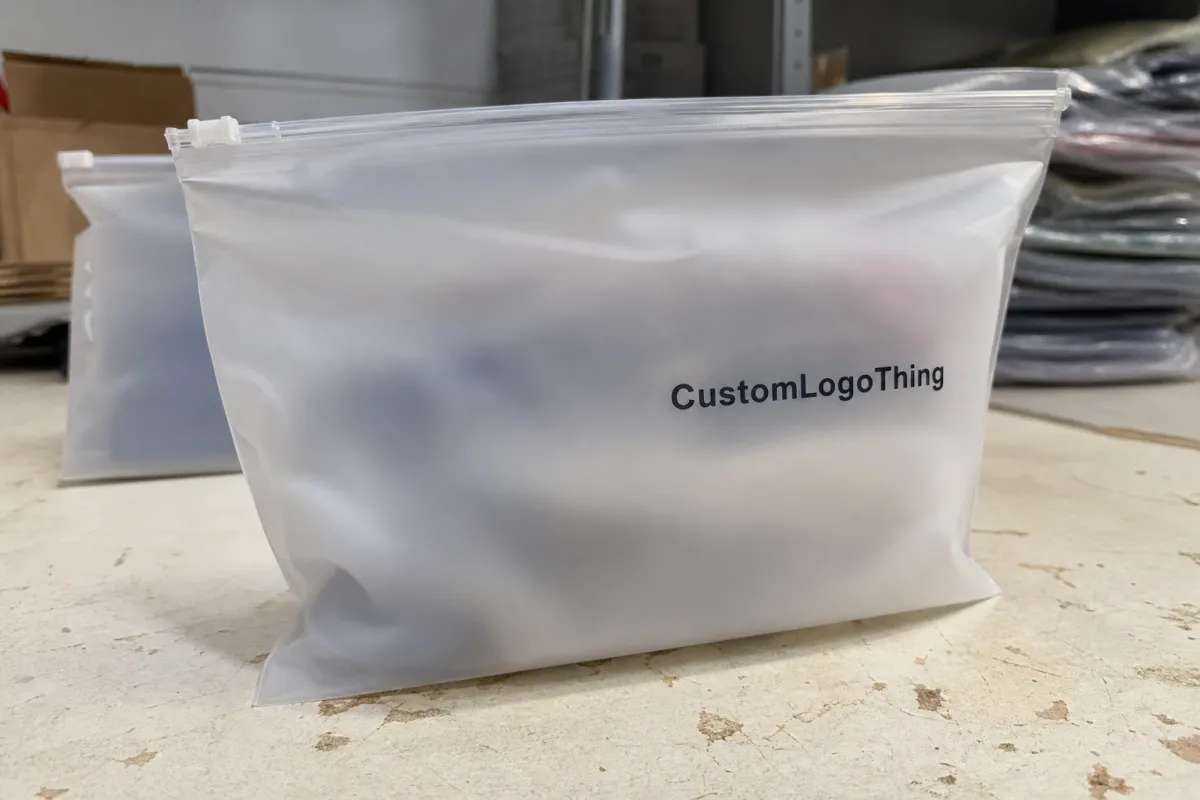
At the basic level, these are resealable plastic bags built from frosted PE or PP film, usually with a zipper closure and sometimes a bottom gusset or side gusset. The frosted finish is what gives them that soft, muted look. It diffuses light, hides surface scuffs better than clear film, and tends to make printed logos stand out more cleanly than buyers expect. In practice, the finish reads as intentional, which is exactly why it works so well for corporate gifting.
The build can be simple or quite specific. Some bags are flat pouches for flat inserts and cards. Others have enough structure to hold apparel, stationery, drinkware, or small merchandise bundles. A zipper bag may seem like a small choice, but the zipper profile, seal width, and film weight all influence the way the bag opens, closes, and sits on a desk or in a gift box. If the bag will be used for presentation, the surface and closure should support that role instead of fighting it.
Most buyers use them for:
- Employee welcome kits with shirts, notebooks, and access materials
- Conference giveaways that need a neat, reusable carrier
- Client appreciation gifts with inserts, samples, or small premium items
- Product presentation where visibility matters, but full transparency does not
- Retail-style gift packing where the bag sits inside a carton or shipping mailer
Here is the buying frame I would use: size matters, but the material spec is what decides whether the final piece feels sturdy, refined, or cheap. A 10 x 12 bag made from thin film can look tired the moment it is filled. The same dimensions in a heavier, better-closed bag can look properly premium without costing much more per unit.
How Frosted Film and Zipper Closures Perform in Use
Frosted film changes the way light lands on the package, and that subtle shift affects how a whole order looks on a table, in a meeting room, or inside a mailer. Clear bags show everything, including fingerprints, wrinkles, and whatever sits behind the product on a shelf. Frosted film hides a lot of that visual noise. The result is a batch that looks more consistent, even when the contents vary slightly from bag to bag.
The zipper matters just as much. A good zipper should close with a clean, even sound and require only moderate force to seal. Too stiff, and the bag feels frustrating. Too loose, and it can pop open during handling. For corporate gifting, repeated opening matters because people often repack, inspect, or reuse the bag after the event. If the zipper track is smooth and aligned, the bag behaves like a finished piece instead of disposable packaging.
Gussets and seals change usable volume. A flat bag is fine for cards, small fabric items, or lightweight inserts, but it can struggle with bulkier kits. Side gussets add width, bottom gussets improve standing stability, and a stronger side seal helps the bag keep shape after filling. If the product is heavy or has sharp edges, that extra structure also helps reduce puncture risk during packing and transit.
A good frosted bag should look quiet and intentional. It should frame the gift, not compete with it.
Compared with a mailer, pouch, or fully clear bag, Frosted Zipper Bags win when presentation is the lead requirement. They are not the answer for every shipping problem. If the package needs real drop protection, you still want a proper outer shipper, often made from corrugated cardboard. But for the layer that the recipient actually sees, frosted film often does the better job.
Material Specs That Change Strength, Clarity, and Print
A useful corporate gifting Frosted Zipper Plastic bags material spec guide should spell out film type, thickness, closure design, and print needs in plain language. That keeps the quote honest and makes the sample process much easier. The most common base choices are PE and PP. PE tends to feel softer and more flexible. PP usually feels a little crisper and can take a cleaner crease. Neither is automatically better; the right choice depends on the look you want and the weight of the contents.
Film weight and opacity
Film thickness is often listed in mils. For lightweight gift kits, 3 mil can be enough. For denser or sharper contents, 4-5 mil usually feels safer and more premium. Buyers should ask for a thickness tolerance, not just a nominal number, because a bag that measures “3 mil” on paper may not behave the same way across runs. Frosted opacity also matters. More translucency shows contents more clearly, while a heavier frost hides more and gives the bag a calmer appearance.
If sustainability is part of the brief, ask how the film is made and what is actually being claimed. Some bags use recycled materials, but not all recycled content is the same. If the project includes paper inserts, request FSC certified kraft paper where appropriate. That can strengthen the story without overstating what the plastic component can do. I would be cautious about calling the whole package biodegradable packaging unless every part of the system is actually designed and certified that way.
Closure and print details
The zipper profile, seal width, and tear notch all affect the user experience. A stronger zipper is worth paying for if the bag will be opened repeatedly or used for sample distribution. For print, solid logo blocks usually read better than hairline type on frosted film. White underprint can help a dark logo stay crisp. PMS matching is helpful if brand color accuracy matters, but it should be balanced against setup complexity and cost. Keep the safe print area away from seal lines, corners, and gussets so the artwork does not fold or distort after filling.
For buyers comparing one supplier to another, ask which standards they can reference for material testing. Tensile strength on thin film is commonly measured with ASTM D882, while shipping or pack-out testing often ties back to ISTA protocols. That is not paperwork for its own sake. It is how you separate a bag that only looks good from one that can survive real handling.
Cost, Pricing, and MOQ Drivers Buyers Should Compare
Pricing moves faster than most buyers expect because several variables stack on top of each other. Dimensions, film weight, zipper style, gussets, print colors, and packing method all change the quote. A small flat pouch with no print is far simpler than a large gusseted bag with a custom zipper and two-color logo. That is why a straight “price per bag” comparison can be misleading if the specs are not matched.
Here is a practical way to think about unit cost for a 5,000-piece order:
| Spec tier | Typical use | Indicative unit price | Notes |
|---|---|---|---|
| 3 mil, unprinted, flat | Light inserts, cards, samples | $0.18-$0.28 | Lowest setup burden; best for simple presentation |
| 4 mil, 1-color print, zipper | Employee kits, event swag | $0.24-$0.38 | Good balance of feel, branding, and cost |
| 4-5 mil, gusseted, 2-color print | Heavier gifts, retail-style packs | $0.32-$0.52 | More material and more setup, but noticeably better structure |
| Custom size, premium zipper, special packing | High-touch gifting programs | $0.40-$0.70+ | Often the best-looking option, especially with insert cards |
MOQ usually follows production efficiency. Standard sizes and familiar print setups can keep minimums lower. Custom dimensions, extra colors, or unusual zipper specs push setup time up, which often means a higher MOQ or a higher unit cost. That is not a penalty; it is simply how the run is being built. Buyers often miss the quieter costs too: art prep, sampling, freight, overrun and underrun allowances, and rush fees when the calendar tightens.
My simple rule is this: compare price against durability and presentation value, not against the cheapest quote on the page. A bag that saves three cents but tears at pack-out is not cheap. It is expensive in the wrong way.
Process and Timeline: From Art File to Finished Bags
The cleanest projects follow the same path every time: dimensions, material choice, artwork, proof, sample, and final signoff. If one of those steps is vague, the job usually slows down later. A buyer who can send a clear spec sheet and print-ready artwork will almost always get a better quote and fewer revisions than someone who only sends a logo and a rough size estimate.
Lead time depends on how complicated the order is. Simple stock-style specs may move in 12-15 business days from proof approval. Custom sizes, multi-color print, or unusual closure requirements can stretch that to 18-25 business days or more. Seasonal gifting windows and product launch dates also matter, because they compress the room for proofing and sampling. If the bags have to arrive with printed insert cards or nested components, add buffer time for those pieces as well.
The quality checks should be practical, not cosmetic. Test zipper engagement with the actual contents. Check seal integrity along the bottom and side seams. Confirm print placement on filled bags, not only on flat samples. If the bags will be packed in a ship-ready kit, I would also suggest a basic transit test using the package as it will actually ship, not as a bare bag on a table. That is where a standard like ISTA 3A starts to become useful, because the pack-out is what faces the real world.
For supply chains that include paper collateral or outer cartons, it is worth planning the whole stack together. A branded frosted bag inside an FSC certified insert set and a corrugated cardboard shipper usually feels more complete than a bag ordered in isolation and boxed later without a plan.
Common Spec Mistakes That Raise Rejection Risk
Most production problems are not dramatic. They are small misses that add up. The first one is quoting by bag size alone. A 10 x 14 bag sounds descriptive, but it does not tell you whether the film is 3 mil or 5 mil, whether the zipper is easy-open or tight, or whether the final fill weight will stretch the seams. Those details decide whether the bag survives real use.
Artwork mistakes are just as common. Logos placed too close to seal areas can distort or disappear once the bag is filled. Fine type often gets lost on frosted film, especially if the print sits over a busy insert. Missing bleed, wrong file format, or no white underprint can create delays that feel unnecessary but are easy to prevent. If the supplier asks for a vector file, send a vector file. That alone can save a round of proofing.
Another miss is approving a sample while it is empty. An empty bag can feel stiff, neat, and perfectly balanced. Once it is filled with a notebook, cable kit, or heavier item, the feel changes. The zipper may pull differently, the seams may bow, and the artwork may land in a different visual zone. Always test the bag with the actual contents before approving a full run.
Storage matters too. Bags shipped in crushed cartons, exposed to heat, or stored too long in poor conditions can warp before use. If the order sits in a warehouse next to hot equipment or direct sun, film memory can become a real issue. This is one reason the outer pack should be protected well, ideally in clean corrugated cardboard with sensible pallet stacking.
Expert Tips for Branding, Inserts, and Product Protection
For branding, frosted film works best when the message is calm and deliberate. Strong contrast helps. Centered graphics help. A busy layout usually does not. If the logo is sensitive, ask for a press proof or a pre-production sample on the actual bag material. A digital mockup is useful, but it cannot show how the ink will sit on translucent film once the light hits it.
I also like to design the insert card and contents together, not separately. A clean card in kraft paper or recycled paper stock can add structure without clutter. If sustainability is part of the packaging story, specify whether the paper should contain post-consumer waste and ask for FSC documentation where needed. That gives the gift a more credible materials story than vague green language ever will.
Protection details deserve attention too. A soft apparel kit needs a different bag than a gift containing pens, metal tools, or sample vials. Sharp edges may require thicker film or internal padding. Moisture-sensitive items may need a desiccant pouch. Heavier products often benefit from gussets, because the bag can distribute weight more evenly and avoid awkward bulging. If the contents are fragile, remember that the zipper bag is usually the presentation layer, not the final protective layer.
The best corporate gift packaging feels simple because the spec work was done carefully.
One last practical point: do not confuse “eco-looking” with eco-verified. A frosted bag can be paired with recycled materials, FSC certified paper, and responsible outer packing, but the plastic film itself is still a plastic film. If your customer expects biodegradable packaging, make sure the whole system supports that claim before printing it anywhere.
Next Steps: Build a Quote-Ready Spec Sheet and Order Plan
If you want a clean quote, send the supplier a spec sheet with exact dimensions, estimated quantity, film thickness, zipper style, print method, target ship date, and any insert or packing requirements. That is the fastest way to avoid vague back-and-forth. For corporate gifting, it also helps to include the contents themselves, because a bag that holds a folded shirt is not the same bag that holds a rigid box or a sample vial.
Ask for at least two sample configurations if the order has any real importance. One should show the preferred thickness or print approach, and the other should test the alternative you are considering. Side-by-side comparisons tell you a lot about feel, clarity, closure strength, and presentation. In my experience, the small difference between “acceptable” and “right” becomes obvious once the sample is in your hand.
Compare quotes on matched specs, not just on unit price. If one quote is based on 3 mil film and another on 4.5 mil film, that is not a price fight. It is a spec difference. The same goes for print coverage, zipper grade, and lead time. A careful corporate gifting frosted zipper plastic Bags Material Spec guide keeps those variables visible so you can choose with confidence and avoid rework, delays, and surprise costs.
What thickness works best for corporate gifting frosted zipper plastic bags?
3 mil is often enough for lightweight inserts and flatter gift kits, while 4-5 mil is better for denser or sharper contents. Ask the supplier for a thickness tolerance, not just a nominal spec, because feel and durability can vary by run. Always test the bag with the actual contents before approving a full production order.
Can frosted zipper plastic bags be printed with a logo for corporate gifting?
Yes, but contrast matters more on frosted film than on clear plastic, so solid graphics usually read better than fine detail. White underprint can help logos stay visible and crisp when the bag surface is translucent. Ask for a proof on the actual bag material, not just on plain paper or a digital mockup.
What affects MOQ and unit cost the most for frosted zipper gift bags?
Bag size, film thickness, zipper style, and the number of print colors usually move the quote fastest. Custom dimensions and special finishes often raise the minimum order because they add setup complexity. Larger runs usually lower the unit price because setup costs are spread across more bags.
How long does the process usually take for branded frosted zipper bags?
Simple stock-style specs can move faster than custom sizes, multi-color print, or special closure requirements. Proofing, sampling, and artwork approvals often take longer than buyers expect, so build that into the schedule. Add extra cushion for seasonal gifting windows, product launches, and event deadlines.
What should I send to get the fastest quote for corporate gifting frosted zipper plastic bags?
Send final bag dimensions, estimated quantity, product weight, artwork files, and the target delivery date. Note whether the bag needs to show the contents clearly or hide them more fully for a cleaner presentation. Include any packaging constraints, such as insert cards, hang tags, retail boxing, or special carton packing.


