Hotel buyers rarely lose money because they chose the wrong style on the first pass. They lose it because the hotel retail Frosted Zipper Plastic Bags Sample Approval Checklist was treated like a formality instead of a filter. A frosted pouch can look premium in a mockup and still come out cloudy, flimsy, or awkward in hand once the physical sample arrives. Under store lighting, those small misses get loud.
That matters because hotel retail packaging has to do several jobs at once. It needs to protect the product, present the brand cleanly, and fit the pace of staff handling. A bag that looks elegant on a render but sticks at the zipper or shifts color under warm light will create friction somewhere else in the process. Usually the friction shows up after the order is already in motion.
The practical lesson is simple: sample approval is not a paperwork step. It is the last chance to catch size drift, finish problems, weak closures, and print issues before they become inventory. The earlier those problems surface, the cheaper they are to fix. The later they surface, the more they look like a production problem instead of a spec problem.
Hotel Retail Frosted Zipper Plastic Bags Sample Approval Checklist: What the Checklist Catches
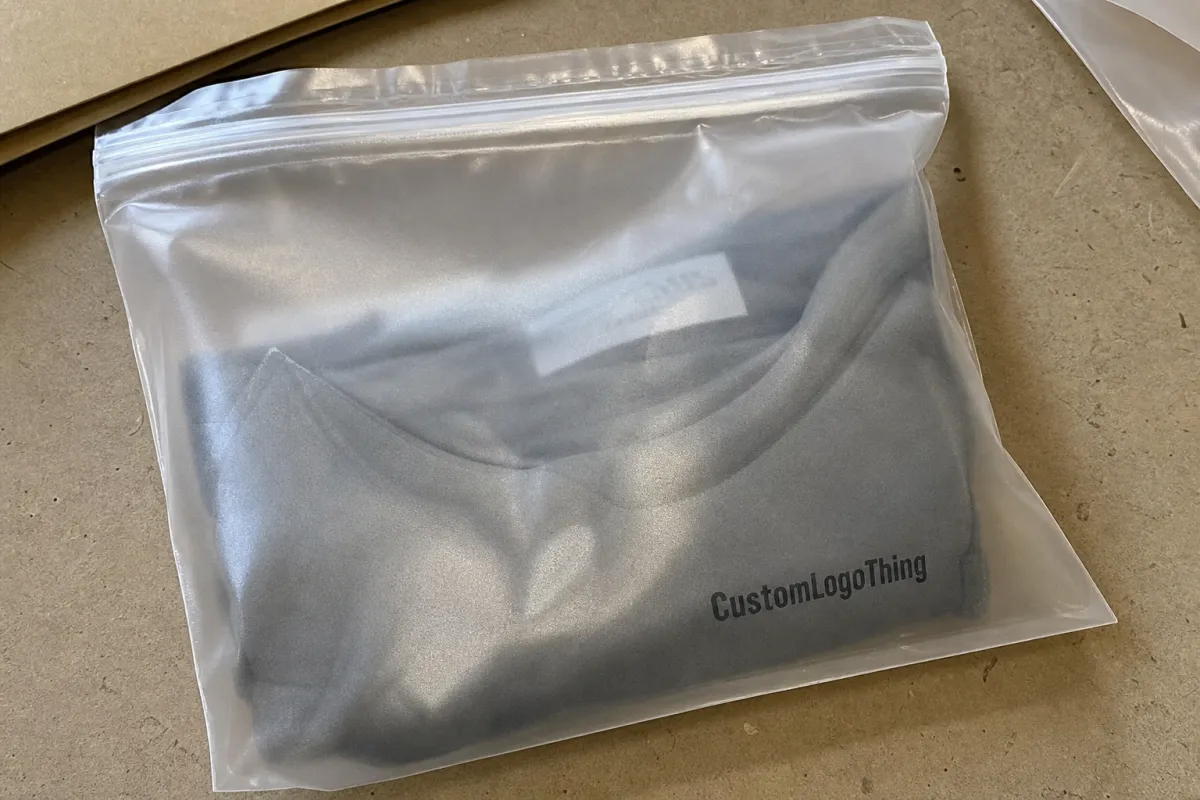
A good checklist catches spec drift while the cost of correction is still low. In Frosted Zipper Bags, the drift is often subtle: a bag that comes in 2 mm short, a zipper that feels stiff on the first open, a frosted surface that looks milky instead of clean, or print that loses contrast because the film opacity is off. None of that sounds serious on a quote sheet. On a shelf, it changes how the whole item reads.
The sample should be judged as a working package, not a sample of intent. For hotel retail use, the most reliable approval set is still the same five-point core: size, closure, finish, print quality, and handling. That means checking how the bag opens, whether the zipper reseals without force, how the frosted surface behaves under both warm and cool light, and whether fingerprints or scuffing show too quickly. Staff and guests both touch these bags, so the surface has to stay presentable after more than one glance.
There is also a commercial reality behind the visual one. The bag has to pack quickly, stack neatly, and look expensive enough to justify its place in a retail environment. If the zipper catches, packing speed drops. If the frost is too heavy, the product disappears into the film. If the print is too faint, the brand disappears instead. That is why this checklist belongs upstream of pricing discussions, not after them.
Baseline rule: do not approve a frosted zipper sample until the supplier confirms size tolerance, material gauge, zipper profile, print method, and pack format. If any of those change later, treat it as a new approval point. Small changes can alter the final look more than people expect.
For buyers who need a wider frame on packaging performance, standards groups and industry references are more useful than sales language. ISTA helps with shipping and transit-testing context, while packaging.org is useful for basic packaging terms and material language. Neither replaces a physical sample. They simply keep the conversation grounded.
How the Sample Approval Process Works
The cleanest approval flow is still the simplest one. The buyer sends a brief. The supplier confirms dimensions and structure. Artwork gets checked. A physical sample is made. The sample is reviewed internally. Then the final sign-off closes the loop. If a supplier tries to skip one of those steps, speed is probably being traded for ambiguity.
Each stage should answer one question. Does the bag fit the intended product? Does the zipper close properly? Does the print still look premium once it is on frosted film instead of on a screen? If the team starts debating quote language before the sample is right, the process has been inverted. A sample review should be practical, not ceremonial.
Sample approvals work best when procurement, merchandising, operations, and brand all have a voice. Procurement will catch cost exposure. Merchandising will notice shelf impact. Operations will see whether packing is efficient. Brand or marketing will spot the difference between a premium finish and a merely acceptable one. Leaving one of those groups out can produce a sample that passes on paper and fails on property.
It also helps to separate a revision from a new approval. A small artwork correction may only need a revised proof or corrected sample. A change in width, film thickness, zipper structure, or packaging format is more than that. Suppliers sometimes blur the distinction because it saves time. Buyers should not. If the structure changes, the approval changes with it.
- Brief: send dimensions, target material, zipper style, artwork files, and packaging requirements together.
- Proof: check copy, logo placement, barcode space, and any required regulatory text before sampling begins.
- Physical sample: inspect the actual bag under lighting that resembles the retail setting.
- Internal review: gather written notes from each stakeholder, not a quick verbal yes.
- Sign-off: approve one version only, with a dated record and photos.
Sample tip: keep one retained reference sample in the office or product archive. It saves arguments later, especially when a production lot arrives and the team remembers the approved sample differently.
Cost, Pricing, MOQ, and Quote Triggers
Price is rarely just price. Material thickness, frosted finish, zipper style, print coverage, insert cards, bag count per carton, and labeling all affect the quote. A 0.12 mm frosted PE bag with no print belongs in a very different cost bracket from a 0.18 mm custom pouch with two-color decoration and a branded insert. Comparing them as if they were interchangeable is how budget conversations get distorted.
For rough planning, Frosted Zipper Bags often land in these working bands: $0.10-$0.18 for simple stock-style items at higher volume, $0.18-$0.35 for custom sizes with basic print, and $0.30-$0.55+ for lower MOQ orders, heavier gauges, or more involved packaging. Those are not promises. They are realistic starting ranges. Final pricing moves with order quantity, decoration method, material choice, and whether the order is a standard format or a fully custom build.
| Option | Typical MOQ | Approx. Unit Cost | Best For | Tradeoff |
|---|---|---|---|---|
| Stock size, no print | 1,000-5,000 | $0.10-$0.18 | Fast replenishment, simple hotel retail use | Limited branding control |
| Custom size, 1-2 color print | 3,000-10,000 | $0.18-$0.35 | Branded hotel amenities or retail kits | Longer approval cycle |
| Heavier gauge, special zipper, insert card | 5,000+ | $0.30-$0.55+ | Premium presentation and frequent guest handling | Higher setup cost and tighter specs |
MOQ behaves in the expected way. Smaller runs carry more unit cost because setup is spread over fewer pieces. Larger runs lower the per-unit number, but they punish poor approvals. A wrong sample on 20,000 bags is not a minor issue. It is avoidable inventory.
Quote triggers are easy to miss. Custom dimensions can add tooling or setup time. Special zipper hardware may require a different lead time. Mixed-SKU orders can complicate packing and carton labeling. Individual sleeves, barcode stickers, and other value-added steps add labor one line item at a time. Freight then finishes the job of turning a low factory quote into a much higher landed cost. Buyers should compare landed cost per bag, not factory price alone.
“If the supplier gives you a clean price without a clean spec sheet, that is not a bargain. It is a guess with a logo on it.”
Process and Timeline: From Artwork to Approved Sample
The path from artwork to approved sample is usually straightforward, but it slows down for ordinary reasons: missing files, vague comments, and delayed internal review. For a clean custom order, a realistic timeline is often 7-12 business days for sample development after artwork confirmation, then another 2-5 business days for internal review if decision-makers are available. If the order requires a custom size, special print, or zipper change, the cycle can stretch to 2-4 weeks before approval is finished.
Stock-size samples move faster because the structure already exists. Fully custom jobs take longer because there are more places for interpretation to creep in. That is not always the supplier’s fault; sometimes the brief is simply under-defined. But every loose point in the brief becomes a delay later. Barcode placement, insert-card size, retail hang display, and carton configuration can all affect the sample turn if they are not decided early.
Time gets lost in predictable ways. The artwork file is missing bleed. The logo arrives as a low-resolution image instead of vector art. One buyer sends comments in three separate emails. Another assumes the zipper color is “obvious.” Then the first sample arrives and someone notices the frosting level was never confirmed. That is how a one-week task starts acting like a three-week problem.
For seasonal launches, hotel openings, and retail resets, build buffer time into the schedule. Not a symbolic buffer. A real one. If the launch date is fixed, sample approval should happen well before the production order is released. That leaves room for one revision without forcing a rushed compromise or an expensive freight upgrade.
- Lock artwork and text.
- Confirm dimensions, zipper style, and film thickness.
- Request the first physical sample.
- Review under real lighting and handling conditions.
- Approve or revise once, then freeze the spec.
Specs That Matter Most for Hotel Retail Buyers
Not every spec carries equal weight. Some are cosmetic. Others decide whether the bag feels intentional or forgettable. The critical pieces are dimensions, tolerance, film gauge, frosted opacity, zipper profile, and seal strength. If the bag is too small, the product looks forced. If the gauge is too light, the pouch collapses. If the frost is too heavy, the contents disappear. If the zipper profile is awkward, the user notices before the brand does.
Material choice matters too. Most frosted zipper bags in this category are built from PE-based film, though some programs use PP for a crisper feel or a different surface response. PE tends to feel softer and more flexible. PP usually reads stiffer and more rigid. Neither is automatically better. The right choice depends on the product weight, the way the bag is displayed, and how premium the retailer wants the package to feel in hand.
There are also display details that buyers underestimate. Is there enough room for a barcode or SKU sticker? Does the bag stand or lie flat the way the shelf requires? Can it take a hang-tab if the store wants peg display? Does the frosted surface still let the logo read clearly from three feet away? That last point matters more than people admit. In a retail setting, a bag that looks refined in a photo can disappear next to stronger competitors.
Frosted texture changes perception. That is the advantage and the trap. A light frost can look crisp and modern. A heavy frost can make the pack feel cheaper if the print is thin or the light is harsh. Two bags with the same artwork can present very differently because the surface treatment changes contrast. Review samples under warm hotel lighting and brighter retail lighting, not only under office fluorescents. Office light flatters nothing and clarifies less than people think.
A useful approval sample should also survive simple checks before the order is signed off:
- Fill test: load the intended product and confirm the bag does not distort the artwork.
- Grip test: handle the bag with dry and slightly oily fingers to see whether it still looks clean.
- Closure test: open and close the zipper 5-10 times to check consistency.
- Flat-pack test: verify the bag stacks without curling or buckling.
- Stain check: look for scuffs, haze, or fingerprints after handling.
For projects with sustainability claims, ask for documentation rather than assumptions. If inserts or secondary packaging use paper, FSC language should be checked at the source. The FSC site is the cleaner reference point for chain-of-custody terminology than a supplier’s marketing sheet. If shipping performance matters, testing references from ISTA are useful for transit context, especially for fragile or high-value retail kits.
Step-by-Step Approval: What to Review in Order
The best approvals follow the same order every time. First dimensions. Then structure. Then print. Then zipper function. That sequence matters because it keeps the team from getting distracted by the visual part before the bag has been proven fit for purpose. A strong logo on the wrong pouch is still the wrong pouch.
Start by measuring the bag against the approved spec sheet. Do not eyeball it. Check width, height, and gusset if there is one. Confirm the tolerance window, usually around plus or minus 2-3 mm for smaller bags and a little more for larger runs, depending on the supplier’s capability. If the sample misses size, stop there and revise. Do not talk yourself into a bad fit because the print looks nice.
Next, check the structure. Look at the seam, seal, and body thickness. Run your fingers along the edges. If the bag feels weak, that weakness will show up later in packing, display, or guest handling. A premium hotel retail item should not feel fragile before it even reaches the shelf.
Then move to print. Confirm logo placement, color density, and white ink or reverse-print behavior if used. Frosted surfaces change how color reads, which means the proof is only part of the answer. Compare the sample to the approved art under the same lighting that will be used in the store or hotel shop. If the print sits too high, too low, too pale, or too dense, mark it clearly.
Only after the visual checks pass should the zipper get detailed attention. Open it from one end to the other. Close it with one hand. Close it again with a full bag. If the closure feels rough, weak, or inconsistent, the sample is not ready. Hotel staff need a bag that works quickly; they do not need a small battle every time they package an item.
Document everything. Written notes and photos prevent the familiar “I thought we approved the other one” problem. Record the sample version, date, and requested changes. Then assign one final sign-off owner. Too many approvers slow the project down; too few create rework. The middle ground is usually best, and it works because it is boring.
Common Sample Mistakes That Waste Reorders
The fastest way to waste money is to approve from a screen. Photos help with artwork and layout, but they do not show zipper feel, surface stiffness, or true opacity. A digital proof can confirm placement. It cannot tell you whether the frosted finish reads clean or milky in person. That is why the physical sample still matters.
Ignoring tolerance is another expensive habit. A bag that is 4 mm short may still hold the product, but if the artwork shifts or the closure sits too tight, the finished piece looks sloppy. Buyers often miss that because the sample is judged flat on a desk rather than loaded the way it will be sold. The loaded version is the one that counts.
The phrase “close enough” is usually a warning sign. If the zipper feels wrong, if the opacity is off, if the pack count is inaccurate, or if the insert card placement is messy, the sample should not move forward just because the launch date is getting tight. Stress does not improve packaging. It usually exposes whatever was already weak.
Single-review approvals create another set of problems. One person may care mostly about branding, another about cost, and another about logistics. If only one of those views reaches the final decision, the order can pass with hidden issues. For visible hotel retail packaging, use at least one operational reviewer and one commercial reviewer. That is usually enough to prevent the obvious misses.
Finally, confirm the plain operational details before the order is released: insert cards, carton labeling, accessory placement, and SKU counts. These items do not get much attention, but they create the headaches when they are wrong. A lot of reorders happen because the attractive part was approved and the rest was assumed.
“If you need a second round because the sample was never checked under retail lighting, that is not bad luck. That is poor process wearing a suit.”
Expert Tips and Next Steps Before Final Approval
Turn the Hotel Retail Frosted Zipper Plastic bags sample approval checklist into a reusable sign-off sheet. Use the same structure, the same order, and the same pass/fail logic for every SKU. That consistency shortens supplier conversations and makes it easier to compare one run against another. It also reduces the odds that a detail gets judged differently because the reviewer was rushed or the sample looked familiar.
If a spec-critical item changes after the first approval, ask for a corrected sample or production sample before release. A small shift in zipper style, film thickness, or print method can change the final result more than expected. Minor changes often become major once a full run starts. The paperwork may be small; the effect is not.
Build a simple final approval rule. Dimensions within tolerance. Zipper closes smoothly. Print matches the approved art. Frosted finish reads clean under display lighting. Packing format matches the shipment plan. If one item fails, the sample is not approved. That approach protects the order from the kind of optimism that creates inventory trouble later.
For hotel retail buyers, the smartest posture is to treat sample approval as the last real gate before the purchase order goes live. Once the approved sample is archived, it becomes the reference for reorders, new runs, and supplier accountability. Keep the sample, keep the photos, and keep the written notes. Those records matter more than memory.
A tight approval process does not make packaging glamorous. It makes it dependable. That is the part that protects budget, timing, and shelf presentation at the same time. And for a product like a frosted zipper bag, that reliability is the whole point.
What should a hotel retail frosted zipper plastic bags sample approval checklist include?
It should cover dimensions, tolerance, capacity, zipper function, seal strength, frosted finish, print placement, retail presentation, and pack-out details. The strongest version also records lighting conditions and the person who signed off.
How many samples should I request before approving frosted zipper plastic bags?
Ask for at least one physical approval sample and one retained reference sample. If any spec changes, request a revised sample instead of approving the original. For larger rollouts, a backup sample is useful, not excessive.
What drives the unit cost most in hotel retail frosted zipper bag orders?
Material thickness, zipper style, frosted opacity, and print coverage usually carry the most weight. MOQ, packaging format, and revision count also affect cost. Custom sizing and insert cards can move the price quickly.
How long does the sample approval process usually take?
Simple stock-style samples can move in about 7-12 business days if artwork is final and the spec is clear. Custom sizes, print changes, or zipper revisions often add more time. Internal review is frequently the slowest part.
Can I approve a frosted zipper bag from photos or a digital proof alone?
No. Photos help with artwork screening, but they do not show zipper feel, stiffness, or true opacity. Use digital proofs for the art check, then verify finish, fit, and closure quality with a physical sample before approval.

