Frosted Zipper Bags can look right in a mockup and still fail when they are actually filled, handled, and checked at a front desk. The gap between screen and sample is where most avoidable costs appear: off-center logos, weak zippers, poor fit, or a finish that looks cleaner online than it does under studio lighting.
That is why the fitness studio frosted zipper plastic bags Sample Approval Checklist matters. These bags are not just packaging. They hold welcome kits, retail apparel, class prizes, and small merch bundles, so the sample has to prove both appearance and function. A good-looking bag that does not work is still a bad buy.
The safest way to review a sample is to treat it as a working product, not a design file. Frosted film softens edges and hides minor scuffs, but it can also make print issues harder to spot in a screenshot. A sample should catch those problems before they become a full production run.
Fitness Studio Frosted Zipper Plastic Bags Sample Approval Checklist
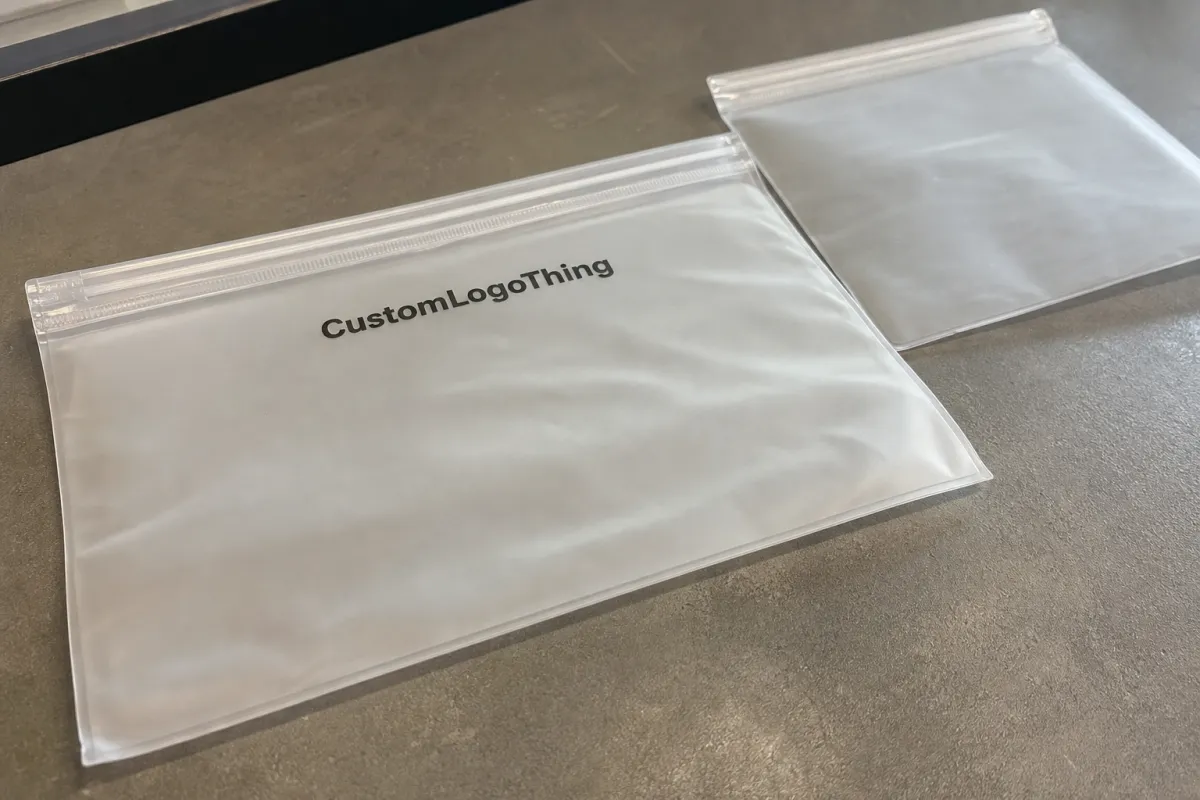
The first approval question is simple: would this bag work at the desk, in retail, or inside a member kit without extra explanation? If not, it is not ready. For a studio, the bag has to fit the contents, feel sturdy enough for repeated handling, and present the brand cleanly in real lighting.
- Fit: Does the usable interior size hold the actual contents without bulging?
- Closure: Does the zipper open and close smoothly more than once?
- Branding: Is the logo sharp, centered, and readable on frosted film?
- Durability: Does the material feel appropriate for the intended use?
- Presentation: Does the bag still look clean under retail lighting?
That last point matters more than many buyers expect. A logo that looks fine on a screen can show blur, shift, or low contrast once it is printed on translucent material. Frosted film hides some wear, but it also makes small registration errors more visible once the bag is in hand.
Always test with the real contents. A folded tee, rolled towel, resistance band set, or gift card insert changes how the zipper sits and how the bag drapes. If the bag is for retail merch, test more than one product combination so you do not approve a size that only works for one item.
"A sample that only works on a desk is a presentation piece, not an approval sample."
The core idea behind the fitness studio Frosted Zipper Plastic bags Sample Approval Checklist is simple: the approval should be specific, physical, and final. If it stays vague, the factory will fill in the gaps, and those assumptions usually cost more than the sample itself.
How the Sample Approval Process Works
Not every sample serves the same purpose. A digital proof checks layout and text placement. A physical sample checks film, zipper, and print behavior. A pre-production sample is the final confirmation before the main run begins.
- Digital proof: Confirms artwork positioning, text, and size callouts.
- Physical sample: Confirms the real material, zipper action, and print quality.
- Pre-production sample: Confirms the final specification before mass production.
Buyers run into trouble when layout approval and functional approval happen separately. Marketing may focus on logo placement while operations cares about packing speed and fit. Both views matter. It is better to settle those questions on a sample than after thousands of bags are already in production.
Set the approval rules before revisions start. Decide whether a written sign-off is enough, whether photo confirmation is required, and whether any change to artwork, zipper, or material restarts the timeline. Those details matter once sourcing begins.
For handling or transport checks, standard references such as ISTA can help if the bags will travel with kits or inserts. If the packaging includes cards or labels, FSC-certified paper is a practical option for studios trying to keep the whole pack consistent.
Cost, Pricing, and MOQ Factors That Change the Quote
Most quotes for frosted zipper bags combine several smaller costs: sample fee, setup or plate charge, material grade, zipper style, print method, packing, and freight. Buyers often compare only unit price, then wonder why the total is higher than expected. The full quote is usually accurate; the comparison was incomplete.
MOQ changes the math quickly. Smaller orders spread setup costs across fewer pieces, which raises the per-unit price. Larger orders usually lower unit cost because the same setup work is spread over more bags. A 300-bag studio launch and a 5,000-bag retail run will not price the same way, even if the artwork is identical.
| Option | Typical Use | Cost Impact | Buyer Tradeoff |
|---|---|---|---|
| Digital proof only | Artwork and placement review | Low or included | Good for layout, weak for function |
| Single physical sample | Standard approval step | Sample fee plus freight | Best balance of cost and confidence |
| Color-match sample | Strict brand color review | Higher fee and extra lead time | Useful when brand color is non-negotiable |
| Pilot run | Large launch or retail rollout | Highest upfront spend | Lowest risk before a big release |
Typical sample fees for custom frosted zipper bags often run about $40 to $150 for a standard physical sample, with color-matched or more complex samples sometimes reaching $80 to $250 or more. Freight is separate. On production orders, lighter film, one-color logos, and standard zipper colors usually sit at the lower end of the range. Heavier film, multi-color art, custom zipper colors, and special inserts push the price up.
Material grade matters too. A 4 mil bag may be enough for light giveaways or inserts. A 6 mil or 8 mil bag feels sturdier and is usually better for apparel, repeat use, or anything that has to survive locker-room handling. Thin film can save a little money, but it can also make the product feel disposable.
Separate sample charges from production pricing. A factory may quote a low sample fee and a higher production rate, or the reverse. Ask whether a revision changes the tooling, the material minimum, or only the file. Those are different issues, and they should not be treated the same.
Production Steps and Turnaround After Approval
After approval, production should follow a predictable sequence: final artwork lock, material sourcing, printing, forming and sealing, then inspection and packing. Problems usually start when someone changes the spec after sign-off.
A realistic production window for custom frosted zipper bags is often 12 to 20 business days after written approval, depending on order size, print complexity, and component sourcing. That estimate covers factory work only. Shipping adds more time, and air freight and sea freight are not interchangeable.
Turnaround gets longer if the order includes custom zipper colors, thicker film, specialty frosted textures, or revised artwork after approval. A small edit can reset the schedule if it affects components or print setup. That matters when the bags are tied to a studio opening, campaign, or merch drop.
For planning, the shortest path is a standard size, standard zipper, simple logo, and one clean approval round. The middle path is a custom print on standard frosted film. The longest path adds custom colors, heavier gauge material, and multiple revisions. Approval timing matters almost as much as order timing.
What to Check on Size, Material, Zipper, and Frosted Finish
Size is the first check, but it should not be the only one. A spec sheet can look correct while the usable interior still feels tight once real products are inserted. Measure the opening, depth, and any gusset expansion. A bag that is technically right on paper can still fail if it bulges or pinches the zipper track.
Size and Fit
Test the sample with the exact item or bundle the studio plans to use. If the bag is for folded apparel, use the same fold method staff will use. If it is for kits, pack the full combination, including cards or inserts. A small difference in fit is easy to ignore on paper and obvious in hand.
Material Thickness
Film thickness is usually described in mils or microns. Thin film works for lightweight inserts or low-touch giveaways. Thicker film is better for repeated handling, merch sales, or anything likely to be reused. If the bag is meant to feel premium, flimsy film is the wrong place to save money.
Zipper Quality
Open and close the zipper several times. Check the start point, corners, and closure line. A weak zipper may seem fine once and then snag later. If the bag uses a locking zipper or double-track style, confirm both sides seal evenly. A zipper problem makes the whole bag feel lower quality.
Frosted Finish and Print
Inspect the sample under bright light and, if possible, under the same lighting used at the studio front desk or retail shelf. Frosted film reduces glare, but it can also soften fine text. Small logos, thin lines, and low-contrast artwork deserve extra caution. Bold marks with clear margins usually survive the material better than delicate designs.
Print registration is easy to underestimate on translucent film. A design that looks centered in a PDF can still feel slightly off in hand. The eye notices imbalance faster on frosted material, so the sample checklist should treat placement as a physical issue, not just a digital one.
Common Mistakes That Delay Orders or Waste Budget
The same mistakes appear again and again because they feel minor in the moment. First, buyers approve from a screen and never touch the sample. That saves time now and can cost far more later. Digital proofing is useful, but it does not replace checking fit, zipper feel, and print on real material.
Second, the buyer changes artwork after approval. Even a tiny edit can change the plate, layout, or schedule. If the change affects color or placement, it may require a new sample. That is inconvenient, but it is still cheaper than printing the wrong version.
Third, too many people approve separately. Marketing wants logo clarity, operations wants packing efficiency, and finance wants the invoice stable. If each group sends changes on its own, the project turns into a moving target. One owner should collect comments and release one decision.
Fourth, buyers ignore how frosted film behaves. Frosted surfaces do not hide weak typography. Very fine text, pale colors, and hairline details often lose legibility on translucent plastic. A simpler design with stronger contrast usually performs better than a detailed one.
- Screen-only approval: misses zipper feel and actual fit.
- Late artwork edits: can reset setup and delay shipment.
- Too many approvers: creates mixed instructions and duplicate revisions.
- Undersized specs: force bulging, curved seams, or poor closure.
- Weak typography: disappears or blurs on frosted film.
Keep the approved sample. A sealed reference sample helps with reorders, disputes, and spec matching. Without it, everyone argues from memory, and memory is not a reliable production spec.
Expert Tips for Cleaner Approvals and Reorders
The cleanest approvals are the ones with fewer moving parts. Finalize the artwork before sample review and use one contact to gather feedback. That alone removes a lot of back-and-forth. Mark the sample with the date, version, and any agreed exceptions, especially if the order includes a custom zipper color or insert.
Photograph the sample under neutral light from the front, side, and closed position. Include one photo with the actual contents inside. Those images become useful later if a reorder needs to match the first run exactly. The first order may survive on memory; the second usually does not.
Ask the supplier to confirm the material spec in plain terms: film thickness, zipper style, finish type, print method, and carton count. A “frosted zipper bag” can describe many structures if the spec is loose, so a clear written record keeps reorders from drifting.
If the bag will be used for seasonal promotions, consider a slightly more durable spec than the minimum. A bag used for a photo shoot only needs to look perfect once. A bag used for customer handoff needs to survive handling. Those are different use cases, even if the artwork is the same.
The strongest fitness studio Frosted Zipper Plastic bags sample approval checklist is short, physical, and specific. It should say what was approved, what was excluded, and what cannot change without a new sign-off. That keeps future reorders cleaner and reduces the chance that the second run drifts from the first.
Next Steps Before You Approve the Sample
Before you approve the bag, run one final pass with the actual contents, the final artwork, and the real lighting the customer will see. Check the closure again, compare the sample against the written spec, and make the decision based on the finished object rather than the mockup.
If something feels off, pause. A 1 mm error on paper can be invisible in a mockup and obvious in the hand. A slightly loose zipper may pass once and annoy staff after repeated use. A frost level that is too cloudy can dull the logo in retail light. Packaging is full of small misses, which is why the checklist exists.
Once approved, store the sample with the order record. Note the date, version, and any exceptions. The next reorder will move faster if the team can compare against an actual reference instead of rebuilding the specification from scratch.
FAQ
Can a fitness studio approve frosted zipper bag samples from a PDF alone?
You can approve artwork placement from a PDF, but not the full product. A PDF cannot show zipper feel, actual film thickness, or how the logo behaves on frosted plastic. For final approval, a physical sample is the safer standard.
What is the most common reason a sample fails?
Size mismatch is the most common issue. The bag may be close on paper, but once a real towel, tee, or kit is inserted, the closure feels tight or the print shifts. Zipper issues and low-contrast artwork follow close behind.
How thick should the material be for studio merch?
For light inserts or giveaways, thinner film may be acceptable. For apparel, repeat use, or premium merch, a thicker spec in the 6 to 8 mil range usually feels better and lasts longer. The right answer depends on the item weight and handling.
How long does approval usually add to the timeline?
Approval itself can be fast if the decision makers are aligned. The larger delay usually comes from revisions. One sample round may add a few days; multiple revisions can push the order back by a week or more before production begins.
Should the studio keep the approved sample?
Yes. Keep it with the purchase record. A retained sample helps with reorders, quality disputes, and spec matching. It is one of the simplest ways to avoid drift on future runs.

