The ecommerce brand Frosted Zipper Plastic Bags Sample Approval Checklist is not paperwork for the sake of paperwork. It is the point where a concept becomes a purchase decision. A frosted bag can look clean on a screen, then reveal haze variation, scuffs, crooked print, or a zipper that starts smooth and turns gritty after a few openings. For an ecommerce brand, that matters because the bag is doing more than protecting a SKU. It is carrying brand identity, shaping customer perception, and setting the tone for the unboxing experience before the product is even touched.
That is why the sample should be treated as a production test, not a courtesy sample. If the finish shifts under warehouse lighting or the logo disappears against the translucent film, the issue is no longer cosmetic. It can affect brand recognition, packing speed, return rates, and launch timing. A good checklist catches those problems before they become cartons, freight, and rework.
Why the ecommerce brand frosted zipper plastic bags sample approval checklist Matters
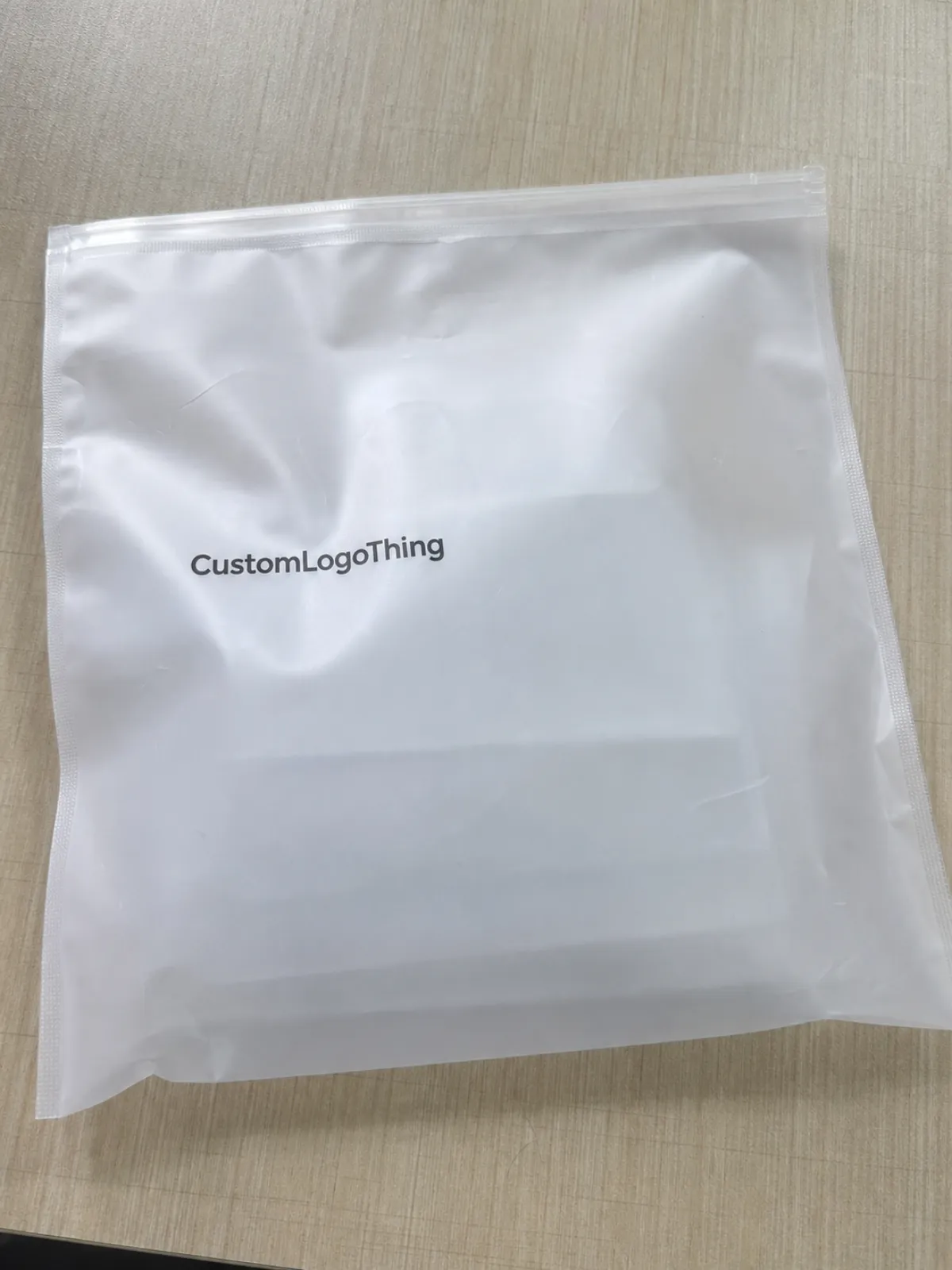
Frosted Zipper Bags are harder to approve than plain clear pouches because the surface changes what the eye sees. Frosting softens contrast. It can make a premium logo look understated or, if the print is off, make it look washed out. Light matters too. The same bag may look crisp under daylight, muted under warm LEDs, and slightly gray under warehouse fluorescents. The checklist exists to separate the rendered mockup from the actual object in your hand.
From a buyer's perspective, the sample is also a risk check on operations. A pouch that looks beautiful on a desk can still fail when it moves through a fulfillment line, gets stacked in cartons, or sits in storage for weeks. If the zipper drags, if the seal line is weak, or if the bag is a few millimeters off, the problem shows up later as slowed packing, damaged goods, or a customer noticing a flaw immediately. That is a brand issue, not just a packaging issue.
Margin matters as well. A frosted finish usually adds a premium feel, but premium only works if the bag still behaves like a production item. Approving too quickly can lock in an attractive-looking spec that hurts labor time, shipping efficiency, or replacement rates. The checklist protects both visual branding and unit economics.
There is a simple reason experienced buyers insist on a physical sample: translucent materials distort judgment. A logo that looks balanced in a PDF may sit too close to a seal line once the bag is built. A soft gray film can make a product inside look brighter, duller, or warmer than expected. Those shifts are subtle, but subtle is where costly misses hide.
Sample Approval Process, Timeline, and Lead Time
Use the ecommerce brand frosted zipper plastic Bags Sample Approval Checklist as a workflow, not a single yes-or-no moment. The cleanest path usually starts with an artwork proof, then a digital mockup, then a physical sample, then consolidated revision notes, and finally signed approval. That sequence sounds orderly. It rarely stays that way unless one person owns the decision and every revision lands in one place.
A realistic timeline often looks like this:
- Request and spec confirmation: 1 to 2 business days if dimensions, thickness, zipper style, and artwork files are ready.
- Sample build: 3 to 7 business days for a straightforward pouch, longer if print setup or tooling changes are needed.
- Transit: 2 to 5 business days, depending on route and courier choice.
- Internal review window: 24 to 72 hours if one person consolidates feedback.
- Revision cycle: 3 to 7 business days for corrected artwork, size tweaks, or closure changes.
- Production release: often 12 to 20 business days after final sign-off, with larger runs stretching longer.
The review window matters more than most teams expect. When brand, design, operations, merchandising, and procurement all comment on different copies of the sample, the process becomes muddy fast. One person wants darker print. Another wants a wider zipper pull. A third notices the barcode overlaps the brand mark. Suddenly there are multiple versions in circulation, and no one is sure which one the supplier should build. Assign one owner, gather comments once, and make the sign-off traceable.
Best practice: approve from one physical sample, one annotated proof, and one final decision owner. Everything else invites confusion, and confusion is expensive.
Frosted Finish, Zipper, Seal, and Print Specs to Verify
The first question is basic: does the bag match the drawing? Measure width, height, gusset depth if present, zipper location, and any hang hole or tear notch. A tolerance of 1 to 2 mm may be acceptable on some styles, but a custom fit for apparel, beauty, or subscription inserts may need tighter control. If the bag is supposed to frame a product neatly, a few millimeters can change how premium it feels.
Then test the functional parts. Open and close the zipper repeatedly, not just once. A closure that feels fine on the first pull may snag after 10 or 15 cycles. Check whether the seal line is even from end to end. Look for weak corners, uneven trimming, and any spots where the film appears stretched. If the bag will travel inside a shipper or mailer, compare the sample against the handling logic used by ISTA test methods so the sample is not judged in a vacuum.
- Frosted opacity: confirm that haze is consistent across the front, back, and side seals.
- Color shift: check print under daylight, LED, and warehouse lighting.
- White ink coverage: verify underlay strength if the logo sits on translucent film.
- Barcode and QR readability: scan from normal packing distance, not just a close-up view.
- Edge finish: watch for burrs or rough cut lines that could affect handling.
- Fit with product: put the actual item inside and confirm it still looks balanced and premium.
One subtle issue often gets missed: a frosted bag changes the product inside too. That matters if the item has strong color, reflective surfaces, or small printed details. A muted pouch can elevate one product and dull another. In other words, the bag is part of the presentation, not just the carrier of it.
If your decoration depends on a translucent effect, ask for sample photos in standard light, not only polished studio images. The final call still belongs to the physical sample, but documentation helps compare versions later if a revised run arrives looking different.
Pricing, MOQ, and Quote Details to Confirm Before Approval
Pricing should be checked in layers. The sample fee is only one part of the picture. Confirm plate or tooling charges, print setup, freight, duties, and any rush fee if the launch calendar is tight. A sample that looks inexpensive can still sit inside a quote with expensive production terms.
MOQ, or minimum order quantity, deserves early attention because frosted zipper bags often price very differently at 1,000, 5,000, and 20,000 units. At lower volumes, the unit price may stay high because setup costs are spread over fewer pieces. At higher volumes, the price per unit can drop sharply, but only if the approved spec stays stable. A small change in thickness, zipper style, or print coverage can move the quote again.
| Sample Path | Typical Sample Fee | Typical MOQ Impact | Indicative Unit Price at Volume | Best Use |
|---|---|---|---|---|
| Stock frosted zipper bag, unprinted | $15-$35 plus freight | 500-1,000 units | $0.08-$0.16 each at 5,000 units | Function check and size validation |
| Single-color printed bag | $40-$90 plus freight | 3,000-5,000 units | $0.18-$0.28 each at 5,000 units | Basic brand launch and logo verification |
| Custom size with full print coverage | $60-$150 plus freight | 5,000-10,000 units | $0.22-$0.45 each at 5,000 units | Premium brand presentation and custom fit |
Those figures are directional, not universal. Film gauge, zipper profile, print coverage, and shipping lane all matter. Still, they show why the cheapest sample does not always win. A low sample fee can hide a weak production price, and that is a poor trade if the bag is part of a high-volume ecommerce program.
Ask whether approval locks the price or only the design. Some suppliers hold a quote for a fixed window. Others reserve the right to reprice if resin, freight, or exchange rates move. That is normal, but it should be clear before the PO is released. If your team is comparing suppliers, put sample fee, production MOQ, unit cost, and lead time side by side instead of judging on one line item.
Common Sample Approval Mistakes That Trigger Reorders
The most expensive mistake is approving from photos alone. Screens flatten texture, hide small scuffs, and make translucent film look more uniform than it really is. If you cannot touch the bag, you cannot judge zipper resistance, seal quality, or the way the frosted surface handles fingerprints and light reflection. For anything branded, that is a real blind spot.
Another common error is testing only one sample. Variation can appear between pulls, cavities, or separate build lots. If the first sample has a perfect zipper and the second feels stiff, the difference may seem small. In production, that small difference can become a packing bottleneck or a wave of customer complaints.
- Ignoring bleed and safe area: artwork can shift closer to the seal than the mockup suggested.
- Overlooking translucent ink density: some colors read darker or lighter on frosted film.
- Skipping real product fill tests: a flat empty bag is not the same as a loaded bag.
- Forgetting barcode behavior: codes that scan in the office may fail under warehouse glare.
- Leaving revision notes scattered across email threads: this creates version confusion and delays.
The biggest operational miss is not using the bag in the same environment where it will actually perform. A pouch that seems fine on a clean table may fail in a fast packing line, in cold storage, or in a humid stockroom. If the product will go to fulfillment staff, build the review around real conditions. That is the difference between a nice-looking sample and a reliable production spec.
Expert Tips for Cleaner Approvals and Fewer Delays
A good checklist is concrete. It should separate pass/fail items from subjective comments. "Zipper closes smoothly" is useful. "Feels premium" is not enough on its own. Keep a notes field for preferences, but make the core decision hinge on measurable points: dimension, closure behavior, print alignment, finish, and fit.
Review the sample in the actual packaging environment whenever possible. That means warehouse lighting, the product inside the bag, the carton or mailer it ships in, and the speed at which a picker or packer will handle it. If the bag is part of a subscription kit, test it alongside inserts and any secondary packaging so the finished set looks intentional. The unboxing experience depends on that coordination.
Practical rule: if a sample only looks good in a styled photo, it is not approved yet.
Standardize photos of the approved bag from front, back, side seal, zipper close-up, and loaded product view. Those images become the comparison set for future runs, and they make it easier to spot drift later. This also helps when a new team member takes over procurement or when a second supplier is being benchmarked. You are not relying on memory; you are relying on a reference.
One useful discipline is to mark which defects are cosmetic and which are functional. A tiny haze variation may be acceptable on a low-cost accessory pouch. A weak zipper is not acceptable on a reusable bag that customers will open many times. The distinction sounds obvious until a rushed launch turns every issue into a yes-or-no debate. Separate the categories before that happens.
Document Control, Version Tracking, and Sign-Off Records
Document control is where many sampling projects quietly succeed or fail. Every artwork file, dimension change, supplier note, and approval image should be tied to one revision number. If you call the sample "final" in one email and "version B" in another, you are building confusion into the process. That matters later if a shipment arrives with a different print layout or if operations needs to prove what was approved.
Keep the records in one folder with a simple structure: artwork, supplier correspondence, sample photos, markup notes, and final sign-off. Name files so they still make sense six months later. For example, frosted-zipper-bag-qty5000-rev03-approved is better than finalfinalnewnew. It sounds obvious. It is also where teams lose time.
Retain the master sample. The physical bag is the reference point if a later production run drifts from spec. If the zipper feels different, if the print shifts, or if the frosted finish turns glossier than approved, the master sample tells you whether the change came from production or from the spec sheet being rewritten midstream. That evidence matters when procurement, operations, and the supplier all remember the project differently.
For packaging teams focused on brand consistency, this is not bureaucracy. It is the paper trail that protects margin and customer experience. A polished bag is only useful if the approved version can be proven, repeated, and checked against the next shipment. The simplest projects are often the ones with the cleanest records.
Next Steps After Approval and Final Order Release
Once the sample clears the checklist, freeze the artwork, send the signed approval file, confirm the purchase order, and set the production start date. That sounds administrative, but it is the moment the project shifts from debate to execution. If you leave the file open for one more small tweak, you can erase the certainty you just created.
Then align on inbound inspection. The first bulk shipment should be checked against the approved sample, not against someone's memory of it. Define what gets measured, how many units are sampled, and what counts as a defect. A 5-piece visual check may be fine for a small launch; a larger roll-out may need more formal incoming QC with measured tolerance bands and scan tests.
Build a backup plan for late changes. If a logo needs to move, if the zipper color changes, or if packaging law or label content shifts, define who can stop production and how quickly that decision must happen. Delays often come from ambiguity, not from the change itself. One owner, one deadline, one approval path keeps the process moving.
From a packaging buyer's point of view, the best approval is the one that feels almost uneventful. No second-guessing. No hidden surprises. No scramble when cartons land. That is why the ecommerce brand Frosted Zipper Plastic bags sample approval checklist belongs before the PO is released, not after the first pallet is already in motion. Get the sample right, and the rest of the launch has room to breathe.
Frequently Asked Questions
What should an ecommerce brand check first on a frosted zipper bag sample?
Start with dimensions, zipper action, and seal strength because those affect fit and function immediately. Then review print placement, opacity, and how the frosted finish changes the look under bright light. If the bag will hold a product, test it loaded, not empty.
How many sample rounds are normal before approval?
One round can be enough for simple unprinted bags, but printed or custom-sized bags often need a revision cycle. A second round is common when the first sample reveals artwork, closure, or sizing adjustments. The goal is not to collect samples; it is to lock the spec.
What cost items can change after sample approval?
Material price, print setup, freight, and rush charges can move if specs change or the schedule tightens. MOQ and unit pricing may also shift if the approved version uses different thickness, finish, or decoration. Always confirm whether the quote is fixed or time-limited.
How long does frosted zipper bag sampling usually take?
Timing depends on artwork readiness, sample complexity, and transit time, but revisions add the most delay. The fastest path is a clean first proof, one decision-maker, and a fixed review deadline. If those three pieces are in place, the schedule is usually much easier to manage.
What if the sample looks right but the zipper feels weak in use?
Do not approve it yet; run repeat-open tests and compare the closure feel against a known good reference. Ask whether the zipper profile, material thickness, or sealing parameters need adjustment before production. A weak closure is a functional defect, even if the bag photographs well.

