A review of Ribbed Winter Beanies for corporate gifting usually gets clearer than a review of many apparel items, because one-size headwear removes some of the sizing risk before production starts. The rib structure adds practical value too: it stretches, recovers shape, and gives the cuff a clean area for branding. That makes the item easier to quote, easier to pack, and easier to hand out in winter programs.
From a buyer's perspective, the appeal is simple. The piece needs to feel useful, arrive in good condition, and hold up through a season of commuting, travel, office wear, or event use. Ribbed beanies tend to satisfy those requirements without forcing the budget into premium territory. They work well for employee kits, customer gifts, holiday mailers, and event giveaways because the perceived value is solid even when the format is familiar.
They also give decorators a stable canvas. A folded cuff can hold a logo in a predictable spot, and the texture helps mask minor variation better than a flat knit. That does not remove the need for careful proofing, but it does make the final result easier to control.
Why Ribbed Winter Beanies Make a Strong Corporate Gift
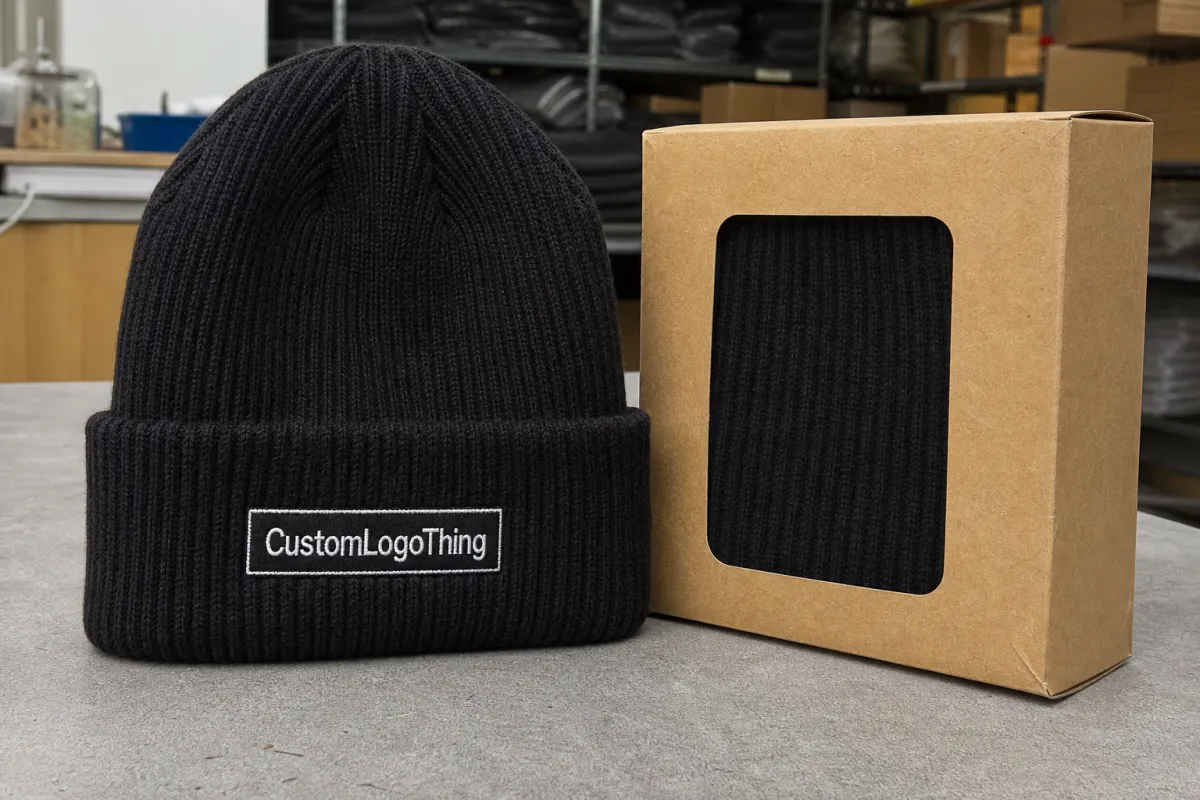
Ribbed knit is useful because it combines stretch with structure. The vertical ribs help the beanie fit a wider range of head sizes without becoming baggy, which matters when one size has to work across a mixed audience. A beanie that fits too loosely can look inexpensive; one that fits too tightly is less likely to be worn.
The knit also helps the item hold its shape after folding, packing, and shipping. A cuffed beanie usually sits more evenly than a softer, less structured cap, so it tends to open well in a box or on a desk. For gifting, that first impression matters nearly as much as the comfort of the item itself.
Wearability is another reason these caps perform well. People use them during commutes, errands, outdoor work, travel, and weekend activities, so the logo gets repeated exposure. That is a stronger return than novelty swag, especially when the goal is a practical item that keeps the brand visible beyond the day it is handed out.
Ribbed knit can hide small production variation better than smoother knit structures, which is one reason the finished item often looks more controlled in hand.
- Employee welcome kits: easy one-size fit, simple packing, low exchange risk.
- Customer gifts: warm, useful, and more likely to be worn than discarded.
- Event giveaways: winter-relevant, easy to stack, and fast to distribute.
- Holiday programs: a natural fit for seasonal mailers and appreciation boxes.
For most buyers, the best result comes from a restrained design rather than oversized branding. A clean logo on the cuff usually reads more premium than a crowded decoration spread across the knit.
Corporate Gifting Ribbed Winter Beanies: Unit Cost, MOQ, and Quote Variables
A useful Unit Cost Review starts by separating the blank beanie from the full landed order. The blank cap is only one part of the bill. Yarn blend, knit density, cuff depth, decoration method, packaging, carton count, and freight can all move the final cost. A quote that looks cheap at first can change once these pieces are included.
Quantity changes pricing in a predictable way. A 250-piece order usually carries a higher per-unit cost than a 1,000-piece run because setup charges are spread across fewer items. Larger orders often reduce the unit cost again. That said, the lowest price is not always the best value if the knit is thinner, the cuff is weaker, or the decoration is poorly controlled.
For decorated ribbed beanies, the quote usually reflects the method used to mark the garment:
| Decoration Method | Typical Setup Charges / Tooling Fees | Common Use Case | Approx. Added Cost Per Piece |
|---|---|---|---|
| Flat embroidery | $35-$85 | Simple logo, clean corporate branding | $0.70-$1.80 |
| Woven patch | $60-$150 | Small text, sharper detail, retail-style finish | $0.90-$2.20 |
| Rubber patch | $85-$220 | Bold logo, high contrast, outdoor feel | $1.10-$2.75 |
| Sewn label | $25-$60 | Low-cost branding, subtle recognition | $0.35-$0.90 |
These are starting ranges, not fixed rates. Stitch count, patch size, thread changes, and artwork complexity can move the numbers quickly. A small logo with limited colors is usually easier to execute than a detailed mark with thin lines or gradients, and simpler art tends to read better on ribbed fabric.
MOQ depends on the blank, the decoration method, and whether the supplier is working from stock or custom production. Simple embroidered beanies on a stocked blank may start around 100 to 250 pieces. Custom-dyed yarn, molded patches, or unusual color matching usually push the MOQ higher because setup becomes more involved. Smaller quantities can work for pilot programs or department-level orders, while larger runs usually improve the unit cost and consistency.
Packaging and freight should be treated as cost items, not afterthoughts. A loose bulk shipment is cheaper than a beanie packed in an individual polybag or retail insert, but the presentation changes. If the order is going into a welcome box or a partner mailer, the packing method should match the rest of the kit.
A useful quote should separate the following:
- Blank beanie cost by quantity tier
- Decoration method and stitch count or patch size
- Setup charges and any artwork fees
- Packaging cost, from bulk packing to retail-ready sleeves
- Split shipping or multi-location delivery fees
- Rush service, if the schedule is tight
Process and Timeline for Bulk Beanie Production
The production sequence is straightforward: specification review, artwork submission, proofing, production, inspection, packing, and shipment. Each step matters because unclear input at the start tends to show up later as delay or rework. Buyers Should Ask for a firm ship date tied to a specific milestone, usually proof approval or deposit confirmation, rather than a loose estimate.
Decoration choice has a real impact on timing. Flat embroidery on a stocked acrylic blank is usually faster than a molded patch that needs tooling or a woven patch that requires its own approval cycle. If the supplier has to source a special yarn color, revise artwork several times, or alter packaging, the schedule can move again. A standard order may ship in about 12 to 15 business days after proof approval, while complex runs or peak-season demand can stretch that to three to five weeks.
Seasonality matters. As winter demand rises in late summer and fall, inventory turns faster, lead times widen, and suppliers become less flexible with last-minute changes. If the beanies have to land before a holiday mailer or January event, it helps to lock the artwork early and confirm what the ship date is actually based on.
Transit protection also deserves attention. A beanie is soft, but cartons can still arrive damaged if packing is weak. Inner bags, carton strength, and label placement all affect how the order lands. For kit programs or multi-item mailers, buyers should ask how the supplier handles carton testing and packing discipline.
The most useful lead-time question is not “how fast can you ship?” It is “what happens between proof approval and the truck leaving the dock?” That answer usually tells you more about reliability than the headline ship promise.
Specification Checklist for a Reliable Winter Headwear Order
The easiest way to avoid rework is to lock the specification before the quote is finalized. Ribbed Winter Beanies may look simple, but the finished piece changes a lot depending on yarn content, knit gauge, cuff depth, fit, and decoration zone. If those choices are set early, pricing is cleaner and production is easier to control.
Material is the first decision. Acrylic is common because it is consistent, warm enough for regular use, and budget-friendly. Polyester can improve durability and color stability. Wool blends add warmth and softness, but they usually raise the unit cost. Recycled yarns are increasingly common in corporate gifting, especially when sustainability claims are part of the brief, but those blends still need review for softness, stretch recovery, and color consistency.
- Yarn content: acrylic, polyester, wool blend, or recycled blend
- Gauge and density: tighter knits usually look cleaner and hold shape better
- Cuff height: the cuff creates the main branding area
- Fit range: confirm unisex sizing and stretch recovery
- Logo size and placement: keep the mark readable across the rib texture
- Packaging style: loose bulk, individual polybag, folded insert, or gift box
Decoration specs deserve the same attention. A small embroidered logo may require 3,000 to 5,000 stitches, while a woven or rubber patch should be specified by width and height, not by a vague label like “medium.” Ribbed fabric changes the way a logo reads, so a proof mockup or decorated sample is worth requesting before sign-off.
Basic quality checks help too. The beanie should recover after being stretched, the cuff should fold evenly, and the decoration should stay centered instead of drifting off axis. If the item looks soft but collapses after one wear, it will not keep delivering the value the budget was meant to buy.
For inserts or carton sleeves, sourcing language can matter. Some procurement teams ask whether the paper stock is FSC certified. That is not essential for every order, but it can matter when the gift is part of a formal sustainability brief.
How to Compare Suppliers Without Inflating the Final Bill
Price alone is a weak comparison tool. A lower quote can hide a thinner knit, a looser cuff, light embroidery, or packaging that looks fine on paper and arrives crushed in transit. A stronger comparison looks at the full order path: sample quality, communication speed, artwork handling, carton labeling, and whether the supplier controls decoration in-house or sends it out.
In-house decoration usually gives the buyer better visibility into timing and quality control. Outsourced decoration can still work, but it adds handoffs, and each handoff creates another place where a color mismatch or missed instruction can slip through. If the supplier answers art questions quickly, provides a clean proof, and explains the process without hedging, that is usually a good sign the order will move with fewer surprises after approval.
Sample evidence is worth requesting. A physical sample tells you more than a mockup, especially on ribbed knit where texture affects the way a logo reads. Check edge quality, cuff fold, stretch recovery, and packaging. If the beanies are going into conference kits or multi-item mailers, carton integrity matters too.
Use this comparison lens before you commit:
- Blank quality: yarn handfeel, knit density, and shape retention
- Decoration control: in-house versus outsourced
- Response time: how quickly the supplier answers art and ship-date questions
- Packing method: loose carton, inner bag, folded presentation, or gift-ready build
- Freight handling: single destination, split shipping, or multi-office delivery
Strong procurement teams compare landed cost, not just base cost. The cheapest supplier on paper can become expensive once freight is added, especially if the order ships in several cartons or needs split delivery. A realistic review should include decoration, packaging, and freight, then translate that into a true cost per piece.
It also helps to ask how the supplier handles exceptions. If a color is backordered, a proof needs correction, or a carton is damaged during packing, what happens next? The answer tells you whether the vendor is selling a product or managing a process.
Next Steps to Place a Ribbed Beanie Order With Confidence
Before requesting pricing, gather the essentials: quantity, target ship date, decoration method, logo files, preferred colors, delivery addresses, and any packaging request. If the order is going to more than one office, say that early. Split shipping can be done, but it changes the packing plan and the freight math.
Ask for a written quote that clearly separates blank item cost, decoration cost, setup charges, packaging, freight, and rush fees if they apply. That structure makes it easier to compare offers side by side and spot which supplier is giving the strongest unit cost rather than just the nicest headline number.
Proof approval deserves a careful read. Check logo size, placement, thread or patch color, cuff position, and carton count for each destination. A beanie can look right in a PDF and still feel crowded once it is stitched onto ribbed knit, so the proof should show the decoration in context.
Timing matters too. The earlier the art is approved, the more room there is to correct a sample if it needs adjustment. Winter headwear is not complicated compared with some apparel programs, but the season moves quickly. Once demand spikes, suppliers have less flexibility and lead times stop being theoretical.
For the final check, line up the quote against the budget and delivery window. If the blank quality is good, the decoration is legible, and the packing protects the shape, the order should do its job without creating extra work. That is usually the real test for corporate gifting: useful item, controlled cost, clean delivery.
What drives the unit cost for corporate gifting ribbed winter beanies?
The main drivers are yarn quality, knit density, decoration method, order quantity, and packaging requirements. Setup fees and freight often change the landed cost more than the blank beanie price alone, so the full quote matters more than the base item cost by itself.
What MOQ should I expect for ribbed winter beanies with a logo?
MOQ depends on the decoration method, the blank availability, and whether the beanies are stocked or custom produced. Small runs are possible, but larger quantities usually lower the per-piece price and make production setup more efficient.
How long does production usually take after artwork approval?
Standard orders often move in about 12 to 15 business days after proof approval, though decoration method and seasonality can extend that timeline. Ask for a firm ship date tied to proof approval so the schedule is clear before you commit.
Which decoration method works best on ribbed winter beanies?
Embroidery and sewn patches are the most common because they hold up well and read clearly on textured knit. Choose the method based on logo detail, budget, and the visual weight you want in hand.
Can corporate gifting orders ship to multiple office locations?
Yes, but split shipping should be confirmed early because it can affect packing and freight charges. Provide the destination list before proof approval so the supplier can quote accurately and avoid surprises later.