Book Ribbed Winter Beanies Unit Cost Review for Bulk Buyers
A book ribbed winter Beanies Unit Cost Review is useful only if it separates the real price from the quote that just looks low. Ribbed knit stretches, recovers, and shifts differently from flatter knit structures, so the same style can behave very differently once it moves from sample to bulk production.
For buyers, the question is not simply what the factory price is. It is what the landed cost becomes after sampling, setup, packaging, inspection, and freight are counted. That is where ribbed beanies either protect margin or quietly add cost.
Why Ribbed Beanies Behave Differently in Bulk Orders
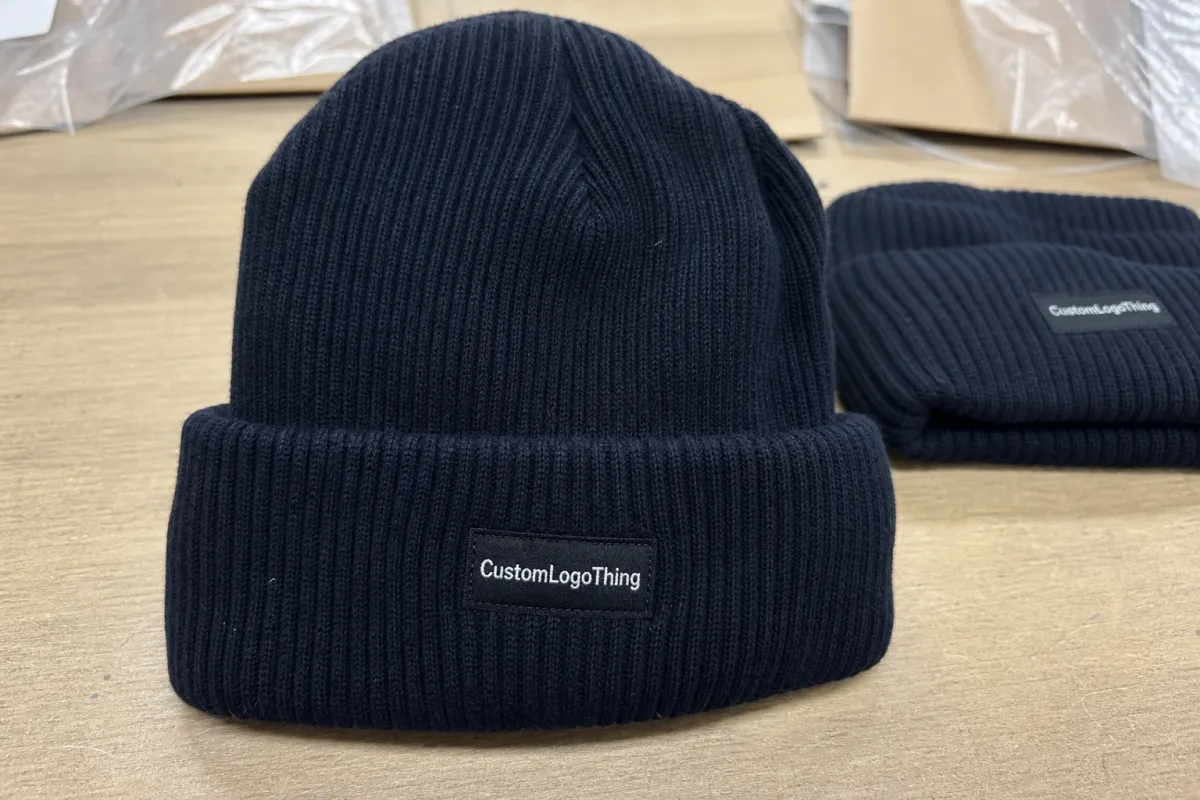
Ribbed knit alternates raised and recessed columns, which gives the beanie stretch and recovery but also makes it more sensitive to yarn tension. A sample can look clean while the bulk run shows uneven ribs, a flared cuff, or a crown that sits less neatly than expected.
That matters because small defects scale fast. A 3% reject or rework rate on a 5,000-piece order means 150 units that need sorting, replacement, or correction. Once freight and labor are included, the cheapest quote may not stay the cheapest order.
Buyers also need to watch appearance before the product is worn. Clean rib lines, a flat cuff, and a tidy top finish signal control. Uneven columns or a twisted fold often read as a production shortcut, even when the yarn itself is acceptable.
Low quotes are easy to find. Predictable production is harder, and usually more valuable.
This is especially true for staff programs, event kits, and promotional orders. The beanie has to survive packing and transit before it ever reaches a wearer, so the real value is often consistency rather than a small unit-price difference.
Rib Construction, Yarn Weight, and Cuff Details
Three spec choices drive most buying decisions: rib construction, yarn weight, and cuff depth. Rib construction shapes the elasticity and texture. Yarn weight affects warmth, hand feel, and knit speed. Cuff depth changes both fit and decoration space. If any of those are off, the beanie may still work, but it usually loses the finished look buyers want to approve.
Acrylic remains the most common starting point because it keeps cost stable and produces repeatable results across color lots. Recycled polyester can support a sustainability story and work well for programs that need a lower-impact material message. Wool blends usually feel more premium and warmer, but they raise cost and can require tighter checks for pilling, shrink behavior, and color consistency.
Cuff height is more than a styling choice. A deeper cuff creates a better area for embroidery, woven labels, or patches, while also giving the front of the beanie more structure on display. A shallow cuff may reduce material use slightly, but it limits decoration space and can make the cap look less substantial on shelf.
Useful spec choices buyers should know
- Rib width: wider ribs create a bolder look, while tighter ribs often feel denser and more refined.
- Yarn blend: acrylic for price control, wool blend for warmth, recycled polyester for a lower-impact material story.
- Cuff depth: usually 2.5-4 inches, depending on logo size and how much front-panel structure is needed.
- Crown shaping: a tidy top finish helps the beanie keep its shape after folding and bagging.
- Decoration zone: front cuff space should be planned before artwork is finalized, not after.
Buyers often pay for features they will not use. A premium wool blend is difficult to justify for a giveaway cap that will sit in storage or go into a tote. A lighter acrylic style may be a better fit for a staff distribution run where speed and consistency matter more than a luxury hand feel. Matching the spec to the use case keeps the quote honest.
Packaging and labeling should be decided with the same discipline. If the order needs recycled board inserts, individual polybags, or carton labels with sorting instructions, those details belong in the brief. Leaving them out often creates add-on charges later, especially when the order ships to multiple destinations.
Specifications Buyers Should Lock In Before Quoting
A quote is only useful when every supplier is pricing the same product. That sounds obvious, but this is where bulk programs often drift. One buyer says “ribbed winter beanie,” another says “rib knit cap,” and the supplier fills in the gaps with assumptions. The result is a comparison that looks clean but is not actually comparable.
Before requesting pricing, lock down the fields that affect the run. Quantity, yarn composition, rib width, cuff measurement, decoration method, and color standard should all be fixed before the first quote is sent. If any of those are vague, the supplier may price a different build than the one you expect to approve.
Packaging should be spelled out too. Individual polybags, hang tags, insert cards, carton markings, and pack count all affect labor and materials. A quote that skips those items may seem lower at first glance, but it is not a better quote if the missing pieces show up later.
Simple approval checklist
- Confirm target quantity and a realistic backup quantity.
- Choose yarn type, color standard, and whether the color is stock or custom.
- Set rib style, cuff depth, and size range.
- Select one decoration method if speed and clarity matter.
- Define packaging, carton count, and label requirements.
- Ask for sample timing and approval steps in writing.
That checklist reduces re-quoting and helps buyers spot hidden setup charges early. Tooling fees, custom label costs, and special decoration steps should appear in the written quote, not show up later as surprises. If a supplier will not itemize them, the quote is incomplete.
Another common mistake is mixing stock and custom assumptions in the same request. A stock acrylic beanie with a woven label does not belong in the same comparison as a custom-dyed wool blend with embroidery and individual packaging. Both are ribbed beanies, but they are not the same product and should not be treated as such in a Unit Cost Review.
Book Ribbed Winter Beanies Unit Cost Review: Pricing and MOQ Drivers
In a book ribbed winter Beanies Unit Cost Review, the main cost drivers are material weight, knitting time, decoration method, packaging, and whether the order uses stock colors or custom color matching. Each one changes the unit cost in a way that can be measured, not guessed.
MOQ is the strongest structural lever. The same setup cost spread over 300 pieces is very different from the same setup spread over 3,000. That is why small runs often look expensive even when the spec is basic. Once the order grows, the cost per piece usually drops because sampling overhead is diluted and production becomes more efficient.
| Option | Typical MOQ | Unit Cost Range | Setup Charges / Tooling Fees | Best Fit |
|---|---|---|---|---|
| Stock acrylic, woven label | 300-500 pcs | $2.10-$3.40 | Low to moderate | Fast promotional orders |
| Acrylic, embroidery on cuff | 500-1,000 pcs | $2.60-$4.20 | Moderate | Brand-led retail or staff wear |
| Wool blend, custom label and bag | 1,000-2,000 pcs | $4.10-$6.80 | Moderate to higher | Premium seasonal programs |
| Recycled yarn, custom-dyed color | 2,000+ pcs | $4.50-$7.50 | Higher | Sustainability-led retail launches |
These ranges are not promises, but they are useful for setting expectations. A woven label is usually simpler than embroidery. A patch can require a separate step. Custom dyeing increases cost because it adds color matching and often extends lead time. Packaging can move the quote too, especially when individual bags or printed inserts are required.
The cheaper line item is not always the cheaper order. Freight, packing efficiency, defect rate, and approval speed all affect the final landed cost. A supplier with a slightly higher factory price can still be the better buy if cartons are packed cleanly and the finish rate is stronger. Buyers who compare only ex-factory pricing can miss that.
For planning, a 5,000-piece order with a $0.18 difference per unit creates a $900 gap before freight or rework enters the picture. If the lower quote comes with more rejects or slower dispatch, the savings disappear quickly. A good cost review compares price, quality control, and lead time together, not as separate conversations.
Currency and seasonality matter as well. Winter programs often get quoted more tightly when factories are filling capacity between larger knitwear orders. At peak season, the same style may move slower, especially if it needs custom yarn or a more involved decoration method. Buyers who plan earlier usually get better access to stock yarns, better sampling turnarounds, and fewer compromises on packaging.
Process and Timeline: From Artwork Approval to Shipment
The production path is predictable, and that predictability helps buyers manage risk. It usually starts with spec confirmation, then artwork review, sampling, sample approval, bulk knitting, decoration, inspection, packing, and shipment. The fewer assumptions in the first brief, the fewer revision loops appear later.
For standard builds, sampling can move quickly. Bulk production commonly falls in the 12-15 business day range after approval when the yarn is stock, the decoration is simple, and the supplier has a stable line schedule. That window can stretch if the order needs custom-dyed yarn, multiple revisions, or a decoration process that requires extra alignment checks. Late-season demand can add more time than most buyers expect.
Fast approval is one of the easiest ways to protect the schedule. A complete brief, clear artwork, and rapid sign-off usually prevent bottlenecks. Last-minute changes are the biggest risk. Even a small adjustment to cuff size or logo placement can trigger a fresh sample or a partial rerun, and that is usually where the timeline starts slipping.
A good production plan has milestones the buyer can verify. Sample photos, production confirmation, and dispatch updates should arrive at fixed checkpoints. Otherwise, the order can sit in a vague “in progress” state while the calendar keeps moving. That kind of delay is expensive even when no one labels it as a delay.
- Day 1-2: intake of spec sheet and artwork.
- Day 3-5: sample or digital proof review.
- Day 6-10: sample approval and bulk start.
- Day 11-15: knitting, decoration, packing, inspection.
- Final step: shipment booking and tracking handoff.
That timing is for straightforward work. If the order includes custom labeling, special folding, or multiple packing configurations, the schedule lengthens. Buyers should plan for that rather than assuming every winter beanie order moves at the same pace as a simple stock cap.
What Lowers Hidden Cost Beyond the Headline Quote
The best supplier is not necessarily the cheapest one on paper. In practice, low-friction execution often beats a lower sticker price. If a supplier sends weak proofs, misses a measurement, or packs cartons poorly, the buyer ends up paying for correction later. That cost can appear as overtime, freight changes, or a delayed launch.
Quality control protects margin. Yarn checks help confirm consistency before knitting starts. Knit density checks reduce shape variation. Color matching matters when a brand needs repeatability across multiple runs. Decoration placement review prevents off-center logos that would otherwise need rework. Carton inspection before dispatch catches packing errors early enough to fix them cheaply.
Communication has a cost profile too. A supplier that answers clearly and documents changes reduces clarification loops. Fewer loops mean fewer approval errors, and fewer errors mean less waste. That may sound like administrative detail, but it has a direct effect on the actual cost of the program.
Replacement policy matters as well. If the goods are part of a recurring campaign, the buyer needs a supplier who can repeat the same cuff height, rib count, yarn texture, and logo placement on the next run. A cheap first order is not a win if the reorder drifts and the brand has to approve a second version later.
A reliable reorder is usually worth more than a slightly cheaper first run if the brand needs the same result next season.
That is the practical lesson behind a strong book Ribbed Winter Beanies Unit Cost review. Buyers are not only buying knitwear. They are buying fit consistency, timing, and a cleaner path for the next order. Those elements rarely show up as line items, but they shape the real cost more than a spreadsheet summary usually admits.
Next Steps: Send Specs, Compare Quotes, and Book a Sample
Start with a complete spec sheet. Include quantity, yarn preference, cuff depth, rib style, decoration method, packaging requirements, and color references. Then ask each supplier to quote against the same brief. If one quote is missing setup charges, sampling fees, or packaging costs, it is not a better quote. It is an incomplete one.
Before a bulk order moves forward, request a sample or at least pre-production photos. That is the easiest way to check fit, cuff shape, decoration placement, and finish quality before the whole batch is committed. One approved sample can prevent a very expensive correction later.
When comparing suppliers, use the same small set of measures every time:
- Unit price and cost per piece
- MOQ and ability to repeat the style later
- Sampling timing and approval flow
- Carton packing and freight assumptions
- Inspection process and replacement terms
If the first quote is low but the sample process is vague, the order still carries risk. If the quote is slightly higher but the supplier documents each step and can repeat the result, that often wins on landed cost. A disciplined book ribbed winter beanies unit cost review works best when the buyer sends complete specs first, because that shortens quoting time and reduces expensive surprises.
Frequently Asked Questions
What affects ribbed winter beanie unit cost the most?
Material weight, yarn type, decoration method, and MOQ usually move the price most. Packaging and freight can also shift the landed cost more than buyers expect, especially when the order is split across locations.
What MOQ should I expect for custom ribbed beanies?
MOQ usually depends on whether the order uses stock yarn or custom colors. Higher decoration complexity and special packaging often raise the minimum run, so a simple woven-label program is generally easier to launch than a custom-dyed retail style.
How long does a custom ribbed beanie order usually take?
Sampling often moves quickly if the brief is clear, while bulk production depends on yarn availability and decoration type. Fast approvals and complete specs are the biggest levers for keeping the schedule tight. For simple orders, 12-15 business days after approval is common, but seasonal congestion can extend that.
Can I get a quote before final artwork is ready?
Yes, if you provide target quantity, material preference, decoration method, and packaging needs. A provisional quote is more accurate when the spec sheet is complete, even if artwork is still being finalized.
What should I compare besides the headline price?
Compare sampling fees, setup costs, QC standards, carton pack details, and estimated freight. Ask for landed cost so you can judge the real program cost, not just the unit quote.


