Skincare Ribbed Winter Beanies Unit Cost Review & Quote is a useful exercise because a seasonal accessory can look expensive at the line-item level and still be an efficient bundle component once material, decoration, and pack-out are measured properly. A ribbed winter beanie sits in a strange but profitable category: it is small enough to ship well, visible enough to feel premium, and practical enough that buyers do not treat it like throwaway swag. The real cost is not just the hat. It is the yarn, the rib structure, the logo method, the finishing labor, and the way the piece is packed for a skincare set or gift-with-purchase program.
That is why a skincare ribbed winter beanies Unit Cost Review should start with the spec, not the quote. Two hats that look similar in a spreadsheet can differ sharply in handfeel, stretch recovery, and production effort. A tighter rib can hold shape better. A thicker yarn can make the piece feel warmer but also push freight and knitting time upward. A neat retail presentation can add perceived value, but it can also add work that never appears in a bare-bones price.
Why a ribbed winter beanie can outwork a scarf in skincare bundles
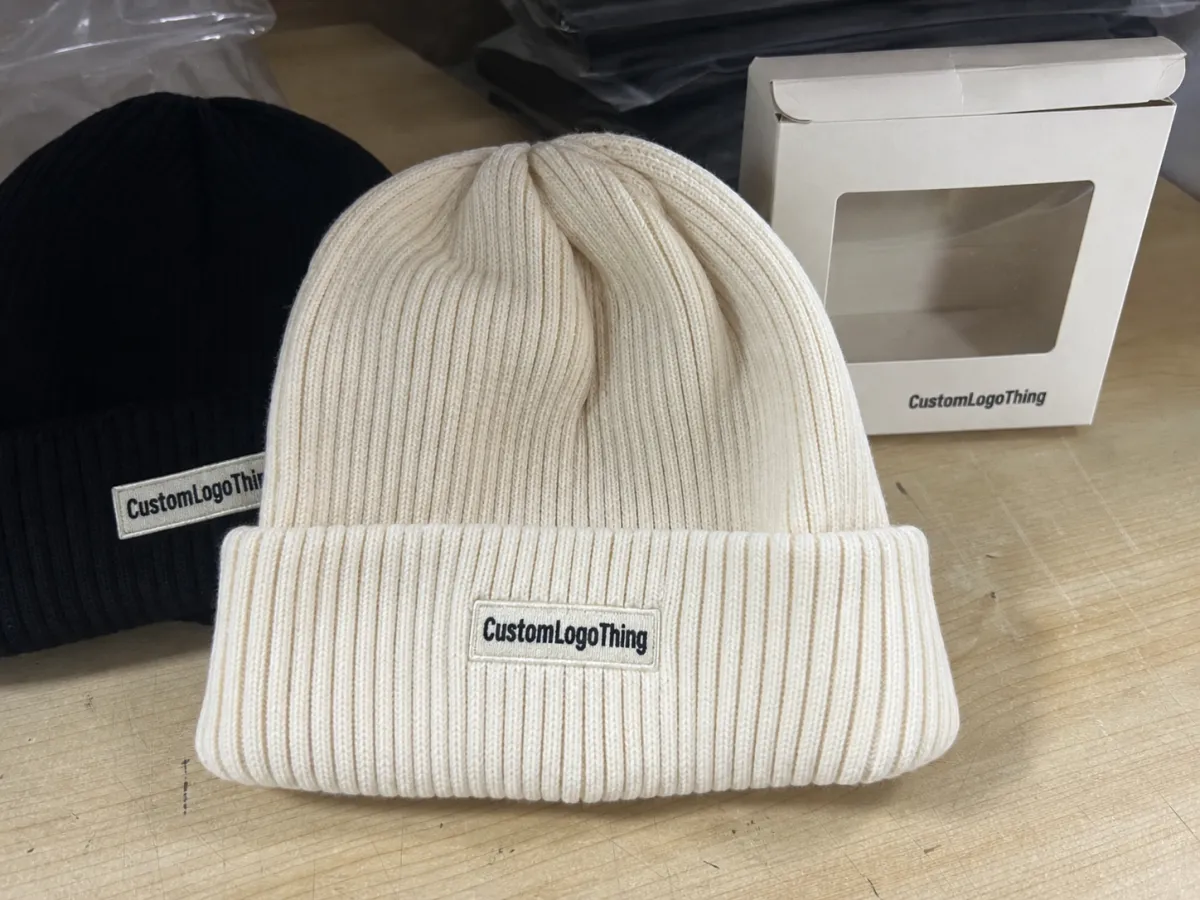
From a packaging buyer’s perspective, ribbed beanies solve several problems at once. They fold compactly, sit cleanly in cartons, and photograph well in a gift box without needing a lot of arrangement. A scarf may feel softer or more luxurious on paper, yet it brings more fabric, more folding complexity, and a higher chance of looking messy after transit. A beanie usually avoids those issues while still giving the bundle a winter cue that customers understand immediately.
That practical advantage matters in skincare programs. Beauty sets often rely on a balance of small, elegant items: serum, cream, mask, candle, or accessory. A ribbed beanie works because it does not compete with those products. It adds utility without forcing the pack structure to change. One size fits most, the cuff gives branding a clear stage, and the item can move between retail box, mailer, and inner carton without redesigning the entire bundle.
The appeal is not purely visual. A beanie also helps a promo feel deliberate. A good cold-weather accessory can increase the gift’s perceived value even when the unit economics stay disciplined. That is especially useful for holiday launches, loyalty rewards, and minimum-spend offers, where the item has to feel thoughtful but still land inside a controlled budget.
There is a caveat, though. Beanies are easy to source badly. Poor rib tension, scratchy yarn, or a logo that sits too low on the cuff can make the item feel cheaper than its cost. The bundle then carries the wrong signal, and the skincare products next to it lose some of their premium effect. For that reason, the item should be treated as a production component, not a casual add-on.
Material and fit details buyers should confirm before quoting
The first decision is fiber content. Acrylic remains common because it is cost-efficient, easy to color match, and stable in bulk knitting. Recycled acrylic usually costs more, but it may support a stronger sustainability narrative if the supply chain documentation is clear. Wool blends can feel more premium and provide better warmth, though they also raise the unit cost and can introduce comfort issues if the yarn is too coarse. Recycled polyester is viable in some programs, but its stretch recovery and surface feel should be tested carefully rather than assumed.
Fit is controlled by more than the size label. Rib pattern, yarn weight, gauge, and cuff depth all affect how the beanie wears. A tighter rib often looks neater and more retail-ready. A looser knit can feel softer, but it may lose structure after repeated wear. For a promotional or gift bundle, a clean silhouette matters because the item has to look good immediately when opened, not after a week of use.
- Acrylic: usually the lowest cost, with reliable color consistency and broad availability.
- Recycled acrylic: slightly higher cost, useful when the brand needs a sustainability claim with documentation.
- Wool blend: warmer and more premium, but more expensive and sometimes less forgiving against sensitive skin.
- Recycled polyester: durable and flexible for some programs, though the handfeel can vary by grade.
Softness deserves more attention than many buyers give it. A beanie sits directly on the forehead and ears, so an uneven knit or scratchy yarn can undo the gift experience quickly. Colorfastness matters too, especially with dark winter shades and bright seasonal colors that may be handled repeatedly before the customer ever wears the item. Ask for a sample that reflects the final yarn and finish, not an early placeholder. A placeholder may confirm shape; it does not confirm the production feel.
It also helps to confirm practical measurements early. Cuff depth determines whether the logo has enough clean space. Body length affects slouch and fit. Stretch recovery tells you whether the piece will bounce back after packing and wear. None of those details is glamorous, but all of them affect whether the final product feels retail-ready.
Skincare Ribbed Winter Beanies Unit Cost Review: What drives price
The fastest way to misread a quote is to compare headline prices without comparing construction. A proper skincare ribbed winter beanies Unit Cost Review should separate yarn, knitting time, finishing, decoration, packing, and freight. Those pieces do not move in the same way. A cheaper yarn can lower the base cost, but a more complex logo method can erase the savings. A plain retail fold may be nearly free in one factory and a real labor line item in another.
At small volumes, setup costs matter a lot. Thread matching, artwork prep, machine setup, and sample approval all have to be absorbed across fewer pieces, so the unit cost rises fast. By the time an order reaches the low hundreds, the per-piece price can already look quite different from a 1,000-piece run. That is not inflation or sales pressure; it is simple arithmetic. The same is true for custom labels, molded badges, or rubber patches that require separate tooling or extra handling.
| Build | Typical MOQ | Approx. cost per piece at 300 pcs | Approx. cost per piece at 1,000 pcs | Notes |
|---|---|---|---|---|
| 100% acrylic, woven label, basic polybag | 300-500 | $1.95-$2.85 | $1.20-$1.70 | Lowest bulk pricing, clean for broad promo use |
| Recycled acrylic, embroidery, retail fold | 500 | $2.60-$3.80 | $1.65-$2.35 | Better brand story, slightly higher setup charges |
| Wool blend, woven patch, tissue wrap | 500-1,000 | $3.90-$5.50 | $2.60-$3.75 | More premium handfeel, higher freight by weight |
| Recycled acrylic, rubber patch, hang tag and belly band | 500-1,000 | $3.20-$4.90 | $2.10-$3.10 | Decoration and packaging push the landed cost up |
Those numbers are only useful when the spec is fixed. A lighter gauge, thinner yarn, or smaller decoration zone can make one quote look lower than another without meaningfully reducing the real cost of the program. Compare like for like. Yarn weight, cuff depth, logo method, color count, packing format, and carton quantity should all be written down before any supplier is asked to price the order.
The cheapest quote is often the one with the most assumptions hidden inside it.
That is especially true for seasonal items. A vendor may present a low base rate and then add charges for sample revisions, decoration setup, folded packing, or retail inserts. On a skincare launch, those additions are not minor. They affect both budget and presentation. A quote that includes every required element is usually easier to judge than a low quote that only covers the knit itself.
There is one more factor buyers should not ignore: freight. Beanies are not heavy, but they are voluminous enough that carton counts, compression, and pack density can change the landed cost. If the order is moving by air, the difference is manageable. If it is moving by ocean or through mixed distribution, packing efficiency starts to matter a lot more. A tidy unit price means little if the final landed cost is distorted by weak packing assumptions.
MOQ, sampling, and decoration choices for bulk orders
MOQ is where the economics shift from theory to reality. Smaller runs can absolutely work, especially when the accessory is part of a limited skincare campaign or an internal retail test. Even so, the unit cost usually climbs because knitting setup and finishing labor are distributed over fewer pieces. Many custom beanie programs begin at 300 to 500 units for workable pricing, while more complex builds can push the minimum higher. That range is not arbitrary. It reflects how much manual handling the order requires.
Decoration choice should follow the brand story, not just the logo file. Embroidery is durable and familiar, with a clean retail look that usually reads well on the cuff. Woven patches are useful when the logo has fine lines or small details. Rubber patches create a bolder effect and can look modern, but they may require tooling and longer approval time. A sewn woven label is often the most cost-disciplined option when the brand wants subtle branding without a large decoration budget.
- Embroidery: durable, straightforward, and visually familiar in retail settings.
- Woven patch: better for fine detail and a flatter, more controlled surface.
- Rubber patch: strong visual impact, but confirm tooling, thickness, and attachment method.
- Woven label: often the cleanest lower-cost option for subtle branding.
Sampling should be treated as a production checkpoint, not a courtesy. At minimum, the process should confirm yarn color, knit shape, logo placement, and cuff depth. If the decoration is custom, a decorated sample or strike-off is worth the extra time. It is far cheaper to adjust a sample than to discover a misaligned logo or bad color match after bulk knitting has started. For skincare bundles, the accessories are usually visible enough that one defect can affect the whole presentation.
A good sample process also exposes less obvious problems. Does the beanie rebound after stretching? Does the cuff roll? Does the patch sit flat or pull the rib? Does the logo distort when the fabric is worn? Those issues are easy to miss in product photos and hard to fix after production has begun. The sample should answer them before the order is released.
Approvals move faster when the decoration is matched to the complexity of the logo. A clean mark with two colors may work fine as embroidery. A detailed logo with tiny type may be better as a woven patch. Trying to force every design into the same decoration method usually increases cost and weakens the result.
Production steps and turnaround for bulk beanie orders
A well-run order should have a visible path from approval to shipment. The sequence is usually artwork review, yarn matching, sample development, sample approval, bulk knitting, finishing, decoration, packing, inspection, and shipment. If any of those steps is vague, the order itself becomes vague. Vague orders are where delays, substitutions, and inconsistent quality usually appear.
- Artwork review to confirm logo size, placement, and stitch limits.
- Yarn matching to align color, softness, and fiber content with the approved spec.
- Sampling to check shape, stretch, and decoration alignment.
- Bulk knitting and finishing after written approval.
- Packing and final inspection before cartons are released.
Timing depends on yarn availability, decoration complexity, and the production calendar. A simple stock-yarn beanie with a woven label can sometimes be ready in roughly 12 to 18 business days after approval. Add embroidery, special packing, or custom patch tooling, and 18 to 25 business days becomes more realistic. Custom-dyed yarn or a new mold can add another week or more, especially if approvals move slowly or the color target needs another round.
Buyers should ask for milestone dates, not just a ship date. Sample photo confirmation, bulk-start date, packing completion, and carton-ready date all matter. Those checkpoints reduce surprises, particularly when the order supports a holiday launch or a store event. A buffer of 7 to 10 business days is usually sensible if the item has a hard calendar deadline. Otherwise, the finish of the run may need expensive air freight.
Packing and transit deserve their own review. A beanie that looks fine in a tote bag may be bruised in a mixed-handling distribution chain if the cartons are weak or overfilled. Ask whether the carton plan matches the shipping method. If hang tags, tissue wrap, belly bands, or inserts are included, those pieces should be accounted for in the pack-out spec so the warehouse does not receive an incomplete or inconsistent build.
For sustainability-led programs, the paperwork should also match the physical product. If recycled fibers are claimed, ask for the relevant documentation and make sure the yarn description is precise. If the outer components use certified paper, confirm the certification on the actual packing components rather than assuming it from a quote line. Small inconsistencies create bigger review problems later.
What to verify in supplier capabilities before you place the order
The lowest quote is not always the best choice. The more useful supplier is the one that can reproduce the approved sample in bulk without drifting on rib tension, color, or decoration placement. Ribbed knit makes variation easy to spot. If the structure tightens up on one production line and loosens on another, the fit changes. If the shade shifts, the beanie no longer sits naturally beside the skincare packaging it was designed to support.
That means buyers should ask for specific quality-control methods. How is shade consistency checked? How is stretch recovery measured? How is decoration alignment verified on the cuff? How does the team inspect folded units before carton closure? A supplier that can answer those questions clearly usually has a better handle on repeatability than one that only talks about price.
- Rib tension control so the beanie matches the approved handfeel and silhouette.
- Shade consistency so all units land in the same color family.
- Decoration alignment so logos sit level on the cuff.
- Pack-out accuracy so carton counts and labels match the receiving plan.
Written specifications matter because beanie orders often pass through multiple hands. Artwork may be reviewed by one person, sampling by another, packing by a third, and freight booking by a fourth. A single spec sheet keeps the order grounded. It should list fiber content, gauge, size, decoration placement, label type, pack method, and carton count. If a later dispute happens, that document is the cleanest reference point for what was actually ordered.
There is also a practical difference between a supplier that can knit a sample and one that can repeat it at scale. Many problems do not appear until the bulk run: patch edges curl, thread color shifts under different lighting, or the cuff ends up shorter than expected after pressing. A capable supplier will usually have a process for pre-production approval, in-line checks, and final inspection. If those steps are missing, the project becomes far more fragile than the quote suggests.
Next steps: request a quote, approve the sample, and lock the ship date
A useful quote starts with useful inputs. Send the supplier the quantity, color count, logo file, decoration method, packing requirement, and shipping destination. If the request is vague, the estimate will be vague too. If the request is tight, the quote can show where the money is actually going and whether the order is built from stock components or more expensive custom parts.
- Quantity and any expected tier breaks for bulk pricing.
- Yarn choice, knit gauge, and whether the handfeel must be soft against skin.
- Decoration method and logo size.
- Packing method, including labels, tissue, inserts, and carton marks.
- Delivery destination so freight is not guessed.
Read the quote line by line. Check whether sample fees are credited back, whether setup charges are one-time, whether tooling fees are separate, and whether freight is included or billed later. Compare at least two quotes on the same spec sheet. That comparison only works when the assumptions are identical, but when they are, the price difference becomes much more meaningful.
Then approve one sample standard and hold it constant. Changing the decoration, yarn, or pack-out after approval is how orders drift into avoidable cost. A winter accessory can absolutely strengthen a skincare campaign, but it needs a disciplined spec and a realistic timeline. That is the simplest path to a clean result and a credible landed cost.
Done well, the beanie adds warmth to the bundle without creating fit issues, warehouse headaches, or a budget surprise. Done poorly, it becomes a noisy extra line that does not earn its place. Keep the assumptions tight, verify the sample, and let the quote reflect the real production work. That is the most reliable way to judge a skincare Ribbed Winter Beanies unit cost review.
What changes the unit cost of skincare ribbed winter beanies the most?
Yarn type, knit density, and decoration method usually move the price the most. MOQ matters because setup cost is spread over fewer units on smaller runs, and packing or freight assumptions can shift the landed cost more than buyers expect. Custom patch tooling can also add a one-time charge that should be separated from the per-piece rate.
What MOQ should I expect for custom ribbed winter beanies for skincare brands?
MOQ depends on the yarn, decoration, and whether the order uses stock or custom components. Smaller runs are possible, but the unit price is usually more efficient once the order reaches a few hundred pieces. Ask the supplier for the MOQ by decoration method, since embroidery, woven patches, and custom labels can differ.
Which decoration method is best for a soft-touch skincare beanie?
Embroidery works well when the brand wants a classic retail look and a durable finish. Woven or rubber patches are useful when the logo needs sharper detail or a more premium feel. A sewn woven label can be the best choice when the brand wants subtle decoration and lower added cost.
How long does production usually take after sample approval?
Turnaround depends on yarn availability, decoration complexity, and the production calendar. A simple stock-yarn beanie can sometimes ship in about 12 to 18 business days after approval, while more detailed builds often need 18 to 25 business days. Ask for an estimated ship date before placing the order and confirm whether packing is included in that timeline.
Can I compare two skincare ribbed winter beanies quotes directly?
Yes, but only if both quotes use the same yarn weight, size, decoration area, and packing method. Check whether freight, samples, and setup charges are included, because those items can hide the real difference. A clean spec sheet makes direct quote comparison much more reliable, and it keeps a skincare ribbed winter Beanies Unit Cost Review anchored to the same assumptions.


