Plain swag bags can make a premium gift look improvised. Corporate gifting slider lock bags Bulk Order Planning is really a packaging and operations decision: the bag has to protect the contents, present them cleanly, and survive handling without turning the kit into a mess. That is a lot to ask from one clear pouch, which is why the details matter.
In bulk programs, the packaging is not filler. It affects first impression, pack-line speed, freight damage, and whether the recipient keeps the bag for reuse. A well-chosen slider lock bag can make a modest gift feel deliberate. A poor one can flatten the value of everything inside it.
Why slider lock bags make corporate gifts look intentional
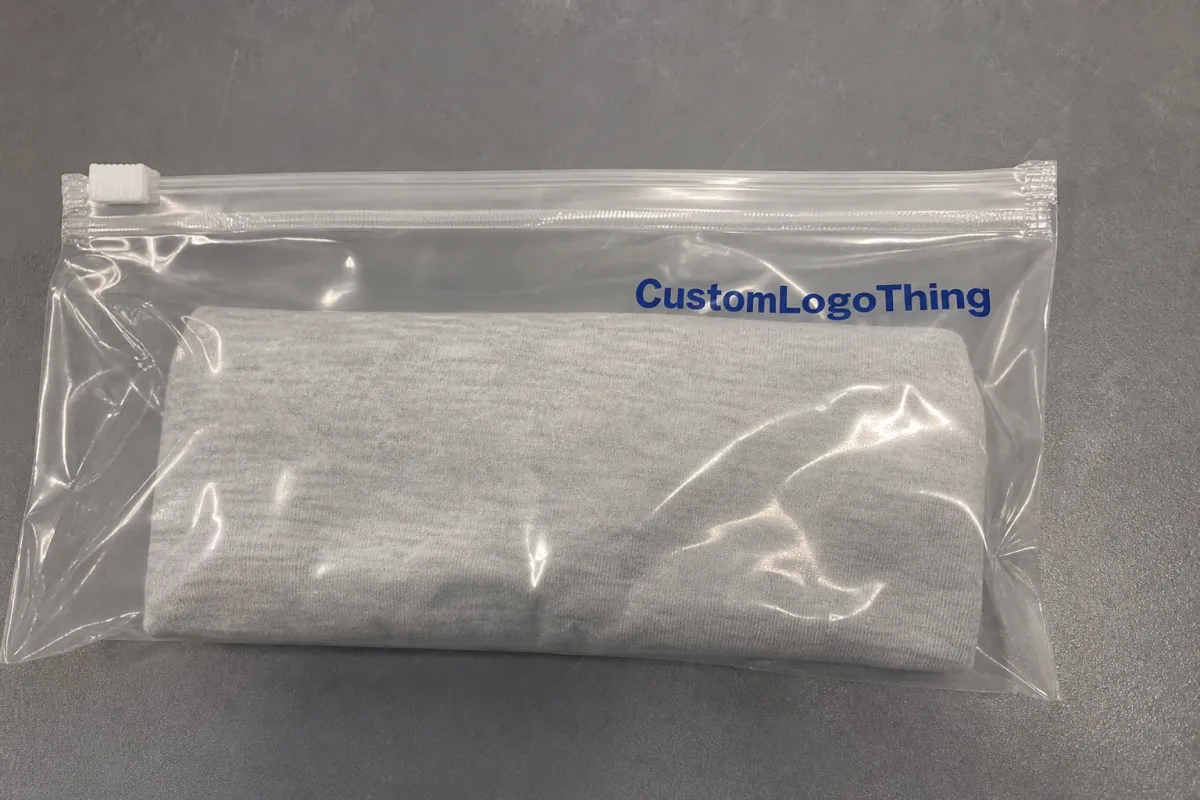
Most buyers start with the gift itself and only then run into the packaging problem. A notebook, hoodie, sample kit, or holiday set can lose impact quickly if it arrives in a thin bag that clouds, wrinkles, or splits at the top. A slider lock bag gives the pack a firmer outline and a closure that reads as planned instead of makeshift.
That matters because corporate gifting is judged in layers. The recipient notices the bag, insert card, print placement, and whether the closure works the first time. A bag that reseals cleanly signals care. It also makes the contents easier to inventory and easier to hand out at scale, which is useful for employee welcome kits, client gifts, trade show giveaways, and event packs.
There is also a reuse effect. A bag that opens and closes smoothly often gets kept for cables, stationery, travel items, or sample storage. A bag that feels awkward gets tossed immediately. That difference does not show up in a quote, but it does affect how the gift is remembered.
If the closure slows the pack line, the bag is already too expensive.
That sounds blunt, but it reflects how bulk packaging actually works. A lower unit price is meaningless if the team has to fight each bag during fill, seal, and inspection. The best choice is usually the one that balances appearance, fit, and handling speed.
Product details that affect the final pack-out
Buyers often compare price first and ask about construction later. That order tends to backfire. Start with the slider. A smooth, consistent track matters more than people expect, especially when the bag will be opened and closed several times during packing or distribution. A weak closure can snag, misalign, or leave the top edge uneven.
Film choice comes next. Clear film works when the contents are already visually polished: folded apparel, stationery, jars, or layered kits. Frosted or lightly tinted film hides imperfect pack-outs and gives more brand control, especially when the contents vary from unit to unit. Transparency is not automatically better; too much can make a premium set look busy, while too little can make it feel generic.
Side gussets change usable volume more than a spec sheet suggests. A flat bag can look spacious on paper and still fail once a folded sweatshirt, instruction card, and filler are inside. Ask for interior dimensions, not just outside measurements. Ask about closure allowance too, because the top edge and slider area reduce usable height.
Display-ready packaging and shipping-ready packaging are not identical. A bag that looks perfect on a table can crush or crease once it is boxed tightly for transit. For orders that pass through several hands, request a sample filled with the actual contents, then close it, stack it, and leave it overnight. That catches fit issues faster than another digital mockup.
It also helps to think about opening behavior. If the gift needs to be unpacked on camera, at a registration desk, or during a staged reveal, the bag should open without resistance. A stiff slider or a warped seal looks minor in isolation and clumsy in a group setting. Bulk orders amplify small flaws.
Sizes, materials, and print specs to lock in early
Before you request quotes, lock down the dimensions: finished interior size, closure allowance, and whether any gusset changes the fill capacity. A bag that is 8 x 10 inches on paper may behave very differently once seams, tracks, and inserts are included. That is how buyers end up paying for extra material they do not need, or approving a bag that pinches the gift once packing starts.
Film thickness is another decision that looks minor until the order arrives. Thinner film lowers unit cost, but it can feel flimsy, show scuffing sooner, and crease under pressure. Thicker film adds stiffness and tear resistance, which matters for kits that will be handled repeatedly or shipped in cartons that take a beating. For most branded gifting, the middle range is the sensible zone.
Print should match the role of the bag. One-color logo printing is usually enough for internal events and clean premium sets. Two-color or multi-color branding makes sense when the bag is part of the presentation, not just the enclosure. A clear logo window can work if you want a peek effect without losing brand control. No-print stock is practical when lead time is tight and the budget is under pressure.
Do not approve a setup from a dummy file alone. Test the actual contents. Apparel folds differently than paper goods. Bottles stack differently than flat inserts. A sample that looks fine on a screen can fail the moment it is packed with tissue, a card, and a filler item. The fit has to be judged with the real mix.
If the kit includes cosmetics, food items, or anything regulated, raise that before quoting begins. Ask about material suitability, intended use, and any documentation the supplier can provide. For packaging that will travel through multiple carriers or warehouse transfers, third-party transport standards such as ISTA are worth referencing. If the program uses paper inserts or carton components, FSC sourcing may matter too.
That is the unglamorous part of corporate gifting slider lock bags Bulk Order Planning, but it is also the part that saves money. Good specs reduce sample rounds, cut approval delays, and make the final quote more honest.
Pricing, MOQ, and unit cost tradeoffs
Price moves for a reason. Film thickness, custom dimensions, color matching, closure style, print coverage, and packing configuration all push a quote up or down. The lowest number is often low because something is missing, usually either material quality or a real understanding of the pack-out.
MOQ is where buyers feel the pressure. Smaller runs carry more setup cost per unit. Larger runs spread setup across more bags and usually improve pricing once tooling and proofing are already paid for. If you only need 1,000 units, you will almost always pay more per bag than a 5,000 or 10,000 piece order.
For planning purposes, these ranges are a reasonable starting point:
| Order profile | Typical unit price | What you get | Best use |
|---|---|---|---|
| Stock size, clear film, one-color logo | $0.18-$0.32 | Lower setup burden, decent presentation, easier replenishment | Employee kits, internal events, simple giveaways |
| Custom size, mid-weight film, one- or two-color branding | $0.24-$0.45 | Better fit, better hand feel, more controlled branding | Client gifts, holiday packs, product sample sets |
| Premium tinted or frosted film, heavier gauge, larger print area | $0.32-$0.70 | Stronger shelf presence, more visual control, better reuse appeal | Executive gifts, higher-end launches, branded retail-style kits |
Those numbers are directional, not a promise. Freight, carton pack-outs, and sample work can move the total enough to matter. A low product price with expensive shipping is not a bargain.
There are sensible ways to reduce cost without making the package feel cheap. Standard sizing helps. Fewer ink colors help. Shared carton pack-outs help. Ordering the amount you actually need for the quarter instead of scattering three tiny reorders helps even more. If the program repeats, one larger run usually beats multiple rush jobs.
For side-by-side comparison, ask for a quote that separates product, setup, sample, and freight. That is the only way to compare offers cleanly. One total with fuzzy assumptions is not pricing clarity.
Process and timeline: from artwork to shipment
The cleanest orders follow a predictable path: inquiry, spec confirmation, artwork prep, proof approval, sample validation, bulk production, inspection, and dispatch. It is not dramatic. It works because each step catches a problem before it becomes expensive.
Most delays come from the same few places: missing dimensions, low-resolution logos, endless color correction, unclear use case, and late approval of the sample or proof. If any of those slip past the beginning of the process, the schedule starts bending immediately.
Lead time should be split into three parts. Sampling can take a few days to two weeks depending on the bag structure. Manufacturing often lands in the 12-20 business day range for straightforward orders, though custom sizes and heavier print work can take longer. Freight is separate, and it can be fast or slow depending on destination and method.
For corporate gifting slider lock bags Bulk Order Planning, ask for three items early: a spec sheet or dieline, a digital proof, and a shipping estimate. If the order is complex, ask for a physical sample before full production. If the contents are oddly shaped, scuff-prone, or unusually heavy, do not skip that step. The sample is cheaper than a full rework.
Rush options exist, but only after the core spec is stable. Speeding up a vague order just gives you the wrong product faster.
The safest timeline assumes approvals will take longer than anyone wants to admit.
That is especially true near holidays, trade shows, and onboarding season. Packaging schedules rarely fail because of one big mistake. They usually fail because several small approvals drift by a day each.
How to choose a supplier that can actually hit the brief
Ignore the smooth pitch for a minute and ask for proof of consistency. A supplier should be able to show similar jobs, explain how they check closure performance, and describe what they do when a batch starts drifting on film clarity or print density. If they cannot answer those questions clearly, the process behind the quote is probably weak.
Repeat orders are where quality issues show up. One batch can look perfect and the next batch can feel looser, print flatter, or pack slightly differently. That is why revision tracking matters. Written approvals, saved specs, and named contacts are not bureaucratic clutter. They are how you keep a reprint from turning into a guessing game.
Communication style tells you a lot. A supplier who answers with exact sizes, material options, production limits, and timeline details is usually safer than one who keeps circling the lowest price. Cheap quotes are easy. Accurate quotes take work.
Pay attention to packing and shipping, not just the bag itself. Carton counts, palletization, and damage prevention affect whether the bags arrive ready for distribution or arrive as another receiving problem. If the order is for event kits, ask how they will be counted and labeled. If the order is for warehouse fulfillment, ask how they will be stacked and protected against crushing.
For larger buying programs, it also helps to know whether the supplier can handle repeat replenishment without rebuilding the whole file every time. A smooth reorder process reduces errors, saves approval time, and prevents the classic problem where the second run does not match the first.
Response quality is a useful filter. A supplier who is direct about spec limits, print tolerances, and MOQ is usually easier to work with than one who promises everything without numbers. Real packaging is measured in details, not adjectives.
Next steps for a clean bulk order that ships on time
Start with a short checklist: gift contents, target quantity, preferred size, print needs, shipping destination, and required delivery date. If one of those is missing, the quote will wobble. If two are missing, the project usually does too.
Gather the files a supplier actually needs: logo artwork, brand colors, pack-out dimensions, and any notes about sample approval or insert compatibility. If you already have a physical sample or a reference photo, send that as well. It cuts down the back-and-forth that eats time and leads to avoidable mistakes.
Ask for a quote that separates product cost, setup cost, sample cost, and freight. That is the only way to compare offers properly. A nice-looking total with blurry assumptions is not useful.
If the contents are heavy, oddly shaped, or sensitive to scuffing, approve one pilot spec before you commit to the full run. That one step can save a surprising amount of money, especially when the gifts are tied to a launch, a holiday deadline, or a customer event that cannot move.
The best rule is simple: lock the spec first, then the timing, then the quantity. Reverse that order and corporate gifting slider lock bags Bulk Order Planning goes sideways fast. Get the dimensions right, confirm the print, and then place the order with enough buffer to absorb proofing, packing, and freight.
If you need a quick refresher on common production and shipping questions, the FAQ page is usually the fastest place to check before you finalize the order.
What size corporate gifting slider lock bags do I need for standard gift kits?
Measure the finished pack-out, not just the items laid flat, because folds, inserts, and filler change the true size. Leave a small buffer for the slider closure and top area so the bag closes cleanly without crushing the gift. If the kit includes apparel or boxed items, test one packed sample before locking the full order.
What is a realistic MOQ for bulk slider lock bag orders?
MOQ depends on size, film type, and print complexity, so there is no single number that fits every order. Standard sizes with simple printing usually support lower MOQs than custom dimensions or multi-color branding. If your quantity sits near the MOQ, ask whether a slightly larger run improves unit cost enough to justify the extra inventory.
How long does corporate gifting slider lock bags bulk order planning usually take?
Simple stock-style jobs move faster than fully custom sizes with branded printing and color matching. The biggest time variable is approval speed, because artwork revisions and sample sign-off can add days or weeks. Build in freight time separately so the production date is not mistaken for the delivery date.
Can slider lock bags be printed with a logo for executive gifts?
Yes, and that is usually the point if you want the packaging to feel like part of the gift instead of an afterthought. Choose print coverage based on the brand style: subtle placement for premium gifts, or larger branding for event giveaways. Ask for a proof on the exact bag size, since logo placement can shift when the closure or gusset changes.
What should I send to get an accurate quote fast?
Send the finished bag size, quantity, product use, print requirements, and destination so the supplier can price the job correctly. Include artwork files and any preferred ship date, because vague timing usually produces vague quotes. If you already have a sample or reference photo, send it; that removes a lot of back-and-forth and cuts quoting mistakes.


