Soap Embroidered Baseball Caps Bulk Order Planning Tips
soap embroidered baseball caps Bulk Order Planning usually breaks down before anyone touches a machine. The cap itself is rarely the problem. The real delays come from missing decisions, unclear artwork, and approval loops that keep changing the target after the quote has already been built. A supplier can stitch a clean logo quickly; it is the uncertainty around that logo, the cap body, and the final count that slows everything down.
That matters because bulk cap orders are not just decoration jobs. They are inventory decisions. A team order, retail launch, or giveaway run has to balance appearance, cost, lead time, and consistency across dozens or hundreds of units. The more the buyer defines up front, the less likely the order is to wobble once production begins. In other words, soap embroidered baseball caps Bulk Order Planning works best when it is treated like a controlled spec, not a creative experiment.
For buyers, the goal is not to make the cap complicated. It is to make the order predictable. That means locking the blank style, decoration method, quantity, and delivery window before revisions start multiplying. Once those four pieces are set, the rest of the process gets easier to price and easier to trust.
Why this cap order can stall before production starts
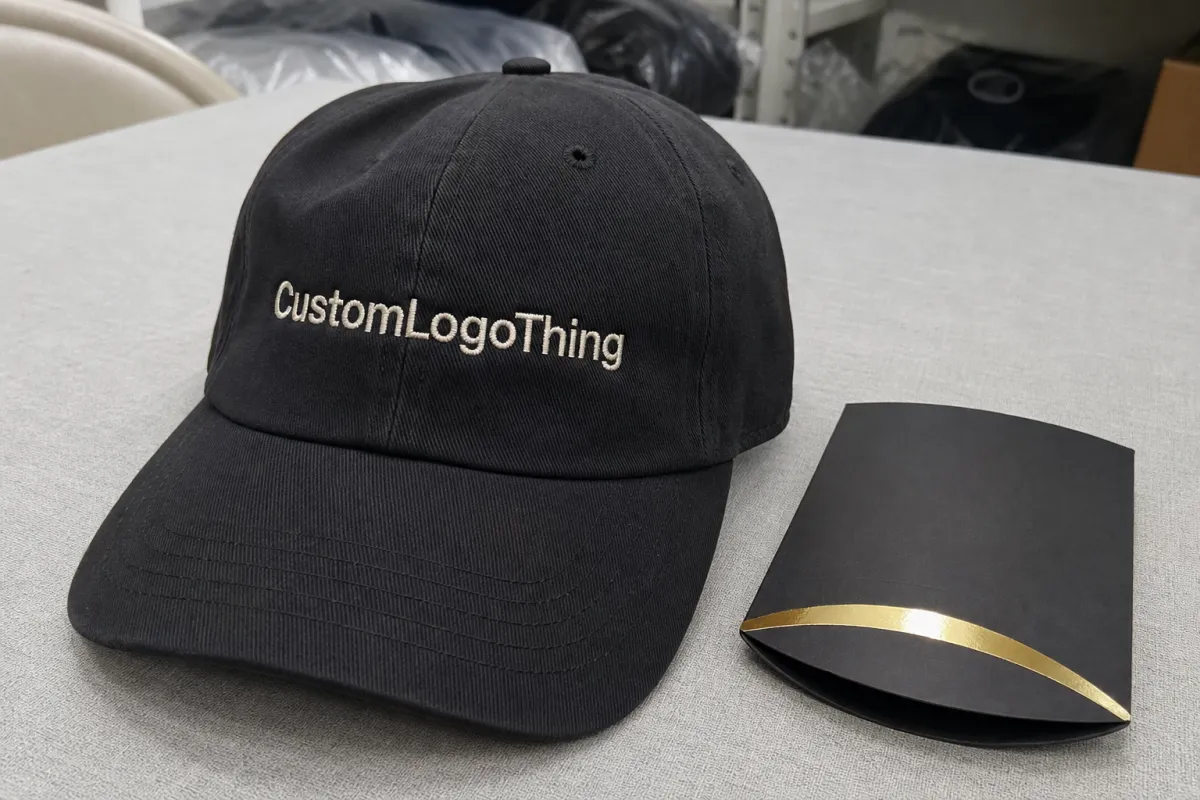
The slow part of most bulk cap orders happens before the first sample is approved. A supplier cannot quote accurately without knowing what kind of cap is being decorated, how much of the front panel the logo will cover, and whether the artwork can survive embroidery without dropping thin details. A file that looks crisp on a screen can turn muddy on fabric if the lines are too tight or the lettering is too small.
Logo structure matters more than buyers expect. Thick strokes, clear spacing, and a clean outline usually embroider better than gradients, shadows, and fine internal detail. Curved seams can also interrupt placement. On a six-panel baseball cap, the seam at the front center may split a logo that looked balanced in the mockup. That is why cap surface and artwork should be reviewed together, not separately.
Another common slowdown is color approval. Brand colors are not always easy to match exactly in thread, and cap fabric can shift how a color reads. A dark navy cap, for example, changes the contrast of white and gold thread differently than a stone or khaki base. That is normal. What causes delays is when the buyer assumes color matching is instant and then requests several revisions after the proof arrives.
A clean spec sheet saves more time than a rush fee. Most rework comes from missing decisions, not machine time.
- Logo file: vector art is the safest starting point because embroidery digitizing needs crisp edges and closed shapes.
- Quantity: pricing, production scheduling, and carton planning all depend on the final count.
- Cap style: structured, unstructured, snapback, strapback, fitted, and performance mesh caps behave differently in production.
- Placement: front, side, and back decoration each affects stitch time and visual balance.
- Deadline: a real ship date helps the supplier decide whether the order fits a standard slot or needs rush handling.
If the order is for internal uniforms, retail inventory, or event giveaways, define that early. The use case changes what matters most. Retail buyers usually care more about finishing and consistency. Giveaway programs often prioritize speed and unit cost. Staff uniforms sit somewhere in between, with durability and comfort taking the lead.
Embroidery details that change the final look and feel
Flat embroidery remains the most practical choice for many baseball cap orders. It handles logos with readable text, clean borders, and moderate detail without adding too much cost or visual weight. 3D puff embroidery creates a stronger raised effect, but it needs room to build height. Tight script, thin lines, and small punctuation marks can collapse under puff and lose clarity. Patch application offers another path. It is useful for vintage looks, complex art, or designs that need sharper edge control than direct stitching can provide.
Mixed decoration is common on higher-value orders. A brand might use a stitched patch on the front and flat embroidery on the side or back. That allows the hero logo to carry more presence while the supporting marks stay smaller and cleaner. Front placement gives the strongest visibility. Side placement is better for subtle branding or sponsor marks. Back placement works well for staff caps, event crews, and programs where the front is already occupied by a large graphic.
Stitch count affects both price and texture. More stitches usually mean more machine time and a firmer hand feel on the cap. Thread color count matters too because every change adds handling during digitizing and stitching. A logo with a few bold elements often reproduces better than a crowded design with fragile lines. That is a useful rule for bulk orders: a simpler mark often looks more premium once it is sewn.
For buyers focused on resale, the real test is legibility. A cap has a small, curved canvas. It will be seen in motion, under bad light, and from a few feet away. The best embroidery is usually the design that reads fast, not the one that uses the most thread colors.
| Decoration option | Best use case | Typical cost impact | Buyer tradeoff |
|---|---|---|---|
| Flat embroidery | Simple logos, text, and repeat programs | Lowest setup cost; usually the most efficient per unit | Less dimensional than puff, but more versatile |
| 3D puff | Bold marks, streetwear looks, premium retail caps | Often adds $0.50-$1.25 per cap depending on coverage | Needs clean shapes and enough space to hold height |
| Patch application | Vintage styling, complex artwork, cleaner edge control | Can add $0.75-$2.50 per cap based on patch type | Extra setup, but more control over detail |
| Mixed method | Front hero mark plus small side or back branding | Highest total decoration cost, especially on multi-location orders | Best presentation when the brand needs several touchpoints |
Not every design deserves the most elaborate treatment. In embroidery, excess detail can look less expensive than restraint. That is one of the stranger truths of cap production, and one of the reasons a proof should be judged for clarity, not just how closely it mirrors the screen file.
Material, sizing, and decoration specs buyers should lock first
The first decisions should be structural. Crown style, panel count, closure type, brim shape, and fabric weight all affect how the cap fits and how the embroidery sits on the front panels. A structured six-panel cap with a firm front panel behaves very differently from a washed cotton unstructured cap. If those basics are still open, the quote is only half built.
- Crown style: structured caps hold their shape; unstructured caps wear softer and more casual.
- Panel count: five-panel caps give a flatter front, while six-panel caps create the classic baseball profile.
- Closure type: snapback, strapback, hook-and-loop, buckle, and fitted options affect sizing and inventory planning.
- Brim shape: pre-curved, gently curved, and flat brims change the tone of the cap.
- Fabric weight: cotton twill, brushed cotton, polyester, and mesh each respond differently to thread tension and wear.
- Extras: sweatband type, eyelets, lining, and underbrim color can shift comfort and presentation.
Adjustable closures are usually the easiest route for bulk orders because they reduce size complications. That is one reason snapbacks and strapbacks are popular for events and staff programs. Fitted caps can still be the right choice, but they demand tighter size planning and a better inventory forecast. If the order includes several cap colors, confirm whether the minimum applies per color or across the full run. That detail can change the budget more than the decoration method itself.
Comfort matters more in repeated wear than many buyers realize. Caps used outdoors or for long shifts benefit from breathable eyelets, a sweatband that manages moisture, and a fabric that does not trap heat. A cap that looks good on approval but wears badly will create complaints later, especially in programs where the end user has to keep it on for hours.
A strong spec sheet should name the cap model if possible, or at least describe it well enough for a close match. The more precise the blank, the easier it is to keep future orders consistent. That matters for reorders, because the second run should not become a search for the original product all over again.
How pricing, MOQ, and quote tiers affect bulk cap budgets
soap Embroidered Baseball Caps bulk order planning gets clearer once the buyer understands where the money goes. Unit cost depends on the blank cap, the decoration method, the number of logo locations, and the total quantity. The first 100 pieces often cost more per unit than the next 500 because setup, digitizing, and machine time are spread across a smaller run. That is not a penalty. It is the arithmetic of bulk production.
| Order tier | Typical MOQ | Typical unit price | Best for |
|---|---|---|---|
| Small run | 48-99 pcs | $8.25-$12.50 | Samples, internal pilots, short promotions |
| Starter bulk | 100-299 pcs | $6.50-$9.25 | Team uniforms, local events, limited retail tests |
| Core wholesale | 300-999 pcs | $4.75-$7.00 | Distribution programs, repeat promotions, regional launches |
| High-volume | 1,000+ pcs | $3.75-$5.75 | National campaigns, recurring inventory, long-running programs |
Those ranges move with complexity. Single-location flat embroidery sits near the low end. Add puff, another placement, or several thread colors, and the price climbs. Digitizing often runs around $35-$85, depending on the art. Pre-production samples commonly land around $25-$60. Rush service can add 10-20 percent, and it may also narrow the room for changes after approval.
Quote comparison should be done on the same basis. One supplier may include setup, proofing, and freight; another may leave those items out and show a lower number that is not really lower at all. Buyers run into trouble when they compare unit price without checking the landed cost. The useful breakdown is simple: decoration, setup, packaging, and shipping. Once those are separated, the real gap becomes visible.
Savings usually appear at higher volume because setup gets diluted and the production run becomes more efficient. The wrong place to chase a bargain is the cap blank or the embroidery quality. Thin thread, weak structure, and inconsistent color often create more expense later than they save at the start. A cheap cap that arrives bent, loose, or badly stitched is not a saving. It is a second order waiting to happen.
One practical question helps buyers avoid bad comparisons: does the quote describe the cap, or only the decoration? If the blank, the stitch count, the closure, and the packaging are not clear, the price is not ready for approval.
Production steps, proofing, and lead time from art to ship
A bulk cap order moves in a fairly predictable sequence: artwork review, digitizing, proof creation, approval, production, quality control, and shipment. The snag is that each step depends on the one before it. If the proof is delayed, the production slot can slip. If the approval arrives with new artwork, the process starts over. That is why response time matters so much in cap orders.
- Artwork review: the supplier checks file quality, logo complexity, and placement limits.
- Digitizing: the art is converted into a stitch file the machine can read.
- Proof or sample: the buyer reviews placement, scale, thread color, and cap style.
- Production: the run is stitched, trimmed, and finished.
- Quality check: alignment, tension, spelling, and consistency are inspected before packing.
- Shipment: cartons are labeled, counted, and handed off for delivery.
Lead time should be treated as a range, not a promise carved into the calendar. A standard run often takes 12-15 business days after proof approval. Smaller rush orders can move in 5-8 business days if the blank cap is in stock and the artwork is ready. The tradeoff is usually a higher unit cost and less room for design changes. Speed always has a price.
Proof review should focus on the details that will affect the finished cap: logo scale, stitch density, thread colors, distance from the seam, and whether the cap structure can support the art cleanly. If the proof shows a logo that is too wide for the front panel, stop there. If the underbrim color or closure style is wrong, fix it before the run begins. Corrections after production starts are expensive and often unnecessary.
Carton handling matters too, especially for warehouse, retail, or distributor programs. Caps should arrive shaped, counted, and easy to receive. If the order will pass through more than one touchpoint, ask how cartons are packed and whether they can handle stacking. Transport packaging standards are useful here, not because the caps are fragile, but because crushed boxes and bent brims create avoidable damage. The cheapest freight plan is not always the best one.
What separates a dependable bulk supplier from a risky one
A dependable supplier does more than say yes. It confirms the spec. That difference is easy to miss at the quote stage and hard to ignore after the cartons arrive. Clear pricing, disciplined proofing, and specific production notes are stronger signs than a fast reply. A good partner will say when a logo is too fine, when a cap body will not hold the stitch count cleanly, or when packaging needs to be defined before production starts.
- Spec confirmation: the supplier repeats cap style, placement, quantity, and color back to the buyer.
- Transparent pricing: setup, digitizing, sampling, freight, and packaging appear as separate line items.
- Proof discipline: revisions are tracked instead of buried in a loose email chain.
- Quality control: alignment, thread tension, spelling, and carton counts are checked before release.
- Repeat-order support: the supplier keeps the stitch file and placement notes on record for the next run.
Accuracy matters more than speed once the order has several moving parts. A supplier that replies instantly but misses key details creates more risk than a supplier that takes a little longer and gets the spec right. The same applies to color standards. If brand consistency matters, ask for thread references or a controlled proof before volume production begins. That small step can protect an entire season of inventory.
There is also a meaningful difference between a supplier that estimates from memory and one that verifies with measurements. The second type checks the decoration area, confirms the cap structure, and flags weak points early. That habit saves rework. It does not sound exciting, but it is one of the clearest signs that an order will arrive cleanly.
For recurring programs, repeat support can be more valuable than a tiny discount. If the same cap will be reordered every month or every season, the supplier should preserve the stitch file, the blank reference, and the exact placement notes. That is what keeps the next run from drifting away from the first.
Next steps to place a cleaner bulk order with fewer revisions
If soap embroidered baseball caps bulk order planning is supposed to move smoothly, start with four inputs: the logo file, the cap style, the quantity, and the delivery date. Those decisions do most of the work. Once they are locked, the quote becomes more reliable and the proof moves faster.
Ask for pricing in separate lines. Decoration, setup, sampling, and shipping should not be blended into one vague number. That makes the comparison honest and makes it easier to see which supplier is actually offering better value.
Approve proofs quickly, but do not approve them casually. Compare the proof against the spec sheet, not just the email thread. Check logo scale, thread color, placement, cap structure, and packaging notes. If the caps are going to a retailer, distributor, or fulfillment center, flag that before production begins. A few minutes of review can prevent a second round of stitching or a shipment that has to be sorted again.
The cleanest bulk cap orders are the ones that read like production briefs. Define the blank. Define the decoration. Define the quantity. Define the ship date. Everything after that has a better chance of staying on schedule.
How do I budget for a soap embroidered baseball caps bulk order?
Start with quantity, decoration method, and the number of logo locations because those drive most of the price. Ask for setup, digitizing, and shipping to be shown separately so the comparison is accurate. Higher volumes usually bring better unit pricing, but only if the spec stays stable.
What is the typical MOQ for embroidered baseball caps in bulk?
MOQ changes with cap style, decoration complexity, and whether the supplier stocks the blank cap. Simpler single-location embroidery often supports lower minimums than multi-step decoration. If you need mixed colors or sizes, confirm whether the minimum applies per style or across the total order.
How long does a bulk embroidered cap order usually take?
The clock usually starts after artwork approval, not when the first inquiry is sent. Standard lead time depends on sampling, proof revisions, and production capacity. Rush options may exist, but they usually raise the cost and leave less room for changes.
Can I mix cap colors in one soap embroidered baseball caps order?
Often yes, but the supplier may set a minimum per color or per cap style. Mixing colors can affect pricing if it adds setup, sorting, or inventory handling. Confirm the color breakdown before approval so the quote matches the final order.
What files do you need before starting a soap embroidered baseball caps quote?
Provide a vector logo file when possible, plus any Pantone or brand color references. Include cap style preferences, quantity, delivery deadline, and placement instructions. If you want a specific finish, note whether you want flat embroidery, 3D puff, or patches.