Seasonal merch does not reward hesitation. For a fragrance brand, a winter beanie is rarely a standalone item; it sits beside candles, room sprays, gift sets, tissue, and shipping cartons, so the timing has to be as disciplined as the packaging. home fragrance ribbed winter beanies Bulk Order Planning works best when the calendar is set before the artwork starts wandering through revisions.
The product may look simple, but the buying process is not. Rib density changes the fit. Yarn choice changes the hand-feel. Decoration changes the price. Packaging changes the freight cube. And because the item is tied to a cold-weather season, one late approval can push the whole program outside the demand window. A beanie arriving after the first warm spell is not a style problem; it is a cash flow problem.
Buyers who manage these programs well tend to think in checkpoints instead of in moods. They ask what the launch date is, what must be in the first shipment, how much slack exists for sampling, and whether the order can survive one revision without triggering rush freight. That sounds dry, but it is the difference between a clean seasonal drop and a bundle that arrives with the right logo on the wrong week.
Why home fragrance ribbed winter beanies bulk order planning starts early
home fragrance ribbed winter beanies Bulk Order Planning should begin from the sell-through date and move backward. That order of operations matters more than the color board. Winter accessories do not sell evenly across the season. Demand rises when the weather turns, when gifting starts, and when retail shelves still look fresh enough to justify a bundle. Miss that stretch by a week or two and the inventory becomes less persuasive, even if the product itself is strong.
The hidden issue is rarely design. It is timing across multiple teams. Marketing wants lifestyle photos. Operations wants a packing date. Sales wants enough stock for a retail launch and a PR reserve. A supplier wants final artwork before production can be scheduled. If those pieces do not align, the order creeps. A few days lost to proofing can turn into a week lost to freight booking, then another week lost to warehouse receiving.
For a straightforward custom beanie, a realistic production window often sits around 12 to 20 business days after proof approval, then transit is added on top. More complicated builds take longer. If the order includes a woven patch, private-label packaging, or multiple colorways, buyers should expect the schedule to stretch. Peak season makes that worse, not better, because factories and freight partners are already handling more volume.
There is a second reason to start early: pricing behaves more predictably. Rush service, rework, and split shipments raise the landed cost in ways that are easy to miss if the buyer focuses only on unit price. A beanie that costs a little less on paper can become the most expensive item in the program once last-minute air freight enters the picture. The cheapest clean order is usually the one that had enough time to move normally.
“A winter accessory that misses the campaign window is just excess stock with a logo.”
The practical test is simple. If the beanie is part of a candle launch, a holiday mailer, or a creator kit, the accessory should be planned with the same urgency as the main product. The delivery schedule is not a back-office detail. It is part of the campaign design.
Ribbed knit details that change comfort, fit, and resale appeal
Ribbed construction is doing more work than most buyers realize. The knit pattern determines stretch, recovery, shape retention, and how the product looks after a few wears. A tighter rib usually sits closer to the head and holds its structure longer. A looser rib can feel softer, but it may relax faster and look less tailored in photos. For a seasonal retail item, that difference matters more than it does on a one-off promo piece.
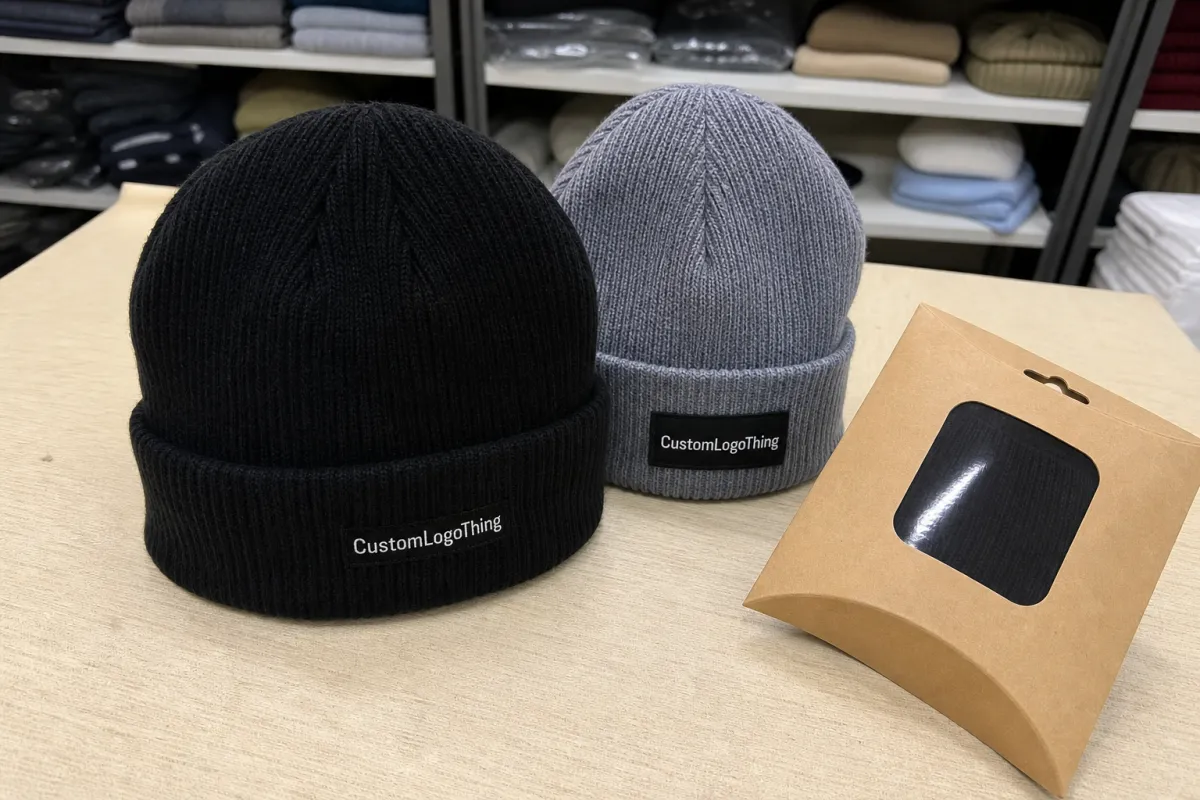
Cuffed and uncuffed versions behave differently too. A cuff adds a larger decoration zone, which usually makes embroidery or patch placement easier and more legible. It also gives the beanie a more substantial profile, which many buyers prefer for gifting. An uncuffed build looks cleaner and more minimal, but it gives less room for branding and often pushes the decoration toward a smaller woven label or compact patch.
Fiber choice changes both price and perception. Acrylic is common because it is cost-stable and easy to color match. Acrylic-wool blends usually feel warmer and slightly more premium, though they raise the unit cost. Recycled yarns can support sustainability messaging, but only if the supplier can keep the shade consistent from batch to batch. On ribbed knit, small variation shows up quickly because the texture catches light unevenly. A color that looks fine in a flat swatch may read noticeably different once it is knitted.
That visual behavior matters for home fragrance brands in a way it does not for generic apparel programs. The beanie is often photographed beside matte glass candles, printed boxes, or soft tissue paper. Those surfaces are unforgiving. A knit that looks rich under warehouse lighting can look slightly coarse or blotchy in product photography if the yarn twist is inconsistent. Buyers should ask for a sample photo under neutral light or, better yet, a physical pre-production sample before signing off on the run.
Fit also deserves more attention than it usually gets. One-size-fits-most works only if the rib has enough memory to recover after stretching. A beanie that feels snug in the sample room but turns baggy after a few wears will create returns, complaints, or awkwardly mixed presentation in a gift set. That risk is one reason some bulk buyers favor midweight knits over very thin ones; the thicker build can look more stable and photograph better beside premium packaging.
Specs to approve before you request a quote
Quotes are only useful when the supplier is pricing the same product the buyer actually wants. If the spec is incomplete, the quote is just an estimate with too many assumptions hidden inside it. That is how teams end up comparing three numbers that do not describe the same beanie.
Start with the core build: fiber blend, rib width, cuff height, and whether the beanie is single-layer or double-layer. Then define decoration method, label style, and packaging. A plain embroidered acrylic beanie is a very different order from a beanie with a woven patch, custom insert card, and retail sleeve. Each added detail changes setup, inspection, and packing time.
Artwork is another place where vague instructions create avoidable cost. The supplier should receive vector files, Pantone targets, placement notes, and size limits before the quote is finalized. Thin strokes, tiny type, and detailed iconography can disappear into the knit pattern, especially on ribbed fabric. If the logo relies on fine detail, it is smarter to scale the mark up slightly or switch to a patch before production starts.
- Material blend: acrylic, wool blend, recycled yarn, or mixed fiber
- Construction: rib width, cuffed or uncuffed, single-layer or double-layer
- Decoration: embroidery, woven label, patch, or printed tag
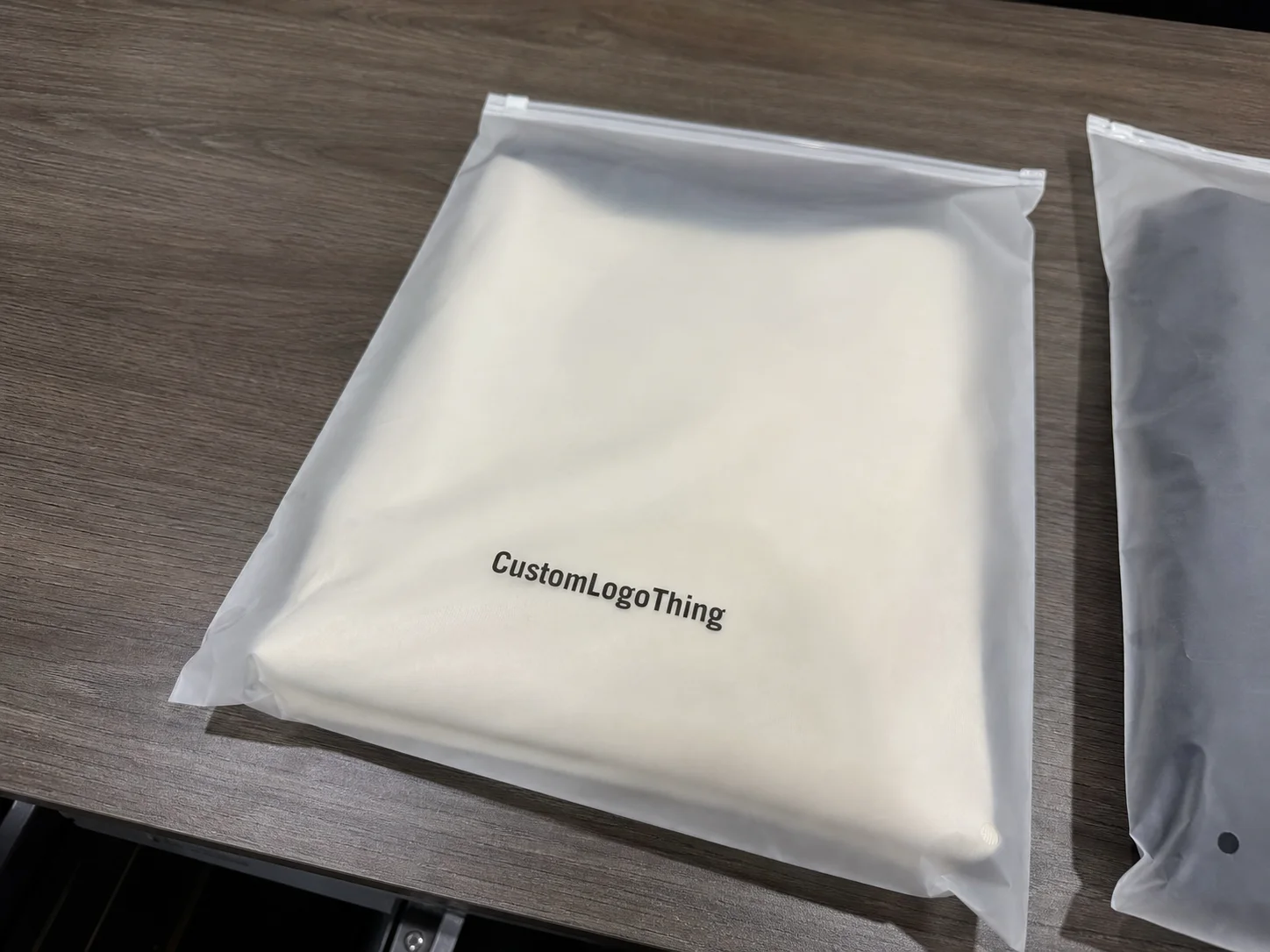
- Packaging: bulk packed, polybagged, folded with insert, or retail-ready sleeve
- Color control: Pantone target, yarn match, and acceptable variance range
A practical approval checklist prevents avoidable delays. Confirm the logo scale, the stitch count or patch size, cuff position, label placement, and carton format before the PO moves forward. If the beanie is part of a fragrance bundle, review the headwear proof beside the candle label, carton, and insert card. Separate approvals tend to create mismatched timing, while set review exposes conflicts early.
Not every supplier handles that process with the same discipline. Some can quote quickly but need repeated clarification later. Others are slower upfront and cleaner in execution. The better choice is usually the one that documents assumptions clearly, because a clear quote is easier to hold accountable once production starts.
Pricing, MOQ, and unit cost drivers for bulk buyers
Unit cost for ribbed beanies usually moves with a short list of variables. Decoration method has one of the largest effects. Fiber content comes next. After that come quantity, color count, packaging, and turnaround time. A buyer who understands those drivers can usually tell within one conversation whether a quote is efficient or padded.
MOQ changes the economics quickly. A 300-piece run often costs more per unit than a 1,000-piece run because setup costs are spread over fewer items. That does not mean the larger order is always better; it means the buyer should compare the unit price against expected sell-through, not against an abstract target. If the beanie is going into holiday bundles, staff kits, or a multichannel drop, a larger run may lower landed cost enough to justify the added inventory. If the item is experimental, smaller can still be the smarter answer.
There are also smaller costs that can distort the final number. Sample charges often sit in the $25-$75 range depending on decoration complexity. Digitizing or setup fees can add another $20-$60. Private labeling, insert cards, and split shipments can raise the total more than the difference between one yarn and another. A quote that ignores freight assumptions or packing format is not a real comparison.
Typical bulk pricing for custom Ribbed Winter Beanies often falls into these bands, though season, decoration, and freight can move the numbers in either direction:
| Option | Typical Unit Price | MOQ | Best For | Notes |
|---|---|---|---|---|
| Standard acrylic beanie with embroidery | $2.10-$3.40 | 300-500 | Launch kits, staff wear, simple retail add-ons | Fastest route when the logo is simple and one color |
| Midweight rib knit with woven label or patch | $3.40-$5.60 | 300-500 | Premium gift sets and fragrance bundles | Better fit for small detail and a softer visual finish |
| Recycled yarn blend with custom trim and retail pack | $5.10-$8.25 | 500+ | Brand drops, holiday boxes, sustainability-led campaigns | Higher QC and packaging demands, more revision risk |
Those ranges are useful as a sanity check. They are not a promise. Two orders that sound similar can price very differently if one uses standard embroidery and the other requires a patch, individual folding, and carton labeling. The buyer’s job is to separate cost drivers from vendor noise.
Price should also be judged against the rest of the campaign. A beanie that adds only a few dollars may be the detail that makes a gift set feel complete. In that context, the wrong comparison is “How cheap can the hat be?” The better question is “How much can the hat improve the bundle without hurting margin or delivery?”
Production steps and lead time from proof to delivery
Production runs follow a familiar path, but the speed of each stage depends on how complete the order is when it enters the queue. The sequence usually looks like this: inquiry, spec review, artwork proof, sample or digital approval, production, quality inspection, packing, and freight booking. None of those steps are exotic. What slows them down is missing information.
A standard beanie with one decoration method usually moves faster than a bundled kit because there are fewer moving parts. Once the yarn, size, cuff, and logo position are approved, the production line can stay focused. Add a retail sleeve, a custom insert, or multiple color splits, and the schedule becomes more fragile because the packing stage has to wait on several components at once.
For a seasonal fragrance launch, even a small delay can snowball. If the proof slips by three days, freight may no longer line up with the warehouse intake slot. Once that happens, the item can lose another several days before it is available for retail or fulfillment. Building a 10 to 15 percent calendar buffer is not paranoia; it is basic insurance in a period when factories are handling larger volumes and transport options narrow quickly.
Inspection deserves the same level of attention as approval. A useful QC check does not just look for obvious defects. It verifies stitch consistency, color accuracy, label placement, packaging count, and the clarity of the final fold. For orders shipped with glass candles or fragile fragrance items, carton strength and internal packing matter too. A beanie can survive almost anything on its own. Pack it badly beside a heavy jar candle, and the failure may show up in the whole box, not on the hat.
Standards from ISTA are a practical reference for distribution testing, especially when the program uses mixed materials or mail-order fulfillment. Buyers working with paper inserts or responsibly sourced packaging can also review FSC options if the brand needs documented material claims. Neither standard replaces direct supplier oversight, but both help define a more serious packaging program.
The pattern behind failed schedules is usually predictable. The buyer assumes production starts as soon as the PO is sent. It does not. It starts when the spec is complete and the proof is signed. That small distinction controls whether the order feels calm or compressed.
How to evaluate a beanie supplier beyond the sample photos
Sample photos can hide a lot. Good lighting, a flattering angle, and one flawless piece tell you very little about whether the full run will hold up. A better supplier conversation focuses on process control: how they manage rib tension, color matching, decoration registration, and acceptable defect thresholds across a production batch.
Color control is especially important for fragrance brands because the beanie often shares shelf space or photo space with packaging that already carries strong visual cues. A knit shade that is slightly too warm can fight the rest of the set. A shade that is slightly too cool may look cleaner but lose the seasonal feel. Ask whether the supplier matches by yarn swatch, Pantone reference, or both, and ask what tolerance they allow for variance across the run.
Packaging capacity is another filter. Can the vendor support retail-ready packing, private labeling, and multi-destination shipping? Can they keep count straight when one campaign needs warehouse cartons, another needs press kits, and a third needs spare units for internal use? Those are ordinary requirements for a growing brand, yet they expose weak operations quickly.
Communication speed matters for production, not just customer service. If a revision takes two days to explain and another four days to confirm, the schedule will stretch before the beanie ever reaches the line. The same is true of quoting. A useful quote should separate product cost, setup, decoration, packaging, and freight assumptions so the buyer can compare vendors without guessing what is hidden inside the number.
“The supplier who can explain the defects policy is usually the one who has had to use it.”
Quality control should be documented. Strong vendors can describe inspection points, acceptable defect levels, and the replacement path for off-color lots or inconsistent stitching. They should also be comfortable with a pre-shipment check, whether that happens through photos, an internal inspection report, or a third-party review. On seasonal programs, that clarity is more valuable than a slightly lower quote that arrives with no process behind it.
For recurring drops, home fragrance ribbed winter beanies Bulk Order Planning works best as a supply-chain decision, not a style exercise. The buyer needs measurable specs, a disciplined approval path, and a delivery window that matches the campaign. If those pieces are in place, the beanie supports the brand instead of competing with it.
Next steps to lock artwork, quantities, and replenishment
The most efficient buying sequence is almost always the plainest one. Set the launch date first, then decide the quantity target, then lock the spec, then request the final quote. That order reduces revision loops and gives the supplier something real to price. It also stops internal debate from mixing up creative preference with landed cost.
- Set the launch date first: work backward from retail, gifting, or campaign delivery.
- Lock the spec sheet: material, cuff, knit style, decoration, and packaging.
- Approve artwork early: send vector files and Pantone targets together.
- Ask for a landed quote: include product, setup, sampling, and freight assumptions.
- Build a reserve: keep a buffer for samples, replacements, and unexpected demand.
The reserve does not need to be large. Even 5 to 10 percent above forecast can keep a launch from feeling fragile, especially if some units are held for staff wear, PR mailers, or store displays. It is cheaper to carry a few extra boxes than to reopen a seasonal run under pressure.
Replenishment should be decided before the first carton ships. A reorder trigger based on sell-through percentage is more reliable than instinct, particularly when a fragrance campaign starts stronger than forecast. If the line gains traction, the next run should already be moving. If it does not, inventory exposure stays contained.
That is the point of disciplined buying. A ribbed winter beanie is not a complex product, but the campaign around it is. The order works best when design, cost, and timing all point in the same direction. Handle those three pieces early, and the accessory becomes part of the story instead of a late-stage correction.
How many ribbed winter beanies should a home fragrance brand order first?
The first order should cover launch demand, staff use, samples, and a small replacement reserve without creating dead stock. For many brands, that means starting with the smallest quantity that still gives a workable unit price, then checking whether the item can support more than one channel. If the beanie appears in gift sets, influencer kits, and store displays, a slightly larger opening run is often safer than a tight one.
What affects the unit cost most on bulk ribbed beanie orders?
Decoration method usually has the biggest impact, followed by yarn composition, quantity, packaging, and turnaround time. Embroidery is often the most economical when the logo is simple. Patches, woven labels, custom inserts, and retail sleeves add cost because they add steps. A quote is only comparable when it breaks those pieces out clearly.
How long does custom beanie production usually take?
Standard orders often need roughly 12 to 20 business days after proof approval, then transit is added based on destination and freight method. That range can stretch if the order includes custom trim, multiple colorways, or retail packing. Seasonal demand usually slows the process, so buyers should plan earlier than they would for a non-seasonal promo item.
Which decoration method is best for a branded winter beanie?
Embroidery works well when the logo is simple, durable, and meant to read as premium. Woven labels or patches make more sense when the mark has fine detail or when the brand wants a softer feel. The right choice depends on knit density, logo size, and how the beanie needs to sit next to the rest of the fragrance packaging.
What should I approve before placing the PO for seasonal beanies?
Confirm the final spec sheet, logo placement, color references, quantity, packaging, and delivery address. Review the proof for scale, cuff position, and readability so the finished item matches the plan instead of improvising it later. The ship date should fit the campaign calendar, not just the factory calendar.