Why Trucker Caps Deliver More Visible Value Per Dollar
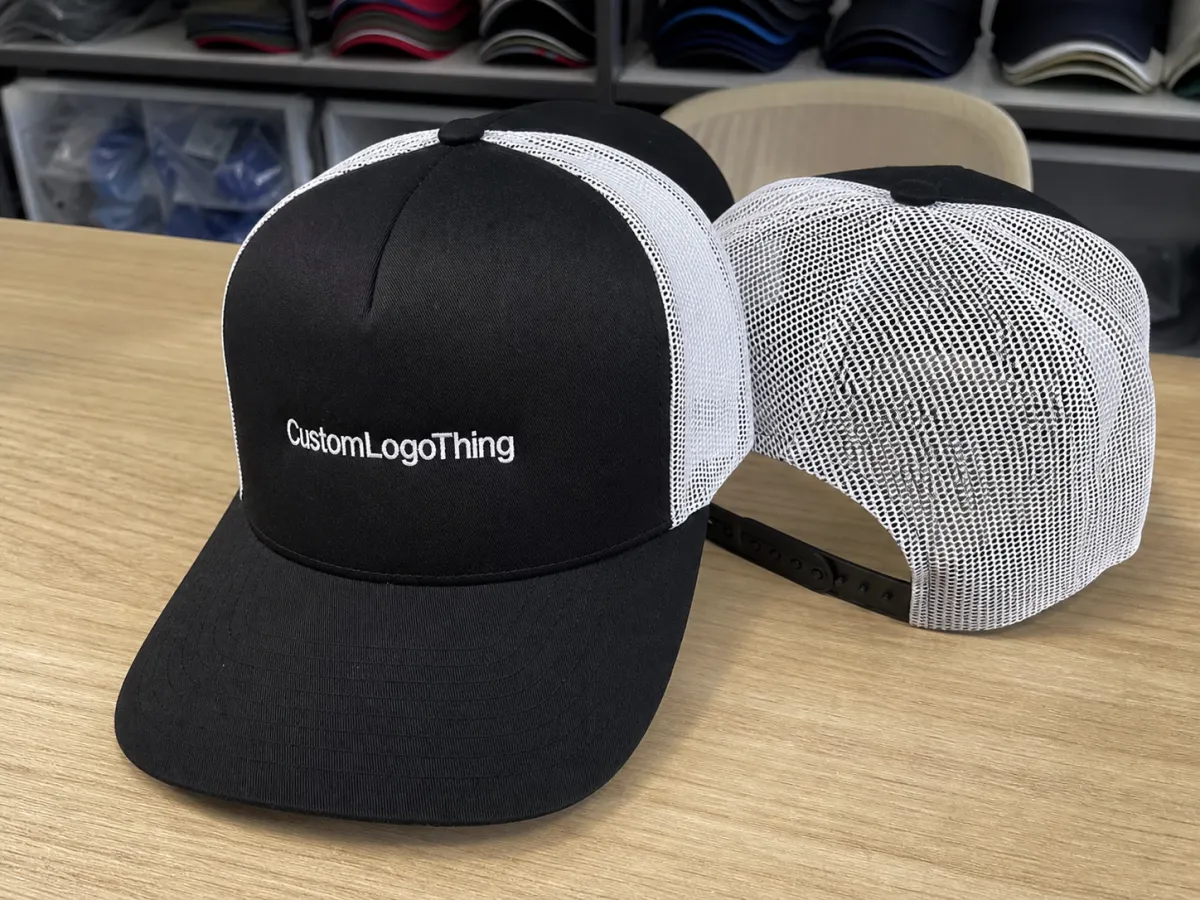
A corporate gifting trucker caps Unit Cost Review usually starts with the same surprise: a mesh-back cap can look more premium in use than its price suggests. That matters to buyers who need a gift that feels branded, wearable, and worth keeping without pushing the budget into apparel territory.
From a procurement angle, trucker caps are simple to plan. They are one size, so there is no size-run complexity, no leftover inventory in the wrong fit, and no need to collect recipient measurements before production. For onboarding kits, field teams, event handouts, and client mailers, that reduces both effort and waste.
The format also creates repeated visibility. A cap can be worn on a commute, at a weekend event, or during travel, which gives the brand more impressions than a desk item that stays packed away. That extra use is what makes the unit cost easier to justify than a one-time novelty.
Shipping and packing are another part of the value equation. Caps stack efficiently, mail cleanly, and do not usually require the kind of protection that fragile items need. If a gift is going to many recipients, that matters as much as the decoration itself.
The key point is not that trucker caps are cheap. It is that they often offer a better balance of visible value, low handling complexity, and broad appeal than other common corporate gifts. That is why the best review starts with fit for purpose, not only with the lowest quote.
What Makes a Corporate Trucker Cap Work as a Gift
A trucker cap is a small bundle of choices. The crown material, mesh back, bill shape, profile, and closure all affect how the cap wears and how it decorates. If those pieces are not aligned, the cap still functions, but the gift feels less intentional.
Front panel construction matters first. Foam-front caps read casual and photograph well, while cotton twill or brushed cotton gives a more refined finish and often works better for embroidery. Five-panel caps create a flatter front for larger graphics, while six-panel caps keep a more traditional shape. Low-profile fits sit closer to the head; mid-profile fits carry a little more height and structure.
Fit is important because corporate gifting usually serves mixed audiences. A sales team, a conference group, and a broad employee population need something that works across head sizes and style preferences. Adjustable snapback closures are popular because they keep the spec simple and the fit flexible.
Decoration should match the use case. Embroidery is durable and straightforward, but dense artwork can increase stitch time and raise setup cost. Patches can look more premium and hide small surface irregularities, while woven labels and side hits are better for subtle branding. Heat transfer can work for smaller runs, but it is usually less durable than stitched decoration.
Simple is often better. The more the spec tries to do, the more the price can move and the more the approval process can slow down. Buyers who keep the cap structure standard and the logo placement disciplined usually get the best mix of appearance, lead time, and repeatability.
Specs That Affect Decoration Quality, Fit, and Reorder Consistency
The safest way to protect quality is to lock the spec before you ask for final pricing. Crown height, panel count, closure type, bill curve, mesh density, and fabric weight all change how the cap feels and how the decoration lands on the front panel. Those are production variables, not just style preferences.
For embroidery, a stable front panel and enough surface area matter more than a trendy silhouette. For screen print, the front needs to stay flat enough that the artwork does not break across seams. Patches are more forgiving, but patch size, edge treatment, and backing method still affect both labor and finish quality. Heat transfer can work on smaller orders, though wash durability and surface texture should be checked first.
Reorder consistency is where disciplined specs pay off. If the first run uses a mid-profile six-panel cap with a matte snap closure and white mesh, the second run should not quietly become a different silhouette because it is slightly cheaper. That kind of drift creates complaints, reapproval cycles, and avoidable procurement work.
Useful approval checkpoints include:
- Vector art for clean edges and cleaner stitch paths.
- Color expectations that state whether Pantone matching must be exact or approximate.
- Maximum imprint area so the logo does not crowd seams or the bill.
- Sample signoff before bulk production starts.
- Packaging spec if caps need folding, banding, or individual polybags.
If shipping performance matters, not just presentation, transit testing is worth considering. The International Safe Transit Association publishes packaging guidance that can help buyers think beyond the cap itself and into carton handling and damage control: ISTA. That becomes relevant when caps are kitted or drop-shipped to multiple sites.
For inserts, hang tags, or branded cartons that use fiber-based materials, sustainability claims should be specific rather than decorative. FSC chain-of-custody is not a guarantee of quality, but it is a credible signal when paper sourcing matters: FSC. Buyers do not need every order to be overbuilt; they do need the spec to be clear enough that the next order matches the first.
Corporate Gifting Trucker Caps Unit Cost Review: Pricing, MOQ, and Quote Drivers
A practical corporate gifting trucker caps Unit Cost Review is driven less by the cap shell than by decoration, quantity break, and handling. At low quantities, setup charges and proof work matter a lot. At higher quantities, those fixed costs spread out and the per-piece price drops faster.
Typical pricing patterns look like this: a simple embroidered or patched cap at 250 units may land around $4.25-$7.50 per piece depending on the cap body, decoration complexity, and packaging. At 1,000 units, that same program may move closer to $2.75-$4.50 per piece. At 2,500 units or more, the cost can drop further if the artwork stays clean and the spec stays standard.
| Program Type | Typical MOQ | Indicative Cost per Piece | Common Decoration | Notes |
|---|---|---|---|---|
| Internal team gift | 250-500 | $4.25-$7.50 | One-location embroidery or patch | Setup charges have a bigger impact here. |
| Client or event gift | 500-1,000 | $2.75-$4.50 | Woven patch, embroidery, or screen print | Good balance of appearance and bulk pricing. |
| Large rollout | 1,000-2,500+ | $2.15-$3.90 | Simple patch or standard embroidery | Best place to spread tooling fees over volume. |
MOQ is not just a line on a quote. It shows where a supplier can produce efficiently without wasting material or labor. A lower MOQ can suit a pilot gift program or a regional team. A higher MOQ makes more sense when the brand asset is locked and the delivery date is fixed.
The main quote drivers stack quickly:
- Decoration method: embroidery, patch, screen print, or heat transfer.
- Stitch count and artwork complexity: more detail means more machine time.
- Cap color and body type: stock colors are usually easier to source.
- Packaging: individual boxing, polybags, or custom inserts increase handling.
- Rush service: short windows often carry a premium.
- Split shipping: multiple destinations increase fulfillment labor and freight.
Tooling fees matter most when the decoration uses a custom patch, molded element, or nonstandard fixture. Setup charges are the smaller line item that gets overlooked too often. A buyer may compare two offers that look close at first glance, then discover one includes a setup fee, a patch tool, and an art revision charge. That is how a quote that looked competitive turns into a higher landed cost.
Budget and premium options should be compared side by side. A standard cap with one-color embroidery may look plain next to a woven patch and custom label, but if the premium version improves wearability or brand recall for only a modest increase, it may be the better buy. A corporate gift should feel intentional, not expensive.
The cheapest cap is not always the least expensive order. Reorders, late approvals, and split freight can bury the first quote.
Process, Timeline, and Lead Time for Branded Trucker Caps
The production path is usually simple on paper and slow in practice when approvals move late. It starts with art review, moves to proof approval, then sample signoff if needed, then bulk production, quality control, and shipping. The risk is not complexity; it is delay between those steps.
For a standard decorated cap, a realistic timeline is often 12-15 business days after proof approval if the art is clean and the spec is standard. More detailed embroidery, special patches, or extra packaging can push that closer to 15-20 business days. Overseas sourcing may lower the unit cost, but freight and customs can extend the total lead time by several weeks.
Delays usually come from the same places: missing vector files, late approval from a marketing manager, a last-minute change from black mesh to white mesh, or unclear shipping instructions. These are coordination issues, not production mysteries.
A practical scheduling rule is to count back from the event date and build in time for approval, production, and transit. If the caps are needed for a conference, launch, or seasonal gift drop, the order should be live well before the deadline starts feeling tight. A two-day approval delay can erase the benefit of a fast factory.
Rush orders can work, but they are most reliable when three things are already true: the art is final, the quantity is locked, and the cap body is a stocked item. If any of those are still moving, rush service becomes a risk instead of a fix. The penalty is not only a surcharge; it is the higher chance of a mistake that needs correction under pressure.
The best quote is not the fastest one. It is the one that clearly maps proof timing, sample timing, production timing, and freight timing so the buyer can plan with confidence.
What Makes Our Cap Program Reliable for Repeat Corporate Orders
Repeat orders expose weak systems quickly. If the same artwork, thread colors, and panel spec do not reproduce cleanly, the first run may still look fine while the second run drifts. That is where consistency becomes a budget control issue, not just a quality claim.
Dependability matters when the caps are tied to a campaign date, client event, or internal launch. Buyers need the same front panel density, the same stitch behavior, and the same carton pack-out from one run to the next. If a factory cannot hold those details, the program starts to absorb invisible costs: rework, freight upgrades, and time spent explaining differences that should not have appeared.
Quality controls should be specific. Ask for inspection checks on stitching, trim consistency, and logo placement. Confirm how loose threads, bent bills, and mixed cartons are handled. If the caps are packed for distribution to multiple offices or franchise sites, carton labeling and ship-to accuracy matter just as much as the decoration.
- Pre-production proof to lock artwork, placement, and color.
- Stitch-count verification for repeatable embroidery output.
- Carton packing standard so the product arrives in the same condition each time.
- Fulfillment flexibility for multi-address shipping or kitting.
Consistency also reduces emergency freight charges. That matters in corporate gifting because delivery windows are often fixed by events rather than by supply chain comfort. If a reorder can be produced without retooling the whole job, the buyer gains speed and predictability at the same time.
The strongest cap programs rely on documented specs, a stable decoration method, and a repeatable approval process. That is how a branded cap stops being a one-off purchase and starts acting like a controlled program.
Next Steps: Build a Quote That Fits Quantity, Deadline, and Brand
If you want a quote that answers the buying question, send six things: quantity, deadline, logo file, preferred decoration, cap color, and shipping destination. Without those, most pricing is only a placeholder.
Ask for two scenarios. One should be a lower-cost spec with standard decoration and plain packaging. The other should be a more polished option with upgraded patch work, better structure, or a cleaner presentation box. That side-by-side view shows whether the extra spend is justified by the audience and the occasion.
For the cleanest order, approve art early, confirm the MOQ, and lock the delivery window before production begins. That avoids the most common source of change orders: deciding what you want after the factory has already started preparing the job.
Use the quote to answer three questions: Does the cap fit the audience? Does the landed cost support the budget? Does the lead time protect the event date? If all three are yes, you have a real sourcing decision instead of a pricing spreadsheet.
That is the value of a corporate gifting trucker caps Unit Cost Review: it turns a style choice into a procurement decision with a defensible cost per piece, a realistic MOQ, and a delivery window you can manage.
What is the usual unit cost for corporate gifting trucker caps?
It depends on quantity, decoration method, and packaging, so ask for tiered pricing instead of a single flat number. Lower quantities usually carry more setup impact, while larger runs reduce the per-cap cost more quickly.
What MOQ should I expect for branded trucker caps for gifts?
MOQ varies by supplier and decoration type, so confirm whether the minimum applies to the cap style, color, or imprint method. If you are testing a new employee or client gift program, ask for the smallest viable run and compare it against a volume quote.
Which decoration method keeps trucker cap pricing lower?
Simple embroidery, a single patch location, or one-color branding usually keeps costs more controlled than multi-location decoration. Fewer stitch colors and less complex artwork often reduce setup work and improve consistency.
How long does a custom trucker cap gift order usually take?
Turnaround depends on proof approval speed, decoration method, and order size, so final art should be ready before you request production. Build in transit time and a buffer for revisions if the caps are tied to a launch, event, or holiday delivery.
Can I mix cap colors or ship to multiple addresses without raising costs too much?
Yes, but split colors or destinations can add handling, packing, or freight complexity that affects the final unit cost. Ask for a consolidated quote and compare it against separate ship-to options before you approve the order.
For most buyers, the cleanest path is simple: lock the spec, compare bulk pricing against the decoration you actually need, and choose the option that keeps the corporate gifting Trucker Caps Unit cost review aligned with the deadline, the audience, and the budget.


