Corporate Gifting Twisted Handle Paper Bags MOQ Guide
In corporate gifting, the bag is part of the presentation, not just a wrapper. The right spec affects how the gift is carried, how the brand is perceived, and whether the pack-out runs smoothly. For buyers comparing corporate gifting twisted handle Paper Bags MOQ across suppliers, the useful question is not only price per unit, but whether the bag fits the product, the packing process, and the event timeline.
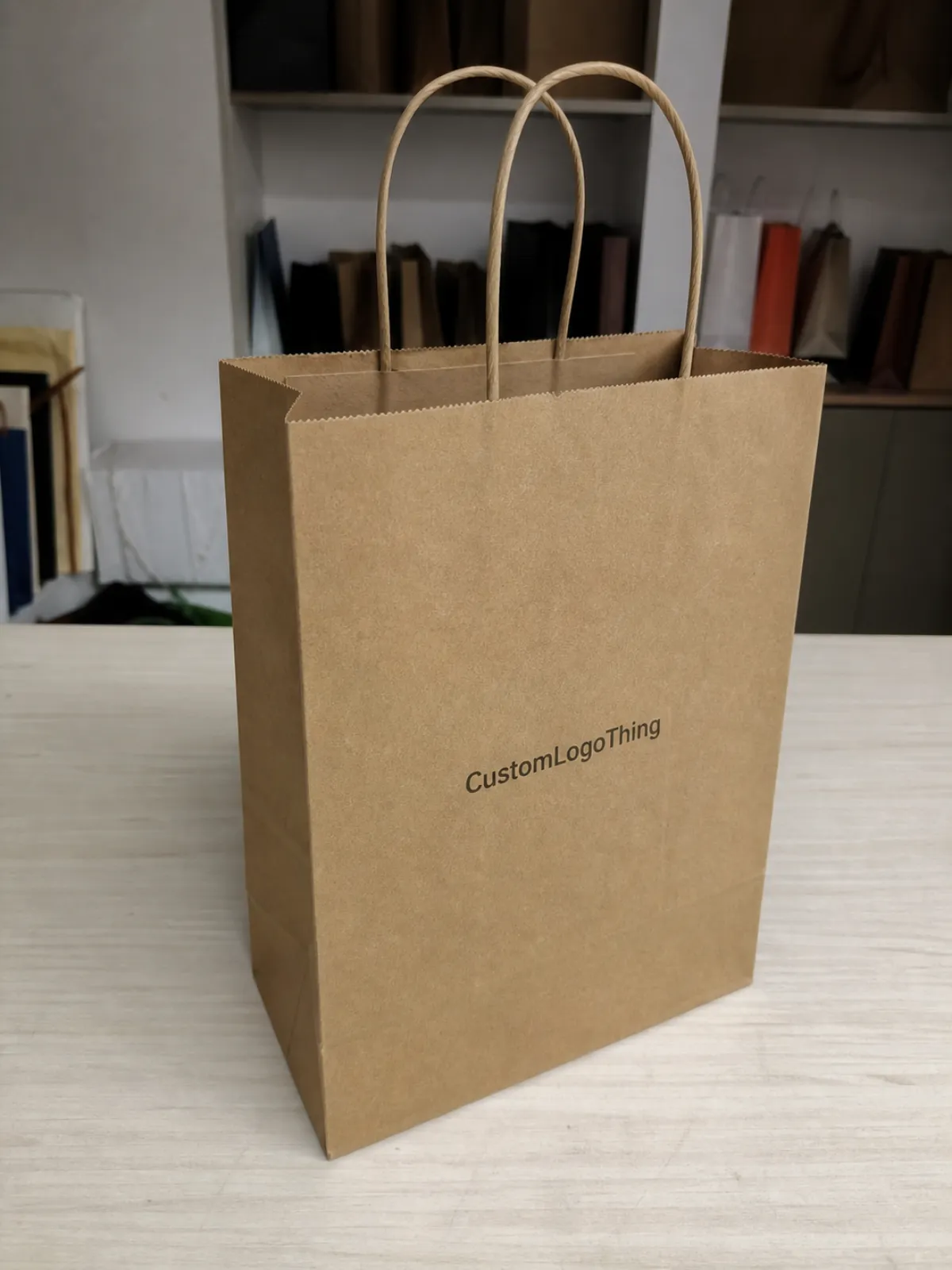
Twisted Handle Paper Bags are a practical middle ground: more polished than flat-handle bags, easier to store than rigid boxes, and flexible enough for recurring programs. They work well when the paper weight, base strength, and handle attachment are matched to the actual contents. If those details are off, the bag can look fine in a proof and still fail in use.
Low quotes are only useful if the final bags hold the gift, print cleanly, and arrive in time. Paper grade, finish, size, and freight all affect the total outcome. The best order is the one that avoids rework, damage, and schedule slips while still meeting the brand standard.
Why Twisted Handle Paper Bags Work for Corporate Gifting
Recipients judge gifting packaging quickly. They notice the handle feel, the stiffness of the side panels, and whether the bag looks secure before they open it. That makes the bag part of the gift experience, especially for onboarding kits, client presents, and event handoffs.
Twisted handle bags are popular because they balance appearance and practicality. The handles feel sturdier than thin flat strips, and the bags fold flatter than many presentation boxes, which helps with storage and bulk shipping. They are also easier for packing teams to use repeatedly across campaigns.
They are forgiving across a range of kits. Apparel, notebooks, skincare sets, bottles, and mixed gift bundles can often share the same bag family if the dimensions are chosen correctly. That reduces SKU sprawl and makes reorders easier to repeat.
Common uses include:
- Employee welcome kits with apparel, notebooks, and small accessories
- Conference giveaway bags for brochures, samples, and event materials
- Client appreciation packages with boxed gifts, food items, or desk goods
- Holiday programs that need one consistent look across teams or regions
When the structure is right, a simple branded bag can outperform a more complicated package. Good print, good sizing, and clean finishing usually matter more than extra layers that add cost without improving the handoff.
Bag Construction, Paper Grades, and Finish Options
The visible design is only part of the spec. Paper weight, gusset depth, bottom reinforcement, and handle bond determine whether the bag survives packing, transport, and repeated handling. A mockup can look correct even when the construction is too light for the load.
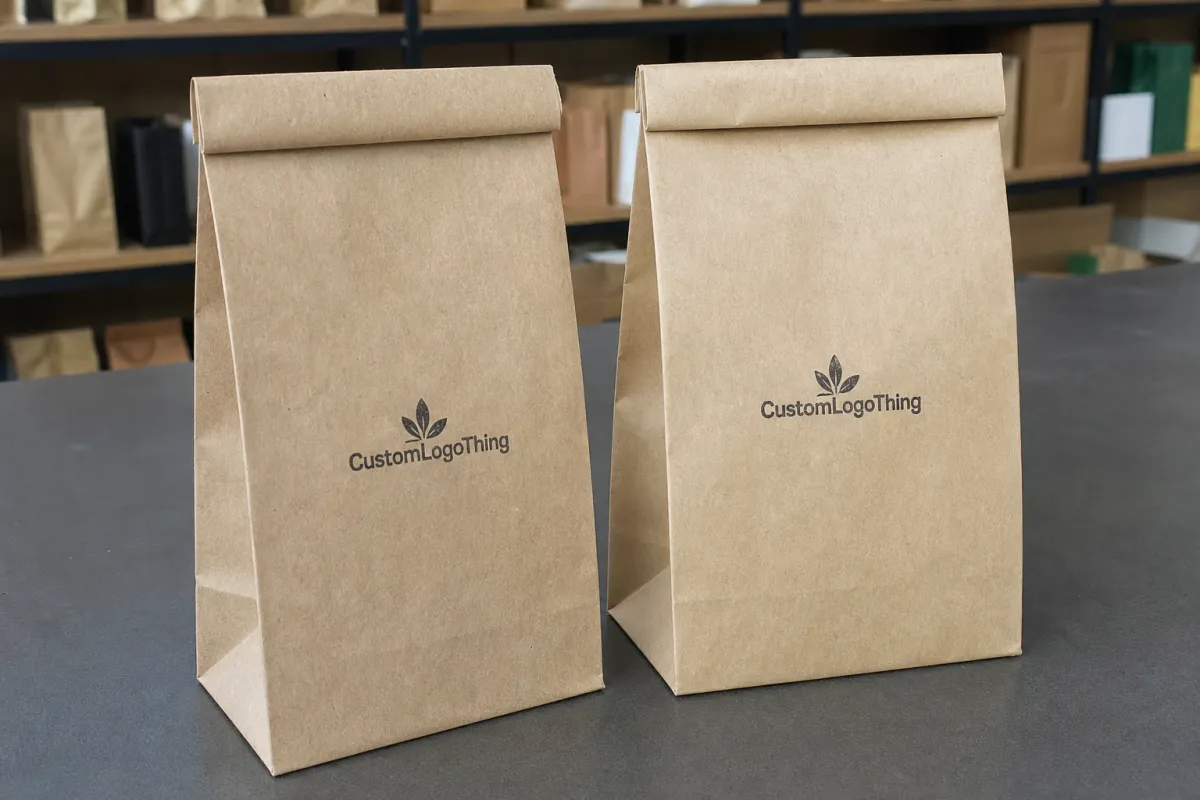
Kraft paper is often the most practical choice for a natural or understated look. It hides scuffs well and supports simpler branding. Bleached or coated paper is better when the logo needs sharper edges or more accurate color reproduction. For color-critical jobs, coated stock usually prints more predictably than uncoated paper.
Paper weight should match the contents. Light kits do not need overbuilt stock, but heavier gifts need a stronger base and better sidewall support. Very thick paper is not always the answer; once the bag becomes too stiff, it is harder to fold, store, and pack efficiently.
Finish affects both presentation and cost. Single-color flexographic print is usually the most economical option for larger runs. Multi-color artwork, lamination, spot UV, foil, and full-coverage printing move the bag into a premium category, but each step adds setup or production cost. The finish should be judged against the value of the gift inside.
For buyers checking sustainability claims, the EPA's recycling basics page and the FSC framework are useful references. They do not replace a supplier spec sheet, but they help verify fiber content, certification, and whether a finish may affect recyclability.
Other details matter too. Surface texture affects how fine logos print. Scuff resistance matters when bags are moved in bulk. Adhesive quality matters if the order sits in storage before the event. These small points separate a bag that only looks good on day one from one that holds up through the whole program.
Size, Load Capacity, and Insert Compatibility
Bag size should follow the gift kit. The goal is enough room for the contents to sit naturally, but not so much space that they shift around or slump to one side. A bag that is too small creates seam stress; a bag that is too large looks loose and unfinished.
Gusset width is one of the most important dimensions. Wider gussets help boxed items stay upright and prevent sidewall bowing. Bottom depth spreads weight better and reduces stress near the handle anchors. If the kit includes a bottle, candle, or rigid carton, those dimensions matter as much as the artwork.
Load capacity should be stated directly, not assumed from a product listing. A bag that handles apparel well may not perform under glass, ceramic, or a dense mixed kit. Heavier contents may need a reinforced bottom, a stronger handle bond, or a board insert.
Inserts can prevent a lot of problems:
- Soft goods: apparel, fabric kits, and folders often fit standard constructions
- Rigid gifts: boxed items, bottles, and ceramics need wider gussets and stronger bases
- Mixed kits: use inserts or internal stabilization to keep items from shifting
A cardboard stiffener keeps the base flat, tissue improves presentation, and dividers reduce movement in transit. These are small additions compared with the cost of a damaged gift or a repack delay. Before approving production, it is worth testing the bag with the actual assembled kit, not just the item dimensions on paper.
Corporate Gifting Twisted Handle Paper Bags MOQ and Pricing
MOQ is driven by production economics. Press setup, cutting, handle attachment, print plates or tooling, waste, and finishing all influence the minimum order a supplier can produce efficiently. That is why corporate gifting Twisted Handle Paper Bags MOQ can differ even when two bags look similar in size.
Price typically falls as quantity rises because fixed setup costs are spread across more units. A plain kraft bag with simple branding sits in a different cost band than a laminated, multi-color bag with premium finishing. Buyers often focus on print cost alone, but paper grade and production method can matter just as much.
It helps to think in tiers rather than a single break point. A 1,000-piece order is not simply half of a 2,000-piece order, because setup and make-ready costs do not scale that way. Once an order crosses a certain threshold, the unit price often drops faster than expected.
| Option | Typical MOQ | Approx. cost per piece | Setup charges / tooling fees | Best fit |
|---|---|---|---|---|
| Plain kraft twisted handle bag | 500-1,000 | $0.18-$0.32 | Low to moderate | Internal kits, simple handoffs, fast approvals |
| One-color custom logo bag | 1,000-3,000 | $0.28-$0.55 | Moderate | Brand visibility with controlled spend |
| Full-coverage premium bag | 3,000-5,000+ | $0.55-$1.20+ | Higher | High-visibility programs and premium gifts |
These numbers are directional. Freight, paper conditions, print method, and finishing all change the final quote. To compare suppliers accurately, ask for unit price, setup, tooling, freight, and sampling as separate lines. A bundled quote can hide the real cost of the job.
It is also worth checking whether the quoted MOQ is a manufacturing minimum or just the supplier's preferred break point. If the order is strategically important, some vendors can adjust quantities or combine stock formats, but the economics should be clear before artwork is approved.
"A low unit price can hide expensive friction elsewhere. If the size, print coverage, freight, and sample process are not spelled out, the job often costs more in time than it saves in paper."
For recurring programs, tiered pricing helps decide whether it is worth ordering a little more for a better break or keeping inventory tight and reordering later. The right choice depends on storage space, artwork stability, and how often the bags will be reused.
Artwork Approval, Production Steps, and Turnaround
Most delays happen before production starts. A typical order moves through inquiry, specification review, artwork submission, proofing, approval, manufacturing, packing, and shipping. Missed bleed, unclear colors, or late address changes can add more time than the run itself.
Artwork should be supplied in the cleanest format available. Vector files are best for logos and line art. Raster files need enough resolution for the final size. Safe areas and bleed should be checked against the actual bag dimensions so folds do not cut into the design.
Pantone references should be confirmed early when brand accuracy matters. Paper absorbs ink differently from a screen mockup, so the printed result may look warmer or duller than expected. That is normal, but it should be planned for during proofing.
Turnaround depends on quantity, finish, and artwork complexity, but the approval timeline matters just as much. A job can be production-ready and still stall if stakeholders have not signed off. Fast, complete feedback is usually the shortest path to shipment.
Standard timelines often fall in the 12-15 business day range after final approval for straightforward orders. Specialty finishes, larger quantities, or tight schedules can extend that. Freight needs its own window so the bags arrive before the event, not just before they leave the plant.
Samples are worth requesting on new programs, unusual sizes, or jobs with strict brand standards. A physical sample shows how the handles feel, whether the bag stands properly, and whether the artwork sits in the right place once the bag is assembled.
What Makes Our Bags Reliable for Recurring Corporate Orders
Recurring orders expose weak specs. The first run often passes because everyone is focused on launch. The second run shows whether paper weight, handle color, print placement, and finish are actually repeatable. In corporate gifting, consistency is part of the product.
That consistency matters operationally too. A repeatable bag spec reduces packing errors and lets teams reorder without rebuilding the job from scratch. For companies running multiple campaigns, predictable packaging is often worth more than a small savings on the first order.
Material consistency should be checked on every reprint. Paper weight should stay stable, handle bonds should hold, and dimensions should remain true so the same gift kit fits the same way next quarter. If those basics change, the program starts to look uneven.
Color control is another common issue. A reorder that prints noticeably darker or lighter than the first batch can make the gift set look mismatched, even if the files are correct. Registration and trimming matter too. A logo that drifts toward a fold or edge loses the polished look corporate gifting depends on.
Finishing quality should be consistent as well. Lamination, edge trimming, and adhesive application all affect how the bags age in storage. If the finish is brittle or the glue is weak, bags can degrade before the next campaign ever starts.
Good documentation keeps reorders clean. Save the size, paper grade, artwork version, print method, and approved sample notes. That turns the next order into a controlled repeat instead of a fresh negotiation every time a new department needs bags.
How to Request the Right Quote and Avoid Rework
The best quote starts with a complete brief. If a supplier gets only a quantity and a logo, they have to guess on size, finish, and load requirements. That is where rework begins. For meaningful comparisons, include dimensions, contents, artwork, delivery timing, and finish requirements in one request.
Send the actual gift information if you have it. A notebook, bottle, and candle may weigh the same, but they behave differently inside a bag. Rigid items need more support. Soft goods may need less reinforcement but more room for tissue or inserts.
Ask for a line-item quote. Separate unit price, setup, tooling, finishing, freight, and sampling so suppliers can be compared on the same basis. A bundled figure can hide the real cost if one vendor discounts print but charges more for shipping or proofing.
Request pricing at several quantity levels. The best break point may sit just above or below the number the team first had in mind. Sometimes it is worth ordering slightly more if the savings are real and the artwork will stay in use. Other times, the lower quantity is smarter because storage is limited or the design may change soon.
A practical order checklist:
- Bag dimensions and approximate load weight
- Paper grade, finish, and handle preference
- Artwork files and color references
- Quantity breakpoints and MOQ tiers
- Delivery location, freight method, and required arrival date
That checklist speeds quoting and reduces the odds of discovering a sizing problem after approval. A few extra minutes spent clarifying the spec usually saves days later and keeps the bag focused on supporting the gift.
What is a typical MOQ for corporate gifting twisted handle paper bags?
MOQ depends on size, paper grade, and print method rather than one universal number. Plain kraft bags often allow lower minimums, while multi-color or premium-finish bags usually require higher runs. The most useful comparison is tiered pricing at several quantities so you can see where the real break point sits.
How does printing affect the price of twisted handle paper bags for gifts?
More print colors, larger coverage, and premium finishes increase setup and production cost. A simple one-color logo is usually less expensive than full-coverage graphics, foil, or spot UV. Artwork complexity can also lengthen proofing, so print-ready files help keep the order moving.
Can twisted handle paper bags hold heavier corporate gift items?
Yes, if the paper weight, base construction, and handle attachment are specified for the load. Heavier gifts may need a reinforced bottom, a board insert, or a wider gusset to prevent stress at the corners. Always share the actual contents or the finished gift weight before the quote is finalized.
How long does production usually take after artwork approval?
For straightforward orders, production often lands around 12-15 business days after final approval. Specialty finishes, larger quantities, or late changes can extend that window. Freight should be treated separately so the bags arrive before the event, not just before the shipment leaves the plant.
What should I send to get an accurate quote for custom paper bags?
Send the bag size, quantity, artwork files, color references, delivery address, and required arrival date. If possible, include the item dimensions or approximate weight so the bag can be checked against the actual kit. If you are comparing options, ask for pricing at multiple MOQ levels and request separate line items for setup and freight.