Corporate Gifting Flat Handle Paper Bags Reorder Plan
Most repeat bag orders do not fail because the artwork looks wrong. They fail because the bag cannot survive the job it was asked to do. That is why a corporate gifting Flat Handle Paper Bags reorder plan should be treated like a production spec, not a branding afterthought. A bag that stacks cleanly, ships without crushing, and carries a gift without tearing saves more money than a pretty mockup ever will.
Flat Handle Paper Bags are a practical choice for recurring gift drops because they are simple to produce, easy to restock, and less likely to drift from one run to the next. For employee welcome kits, trade shows, holiday distributions, and client gifting, that predictability matters. One approved size, one print file, one carton count, one repeatable standard.
That boring consistency is the advantage. It keeps the budget visible and the workflow calm.
Why the corporate gifting flat handle paper bags reorder plan starts with the bag, not the gift
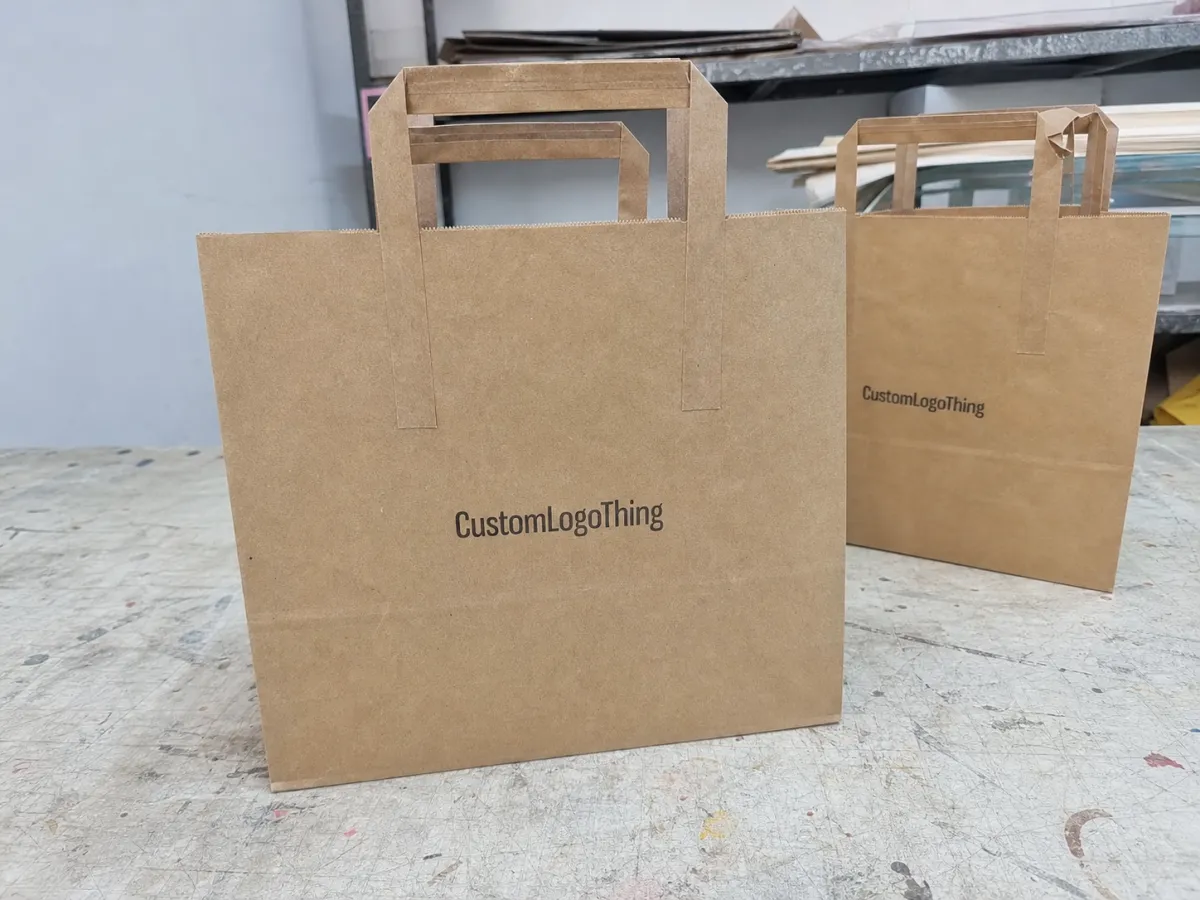
Flat handle bags are not trying to win points for drama. They are trying to carry weight, hold shape, and arrive looking close to the proof. The handle is folded from paper and glued into the top edge, which keeps the build straightforward and usually cheaper than rope or cord alternatives. On repeated corporate runs, a few cents saved per unit can turn into a meaningful difference once the order crosses a few thousand pieces.
From the buyer side, repeatability is the real value. A reusable spec means the next order can move forward without reopening the whole conversation about dimensions, artwork placement, or carton packing. That is where a corporate gifting flat Handle Paper Bags reorder plan earns its keep: fewer proof rounds, fewer surprises, fewer emergency corrections when the next event date is already on the calendar.
Flat handle construction also works well for mixed gift programs. It can carry boxed snacks, notebooks, apparel, small bottles, and curated sets that are packed quickly before an event. The limits show up fast, though. If the contents are heavy, sharp-edged, or oddly shaped, the bag needs a reinforced base and a stock that does not soften under pressure after ten minutes of handling.
For a recurring gift program, the bag has to survive a few predictable stress points:
- stacking in storage without flattening the handles
- transport in cartons without rubbing off the print
- handoff at reception desks, booths, or venue check-in tables
- being carried again after the event instead of ending up in a bin
The logic is simple. If the bag spec keeps changing, the program starts leaking time and money. Lock the structure once, then only revise it when the gift itself changes enough to justify the extra work.
One more practical comparison helps. Rope handles and laminated finishes can look more premium, but they also add cost, lead time, and another failure point. Flat handle bags usually give up some showmanship and gain reliability. For a recurring order, that trade often makes more sense than chasing a higher-end finish that nobody will notice once the bag is filled.
Paper weight, handle strength, and print choices that hold up
The first place to look is the paper stock. Light kraft in the 120gsm range can work for slim giveaways and folded inserts, but many corporate gift programs land closer to 150gsm or 200gsm because the bag needs backbone. Heavier sets, boxed gifts, and bags that will be reused benefit from the extra stiffness. A weak stock may look fine on a sample table and fail once it is full, which is a very expensive way to discover the difference between appearance and performance.
Handle attachment is just as important as the paper itself. A neat flat handle is only useful if the glued seam is wide enough, the fold is clean, and the bond survives pull and lift stress. Buyers should ask about the glue line, reinforcement at the top fold, and whether the base can take the expected load without bowing. If the bag is intended to carry bottles or dense boxed items, the supplier should be able to explain the construction in plain terms instead of leaning on marketing language.
Print choice changes both the look and the reorder risk. A restrained one-color logo panel often looks more composed than a busy wrap design that fights the shape of the bag. Every extra color adds setup work, more proofing, and a greater chance that the second run will drift slightly from the first. If the brand can live with a clean panel, the result is usually sharper and easier to repeat.
Finish matters too. Uncoated kraft hides small marks and gives a more natural feel. Matte aqueous coating adds polish without going too glossy. Gloss can make artwork pop, but it also shows scuffs faster. Full lamination improves wipe resistance and can make the bag feel more premium, yet it adds cost and moves the bag away from a paper-first look.
If the sourcing review includes sustainability language, ask for FSC-certified stock where the program allows it. That does not solve every procurement problem, but it gives the buyer a cleaner paper trail for internal approvals and external claims.
There is a useful rule here: the most expensive build is not always the best build. The strongest candidate is the one that can be reproduced with the fewest variables and the least guesswork.
Size, gusset, and finish specs to lock before reordering
Never guess the dimensions on a reorder. Width, gusset, height, handle drop, and base depth all affect how the gift fits and how the bag feels in the hand. A 10 mm or 15 mm difference can sound minor in a spreadsheet and become a real problem in packing, especially if the contents include tissue, brochures, or a rigid box that was not part of the original sample.
For a corporate gifting flat Handle Paper Bags reorder plan, the size spec should account for the real contents, not the smallest item that happened to fit during sampling. A slim notebook and a boxed candle do not create the same load profile. Neither do a folded shirt and a ceramic mug. That sounds obvious until a program moves from the test set to production and somebody realizes the current bag only works when nothing inside has corners.
Artwork rules need the same discipline. Save the dieline, approved proof, bleed allowance, safe zone, and exact print position. If the logo is 8 mm higher than the last run, it may still be acceptable. It may also trigger a round of questions from brand reviewers who compare batches more closely than most suppliers expect. That is not nitpicking. That is how consistent programs stay consistent.
Useful specs to lock before the next run:
- Width: the usable face, not a rough estimate
- Gusset: enough room for the widest item plus tissue or filler
- Height: tall enough to protect the contents without awkward overhang
- Handle drop: comfortable for hand carry, especially for event staff
- Base reinforcement: critical for boxed gifts, bottles, and heavier items
Decorative extras should earn their place. Ribbon ties, card pockets, and extra inserts can look polished, but they also increase setup time and reorder cost. If they do not improve the gift experience or protect the contents, they are just another thing that can shift between runs.
The same logic applies to recycled or natural-fiber papers. They can be a good fit, but they may show shade variation more easily than coated stock. That is not a defect by itself; it is a known property. Buyers who want a very tight color match should factor that into the spec before the reorder goes out.
Pricing, MOQ, and unit cost for recurring bag runs
The cost drivers are predictable, which is why buyers should be suspicious when a quote looks too neat. Material weight, bag size, handle construction, number of print colors, finish, carton packing, and freight all affect the final number. If a supplier does not ask about gift weight or delivery timing, the quote may be low for the wrong reason.
MOQ changes the math quickly. A corporate program with several event dates may want only the next batch, but a larger run can lower unit cost and keep the next reorder from triggering fresh setup charges. That is the basic tradeoff: smaller cash outlay now or lower average cost across the whole program. There is no clever trick here, only volume, setup, and timing.
At scale, the cheapest unit price usually comes from standard sizes, fewer print colors, repeat artwork, and carton packs that do not require special handling. Add a second print pass, custom finishing, or split delivery, and the price climbs. Not because anyone is being difficult. Because production steps are real, and they all take time.
| Bag option | Typical use | Best for | Approx. unit cost at 5,000 pcs |
|---|---|---|---|
| 120-150gsm kraft, 1-color print | Light kits, flyers, small merch | Simple giveaways and short carry distance | $0.18-$0.28 |
| 150-180gsm kraft or coated stock, 1-2 colors | Employee kits, client gifts, boxed items | Most recurring corporate orders | $0.24-$0.38 |
| 180-250gsm reinforced stock, matte or lamination | Heavier gifts, premium programs | Better scuff resistance and reuse | $0.30-$0.55 |
Those numbers are a guide, not a promise. Print coverage, handle style, carton count, and freight can move the final landed cost. A low MOQ may also push the unit price up because setup charges are spread across fewer bags. That is often where budget plans get optimistic and procurement gets annoyed.
The cheapest quote is only cheap if the second order matches the first and the cartons arrive before the event.
For buyers comparing recurring packaging options, the Wholesale Programs page is a useful reference point for volume planning and repeat-order structure.
Lead time and production steps for a clean reorder
A clean reorder follows a predictable path: file check, proof, approval, production, packing, dispatch. Most delays happen before the machines start, not during print. If the artwork is ready and the spec has not changed, a repeat job moves faster because the supplier is not rebuilding the order from scratch.
For repeat runs, a common timeline is 8 to 12 business days from proof approval to production completion, with transit adding another 3 to 7 business days depending on destination and shipment method. First-time jobs usually take longer because dielines, print placement, and sample signoff need more back-and-forth. Add a little more time if the bags need to arrive before a packing date or if they are being split across locations.
The timeline gets easier to manage when the buyer asks practical questions early:
- Is the previous stock still the right stock for the new gift?
- Has the delivery window changed since the last event?
- Will the bags ship to one location or several offices?
- Are the gift sets being packed before or after the bags arrive?
That last question matters more than many teams expect. If the bags arrive after packing starts, the schedule becomes fragile. If they arrive early, the team has breathing room. Logistics rarely looks exciting from the outside, but boring logistics is what keeps the event from turning into a last-minute scramble.
If the shipment is moving with fragile contents or multiple cartons, ask whether the pack-out was checked against ISTA transport testing logic. A good-looking proof does not protect product in a truck. Packaging has to survive movement, stacking, and pressure, not just a PDF review.
Late approvals are the usual culprit. The factory can only print what has been signed off. If a proof sits in an inbox for three days, the schedule moves. Production does not wait for memory or optimism.
Repeat jobs are faster for another reason: they reduce judgment calls. When the size, stock, and artwork are already locked, there is less room for confusion and less chance that someone will "improve" the order in ways nobody asked for.
Supplier controls that keep every reprint identical
Reliable suppliers do more than quote a price. They keep records. That means archived artwork, locked dielines, approved sample retention, and spec sheets that show the exact paper stock, handle construction, finish, and carton count from the last run. For a corporate gifting flat handle paper bags reorder plan, that record-keeping is what stops the second order from drifting away from the first.
Color control matters more than casual buyers think. A logo that looks right in one batch and slightly warmer in the next can create more complaints than a larger design issue. Good suppliers compare each run against the approved sample, not just against the digital file, because printed paper and screens behave very differently. That is especially true on kraft, where the base color affects how inks read.
Quality control should include a few checks that are easy to understand and hard to fake:
- Handle pull testing against the expected load
- Carton inspection for crush, moisture, and count accuracy
- Print registration to keep logos centered and clean
- Sample retention so future reprints match the approved standard
A supplier should also be able to tell the buyer the tolerance range on the bag size and the handle placement. Nominal dimensions are not enough. If the spec says 250 mm wide, the team still needs to know what the acceptable production window is. That is the difference between a controlled repeat order and a polite guess.
There is a trust issue here as well. If the supplier changes paper, glue, or handle depth without flagging it, the first failure will not show up in the spec sheet. It will show up at the event desk, in front of people, with a torn bag in hand. That is a bad place to discover shortcuts.
I tend to trust suppliers who can answer a reorder question immediately from archived records. If they need to start from zero every time, the process is not really repeatable. It is just being reassembled under pressure.
Reorder checklist and next steps before the next event
The next reorder should feel like a checklist, not a scavenger hunt. Start with the exact bag size, paper stock, handle style, print file, quantity, delivery address, and event date. Then compare those details against the last approved sample, not just against memory. Memory is where packaging budgets get fuzzy.
Build the reorder calendar around actual consumption. If the team used 3,200 bags across two events and had 400 left over, that tells you something useful. If the next campaign is larger, order more. If the program is shrinking, cut the quantity before the warehouse becomes a storage room for old branding.
Keep one approved sample bag on file and one digital spec sheet with the important details: measurements, print placement, carton packing, and any handling instructions. That gives procurement a faster approval path and production a clearer target. It also helps when someone new takes over the account and tries to rely on a vague description from six months ago.
Before the next order goes in, confirm three things:
- The gift still fits the bag without forcing the sides open
- The lead time still matches the event schedule
- The approved artwork file is the same one used on the last run
That is the real value of a corporate gifting flat handle paper bags reorder plan: not marketing language, not fancy language, just a process that keeps the same bag arriving the same way, on time, with fewer surprises. Repeat packaging programs stay efficient when the spec stays stable and the approval trail stays clean.
How often should a corporate gifting flat handle paper bags reorder plan be reviewed?
Review it after each major event cycle, not once a year. Gift contents, pack weights, and delivery timing change more often than teams expect, and the bag spec should move with them. If the program changes size or shape, the reorder plan should change too.
What details do I need to save for a fast flat handle paper bag reorder?
Save the exact size, paper stock, handle style, print colors, artwork file, approved proof, carton count, and delivery address. If the supplier can also reference the previous sample and tolerance notes, the next order usually moves faster.
How does MOQ affect recurring corporate gifting orders?
MOQ changes unit cost because setup charges are spread across the total quantity. Smaller orders are easier on cash flow, but they usually cost more per bag. Larger orders lower the per-unit price, as long as the storage space and event timing make sense.
What lead time should I expect for a repeat flat handle bag order?
Repeat orders are often completed in 8 to 12 business days after proof approval, with transit adding 3 to 7 business days depending on route and carrier. First-time jobs take longer because the dieline, proofing, and sample signoff usually require extra rounds.
What should I check before approving the next bag reprint?
Check dimensions, artwork alignment, color reference, handle strength, and carton quantity against the last approved sample. Also confirm that the gift still fits the bag without strain; a reprint that arrives on time but does not fit the product is still a failed order.