Buyer Fit Snapshot
| Best fit | Corrugated Box Assembly Cost projects where brand print, material claims, artwork control, MOQ, and repeat-order consistency need to be specified before quoting. |
|---|---|
| Quote inputs | Share finished size, material target, print colors, finish, packing count, annual reorder estimate, ship-to region, and any compliance wording. |
| Proofing check | Approve dieline scale, logo placement, barcode or warning zones, color tolerance, closure strength, and carton packing before bulk production. |
| Main risk | Vague material claims, crowded artwork, missing packing details, or unclear freight terms can make a low unit price expensive after revisions. |
Fast answer: Corrugated Box Assembly Cost: Pricing, Process, and Specs should be specified like a repeatable production item. The safest quote records material, print method, finish, artwork proof, packing count, and reorder notes in one written spec.
Production checks before approval
Compare the actual filled-product size with the drawing, then confirm tolerance on folds, seals, hang holes, label areas, and retail display edges. Reserve space for logos, QR codes, warning copy, and material claims before decorative graphics fill the panel.
Quote comparison points
Review material grade, print process, finish, sampling route, tooling charges, carton quantity, and freight assumptions side by side. A quote is only useful when the supplier can repeat the same color, closure quality, and packing count on the next order.
Corrugated Box Assembly Cost: Pricing, Process, and Specs
Corrugated box assembly cost can look deceptively simple on a quote. Then the job hits the floor, and the real numbers show up in folding time, adhesive cure, insert placement, labeling, hand packing, and inspection. Board price is only one piece of the puzzle. In a packaging plant, the billable work is often the labor in the middle, the part buyers do not always see on the first pass. I have watched a clean-looking carton turn into a labor-heavy unit simply because the packout had three more motions than anyone expected. That is where budgets start wobbling.
From a buyer's perspective, the number that matters most is the ready-to-ship cost. That is the carton, the work needed to build it, and the handling required to move it out the door in usable form. A box that looks tidy in a spec sheet may still need several hands to finish. If the project begins as a shipping carton, reviewing Custom Shipping Boxes early can keep the structure from drifting after pricing has already started.
Custom Logo Things approaches each job with a plain rule: match the build to the actual use, not to a flashy spec that adds cost without adding value. A good corrugated box assembly cost quote should show what is included, what sits outside the base price, and which parts of the build change if the job moves from a plain shipper to a kitted pack or a branded retail format. That clarity saves money and, just as useful, it keeps the conversation honest.
Why Corrugated Box Assembly Cost Is More Than a Line Item
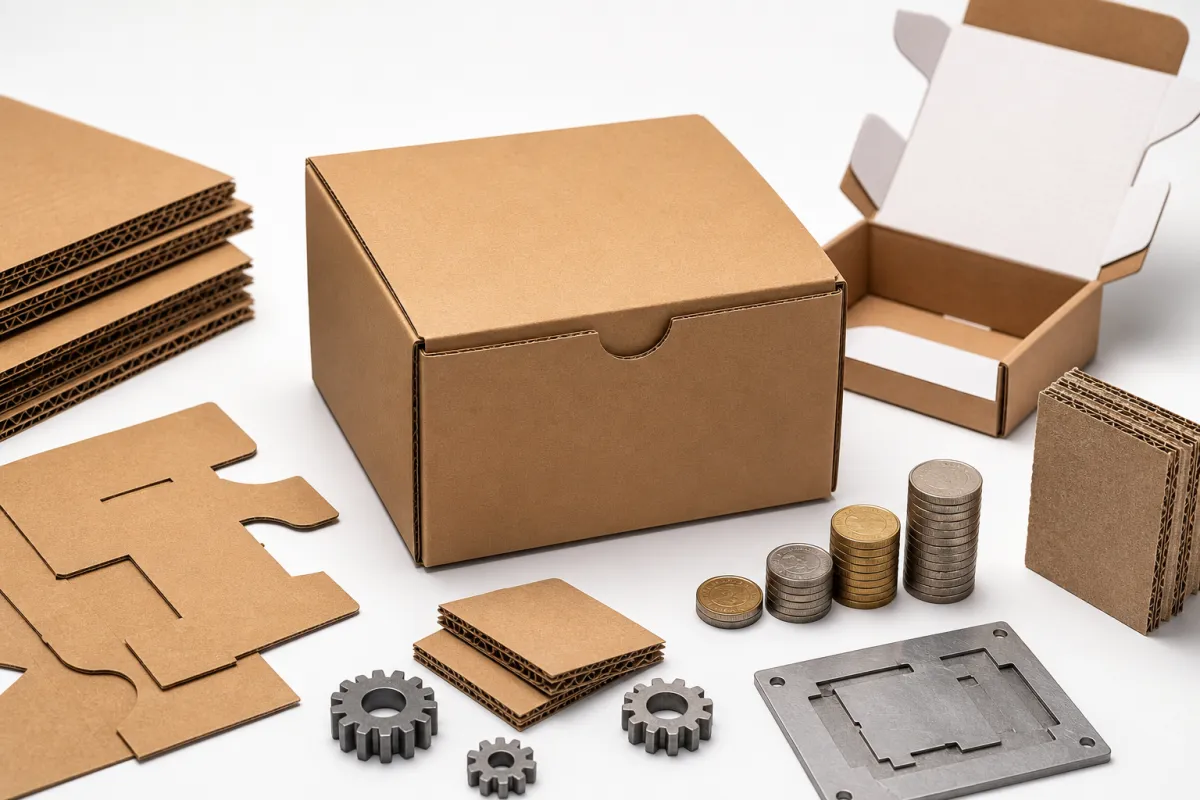
A carton can look inexpensive on paper and still carry a meaningful corrugated box assembly cost once production starts. In a warehouse, a basic RSC may fold in seconds. Add tape, hand insertion, QC checks, or pallet staging, and the cost profile shifts quickly. That is the part buyers miss when they focus only on board. The finished, packed, labeled unit is the number that matters.
The common mistake is treating corrugated box assembly cost as if it were only a material issue. Board grade matters, but labor often moves the total faster than paperboard does. A box that needs two folds and one tape pass is not in the same category as a mailer that needs score-breaking, adhesive, inserts, matched print, and final bundle wrap. The material may move by pennies. Labor can move by dollars. That is not theory; it is the kind of thing you feel immediately when a line slows down and everyone starts asking who approved the extra step.
Launches expose that difference. A buyer may approve a prototype at a comfortable price, then place a larger order and discover the quote never accounted for the real pack-out pattern. Holiday builds do the same thing. A change in customer instructions can do it too. Clear corrugated box assembly cost detail gives purchasing teams room to plan instead of reacting when volume changes or shipping rules shift after the first trial.
The better quote separates the cost of the carton from the cost of preparing it for shipment. That separation gives a cleaner read on cost per piece, and it makes later comparisons far more honest. One supplier may include inserts, another may price them separately, and a third may leave freight out of the number entirely. The lowest opening price is not always the lowest landed cost. The gap can be small on a single order and surprisingly large across a quarter of steady replenishment.
A simple box stays simple only while the build stays simple. The moment handwork enters the job, corrugated box assembly cost starts reflecting labor, control, and repeatability rather than paper alone.
For anyone buying packaging at scale, that distinction changes the budget conversation. It affects inventory planning, reorder timing, and whether the team gets forced into rush freight because the packaging budget was built on the wrong baseline. A solid corrugated box assembly cost quote makes the work visible before the first carton is touched.
How is corrugated box assembly cost calculated?
Corrugated box assembly cost is usually calculated by combining setup, labor, materials, and any secondary operations that sit outside basic folding. The fastest way to estimate it is to trace the job from blank board to finished carton and ask how many hands, machine adjustments, and checks are needed at each step. A simple shipper may need only light folding and closure. A kitted retail pack may need insertion, labeling, bundle wrapping, and extra QC. Each added motion increases unit cost.
The calculation also depends on quantity. A short run carries the same setup burden as a much larger one, but fewer cartons are available to absorb that burden. That is why MOQ matters so much. If a line needs 45 minutes of prep and only 300 boxes are produced, the prep cost lands heavily on each unit. If the same prep supports 3,000 cartons, corrugated box assembly cost spreads out and the per-piece number drops.
Specs matter too. A standard RSC, a die-cut mailer, and a multi-part kitted shipper do not ask for the same amount of work. The quote should reflect the actual assembly path, not just the board size. That is the most honest way to read corrugated box assembly cost, and it is usually the best way to compare suppliers without mistaking a partial quote for a true total.
I have seen buyers compare two prices that looked wildly different, only to discover one supplier had included folding, taping, inserts, and pallet wrap while the other had quoted board only. That kind of mismatch is common. It is also avoidable if the request spells out the work instead of assuming everyone is pricing the same thing.
Corrugated Box Assembly Cost Drivers in Real Production
Several production details can push corrugated box assembly cost up or down quickly, and most of them are rooted in labor content rather than raw material. Box style is the first place to look. A standard RSC usually stays near the lower end because it folds and closes quickly. Specialty mailers, die-cut retail-ready packs, and multi-piece shipping sets ask for more time at every station. More steps mean more cost.
Fold count matters more than many buyers expect. A carton that closes in one movement is faster than one that needs multiple crease points or a tuck-lock pattern that must be aligned carefully. Adhesive choice changes the rhythm too. Hot-melt, cold glue, and tape each create a different handling pattern, and each one affects line speed, cure time, and inspection. Insert placement, product orientation, and inner supports add another layer of work. Every extra motion trims throughput.
Printing can change the job even when the board itself stays the same. A printed surface may need closer inspection for registration, smudging, or placement. Labeling, bundle configuration, and pallet patterning also add handling time. A quote for corrugated box assembly cost should spell out secondary operations whenever possible. Buyers get a clearer picture, and suppliers avoid later arguments about scope. Nobody wants to find out after the fact that a "simple" label application was actually three extra labor minutes per unit.
Run size changes the math in a way that can be surprisingly blunt. A 500-piece order may seem small enough to manage easily, yet setup time does not shrink just because the quantity is low. That is where MOQ and changeover charges start to matter. Larger runs usually improve bulk pricing because the line stays on one configuration long enough to spread setup and inspection across more units. Small orders carry a higher unit cost for the same reason a short print run often costs more per page: the prep work has to be recovered somewhere.
There is also a practical difference between standard shipping cartons and more specialized packaging formats:
- Standard RSC cartons usually have the lowest corrugated box assembly cost because they are straightforward to form and close.
- Specialty mailers often require more scoring, folding, and quality checks, which raises unit cost.
- Die-cut formats can add tooling fees and more careful handling during assembly.
- Retail-ready packs may need print alignment, display configuration, and tighter visual inspection.
- Kitted shipping sets tend to be the most labor-heavy because each piece must be matched, placed, and packed correctly.
Corrugated box assembly cost reads best as a production story, not a single number on a spreadsheet. The real driver is the number of human actions, machine adjustments, and checks sitting between the blank and the finished carton. That is where the money goes. The board is visible. The labor is usually what sneaks up on people.
Corrugated Box Assembly Cost Specs: Materials, Tolerances, and Build Details
Clear specs reduce confusion, and they usually reduce corrugated box assembly cost because the quote does not have to guess. Board grade should be pinned down from the start: single-wall, double-wall, or a specific flute combination. A light-duty mailer may work in B-flute or E-flute. A heavier shipper may need C-flute or a double-wall build such as BC or AC. If the carton has to survive stacked storage, long transit routes, or rough handling, compression resistance matters more than a pretty outer surface.
Printed and unprinted surfaces belong in the spec as well. A plain natural kraft shipper is a different job from a fully printed branded carton with inside print, spot varnish, or a coated face. The more visual requirements you add, the more inspection time usually appears in corrugated box assembly cost. Moisture resistance is another practical detail. In humid storage or cold-chain-adjacent moves, water-resistant adhesives, treated liners, or stronger board can improve performance, though each choice changes price and build behavior.
Build details matter just as much. Tuck style, glue type, reinforcement strips, tear tape, and any insert or divider work all affect assembly time. Tighter dimensional tolerances can slow the line if operators must verify fit more often. If you need a snug insert or a product cradle, say so plainly. A tolerance of +/- 1/8 inch may be fine for some shippers, while a smaller internal fit often needs closer control, especially on die-cut structures.
Weight limits and load targets should be written into the request too. A carton carrying 6 lb of light retail product is not the same as one carrying a dense glass bottle set or a small appliance. Compression targets, edge crush ratings, and stack performance should match the actual shipping route, not a guess. For teams that validate packaging, industry references like ISTA and standards bodies such as ASTM are useful benchmarks for transit and distribution testing.
If sourcing requirements matter, FSC chain-of-custody paper can be part of the conversation. See FSC for certification context. That does not automatically lower corrugated box assembly cost, though it can matter a great deal for buyers with sustainability targets or customer-facing claims.
Precise specs speed quoting because the supplier can match the actual work to the actual build. They also make it easier to compare proposals side by side. If one quote assumes a taped carton and another assumes glued inserts, the price gap is not a mystery. It is a spec gap. That kind of detail keeps corrugated box assembly cost honest.
- Board grade: single-wall, double-wall, flute choice, and recycled content targets.
- Surface finish: unprinted kraft, printed face, coated stock, or moisture-resistant treatment.
- Build method: tape, glue, tuck, die-cut, or mixed assembly steps.
- Tolerances: fit windows for inserts, product clearance, and dimensional variance.
- Performance goals: compression, stackability, and shipping route requirements.
Pricing & MOQ for Corrugated Box Assembly Cost Projects
Pricing for corrugated box assembly cost usually starts with four parts: setup, labor, materials, and secondary operations. Quantity then changes the math. A repeat order can carry a lower unit cost because the line already knows the build. A custom first run may include setup charges, tooling fees for special die-cut components, and more quality checks while the team confirms that everything folds and closes the way it should.
The MOQ question catches a lot of buyers. Small runs cost more per piece because setup labor, line changeover, and inspection effort are divided across fewer cartons. Larger quantities often lower the unit cost even when the total order value rises. That is not a pricing trick. It is the reality of packaging production. If the order is too small to absorb the prep work, corrugated box assembly cost climbs on a per-unit basis.
A useful quote should show pricing tiers by quantity. That lets a buyer compare scenarios instead of guessing. Maybe 1,000 units make sense for the current launch, but 3,000 units lower the cost per piece enough to justify the extra inventory. Maybe the larger run saves only a little and creates warehouse pressure that is hard to absorb. The point is to see the tradeoff clearly rather than chase the lowest headline number.
Here is a practical comparison that buyers can use as a starting frame. These ranges are illustrative, because artwork, structure, labor density, and destination all matter, but they are close to what many procurement teams see when evaluating corrugated box assembly cost:
| Build Type | Typical Order Character | Typical Assembly Cost per Piece | What Drives the Price |
|---|---|---|---|
| Standard RSC carton | 1,000-10,000 units, simple close and pack | $0.12-$0.28 | Fast folding, light taping, low handwork |
| Printed shipping box with label or insert | 500-5,000 units, moderate handling | $0.22-$0.48 | Print inspection, insert placement, more QC |
| Die-cut mailer or retail-ready pack | 250-3,000 units, specialty build | $0.40-$0.95 | Extra folds, closer tolerance, tooling fees, higher labor |
| Kitted shipping set | 100-2,500 units, multi-part packout | $0.85-$2.50 | Part matching, insert work, count verification, bundling |
Those numbers are not a substitute for a formal quote, but they do give the buying conversation some shape. If a supplier offers a low number, ask what is left out. Are inserts included? Is labeling included? Is palletizing included? Is freight included? A clean corrugated box assembly cost proposal should answer those questions before the order starts.
It also helps to ask for the order at two or three quantities. That small step often reveals the best balance between inventory and price. A buyer may find that 2,500 pieces offer a much better unit cost than 1,000 units, while 10,000 pieces save only a little more and tie up too much cash. Corrugated box assembly cost becomes a planning tool at that point, not just a production number.
Process & Timeline: From Quote to Finished Cartons
The cleanest corrugated box assembly cost projects start with good intake. The first step is usually inquiry and spec review: dimensions, board grade, print needs, closure style, target quantity, packaging method, and ship-to location. If anything is vague at this stage, the quote carries more risk, and risk usually shows up later as change orders or delays.
After intake, the team confirms structure and artwork. That may mean reviewing a dieline, checking a sample, or verifying the insert fit. If the build includes kitting, the pack sequence should be agreed on early so the line does not have to improvise. Corrugated box assembly cost stays controlled when the details are settled before production starts. Late changes are expensive because they interrupt flow, reset checks, and force the team to rebuild assumptions already baked into the plan.
A realistic timeline depends on how simple the job is. A repeat RSC with straightforward pack-out usually moves faster than a new die-cut assembly or a box with multiple inserts. For many standard projects, a production window of roughly 10-15 business days after proof or sample approval is reasonable. More complex builds can take longer, especially if tooling, printed components, or inspection-heavy kitting are involved. Rush orders compress the schedule, and they usually raise corrugated box assembly cost because overtime, priority sequencing, or partial changeovers have to be absorbed somewhere.
The process usually looks like this:
- Inquiry: The buyer sends dimensions, target quantity, and packaging goals.
- Spec review: The team checks board grade, build style, and any special handling steps.
- Sample or dieline confirmation: Fit and closure are validated before full production.
- Production planning: Labor, equipment, and material staging are scheduled.
- Assembly: Folding, gluing, insertion, labeling, and packing take place.
- Final inspection: The finished cartons are checked, bundled, and staged for shipment.
Delays usually show up in a few predictable places. Incomplete artwork slows proofing. Missing insert details slow assembly planning. A late change to the master carton size can ripple through pallet counts and freight rates. If the order needs test support, companies may reference transport standards and validation methods from ISTA or comparable lab protocols, especially if the carton is carrying fragile goods or stacked loads.
Shortening the turnaround starts with clear information. A buyer who sends dimensions, photographs, product weight, destination, and pack-out notes on day one usually gets a sharper quote and a cleaner schedule. That matters because corrugated box assembly cost is not only about how the package looks; it is also about how easily the job can be repeated without rework.
The fastest job is rarely the one with the fanciest structure. It is the job with the fewest surprises, the clearest spec, and the least amount of hand correction.
That is the practical side of corrugated box assembly cost. A well-planned timeline keeps the line moving, reduces waste, and gives purchasing a reliable date instead of a moving target.
Why Choose Us for Corrugated Box Assembly Cost Projects
Custom Logo Things is a good fit for buyers who want a packaging partner that talks in real production terms. That means clear quotes, straightforward assumptions, and no inflated language around what is actually a simple assembly job. The best corrugated box assembly cost proposals are the ones that tell you what is included, what is optional, and what changes if the spec changes.
Experience matters because corrugated work is full of small decisions that affect total spend. A slightly different flute, a different glue pattern, or one extra insert can change labor time more than a customer expects. A practical supplier understands that the real goal is not to make the carton look complicated; it is to make sure the package protects the product, fits the route, and stays within budget. That is how corrugated box assembly cost stays aligned with the shipping need.
Strong partners also help buyers avoid unnecessary overpackaging. A box that is too heavy, too large, or too labor-intensive can waste money every time it ships. A box that is too light can create damage and replacement costs that exceed the savings. The right balance is often somewhere in the middle, and it usually comes from asking the right questions early rather than padding the estimate with vague contingency. That is especially true on custom shipping programs and recurring replenishment orders.
If the project involves tooling fees, setup charges, or more than one assembly step, those items should be visible in the quote. Hidden costs create distrust fast. A clean corrugated box assembly cost quote should explain whether the build includes folding only, folding plus tape, or full kitting and palletization. Buyers can then decide whether the lower-cost version is actually the smarter version for operations.
There is also value in communication during the order. If a piece count shifts, if a print file needs a correction, or if a carton fit test shows a tighter tolerance than expected, the supplier should surface that quickly. Small issues are easier to solve before the line starts. That discipline is what turns a packaging vendor into a useful production partner.
For teams comparing options, one useful approach is to balance unit cost against build reliability. The lowest quote is not always the best one if it creates rework, damaged goods, or schedule problems. A slightly higher corrugated box assembly cost can be worth it if the job runs cleaner, the cartons arrive consistent, and the warehouse team does not have to fix issues on receipt. I have seen that choice pay for itself in fewer complaints alone.
Next Steps to Lock In Your Corrugated Box Assembly Cost
If you are preparing a quote request, gather the basics first: box dimensions, board spec, artwork status, assembly steps, target quantity, shipping destination, and whether the cartons need inserts, labels, or bundling. That information does more than speed the reply. It makes corrugated box assembly cost far easier to compare across suppliers because everyone is pricing the same job.
It also helps to ask for two scenarios. One should be the lowest-cost build that still meets the shipping need. The other should be the most operationally efficient build, even if the per-piece price is a little higher. Buyers are often surprised by how small the cost gap can be once a job is simplified. A cleaner structure, fewer hand steps, and a more standard closure can lower corrugated box assembly cost without reducing protection.
Before production starts, confirm sample approval, test requirements, and reorder assumptions. If a box has to pass transit validation, stacking checks, or internal drop testing, build that into the timeline. If it will repeat every month, ask how pricing changes at higher volumes so the plan can support bulk pricing later. If the quote includes secondary handling, make sure freight, pallet count, and destination terms are all visible. The more complete the input, the less likely it is that corrugated box assembly cost will surprise you later.
- Confirm the exact box dimensions and board grade.
- State whether the build is taped, glued, folded, or kitted.
- List inserts, labels, bundling, and palletizing requirements.
- Ask for pricing at more than one quantity break.
- Verify sample approval and transit test expectations before release.
That checklist is plain, but it saves time. It keeps the quote readable, reduces rework, and gives the buyer a cleaner path from estimate to order. If you are trying to control corrugated box assembly cost, the smartest move is usually to define the job well enough that the price reflects the real work instead of guesswork.
Corrugated box assembly cost is easier to manage once the structure, spec, and workflow are visible. A well-written request, a realistic MOQ, and a clear understanding of setup charges make the final price much easier to defend. The most practical takeaway is simple: specify the build in the same language the production team uses, confirm what is and is not included, and compare quotes on total work rather than headline price. Do that, and corrugated box assembly cost stops being a surprise and starts behaving like a number you can plan around.
What is included in corrugated box assembly cost?
It usually includes folding, gluing or taping, insert placement, packing, and any required inspection or secondary handling. Some quotes also include labeling, bundling, palletizing, or kitting if those steps are part of the finished deliverable. The exact scope matters because corrugated box assembly cost changes quickly once handwork or verification steps are added.
How can I lower corrugated box assembly cost without reducing strength?
Simplify the build by reducing hand steps, choosing a standard structure, and using materials that match the actual shipping load. Ask for pricing on multiple quantities so you can see whether a larger run lowers the per-unit cost enough to justify the inventory. In many cases, the best corrugated box assembly cost improvement comes from removing unnecessary complexity rather than changing the board grade.
Does a custom printed box change the assembly cost much?
Yes, printed boxes can add handling, setup coordination, and inspection time, especially if registration or finish quality must be checked closely. The cost impact is usually modest on repeat runs but more noticeable when artwork or structure changes often. For that reason, a printed project should always be reviewed as part of the full corrugated box assembly cost, not as a separate decoration decision.
Why does MOQ affect corrugated box assembly cost so much?
Because setup labor, machine changeover, and QC effort are spread across fewer units on small runs. Larger quantities generally lower the per-box assembly cost, even when the total order value increases. That is why MOQ is such a major driver of corrugated box assembly cost in both prototype runs and replenishment orders.
How do I compare quotes for corrugated box assembly services?
Make sure each quote uses the same board grade, dimensions, assembly steps, quantity, and shipping terms. If one proposal looks cheaper, confirm whether it excludes inserts, labels, freight, or secondary packing work. A true comparison only works if the corrugated box assembly cost assumptions match from quote to quote.
Related packaging resources
Use these related guides to compare specs, costs, quality checks, and buyer decisions before making the final call.