A waterproof mailer can look polished on a screen and still arrive with the logo clipped by a side seal, a QR code tucked too close to the flap, or pale beige ink that disappears under warehouse lighting. That is why a cosmetics brands Waterproof Apparel Mailers artwork proof checklist matters. It is the last inexpensive point where a launch team can catch production errors before thousands of bags are printed, packed, and routed into fulfillment.
Cosmetics shipments ask a lot from an outer mailer. One parcel may include a satin robe, headband, PR samples, refill pouch, tissue wrap, promotional card, and a fragile brand promise. The mailer has to resist rain, handling friction, courier labels, compression, and customer judgment. For beauty brands shipping apparel-adjacent items, influencer kits, merch drops, or sample sets, the outside package is not only transport protection. It is the first branded surface the customer touches.
Why a waterproof mailer proof can save a launch
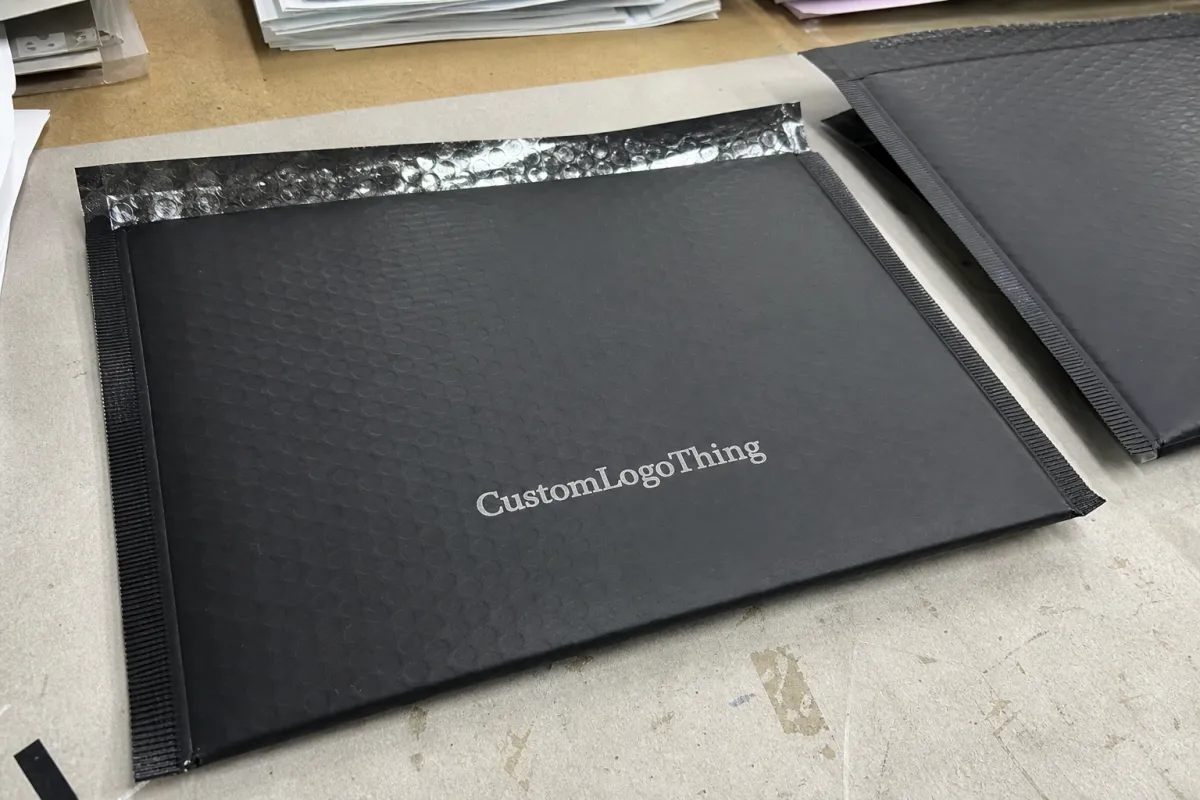
Proofs catch the quiet problems. A missing logo is obvious. A 2 mm shift toward the side seal is not, at least not until the press run starts and the artwork lands partly on the printable panel and partly in a distortion zone.
From a packaging buyer’s point of view, the proof is a risk filter. It should confirm the structure, print position, copy, color intent, code readability, and production assumptions. If a brand is ordering 5,000 to 25,000 Waterproof Apparel Mailers for a product drop, this review may be the only moment when brand, operations, ecommerce, and compliance are all looking at the same packaging decision.
The review becomes even more useful when the mailer has to protect mixed contents: soft goods, sample sachets, product cards, and promotional inserts. A poly mailer that works for a plain T-shirt may not suit a PR kit with sharp-edged cartons inside. The bag may need heavier film, a stronger adhesive strip, a larger format, or an insert strategy that prevents bulging at the closure.
The issues hidden by digital mockups tend to be practical production issues: weak contrast, panel mismatch, artwork crossing a fold, type too close to the flap, or a return address landing under the shipping label. On opaque or colored film, fine type can also lose crispness. A pale pink logo on white polyethylene may look elegant in a presentation deck and underpowered on a conveyor.
Practical rule: if an error would bother a customer unboxing a $60 skincare set, it belongs on the proof review list. The proof is cheaper than reprinting mailers, relabeling cartons, or explaining a messy first impression after launch.
The fastest approvals usually are not rushed. They are disciplined. One clean file, one owner for comments, one deadline, and a checklist that keeps people from debating shade preference before confirming whether the dieline is correct.
How waterproof apparel mailers handle ink, seal, and color
Most Waterproof Apparel Mailers are made from polyethylene film, co-extruded plastic structures, or recycled-content PE blends. Common thicknesses run around 2.0 to 3.0 mil for standard apparel mailers, with heavier constructions used for bulkier kits or rougher distribution paths. Paper-based mailers can be treated for water resistance, but they do not behave like plastic film under prolonged moisture, abrasion, or flexing.
The print method changes the proof conversation. Flexographic printing is common for custom poly mailers because it handles repeat runs efficiently and produces strong spot colors at scale. Gravure can deliver dense, consistent coverage for very high-volume work, though setup costs are higher. Digital printing can be useful for shorter runs or variable designs, but color control, ink durability, and substrate compatibility vary by equipment.
A good proof should show how the design maps across the front panel, back panel, flap, side edges, and seal zone. On a flat PDF, those areas can appear tidy. On the finished bag, the side seal, bottom fold, gusset, or adhesive flap reduces usable space. A 10 x 13 inch mailer is not a 10 x 13 inch billboard; the safe artwork area is smaller after seals and folds are accounted for.
Waterproof does not mean indestructible. Poly film resists moisture well, but it can scuff, stretch, crease, and pick up transfer from other parcels. Dark ink coverage may show scratches. Fine reverse type can fill in. Matte films can feel premium, yet they may reveal rub marks faster than glossy films. Too many teams approve mailer artwork as if it will sit untouched on a shelf, rather than ride through sortation equipment.
For ecommerce transit testing, teams sometimes reference procedures from the International Safe Transit Association, especially when packaging has to survive compression, vibration, drops, and routine handling. Not every apparel mailer project needs formal ISTA testing, but the mindset is useful: design for the actual route, not the studio render.
Cosmetics brands waterproof apparel mailers artwork proof checklist
Use the cosmetics brands waterproof apparel mailers Artwork Proof Checklist in a fixed order. Structure first. Artwork second. Copy and codes third. Color last. That sequence matters because color debates are common, while structural mistakes are usually more expensive.
- Confirm the dieline and finished size. Check width, height, flap depth, side seals, bottom seal, gussets if any, and usable print area. If the mailer is 12 x 15.5 inches with a 2-inch flap, the proof should reflect that exact construction.
- Check safe zones. Keep logos, URLs, QR codes, legal text, and campaign messages away from heat seals, adhesive strips, tear strips, folds, and edges. A common safe margin is 0.125 to 0.25 inch, though some suppliers request more depending on tolerance.
- Map each panel. Front, back, flap, and return-address zones should be clearly labeled. If the artwork wraps, confirm the wrap direction. A pattern that looks balanced flat can feel upside down after filling.
- Verify logo placement. Measure it. Do not approve “centered” by eye only. If a logo must sit 3 inches from the top edge and print 4 inches wide, the proof should show that reference.
- Review brand color targets. Provide Pantone references where possible. CMYK builds can shift on film, especially on colored or translucent substrates.
- Confirm white ink or opaque backing. On clear, metallic, kraft-look, or colored film, white underprint may be needed to keep colors readable. Missing white ink is one of those technical errors that becomes painfully visible.
- Inspect image resolution. Raster art should typically be 300 dpi at final size for detailed graphics. Some large pattern artwork can tolerate less, but product imagery and fine illustrations usually cannot.
- Test barcodes and QR codes at actual size. Confirm quiet zones, contrast, and placement. A QR code under a shipping label is not a QR code; it is decoration.
- Check copy line by line. URLs, social handles, sustainability claims, country-of-origin statements, recycle messaging, and promotional dates should match the final approved copy deck.
- Look for overprint and knockout settings. These settings can change how small type or white elements print. Ask the supplier to flag risky overprint behavior during preflight.
For cosmetics brands, compliance text deserves a second pass. Outer mailers often are not regulated product labels, but claims such as “recyclable,” “compostable,” “PCR content,” or “FSC” still carry meaning. If a paper insert or paper mailer references FSC, the chain-of-custody claim should align with requirements from the Forest Stewardship Council. For poly mailers, recycle labeling depends on material structure, local acceptance, and whether adhesives, inks, or labels affect recovery.
The checklist is not meant to slow approvals. It reduces vague feedback. “Make the logo pop” is subjective. “Increase logo contrast because blush pink on white film fails at arm’s length” is useful.
Process and timeline: from file upload to approved proof
Most custom mailer projects begin with file intake. The supplier checks whether artwork is built on the right template, whether fonts are outlined or packaged, whether links are missing, and whether spot colors are named consistently. This preflight step is not glamorous. It prevents chaos.
A typical digital proof may come back in 1 to 3 business days after usable files are submitted. More complex jobs can take 3 to 5 business days, especially if the supplier has to adjust dielines, confirm ink limits, or clarify opaque layers. Production after proof approval often runs 12 to 20 business days for many custom poly mailer orders, though that range depends on run size, print method, material availability, and freight.
Revision cycles create hidden schedule risk. One round is common when the file matches the template and copy is final. Two rounds are normal when positioning, color notes, or barcode placement need work. Three or more rounds usually signal a process problem: too many reviewers, late copy changes, missing assets, or no single approval owner.
Rush projects can move quickly through proofing and still stall later. Press time, film inventory, plate making, curing or drying time, packing, freight, and warehouse receiving all sit downstream of the proof. If a cosmetics launch has an influencer mail date, build backward from the ship date, not from the artwork deadline.
| Project stage | Typical timing | What can slow it down | Buyer action |
|---|---|---|---|
| File intake and preflight | 1–2 business days | Missing fonts, wrong dieline, low-resolution images | Send packaged files, final copy, and brand color references |
| First digital proof | 1–3 business days | Custom sizing, unclear print zones, special ink layers | Review structure before debating color |
| Proof revisions | 1–2 business days per round | Multiple reviewers marking different file versions | Use one consolidated comment list |
| Production after approval | 12–20 business days in many cases | Large runs, plate changes, material shortages, freight delays | Approve only after size, copy, and shipping specs are final |
Custom Logo Things offers several formats under Custom Packaging Products, and the same proof logic applies across many printed packaging formats. For waterproof apparel mailers specifically, the Custom Poly Mailers category is usually the most relevant starting point.
Cost, pricing, and MOQ drivers for custom mailers
Mailer pricing is a math problem with brand consequences. Unit cost is shaped by size, film gauge, order quantity, print coverage, number of ink colors, special finishes, plate requirements, and delivery point. A small 10 x 13 inch one-color poly mailer is a different project from a 14.5 x 19 inch full-coverage printed bag with white underprint and a double adhesive strip.
For general planning, simple custom poly mailers can land around $0.18–$0.35 per unit at mid-sized quantities such as 5,000 to 10,000 pieces, depending heavily on size and print coverage. Smaller runs may be higher, sometimes $0.45–$1.20 per unit, because setup costs are spread across fewer bags. Very large runs can push pricing down, but only when the specification stays stable.
MOQ matters because presses need setup time. Plates, ink calibration, film loading, make-ready waste, and quality checks all cost money before the first sellable mailer is packed. That is why a 500-piece run can feel expensive per unit. The machine does not care that the launch is boutique.
Artwork revisions can create indirect cost as well. A late logo move may require only a new proof. A late size change may require a new dieline, new quote, new film estimate, and revised carton pack count. A color change after plates are made can become real money, not always, but often enough that buyers should treat proof approval as a purchasing decision rather than a casual design signoff.
| Cost driver | Lower-cost choice | Higher-cost choice | Why it changes price |
|---|---|---|---|
| Size | Standard apparel sizes such as 10 x 13 or 12 x 15.5 inches | Oversized or unusual custom dimensions | More film, more waste, and possible custom setup |
| Film thickness | 2.0–2.5 mil for light apparel | 3.0 mil or heavier for bulky kits | Material consumption increases directly |
| Print coverage | One logo or repeat pattern | Full flood color or dense artwork | More ink, slower control, higher defect visibility |
| Ink setup | One or two spot colors | Multiple spot colors, white underprint, tight registration | More setup and more quality control |
| MOQ | 5,000+ pieces | 500–1,000 pieces | Setup cost is spread across fewer units |
Comparing quotes only works if every vendor prices the same thing. Use the same dieline, material thickness, print method, number of colors, adhesive style, pack count, and delivery location. Otherwise, the cheapest quote may simply be missing something.
Step-by-step proof review for cosmetics packaging teams
The best proof reviews are boring in the right way. Everyone knows their lane. Nobody approves from a phone while boarding a flight. Nobody sends “looks good to me” before the barcode is checked.
Assign three roles. One person owns brand review: logo, color, tone, visual hierarchy. One owns operations: size, pack count, shipping label area, carton configuration, fulfillment handling. One owns compliance or claims: required copy, recycling statements, warning text if relevant, and claim language. Smaller teams may have one person wearing all three hats, but the responsibilities should still be separated on the checklist.
- Open the correct file version. Confirm proof date, revision number, SKU name, and size. Old PDFs cause real errors.
- Check structure first. Finished dimensions, flap, seal areas, hang holes if any, perforations, tear strips, and adhesive zones.
- Review artwork placement. Confirm logo centerline, repeat pattern direction, panel alignment, and whether critical elements avoid folds.
- Read every word. Cosmetic brands often reuse campaign copy across cartons, cards, mailers, and landing pages. Mismatches are easy.
- Scan codes. Test QR codes on screen at actual size when possible, then ask for printed sample validation if the code is mission-critical.
- Assess color realistically. Compare Pantone targets, but remember that film, ink opacity, and lighting affect appearance.
- Document approval. Save the approved proof, quote, spec sheet, and email approval in one reorder folder.
One underrated tactic: view the proof at actual size and at arm’s length. A 7-point URL may be technically printable but useless on a moving package. A beige logo may feel refined in a deck and barely visible against off-white film. Packaging has to work under fluorescent lights, on doorsteps, in mailrooms, and in quick social videos.
For teams managing several seasonal or campaign mailers, review past runs before approving new ones. Custom Logo Things’ Case Studies can also help buyers think through how artwork, product type, and packaging format interact across different branded projects.
Common mistakes cosmetics brands make before approval
The first mistake is believing the screen. Screens are backlit, calibrated differently, and forgiving. Printed film is physical. Ink sits on a substrate with its own color, gloss, texture, opacity, and surface energy. A proof should be judged as a production instruction, not as a mood board.
The second mistake is ignoring closure zones. Adhesive strips, perforations, side seals, bottom seals, and flap folds are functional areas. They are not safe places for legal copy, QR codes, social handles, or fine brand marks. If a customer tears through the campaign message while opening the mailer, the layout failed.
The third mistake is checking only the front panel. Fulfillment teams care about the back panel, too. Return addresses, shipping label clearance, pack orientation, carton count, and SKU identification affect warehouse speed. A beautiful front panel does not help if the mailer stacks poorly or the shipping label covers the sustainability message.
Approving before carton configuration is final creates another avoidable snag. If 1,000 mailers are packed per master carton but the warehouse expects 500, receiving can slow down. If the final shipping address changes after approval, freight paperwork may need revision. These details sound administrative until inventory misses the launch window.
Reorders expose sloppy records. Brands often remember the artwork but not the film thickness, print method, finish, adhesive type, or approved safe-zone adjustment. Six months later, a simple reorder becomes detective work. Keep the approved proof, final invoice spec, carton label, and any production sample notes together.
Claims deserve special caution. “Recyclable” can depend on local collection access, material type, labels, inks, and store drop-off programs. The U.S. Environmental Protection Agency publishes broader recycling and materials guidance at epa.gov/recycle, but brands should also check applicable local rules and legal review for packaging claims. Sustainability language is not a design flourish.
Expert tips and next steps after the proof
Once the proof is approved, lock the file. Do not let stray comments continue in parallel email threads. The approved proof should match the production order, quote, dieline, and spec sheet. If those documents disagree, pause before production starts.
Ask for a production sample when the stakes justify it. Color-critical beauty branding, dense all-over artwork, metallic effects, transparent film, white underprint, or QR-heavy campaigns can benefit from a physical check. A sample adds time, often several business days or more, and sometimes cost. It can still be cheaper than discovering weak scan performance or a color miss across 20,000 pieces.
Set a reorder trigger before inventory gets tight. If production plus freight can take 3 to 5 weeks after proof approval, waiting until only two weeks of mailers remain is not a plan. Track average weekly usage, campaign spikes, and warehouse buffer. For example, a brand shipping 1,200 apparel mailers per week with a four-week replacement lead time should consider reordering well before stock drops below 6,000 units.
Archive the full reorder package: approved PDF proof, editable source files, dieline, material spec, film thickness, Pantone targets, print method, white ink notes, MOQ, unit price, carton pack count, and photos of finished mailers if available. That archive protects the next launch from memory-based purchasing.
Here is what most people get wrong: they treat waterproof apparel mailer approval as a design task. It is also a logistics task, a print task, a claims task, and a customer-experience task. A strong outer mailer protects the product, carries the brand, and survives the parcel network with enough dignity to still look intentional on arrival.
Use the checklist before every launch and every reorder. Not because teams need more process, but because repeatable approvals reduce mistakes, shorten review cycles, and help cosmetics brands ship waterproof apparel mailers that look as polished in a customer’s hands as they did in the launch deck.
FAQ
What should cosmetics brands check first on a waterproof apparel mailer proof?
Start with the dieline, finished dimensions, and panel layout. Confirm that the artwork sits on the correct front, back, flap, and seal areas before reviewing color. Then verify logos, legal copy, barcodes, QR codes, and any text near folds or seams. Finish by checking color targets and image sharpness at actual size.
How many proof rounds are normal for custom waterproof apparel mailers?
One proof round is common for simple files that already match the supplier’s template. Two rounds are normal when layout, color, or compliance text needs adjustment. Extra rounds usually come from missing assets, late copy changes, unclear version control, or too many people reviewing separate files.
What affects waterproof apparel mailer pricing the most?
Size, material thickness, print coverage, and number of ink colors are usually the largest price drivers. MOQ and setup costs strongly affect unit price, especially for smaller runs. Special finishes, opaque white layers, rush production, and expedited freight can also raise the total cost.
Can barcode and QR code readability be checked in an artwork proof?
Yes. A digital proof can confirm placement, size, contrast, and quiet space. Actual scan performance still depends on print quality, substrate, ink spread, surface finish, and whether the code gets bent or covered in use. For critical codes, request a production sample or press sample before full release.
What files should I send before requesting a proof for waterproof mailers?
Send the final dieline, editable artwork, outlined or packaged fonts, logo files, Pantone or brand color references, final copy deck, and barcode or QR assets. Include notes for finish, white ink, opacity, adhesive style, and placement rules. A single marked-up reference file speeds the cosmetics brands waterproof apparel mailers artwork proof checklist review and reduces back-and-forth.