Cosmetics Embroidered Beanies Material Sample Guide
A cosmetics embroidered Beanies Material Sample guide matters because beanies are unforgiving in a way flat mockups are not. A knit can feel soft and premium in the hand, then twist, pucker, or blur the logo once embroidery starts pulling against the fabric. That is why a sample is not a souvenir and not a placeholder. It is a small production test that shows how the fiber, gauge, stitch density, and presentation will behave together before you approve a bulk run.
For cosmetics brands, the stakes are practical. The beanie may sit inside a holiday set, ship with a skincare bundle, appear in an influencer mailer, or function as retail add-on merch. It has to look polished from across a shelf, feel comfortable on the head, and hold color and shape across reorders. If those things are not aligned in the sample stage, they rarely improve later.
Cosmetics embroidered beanies material sample guide: what buyers miss
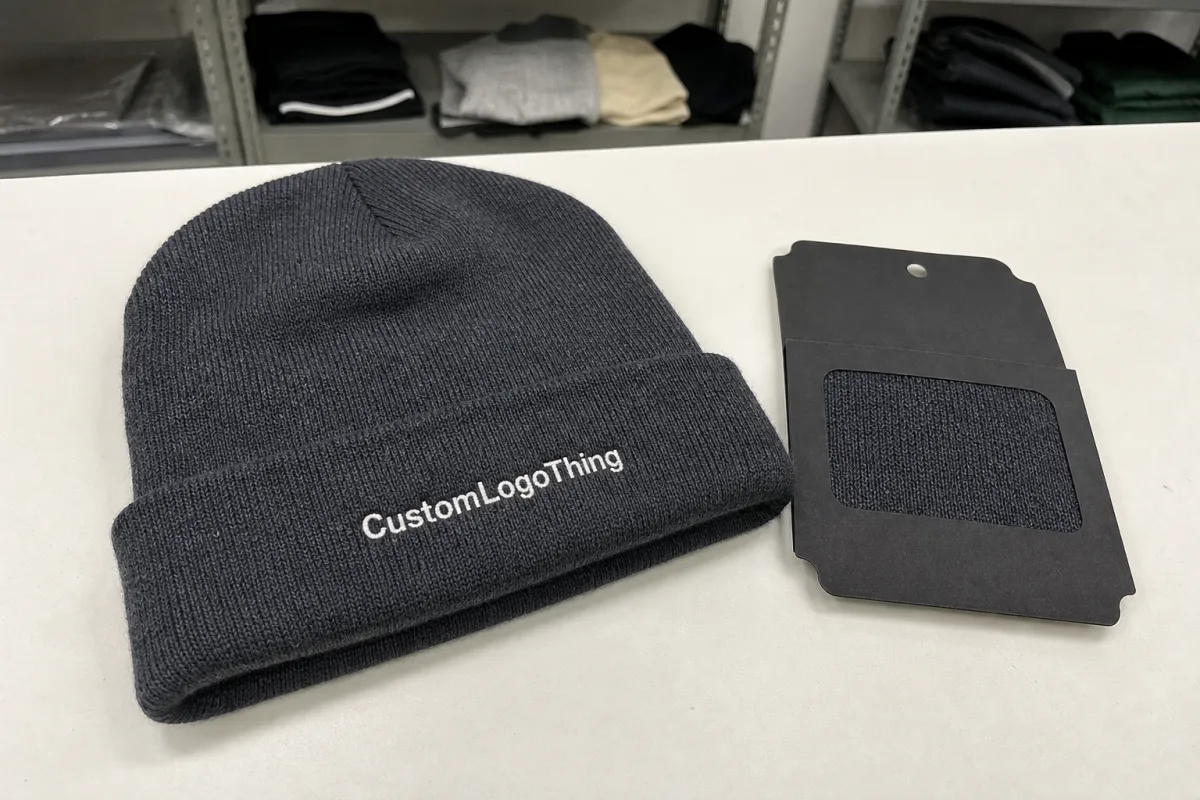
The most common mistake is treating a sample like a finished keepsake instead of a decision tool. A beanie sample should answer a series of uncomfortable questions fast: Does the knit recover after stretch? Does the cuff hold its shape after packing? Does the logo stay crisp when the fabric relaxes? Softness alone will not tell you any of that.
In cosmetics, presentation is part of the product. Neutral tones, seasonal shades, and understated logos can look expensive or cheap depending on the yarn, the finish, and the embroidery support underneath. Color is especially easy to misjudge. An off-white that feels warm in daylight can shift cooler under warehouse LEDs, and a charcoal yarn may show texture and lint much more than expected once it is folded into a set.
“A sample is not a souvenir; it is a production decision.”
That principle saves time and money. If the first sample already shows stable shape, clean stitch definition, and acceptable recovery after handling, you can move toward production with fewer unknowns. If it shows sinkage, loose threads, or a logo that looks too small once the knit relaxes, you still have room to correct the spec before the order becomes expensive.
- Check structure first, then evaluate decoration.
- Inspect the logo zone under stretch, fold, and wear.
- Review color in different lighting before sign-off.
- Keep one approved physical reference for bulk comparison.
For beauty launches, the sample should also show how the beanie fits into the larger packaging story. A soft knit inside a crisp box can feel intentional; the same piece dropped into random filler can feel unfinished. That does not mean the packaging has to be elaborate. It does mean the material sample should be reviewed alongside the way it will ship and display.
How the sample shows embroidery behavior in real wear
A useful sample includes the full construction, not just the beanie body. Ask for fiber content, knit gauge, cuff structure, embroidery placement, and any backing or stabilization used behind the logo. Those details reveal whether the thread is sitting on a stable surface or fighting a loose, airy knit. A beautiful artwork proof can hide problems that the physical sample exposes immediately.
Embroidery on knitwear behaves differently depending on density. Tighter knits usually support letters and fine edges better because the thread has more surface to grip. Looser or bulkier knits can feel richer and warmer, but they often increase the risk of pull, sinkage, and uneven coverage. That does not make them unusable. It means the logo has to be designed for the fabric, not copied onto it as if the surface were flat canvas.
Placement matters more than many buyers expect. A mark too close to a seam, fold, or edge can distort once the beanie is worn or compressed in packaging. The sample should be viewed from the front, side, and slightly angled positions, because logo clarity is rarely judged from one perfect camera angle in the real world.
Testing should mimic handling, not lab fantasy. Stretch the cuff a few times. Fold the beanie the way it will sit in a carton or mailer. Hold it under indoor light and natural light. Wear it briefly and look for puckering as the knit relaxes. You are not trying to certify perfection; you are trying to see whether the fabric behaves like a product that can survive normal use.
Keep the sample close to production intent. Small changes in yarn blend, gauge, backing, or stitch density can shift the final result in ways that are easy to dismiss on paper. If the approved sample uses a dense cuff and the bulk order switches to a looser cuff, the embroidery may sit differently. If the sample uses a heavier fill stitch and the final run trims thread to save cost, the logo can look flatter and less precise.
Fiber, gauge, and finish: the key approval factors
Fiber choice comes first because it sets the tone for feel, drape, warmth, and recoverability. Acrylic is common in branded headwear because it is consistent, price-friendly, and usually behaves well under embroidery. Wool blends add warmth and a more natural hand, but they can feel scratchier unless the blend and finishing are chosen carefully. Mixed yarns can improve softness or shape retention, yet the ratio matters. Even a small shift can change how the beanie sits and how the logo lies on the knit.
Gauge and weight matter just as much. A heavier beanie can signal quality, especially in beauty packaging where a product has to feel substantial out of the box. But weight alone does not guarantee a good result. An open structure at a heavy weight may still stretch more than you want, while a fine gauge may give cleaner stitch definition and a more refined surface even if it feels less chunky.
Recovery deserves its own check. If a beanie stretches out after a few pulls and does not spring back, the logo area can look warped before the customer ever wears it. That is especially relevant for cuffed styles, which have to keep their form after packing, display handling, and shipping compression. A sample that curls hard at the edge or loses cuff height after a brief wear test is warning you early.
Finish and colorfastness should be reviewed with the same seriousness as fit. Cosmetics buyers often need repeatable color across restocks, seasonal runs, or companion items like pouches and scarves. Ask how the shade was developed, whether the yarn batch was matched to a reference, and how the finish will hold after handling. If your broader packaging uses FSC certified inserts, kraft paper wrap, or other recycled materials, the beanie should still look like part of the same system instead of a disconnected add-on.
Sample presentation also affects perception. Many teams now ask for shipments in corrugated cardboard cartons with paper-based tissue rather than plastic fillers. That does not make the product itself better, but it can improve the first impression and support a cleaner brand story. If sustainability claims are part of the pitch, keep them specific and defensible. Use materials you can describe clearly, whether that means post-consumer waste content, biodegradable packaging inserts, or a documented chain of custody for paper-based components.
If transit stress is part of your concern, package testing logic is useful even for a small sample. The FSC and ISTA sites are practical references when you want to align packaging choices with recognized standards for material sourcing and handling. They do not replace real-world approval, but they help you ask better questions.
| Sample type | Typical sample cost | Best for | Watch-outs |
|---|---|---|---|
| Basic knit prototype | $25-$60 plus shipping | Checking fit, cuff height, and yarn feel | May not reflect the final embroidery setup |
| Embroidery approval sample | $40-$90 plus shipping | Reviewing stitch clarity and logo placement | Revisions can add time and separate fees |
| Pre-production sample | $60-$150 plus shipping | Final sign-off before bulk production | Should match the intended yarn and stitch count exactly |
| Multiple variant samples | $90-$200 total or more | Comparing yarn weights, cuff heights, or thread colors | Easy to lose track without a written comparison sheet |
Cost, MOQ, and quote variables buyers should compare
Sampling cost is driven by the work around the sample as much as the beanie itself. Yarn sourcing can increase the price if the supplier must match a specific fiber blend or shade. Embroidery setup, digitizing, and artwork corrections also matter, especially when the logo has small type, multiple thread colors, or fine details that need cleanup. One-off prototypes are usually more expensive per unit because setup time is being spread across a single piece.
MOQ changes the equation quickly. Smaller quantities usually raise unit cost because labor, setup, and finishing are not diluted across many pieces. Larger orders reduce the price per beanie, but only if the style is stable and the sample has already been approved cleanly. The trap is comparing quotes as if every supplier includes the same things. One quote may fold embroidery into the sample fee, while another may separate digitizing, revision labor, and courier charges.
When you request pricing, send complete information up front. Include the logo size, thread color count, required packaging, whether the beanies will be folded into sets, and whether you need more than one sample version. If you know your target retail or giveaway budget, say that too. That lets the supplier recommend a fiber and construction that fit the price band instead of pushing a premium build into a budget that cannot support it.
The simplest way to compare bids is to separate the costs that often get blended together:
- Sample fee — the cost to make the prototype or approval piece.
- Revision fee — the cost for corrected artwork, stitch changes, or a second sample.
- Shipping — courier cost, packaging, and protective inserts.
- Production unit cost — the bulk price after approval.
- Total project spend — the full amount across sampling and production.
If one quote looks unusually low, look for what is missing. A cheap sample that does not include proper embroidery correction can end up costing more after two revisions. A slightly higher quote with accurate setup, clear communication, and fewer surprises can be the better buy because it reduces schedule risk and protects the final appearance.
Process and turnaround: from request to approval
The fastest approvals start with complete input. Gather artwork files, Pantone or shade targets, preferred yarn feel, target fit, and any restrictions on scratchiness, shrinkage, or embellishment size before requesting the sample. If your brand has strict presentation rules, include those too. Beauty teams often care about softer neutrals, cleaner edges, and packaging that feels deliberate the moment the box opens.
Most sample development follows a simple order: knit or prototype sample, embroidery placement review, and then a corrected revision if needed. A good first sample should get you close enough that the discussion is about details, not reconstruction. If the logo sits too high on the cuff or the thread color reads too bright, those are normal corrections. If the beanie is the wrong gauge or the shape is off, that is a construction issue and should be fixed before anyone signs off.
Once the sample is close, document the approval carefully. Record measurements, take photos from several angles, and note exactly what was approved: yarn, color, stitch count, placement, cuff height, and any packaging standard. The approved sample becomes the reference point for production and reorders. If the factory changes a detail later, you need a written trail showing what was agreed.
Turnaround depends on yarn availability, revision count, and shipping distance. A simple approval cycle can move fairly quickly if the specs are complete and the decoration is straightforward. More complex logos, special yarn sourcing, or multiple variants can stretch the schedule. For planning purposes, many buyers should expect a few business days for setup, additional time for the sample itself, and extra transit time if the item is coming from overseas. That is not slow. It is the realistic pace of a custom textile product.
One useful habit is to align the sample pack with the same materials logic you want in the final presentation. If your brand uses paper-based mailers, ask for recycled inserts or kraft paper cushioning instead of mixed materials that are harder to recycle. If the project is sold as low-waste or eco-conscious, the outer pack should support that story without overstating what the materials can actually do.
Common mistakes when reviewing beanie samples
The first mistake is judging by softness alone. Comfortable handfeel is nice, but it does not guarantee the knit will support sharp embroidery or hold shape after packing. A very soft sample can approve beautifully on a table and still fail once it is stretched or folded. That is frustrating because the product seems right in hand but wrong in use.
Another common error is reviewing only under one light source. Thread sheen can shift under warehouse lighting, daylight, and retail lighting, and yarn color can do the same. A deep cream may read warm indoors and almost gray outdoors. A black or charcoal can show more texture than expected under bright light. If the product is for cosmetics, where visual polish matters, check it in more than one setting.
Skipping wear testing is another one. A sample should be stretched, folded, handled, and worn long enough to reveal puckering, edge curl, or distortion. You do not need a lab for basic review, but you do need to simulate normal use. A sample that looks perfect on a table may fail once a person pulls it on and off a few times.
Do not assume the sample equals production unless the details are locked down in writing. Yarn lot, stitch count, embroidery placement, and finishing method all need to match the approved reference. If a supplier substitutes a slightly different fiber blend or changes the thread density, the final look can drift. Clear paperwork is boring, but it prevents a harder conversation later.
For buyers who want packaging and product quality to support each other, the sample should be reviewed together with the carton or mailer. A beanie packed in an FSC certified box with a clean corrugated cardboard insert can feel more premium than the same item tossed into a random poly bag. Packaging will not rescue a weak product, but it can strengthen the overall experience when chosen thoughtfully.
Expert tips before bulk production
Use a short approval checklist every time. It should cover fit, stitch clarity, logo placement, color match, handfeel, and recovery after stretching. Keep it short enough that people will actually use it, but specific enough that marketing, operations, and procurement are judging the same things. That reduces the “I thought it meant something else” problem that often slows apparel approvals.
If the project has any uncertainty, ask for more than one sample option. A second yarn weight can show whether the beanie needs a denser knit for better logo support. An alternate cuff height can improve the decoration zone. A different embroidery thread can change how sharply the artwork reads. Extra samples cost time, but they are cheaper than producing a style that works only halfway.
Save the approved sample carefully. Photograph it, record the measurements, and label it so future production teams can compare against the same standard. If you are using paper-based shipping or gift packaging, keep a note of whether the final presentation used recycled materials, post-consumer waste content, or biodegradable packaging components. Packaging consistency becomes part of the product story, especially for cosmetics launches where the whole set has to feel intentional.
For transit and handling questions, borrow from package-testing logic rather than guessing. The ISTA guidance is useful for thinking about compression, distribution stress, and handling. It does not replace a full production test, but it helps you ask better questions before a bulk order leaves the line. The same thinking applies to the beanie itself: test the structure, not just the appearance.
Use this cosmetics embroidered Beanies Material Sample guide to make the final call with confidence. Review the material against your brand spec, lock the details in writing, and approve production only when the knit, embroidery, and packaging are all pointing in the same direction.
FAQ
What should a cosmetics embroidered beanies material sample guide include?
It should cover fiber content, knit gauge, embroidery placement, and any backing or stabilization used in the logo area. It should also show how the beanie behaves under stretching, folding, and normal wear so the sample reflects real production performance.
How many beanie material samples should I review before ordering?
For most projects, reviewing at least two options is useful if you are comparing yarn weights, colors, or knit density. If the logo is detailed or the fit is sensitive, request a revised sample so you can compare the first version against the corrected one.
Which materials usually hold embroidery best on cosmetics beanies?
Tighter gauge knits and blends with good recovery usually hold embroidery more cleanly than loose, oversized knits. The best choice depends on logo complexity, so compare the knit structure and thread behavior together instead of choosing by softness alone.
How do sample approvals affect cost and turnaround?
Each revision can add setup time, labor, and shipping, so clear instructions at the start usually reduce both cost and lead time. A fast approval cycle often comes from complete artwork, exact measurements, and a written sign-off on the first or second sample.
What should I confirm before approving the final beanie sample?
Confirm stitch clarity, color accuracy, fit, shrinkage behavior, and logo placement from more than one angle and in more than one light source. Also confirm the sample matches the intended production yarn, because the approved look only holds if the final run uses the same construction.
Done well, the cosmetics Embroidered Beanies Material Sample guide is less about checking boxes and more about preventing a polished-looking mistake from becoming a costly bulk order.