Cosmetics Printed Poly Mailers Quote Checklist for Buyers
A cosmetics Printed Poly Mailers quote checklist helps buyers compare real options instead of vague estimates. Two mailers can look similar in a mockup and still differ in price once the gauge, closure, print coverage, and freight basis are set. In beauty packaging, those variables also affect scuff resistance, seal feel, and how polished the parcel looks after warehouse handling.
The useful comparison is simple: same size, same material, same print method, same quantity, same delivery terms. If one quote is missing a finish upgrade, a setup charge, or bulky freight, the unit price is not truly comparable. The goal is to Buy the Right spec for the product and launch timing, not just the lowest number.
What a cosmetics printed poly mailers quote checklist should include
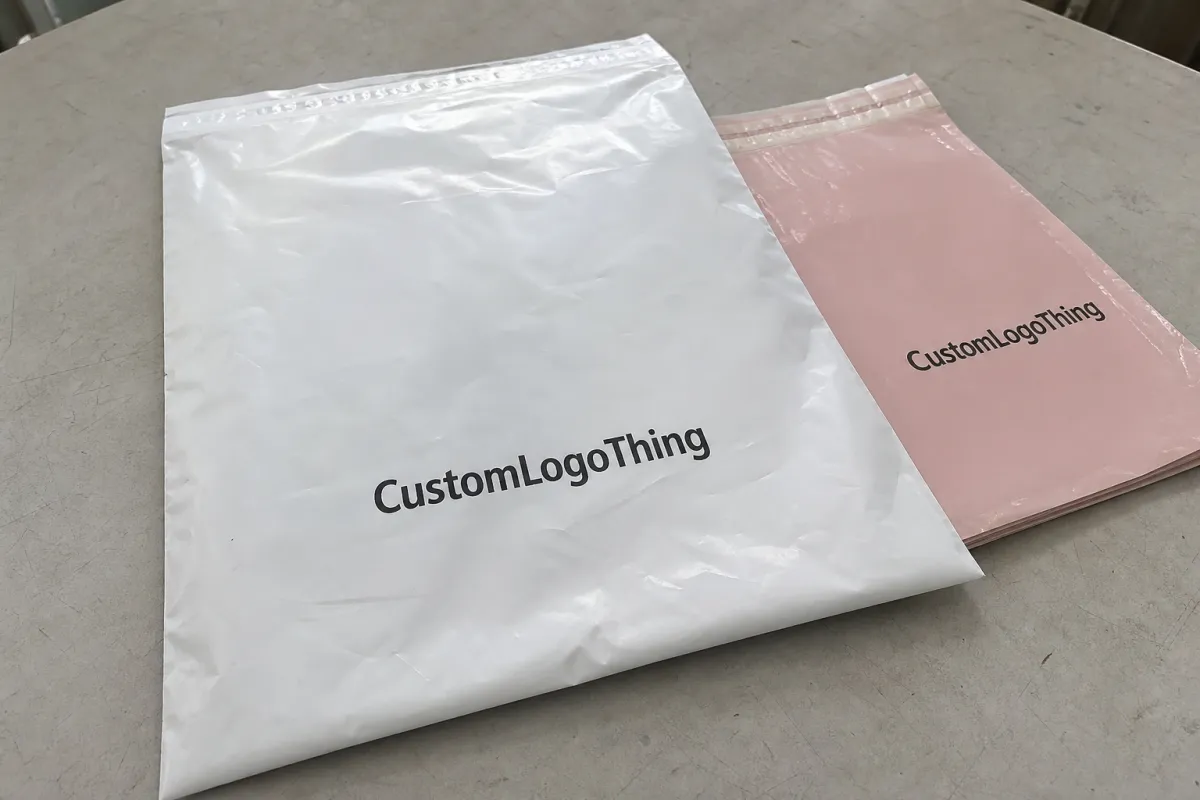
Start with the packed product, not the empty bag. A skincare set, pouch, carton, or insert changes the finished footprint, and a mailer sized only to the product itself often ends up too tight.
Before requesting pricing, gather the core details the supplier needs to quote accurately:
- Packed size: finished width, length, and thickness, including any carton or insert that changes the footprint.
- Contents: light tubes, glass bottles, rigid compacts, and mixed sets all behave differently in transit.
- Closure style: standard adhesive flap, double strip for returns, tamper-evident seal, or peel-and-stick option.
- Quantity: the actual order size, since setup cost is spread very differently across 3,000 versus 30,000 units.
- Artwork: vector files, Pantone references, reversed text, gradients, and any fine type that needs close proofing.
- Performance needs: moisture resistance, opacity, soft-touch finish, puncture resistance, or extra scuff control.
Identify the film type early as well. A supplier may quote standard LDPE, a blended polyethylene structure, or a recycled-content option if your program allows it. Those choices affect hand feel, print behavior, and sometimes minimum order quantities.
If the outer shipper needs to coordinate with cartons or inserts, align the wider packaging system through Custom Packaging Products so the presentation stays consistent from packout to delivery.
Fit, closure, and finish details that affect the final mailer
Most sizing mistakes happen when the mailer is quoted around the product instead of the finished pack. That creates a bag that is harder to load, more likely to wrinkle, and more prone to distortion in transit. For beauty orders, size around the complete packed item with a little allowance for fold lines and handling variation.
The closure style affects both packout speed and the customer experience. A standard adhesive flap works well for high-volume fulfillment. A double-strip closure is better if returns are part of the program. Tamper-evident structures make sense for higher-value items where a visible open-and-reseal condition would be a concern.
Finish matters too. Matte film looks more premium and hides fingerprints better. Gloss can make colors pop, but it shows scuffs sooner. Opaque film is useful when the contents should not be visible under bright warehouse lights. Semi-opaque structures sit in the middle for brands that want some privacy without a fully blocking bag.
Seam placement and fold direction also affect the final result. A seam that stacks cleanly is easier to palletize. A fold that lines up with the label panel reduces rework at the fulfillment station. Small details like these become cost when thousands of units move through a busy line.
Adhesive performance can also shift with temperature and humidity. If the mailers will sit in a hot dock, a humid storeroom, or a long cross-country route, ask how the seal behaves under those conditions and whether the adhesive is rated for the expected environment.
Film gauge, print coverage, and artwork specifications buyers should lock in
Once fit is defined, move to the technical print details: material thickness, print method, color count, coverage, and whether white ink or a backing layer is needed to keep the artwork readable on darker film. A small logo on white film is a different job from a full-bleed beauty print with repeated patterns and fine text.
Film gauge is one of the biggest levers for both performance and price. A lighter mailer can reduce cost and handling weight, but it may not survive sharp corners, dense pack-outs, or rougher distribution channels. For many cosmetic shipments, a common range is around 2.5-3.5 mil. Heavier structures can make sense for rigid items, larger kits, or shipments that need extra puncture resistance.
Print coverage changes quoting quickly. More ink means more setup, more drying or curing time, and a greater chance of color drift if the artwork is dense or the press is busy. A one-color logo is a very different quote from a full-coverage mailer with gradients, photo blocks, or narrow reversed type. If the art uses a dark background, the supplier may need a white underprint to keep the brand color from disappearing into the film.
Send vector artwork early, plus Pantone references and any tolerance guidance for color match. If the logo includes small text or thin strokes, ask for confirmation on minimum line weight and readable type size at final bag dimensions. Artwork that looks fine on screen can fail on press if the lines are too delicate.
Ask how proofing is handled. A flat digital proof is useful for layout, but it does not show the full color or finish effect. For a new design, especially one with a large color block or a reverse-out logo, an approval sample is often worth the time because it catches issues before the full run is committed.
If the vendor references seal strength testing or compares performance to methods such as ASTM F88, that is a useful sign that they understand the mailer as a functional package, not just a printed shell. Gauge consistency across the roll matters too, because uneven thickness can create weak points that only show up during volume loading.
Cost, MOQ, and quote factors that change the unit price
Price is shaped by more than quantity. The main drivers are bag size, film thickness, print complexity, number of colors, finish, carton configuration, and shipping distance. A quote that leaves any of those out is incomplete.
For a straightforward branded mailer, a run of around 5,000 pieces may fall in the $0.18-$0.28 per unit range. Add heavier coverage, a matte premium structure, or a more complex color build, and the price often moves into the $0.30-$0.45 range. Smaller trial orders usually cost more per unit because setup is spread over fewer pieces.
Setup charges matter as well. Plate prep, proof revisions, and press changeover can add several hundred dollars before the first bag is produced, and specialty finishes can push that higher. Some suppliers fold part of that into the unit price once volume rises; others list it separately. Either approach can work if the quote makes it clear.
The table below is a practical comparison, not a promise of exact pricing. It shows how the structure of the job changes the quote before freight is even included.
| Quote scenario | Typical MOQ | Typical unit price | Best fit | Watch-outs |
|---|---|---|---|---|
| Simple logo on standard film | 3,000-5,000 | $0.12-$0.22 | Launches, sample programs, and clean branded shipping | Usually fewer finish choices and limited print complexity |
| Full-coverage matte mailer | 5,000-10,000 | $0.18-$0.34 | Beauty brands that want stronger impact in transit | Ink density, drying time, and proof control matter more |
| Opaque premium mailer with white ink | 10,000+ | $0.28-$0.55 | Luxury lines and higher-value sets | More setup, tighter approval, and more room for color drift |
If tooling, plates, proof revisions, freight, and sample charges are not listed, the comparison is incomplete. A lower number can hide costs that show up later.
That is why a cosmetics Printed Poly Mailers quote checklist has to force every supplier onto the same basis. Compare landed cost, not just factory price. Poly mailers are light, but they are bulky, and dimensional weight can change the freight bill faster than buyers expect.
Production process, proofing, and turnaround expectations
A realistic schedule matters almost as much as the quote. The process usually starts with brief review, then proofing, then material confirmation, printing, curing, converting, packing, and shipment. If artwork is late or a color callout is unclear, the timeline stretches quickly.
For a clean, well-prepared order, a common lead time is 12-15 business days from proof approval. Heavy coverage, special finishes, and a crowded production queue can extend that. Rush jobs are sometimes possible, but the limit is often drying time, material supply, and whether the job can be inserted without weakening quality control.
Ask for stage-by-stage timing instead of one broad delivery promise. A useful quote should separate proof turnaround, production time, and freight time. That makes it easier to manage launch dates and avoids a finished product waiting on packaging that is still in transit.
For designs that need to survive parcel handling, ask whether the structure has been considered against transit testing methods from the International Safe Transit Association. That does not mean every cosmetic mailer needs a full test report, but it does mean the supplier should understand drop, vibration, and compression risks instead of treating the bag as a decorative sleeve.
The best suppliers are direct about schedule risk. Missing Pantone references, low-resolution art, and late finish changes can all add time. A realistic lead time is more valuable than a short one that cannot actually be delivered.
Carton pack, shipping method, and receiving requirements to confirm
Shipping details matter as soon as the order reaches the warehouse. Confirm the inner pack count per carton, carton dimensions, pallet pattern, label requirements, and whether the shipment arrives loose or palletized. Those details affect receiving labor and whether the freight can be stored without repacking.
Poly mailers are light but bulky, so freight often becomes a bigger line item than buyers expect. Dimensional weight can outpace actual product weight. A palletized shipment can make sense for larger runs or long-distance moves, while smaller orders may travel more efficiently in cartons. The right answer depends on route, destination, and warehouse setup.
If the mailers will sit in humid storage or move through a high-volume fulfillment line, ask about print rub, blocking, and film stickiness. Some finishes hold up better when bags are stacked tightly or stored for longer periods. If paper inserts or outer cartons are part of the order, FSC chain-of-custody applies to those paper components, not to the polyethylene mailer itself.
Receiving teams also appreciate simple paperwork. Advance shipping notices, clear carton marks, and purchase order references reduce count errors and speed inbound processing. On a tight launch, that saves more time than it seems to on paper.
For sustainability planning, the U.S. EPA has practical material on source reduction and packaging waste at EPA. The useful takeaway is straightforward: use the lightest structure that still protects the product and keeps the presentation intact.
How a packaging supplier should support repeat orders and proof control
Good supplier support starts with clean quoting and ends with file control. A dependable packaging partner should keep approved proofs, color notes, bag dimensions, and production comments so repeat orders can move without starting from zero.
That matters because cosmetic mailers often rely on small details. The artwork may stay the same, but the next batch might need a cleaner matte finish, a stronger adhesive strip, or a tighter color match. If the supplier stores the approved version correctly, those changes are manageable. If they do not, the reorder becomes a search for missing information.
Watch for conflicts before the press starts. A logo too close to the seal can shift during converting. A photo that looks crisp at screen size may print muddy on film. A fine line can disappear once the ink hits a moving substrate. Catching those issues early saves both time and money, even if it adds a day to approval.
Repeat work is where a cosmetics Printed Poly Mailers quote checklist proves its value again. The first time, it forces a clean comparison. The second time, it becomes the control sheet that keeps the next run aligned with the approved spec. Size, film, finish, print method, and artwork version should all live in the same place.
How to assemble a quote-ready brief
The brief does not need to be long, but it does need to be specific. Include the packed size, quantity, film preference, finish, closure style, artwork files, shipping destination, and target delivery window. If the design has tight type, rich color blocks, or a premium finish that needs an approval sample, say so before the quote is locked.
Send the same comparison table to every supplier so the answers come back on the same basis. That avoids the familiar trap where one quote includes freight, another excludes it, and a third assumes a different quantity altogether. Comparable inputs matter more than fast responses.
If the first round surfaces uncertainty around color, closure, or film thickness, ask for a revised proof before production starts. That extra step is cheaper than correcting a full run. A good brief should do more than request a number; it should reduce the number of decisions that have to be made later under pressure.
The best closing test is simple: if another buyer picked up your quote sheet, could they tell exactly what is being produced, how it will be packed, and what would cause the price to change? If the answer is yes, the brief is ready.
FAQ
What should I prepare before requesting a cosmetics printed poly mailers quote?
Have the packed dimensions, quantity, artwork files, finish preference, closure style, and shipping destination ready before you request pricing. Add the target delivery window so the supplier can separate production time from freight time. If you need samples, a digital proof, or exact color matching, include that up front.
How do I compare two printed poly mailer quotes fairly?
Compare the same bag size, film gauge, print coverage, MOQ, proof process, and shipping basis. Check whether tooling, plates, samples, and freight are included or billed separately. The cleanest number is landed cost per unit, not just the factory quote.
What drives MOQ for cosmetics printed poly mailers?
MOQ is usually set by setup time, plate or screen preparation, film sourcing, and how efficiently the press can run the job. More colors, special finishes, larger bags, and multiple sizes tend to raise the minimum. Some suppliers will quote a lower trial run, but the unit price is usually higher.
How long does production usually take after approval?
Lead time depends on artwork approval speed, material availability, print complexity, and the current production schedule. A simple order moves faster than a fully printed bag with heavy coverage or a specialty finish. Ask for timing in stages so proofing, production, and freight can be planned separately.
Can I reorder the same cosmetics printed poly mailers later?
Yes, if the supplier keeps the approved spec, artwork, and production notes on file. Reorders move faster when the size, closure style, film, and color references are already locked in. Confirm that any material or process change will be flagged before the next run starts.